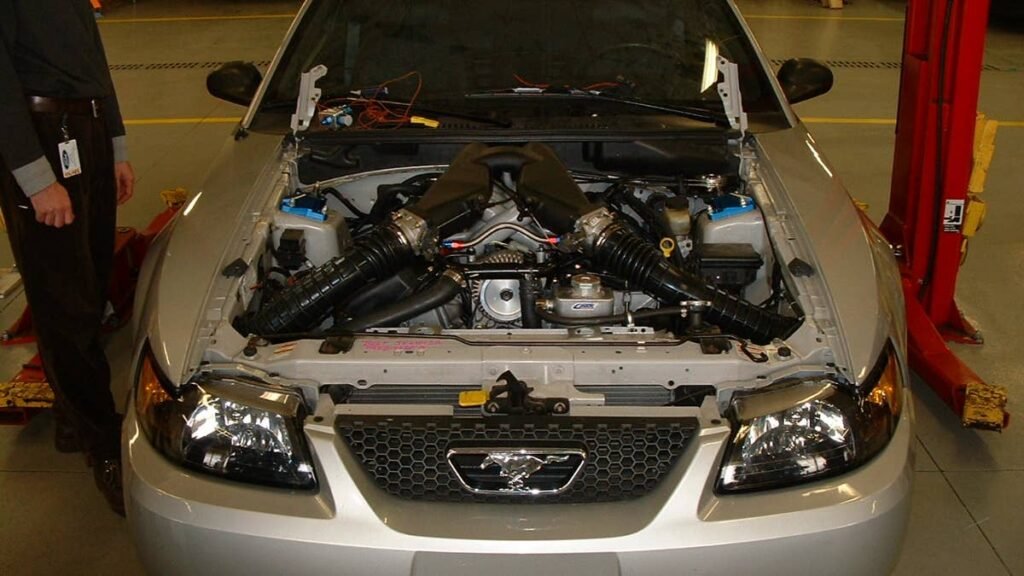
Ford has brought its one-off V10 Mustang prototype out of hiding after 24 years. Built in 2002 by a group of engineers operating largely off the books, the Boss 351 prototype was intended to counter the large-displacement Dodge Viper. Disguised as a standard 1999 Mustang GT test mule, the vehicle features a naturally aspirated 5.8-liter V10 engine tucked under a Cobra R hood.
The project faced cancellation during the Great Recession, surviving only because its creators maintained it in secret and paid for its upkeep themselves. Now, Ford’s formal Heritage Fleet has successfully recommissioned the vehicle. While modern track weapons like the Mustang GTD chase lap records using supercharged power, the goal for this revival was simply to make the naturally aspirated V10 prototype fully operational so future generations could experience its raw mechanical sound.
What Makes it Tick
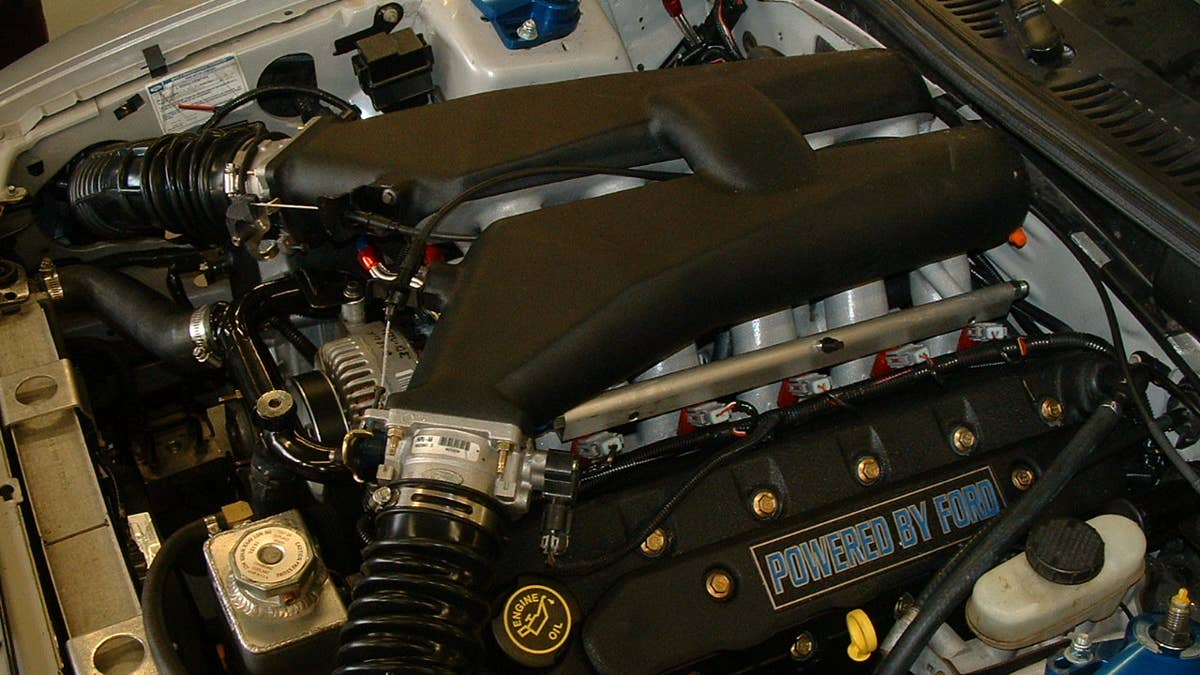
The engineering behind the prototype remains uniquely complex. Ford’s casting team in Windsor created an all-new 90-degree block by extending the 4.6-liter Modular V8 architecture by two cylinders. This all-aluminum engine received five-chamber Cobra R heads, billet camshafts, and a billet common-pin crankshaft, which gave the powerplant an unusual 54-90-54-90 firing order. The resulting displacement totaled 351 cubic inches, earning the car its Boss 351 moniker.
Managing that specific firing sequence required a clever workaround since Ford lacked a single compatible control module in 2002. The engineers configured the V10 to run essentially as two independent inline-five engines sharing a single crankshaft, using dual electronic control units and twin throttle bodies. Power flows through a Tremec T-56 six-speed manual transmission to a 9-inch rear axle equipped with a 3.83:1 final drive gear.
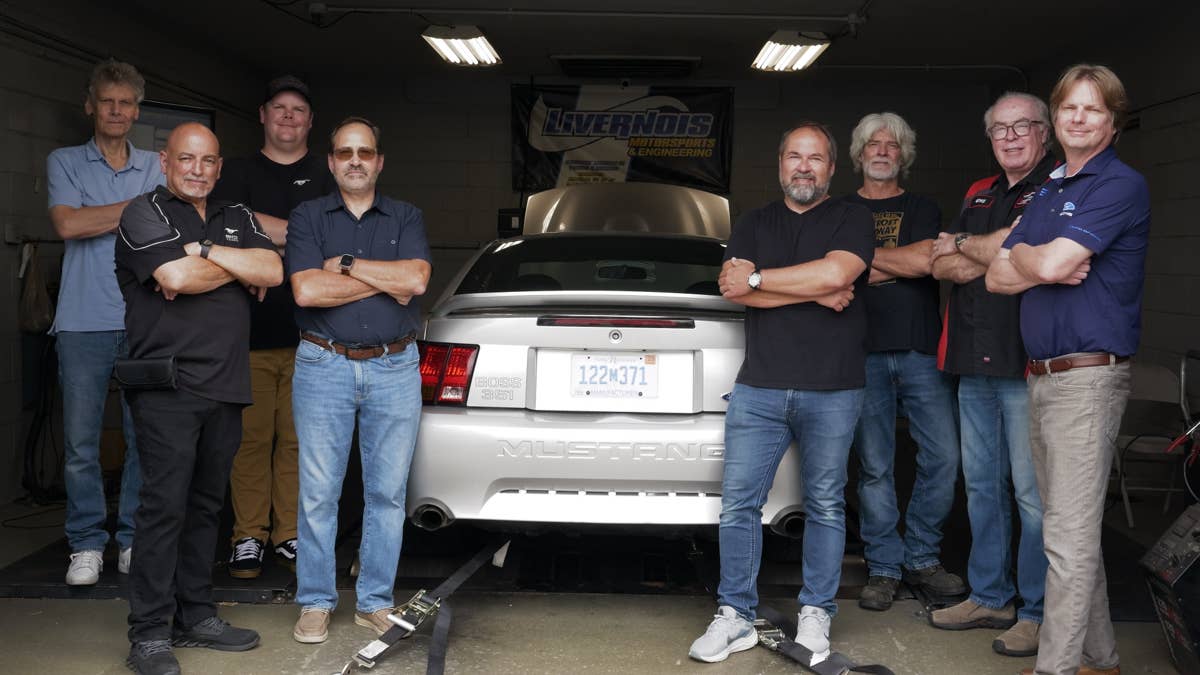
The recent recommissioning effort involved replacing aged electronics and thoroughly refreshing systems that had sat untouched for decades. After outfitting the engine with a modernized intake, Ford put the car on a chassis dyno. It laid down over 517 horsepower at the wheels, which is a nearly 20% increase from the 432 wheel horsepower it reportedly produced when new. While a modern GT40-inspired supercar showcases the extreme top-end potential of ten cylinders today, the 517-hp dyno pull validates the original team’s grassroots engineering.
Ford
Not Just by the Numbers
Ford’s decision to revive this specific V10 Mustang settles the debate over the ultimate purpose of a corporate heritage fleet. A stationary prototype is effectively just a museum piece, but a running, driving engineering exercise tells a richer story. This revived vehicle proves that the Boss 351 didn’t lose on engineering merit but simply just lost to an economic downturn and tightening industry regulations.
Today, extreme performance is often a matter of bolting on forced induction, as seen with the factory Mustang supercharger kit that delivers 810 horsepower straight over the parts counter. However, focusing solely on horsepower figures misses the historical point of the V10 prototype. The Boss 351 stands as a physical record of dedicated engineers pushing boundaries off the clock, demonstrating what a passionate team can achieve when given the freedom to experiment.
Ford