It looks like President Trump’s plan to drastically relax U.S. fuel-economy standards will go through imminently. Transportation Secretary Sean Duffy said on Monday that an announcement on lower figures will be made soon, and while specific details on what the final standard will be have not yet been made public, it’s expected to be very similar to the proposal made by the National Highway Traffic Safety Administration in early December last year. Therein, the NHTSA suggested a fleetwide average of 34.5 mpg by 2031, a massive 31.55 percent drop from the 50.4 mpg figure targeted under the Biden Administration.
Why The Feds Want to Drop Fuel Economy Figures
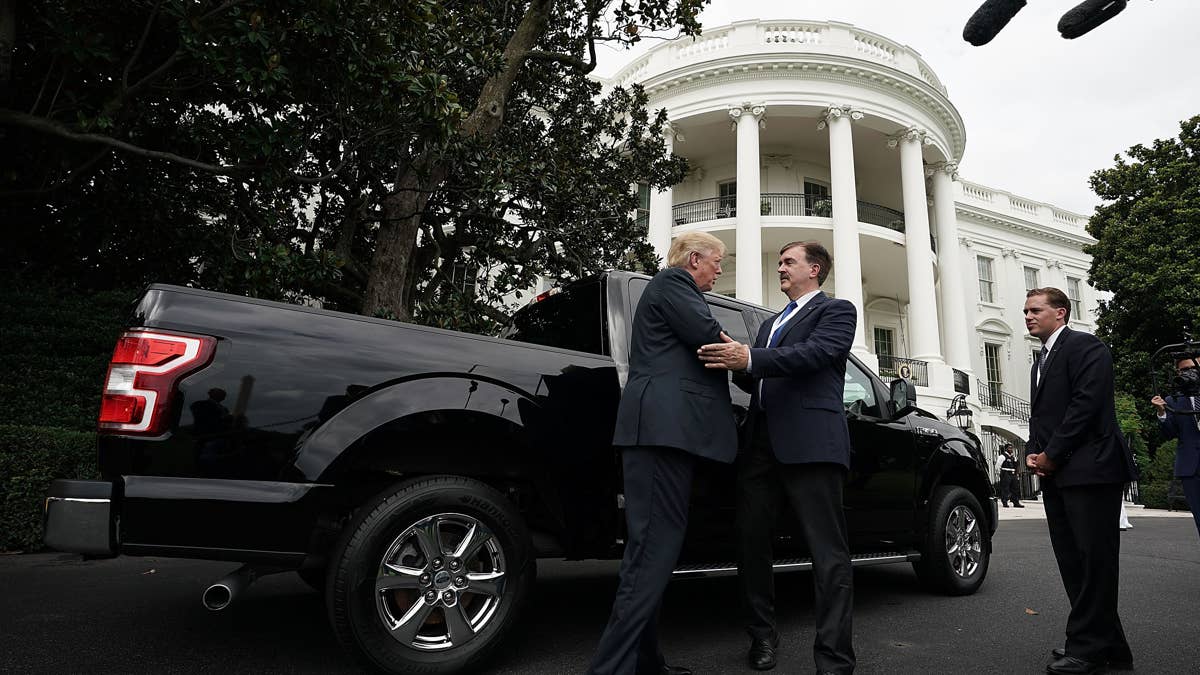
According to Reuters, Trump’s Transportation Secretary described the move as the introduction of “a common-sense fuel economy standard.” Speaking in Michigan, Duffy added, “We want Detroit to build cars that Americans want to buy, not cars that Democrats want Washington to build.” The NHTSA’s recent proposal suggests revising down 2022 fuel economy standards and then gradually raising them by between a quarter of a percent and half a percent annually, a stark contrast to Biden’s aim of increasing gas mileage efficiency by 8 percent a year for 2024 and 2025, by 10 percent for 2026, and by 2 percent annually each following year until 2031. If the new proposal goes through, the NHTSA estimates it will make new cars $930 cheaper each, but fuel consumption will rise by roughly 100 billion gallons through 2050. By the same milestone, fuel spending is expected to rise by $185 billion, and carbon dioxide emissions will swell by 5 percent. This will have obvious pros and cons for consumers, but it’s tough to see any drawbacks for automakers.
Not only will they have easier targets to achieve, but a retroactive update to 2022 fuel economy standards would put extra compliance credits in the pockets of automakers that achieved higher-than-required efficiency in prior model years. In other words, while contemporary combustion efficiency will need to improve at a slower rate than automakers’ engineers and accountants had planned for, carmakers also won’t need a steep efficiency curve in the future because they’ll have extra brownie points in the bank. It’s basically free money, and as they continue to innovate in Europe, where tighter Euro 7 emissions will come into effect this November, meeting U.S. targets won’t even require a second thought.
Autoblog’s Take
Pexels
Making cars cheaper is something nobody is against, as long as it doesn’t negatively impact public safety, and widening the goalposts for combustion cars will have a profound impact in both areas. The rate of progress in the electrified powertrain space is hard to ignore, and it applies to cost, weight, and efficiency; trickle-down engineering is happening at a more rapid pace than ever. Moreover, stunting the previous administration’s achievements as the world leader in clean energy makes the hundreds of millions of dollars already invested by taxpayers in these efforts more wasteful than was perhaps necessary, and the NHTSA concedes that this will have a measurable effect on emissions, which contribute to all sorts of negative outcomes.
The best move for the public would be somewhere between the two extremes. In this writer’s humble opinion, pushing EVs so aggressively, especially before more environmentally friendly mineral solutions were as prevalent as they are today, and especially when the vast majority of Americans couldn’t hope to afford most of the EVs being offered, may have suggested an ignorance of economic realities. Still, it did improve infrastructure and motivated many other countries to take similar measures. By the same token, when the U.S. debt is in the trillions, making cars less efficient than they might have been could benefit the economy, but it may also have harmful environmental effects down the line, no matter how hard California tries to stem the tide. In a nutshell, pushing too hard in either direction is imprudent, but that’s the nature of politics in the 21st century, and it’s compromising both Americans’ economic buying power and environmental health.