Single-Rotor-Rotary Engine
In its standard form, the Mazda 13B Rotary engine has two rotors that make a distinct ‘brap-brap’ while at idle, and a 9,000 RPM scream on full tilt. It’s a two-stroke dream of an engine with a cult following, and the most reliable rotary that Mazda has built so far. The loyal ones are a different breed, and their dedication runs deep when it comes to rebuilding, maintaining, and improving their rotor motors.
Rob Dahm is one of those guys who make crazy builds. Just a while back, he built a 12-rotor motor with a goal of 5,000 horsepower. So what’s next? 14? 16? 18? Well, how about a single-rotor rotary engine?
The Most Modular Engine Ever?
When it comes to building a rotary engine, it’s almost like a Lego kit. With enough know-how, you can theoretically build an engine with any number of rotors. Common rotor counts include 2, 3, or 4, but rarely do you see exercises in excess, like a 12-rotor engine. On the other end of the spectrum, how about a minimal setup? One rotor, a lightweight chassis, and a turbocharger.
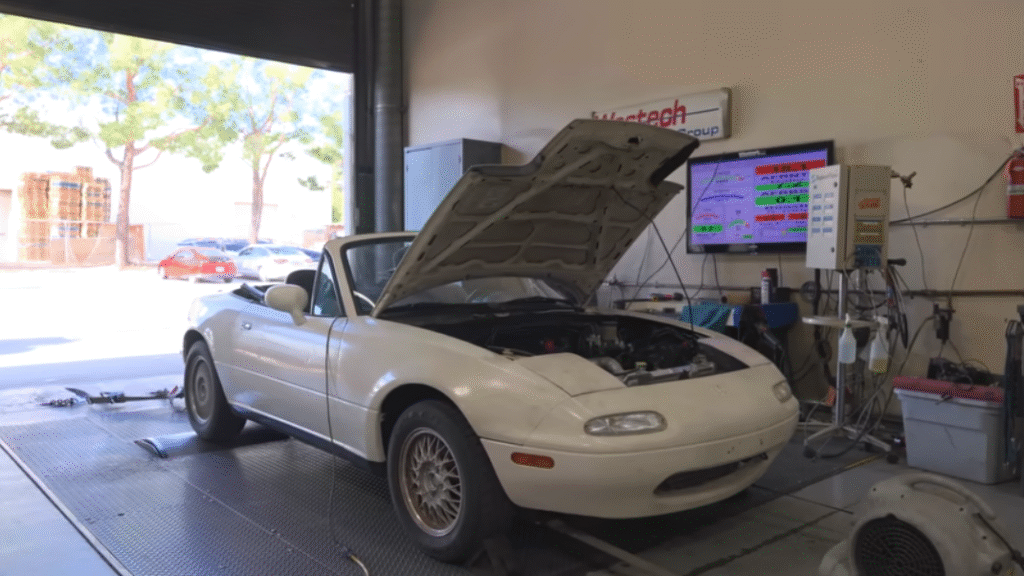
This Miata has been built from the ground up by Rob. It features a single-rotor, single-turbo setup that we assume displaces about 600 cc of air. It’s a tiny engine, but it makes 1.5-liter power. Recently, his build was completed enough to head to the dyno for some tuning and a few pulls, and it did not disappoint, making 155 horsepower and 136 lb-ft of torque.
Not Done Yet
The engine was fashioned from billet aluminum, and it weighs about 70 pounds. In theory, it should be easy to build something so simple, but just like any project car, there are always problems that come up. In his Turbo One Rotor Miata Playlist on YouTube, you can see how Dahm went through the motions.
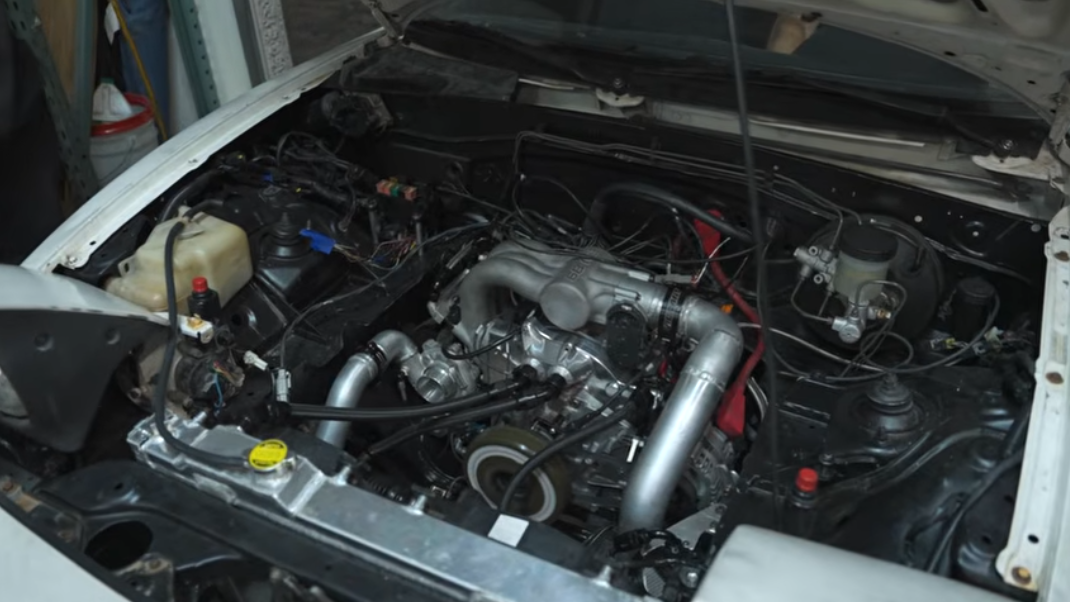
On its side, the engine comes with an internally wastegated Garrett GBC-22 turbocharger and a 3D-printed intake manifold. Due to the oddity of a single-rotor setup, Dahm expectedly had to go the custom route for this build. During his single-rotor build series, he’s experienced quite a number of problems, from running too rich (too much fuel) to refining the powerband and how the engine runs. It works, but again, it’s a project, so it’s far from perfect.
It’s interesting to note that Dahm’s Miata made 155 horsepower and 136 lb ft of torque, even with those issues, when he took it to the dyno. Once all those problems are smoothed over, we can expect even more power from this engine. Currently, the goal is to run it at 20 pounds of boost, but the car’s experiencing some boost creep, with spikes up to 22 pounds that are blowing oil straight into its catch can.
I’m confident that this will be one of the more “relatable” rotary builds that Dahm makes. While rotaries are already an exotic piece of automotive history for many enthusiasts, this stands out as one of the more interesting and unique setups in a while. Perhaps there’s a joke in there about the fuel crisis and the need to downsize from 12 rotors and three turbos to a single rotor and single turbo, but I’ll let it be. I’m happy to finally hear what a single-rotor rotary engine sounds like after getting earfuls of 2, 3, 4, and 12-rotor engines over the years.