Navigating The EV Era
Automakers today have a wide range of powertrain options to choose from, including internal combustion engines, hybrids, plug-in hybrids, range-extender electric vehicles (EREVs), and battery-electric vehicles (BEVs). Selecting the right strategy can significantly influence a company’s success or failure, as seen in automakers such as Stellantis, which has incurred billions of dollars in EV-related write-downs.
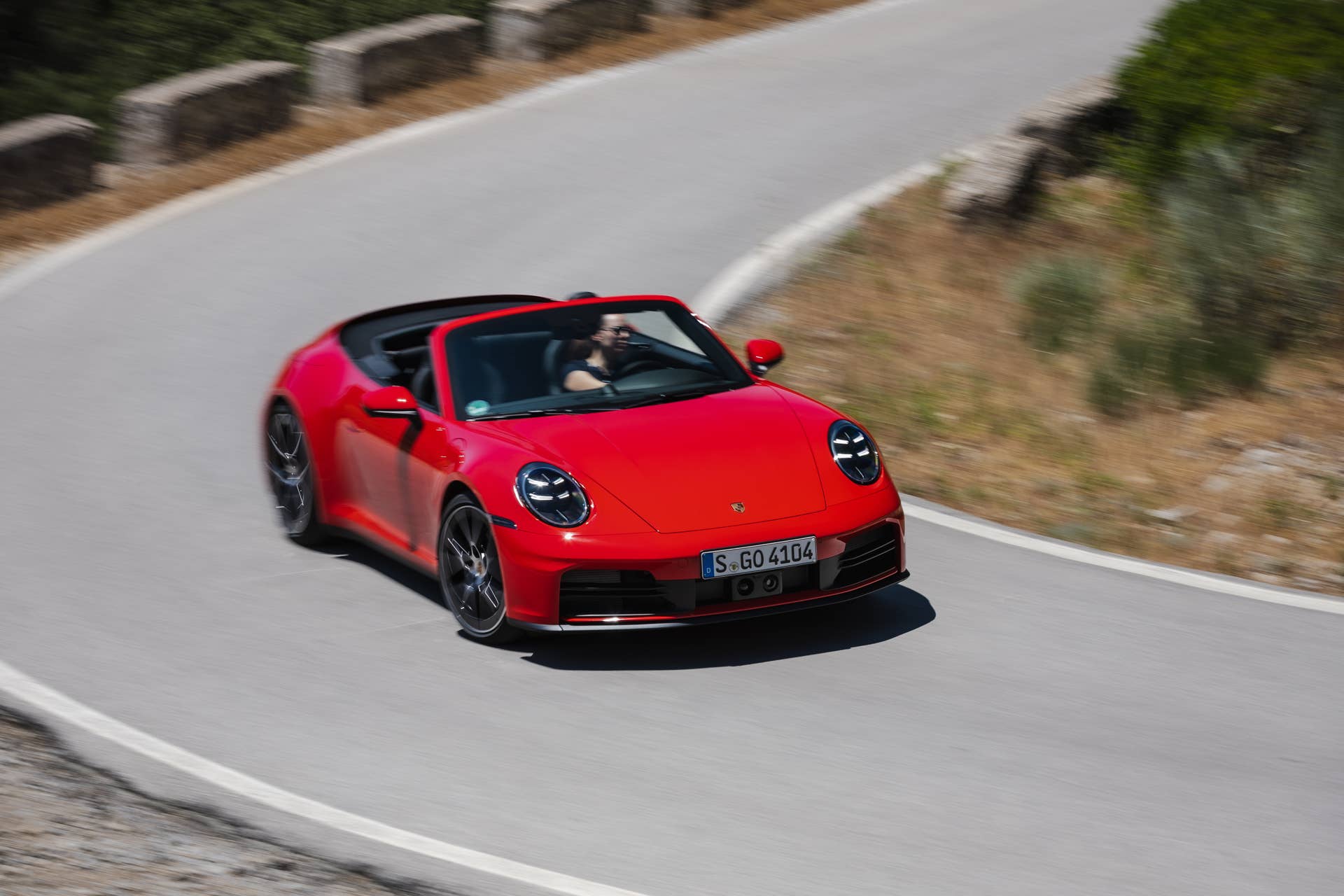
Porsche is also facing challenges in its electrification journey, with the all-electric 718 running into delays. There is still plenty of uncertainty, but as long as the 911 avoids going fully electric, enthusiasts may agree that the brand’s core identity remains intact. Now, the automaker appears to be done juggling separate electrification paths and is instead exploring a way to combine them into one powertrain, as suggested by a patent discovered by CarBuzz.
Porsche
The Best Of All Worlds?
This patented powertrain would theoretically allow Porsche to deliver a car capable of operating as an EV, EREV, or hybrid. That’s because the engine features two distinct banks: one focused on performance and the other on efficiency. Depending on driving conditions and power demands, either bank can operate independently, both can work together, or the engine can remain off entirely.
Unlike the cylinder deactivation systems found in many modern engines, including Ferrari’s V12, the two banks in Porsche’s patent feature different internal components. The performance bank uses conventional internals, while the efficiency-focused bank incorporates ceramic bearings and one fewer piston ring to reduce friction.
In practice, an EV-like driving mode would mean the engine remains off. An EREV-like mode would see the efficiency-focused bank running to generate electricity and recharge the battery. For more spirited driving, the entire powertrain would come to life, with the performance bank engaging and the engine sending power to the wheels.
Porsche
The Weight Of Ambition
One apparent concern, however, is weight, which is particularly important for Porsche given the brand’s reputation for balanced handling. A battery large enough to provide meaningful EV range would likely account for much of the added mass, while the combustion engine and electric motors would add even more.
But then again, this is only a patent, so Porsche is not necessarily committing resources to bring the concept to production. Still, it highlights how automakers are trying to navigate the electrification era, as emissions regulations continue to tighten and compliance becomes increasingly challenging.
As of this writing, Porsche’s electrified lineup includes hybridized versions of the 911, Cayenne, and Panamera, as well as the all-electric Taycan, Macan, and Cayenne.
Porsche