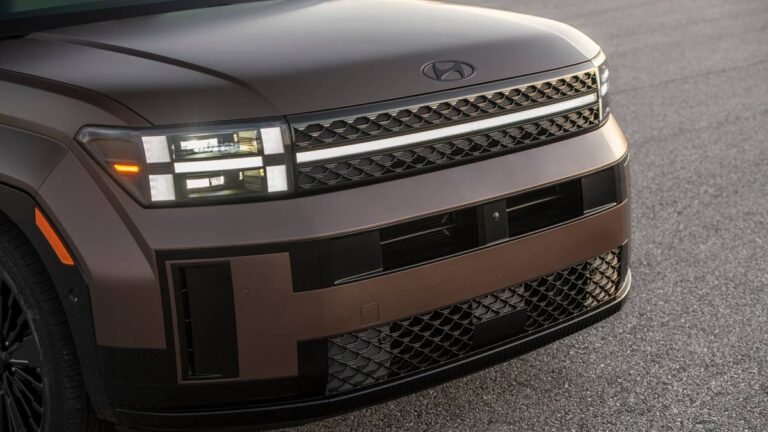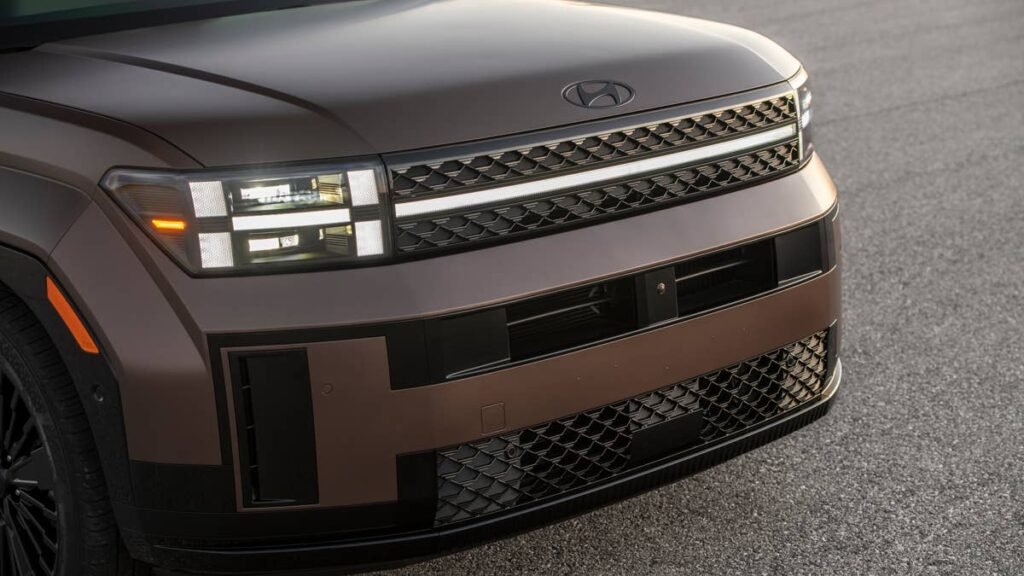
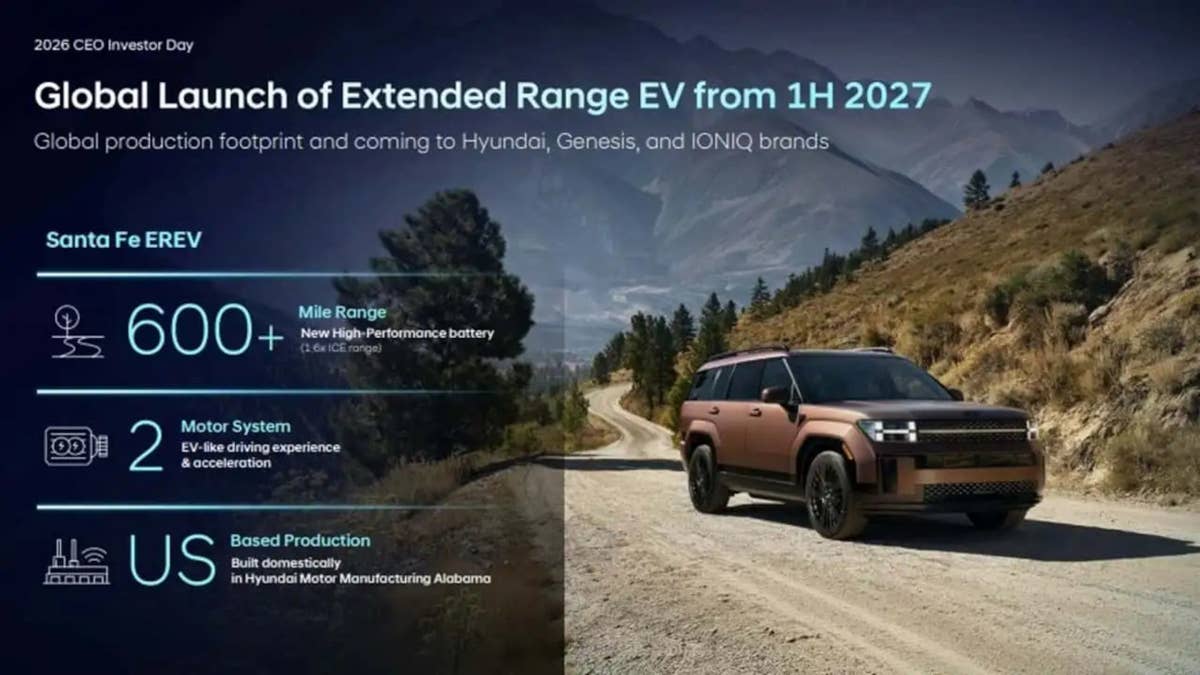
Hyundai has just made several exciting announcements during its CEO Investor Day, from a slew of new performance vehicles to intentions for its upcoming mid-size pickup to be built in America, but there’s still more to discuss. The Korean automaker has also revealed that it will soon enter the extended-range electric vehicle (EREV) market with two models, one of which will be the new Santa Fe, set to arrive in the U.S. next year with more than 600 miles of driving range.
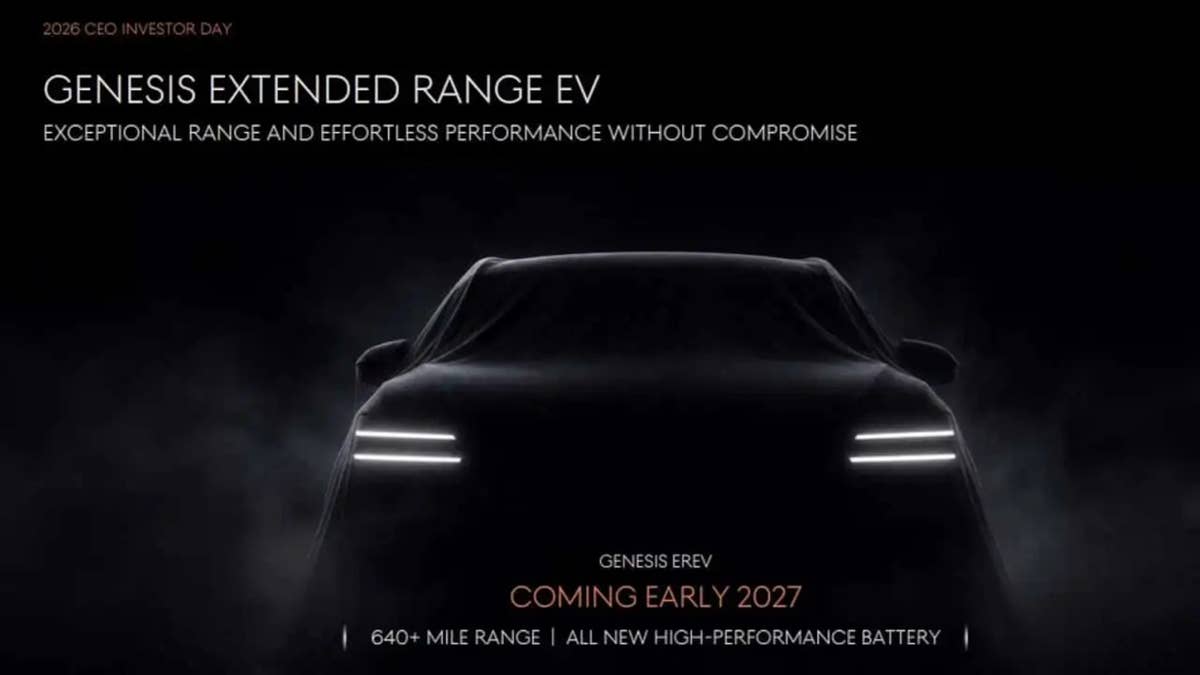
The other model looks like an EREV version of the Genesis GV80 SUV, which Hyundai says will be given an “all-new high-performance battery” with even more range, achieving over 640 miles before the gas tank and battery need replenishing. Of course, Hyundai isn’t stopping there.
Hyundai EREV Tech To Be Offered In Multiple Segments
Hyundai
The Santa Fe EREV will be built in Alabama alongside the regular SUV, and Hyundai claims that the battery will have half the capacity an all-electric Santa Fe would have required, which means the battery won’t encroach on space or impact weight too much. The Santa Fe EREV will have two electric motors, likely combining across both axles to provide AWD since the engine probably won’t drive the wheels directly (EREVs usually use the combustion engine as a generator to charge the battery, with no mechanical connection to any axle). Hyundai claims an “EV-like driving experience and acceleration,” so we should get decent horsepower and torque figures. Interestingly, Hyundai’s presentation showing all its current and future powertrains indicates that the EREV system will be offered across all market segments, potentially even entry-level models. These will obviously get even smaller batteries, since they won’t need as much range.
Autoblog’s Take
Hyundai
Hyundai’s ability to put a decent battery with competitive range comes from its development of all-electric vehicles, and these new EREVs will doubtless further advance the technology. Furthermore, they’ll provide buyers yet another electrified option (a conventional GV80 hybrid was recently launched) without having to deal with the range anxiety concerns of a pure-electric vehicle. VW-backed Scout Motors also realized early on that all-electric vehicles are still tough for many to consider, pivoting to focus on EREVs, and Hyundai’s announcement shows it understands the same stumbling blocks. By putting the somewhat novel tech in a familiar package or two, Hyundai and Genesis will be able to get more buyers to have an EV-like experience, which may foster EV sales later down the line, while simultaneously keeping the brand adaptable to whatever global emissions requirements demand. Price, weight, and space will be critical, but Hyundai knows that, and we expect these EREVs to uphold the brand’s high standards.
Hyundai