The Cost of Transition
General Motors may have taken a multibillion-dollar hit to its electric-vehicle strategy, but the company remains committed to sustainability. In fact, GM has secured enough renewable energy to match 100% of its electricity use across all U.S. facilities in 2025, making it the first U.S. automaker to do so.
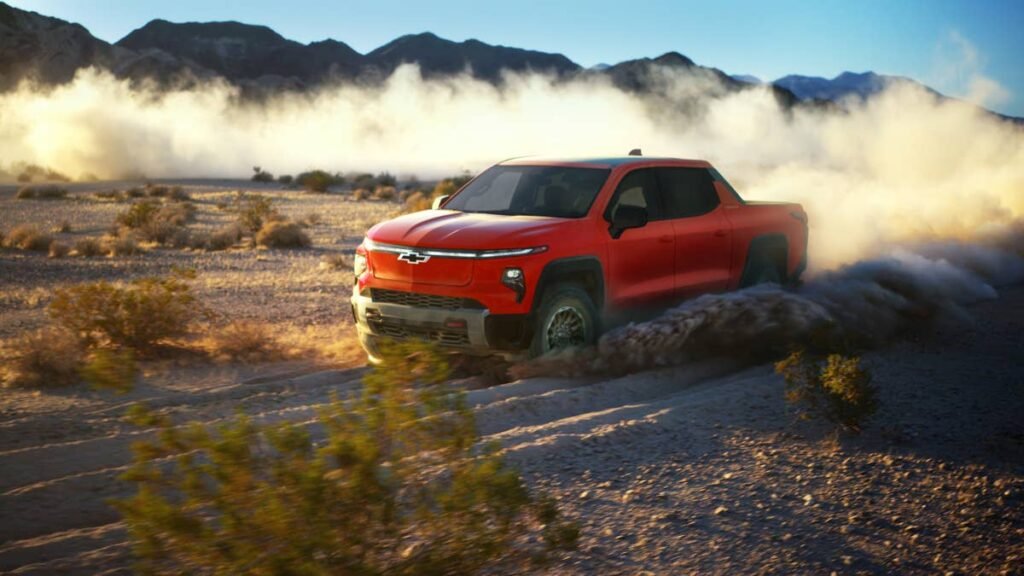
That does not mean every GM facility runs solely on renewable electricity in real time. Rather, the company says it contracts enough clean energy from sources such as solar and wind to match its annual U.S. electricity use on a 1:1 basis. It matters because the company can support vehicle production with cleaner energy while reducing climate impact. Other benefits include strengthening its EV narrative with models like the Chevrolet Silverado EV and limiting exposure to energy price volatility.
Inside the Energy Strategy
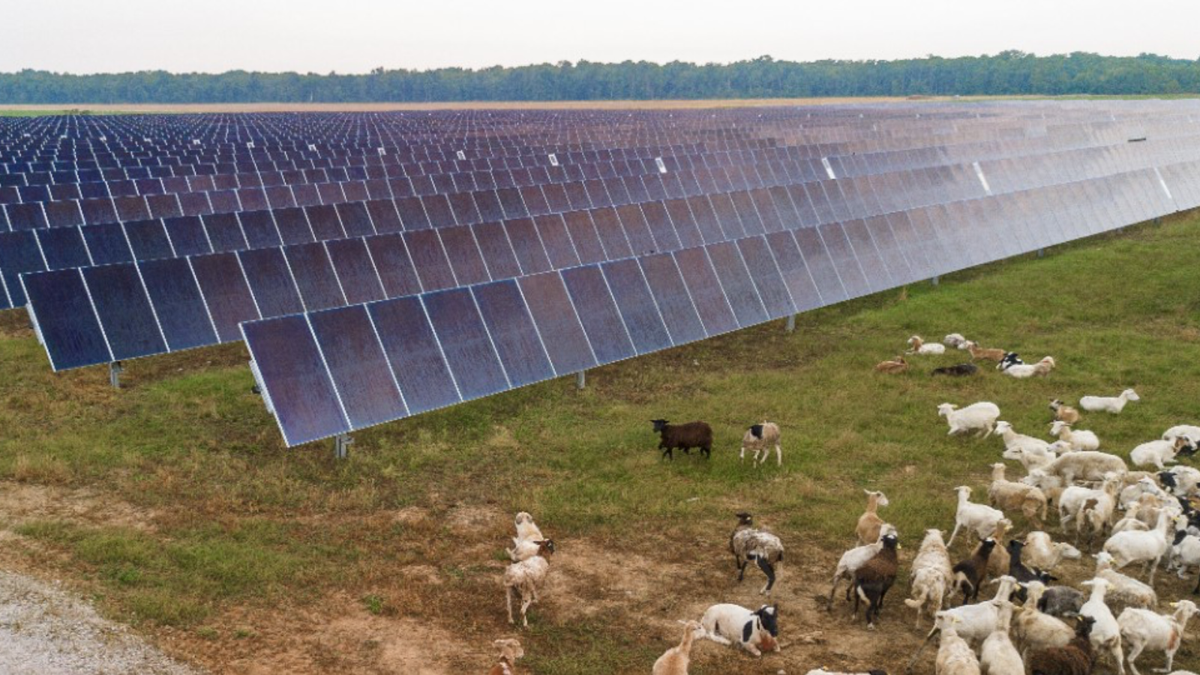
The feat was achieved by GM’s diverse mix of renewable energy sources. In 2025, 40% came from clean-energy utility programs, while 37% was sourced through virtual power purchase agreements. The smaller remaining share came from unbundled renewable energy credits (14%), default delivered renewable energy (8%), and on-site generation and landfill gas (1%).
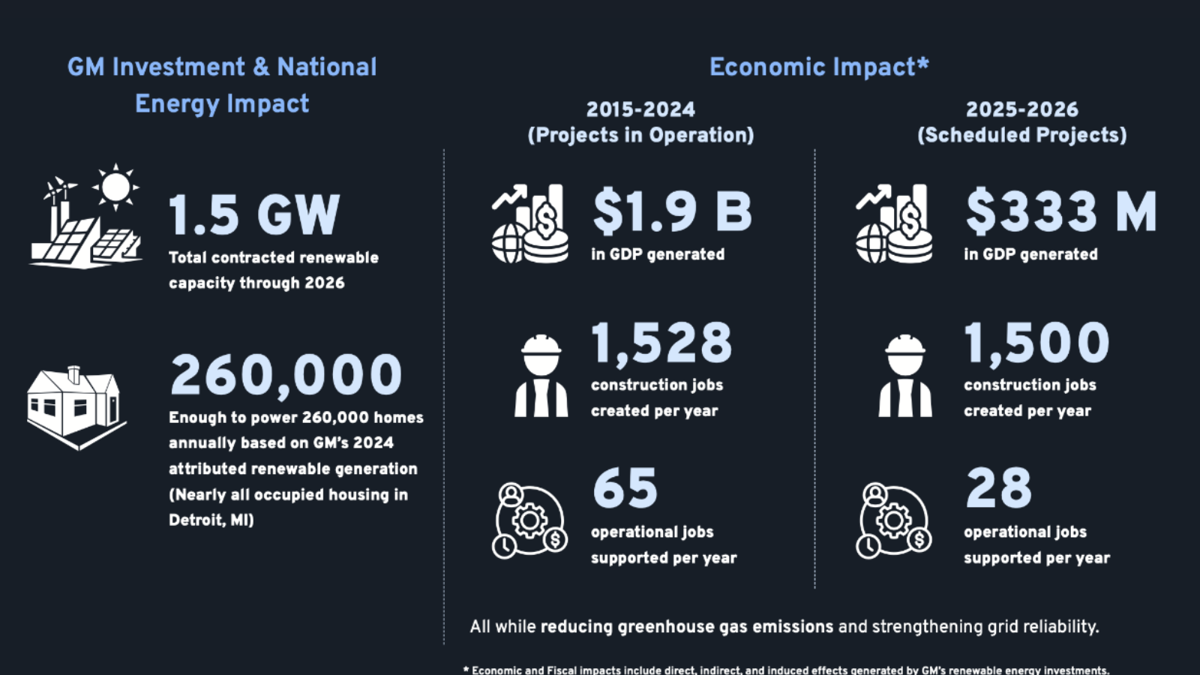
As a result, GM has reduced operational emissions by 52% since 2018. It has also contracted 1.5 GW of renewable energy capacity through 2026, enough to power 260,000 homes annually. In terms of economic impact, the company’s renewable energy investments generated $1.9 billion in GDP, created 1,528 construction jobs per year, and supported 65 operational jobs per year from 2015 to 2024.
Meanwhile, projects scheduled for 2025 to 2026 are expected to generate $333 million in GDP.
Expanding the Mission
General Motors says its “zero-emissions journey starts before an EV customer ever hits the accelerator.” The company operates an EV plant in Michigan called Factory Zero, which is intended to drive renewable energy adoption across the automotive value chain through programs such as Transform: Auto, a commitment it is encouraging suppliers and partners to join.
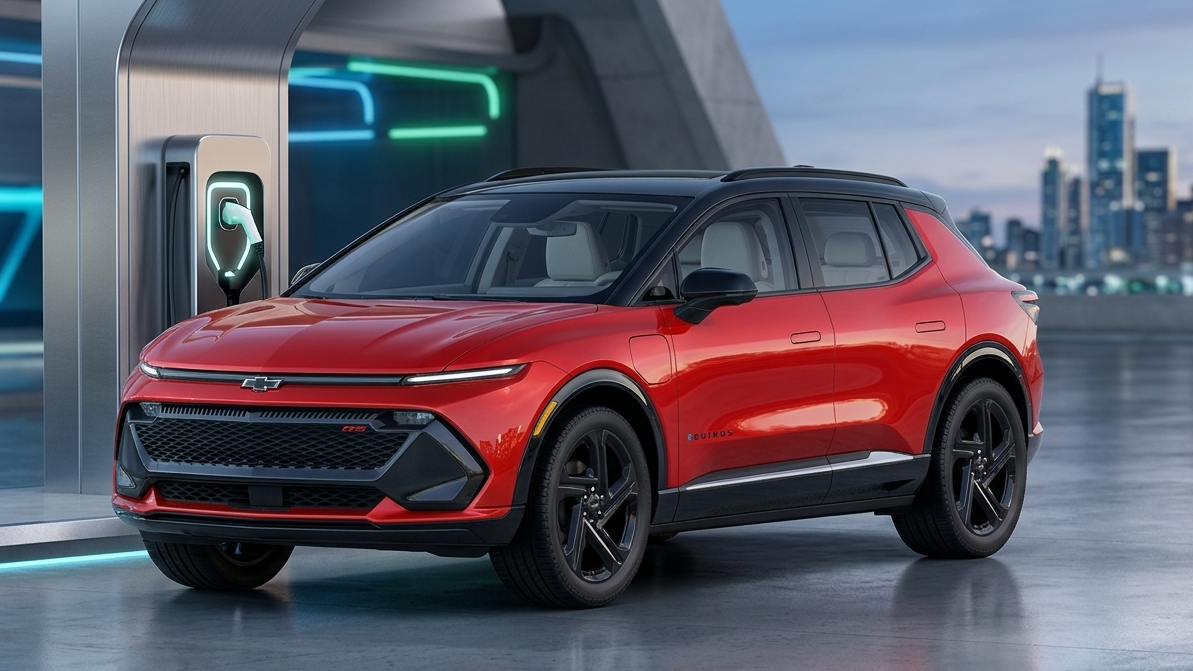
GM’s Spring Hill, Tennessee, plant, which builds EVs including the Cadillac Lyriq and Vistiq, is also part of that commitment. However, not all EVs are produced in the U.S. The Chevrolet Equinox EV and Blazer EV, along with Cadillac’s entry-level EV, the Optiq, are built at its Ramos Arizpe Assembly plant in Mexico.
Whether savings from more stable energy costs and reduced emissions-compliance spending will improve vehicle affordability remains unclear, but it’s a notable step forward in sustainability.
Gemini