CONS ›› Expensive, heavy, lacks premium feel
The Ioniq 5 was Hyundai’s first EV built on its 800-volt eGMP architecture and immediately proved the South Korean brand could build a world-class electric car.
Although its bold design initially captured headlines, the Ioniq 5 backed up the design with substance, launching as a comfortable, capable, efficient, and practical EV a shopper might genuinely consider over a Tesla Model 3 or Y. It was updated in 2024 and now includes an N Line variant, which we recently tested for several days.
Review: The Hyundai Ioniq 5 N Is A Ballistic Missile That Redefines EVs
While it doesn’t deliver the same kind of breakneck performance as the fully-fledged Ioniq 5 N, the N Line proved itself to be a good all-rounder that also loves having a little bit of fun. However, it is a hard sell compared to some of the newer competition.
QUICK FACTS
SWIPE
Photos Brad Anderson/Carscoops
Four versions of the Ioniq 5 are available in Australia, starting with the base model, the Elite, the N Line Premium we tested, and the Ioniq 5 N. In the US, there are six models to choose from, but there is no N Line option; instead, there is the slightly more rugged XRT model.
At the time of writing, the base Ioniq 5 was available Down Under for AU$70,990 (US$49,400) including all fees as part of a limited-run offer available through the end of December. The Elite adds AU$5,000 (US$3,480) to this figure, bringing the price tag up to AU$75,990 (US$52,270), while the Ioniq N Line Premium we tested is available from AU$86,990 (US$60,600). In the US, the Ioniq 5 is significantly cheaper, starting at just US$35,250 for the base SE Standard Range and topping out at US$59,900 for the 5 N.
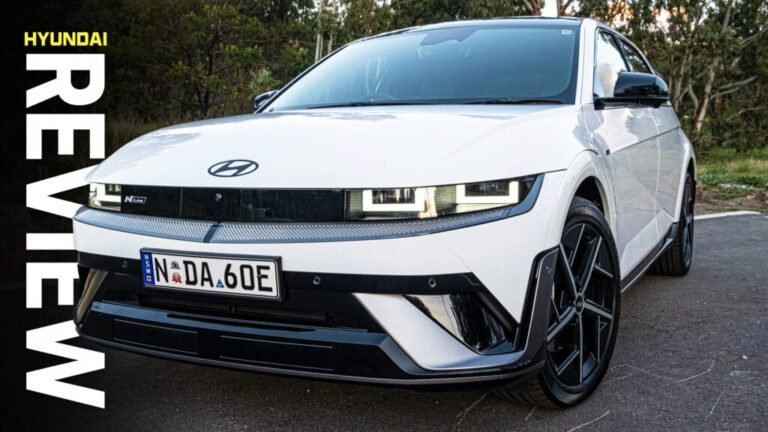
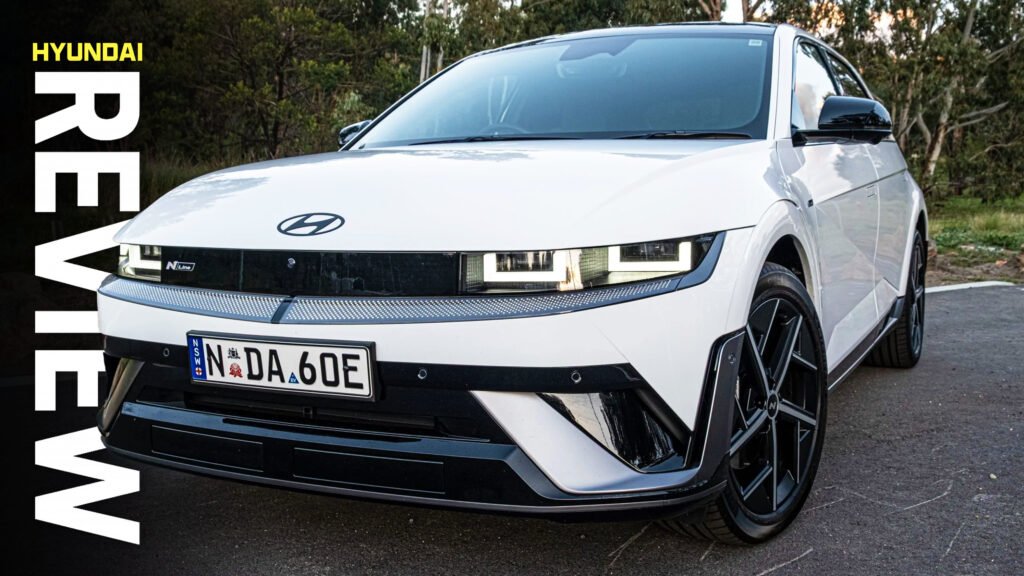
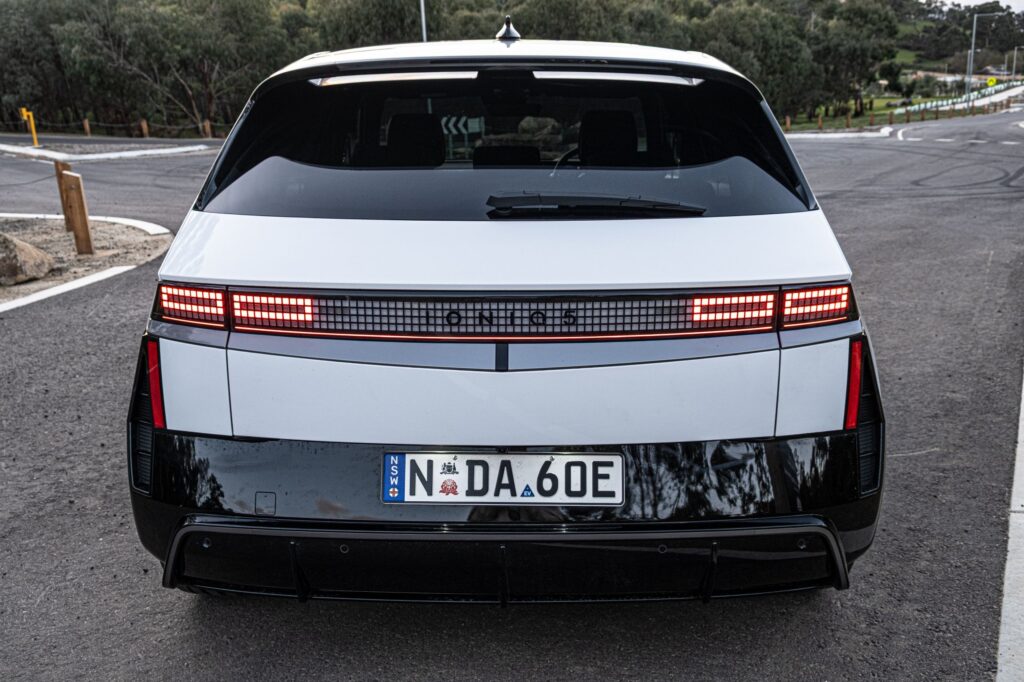
Like other Hyundai N Line-branded models, the Ioniq 5 N Line Premium borrows many design elements from a higher-end N model, namely the 5 N. It includes a similarly bold and aggressive front bumper, black rocker panels, and an edgy rear end with a large diffuser. It’s a legitimately sporty-looking vehicle and does a nice job of standing out from lesser versions.
Sporty And Spacious
Photos Brad Anderson/Carscoops
While the Ioniq 5’s exterior design hasn’t changed much since its introduction, Hyundai made a surprising number of changes in the cabin as part of the mid-cycle facelift a couple of years ago.
One of the most intriguing features of the original Ioniq 5 was the sliding center console. Unfortunately, the facelift removed it and replaced it with a more conventional unit with redesigned controls for seat heating and ventilation, two cupholders, and a smartphone charger. In the cabin of the N Line, several sporty accents give it an extra level of theater.
The steering wheel is almost identical to what’s found in the 5 N, albeit without some of the extra performance buttons. There’s also a red ring around the Start/Stop button, red trim on the dashboard, and red contrast stitching across the door panels, steering wheel, and seats. Speaking of the seats, they’re trimmed in a mix of black leather and Alcantara and offer good support.
Photos Brad Anderson/Carscoops
As with the rest of the Ioniq 5 range, the N Line includes a pair of 12.3-inch screens and wireless Apple CarPlay and Android Auto. The Ioniq 5 also continues to feature a separate climate control panel, something that has become increasingly rare in the industry. Sadly, new Hyundai models, starting with the latest-gen Elantra and Tucson, are adopting tablet-like central screens with the climate controls, so we should appreciate this design while we can.
Sitting inside the Ioniq 5, it’s hard not to be impressed with just how open and spacious it feels. The flat floor plays an important role here, maximizing space up front and leaving a large area in front of the center console for storing items like small backpacks. The floor is flat at the rear, too, and there’s also a large panoramic glass roof, but it doesn’t open.
Read: Hyundai’s Ioniq 5 Is Selling Better Now Than It Did With The $7,500 EV Credit
Sticking with the second row, it’s been well-thought-out, and legroom is excellent, owing to the 3,000 mm (118.1-inch) wheelbase. A somewhat strange omission is the lack of a dedicated climate control panel, so rear passengers will have to ask the driver to change the temperature or fan speed.
For all the practicalities and space of the Ioniq 5 N Line, it doesn’t feel like a luxurious SUV from behind the wheel, or while in any of the passenger seats. Compared with some of the competition, particularly models from China, Hyundai’s cabin doesn’t quite meet the standard we’ve come to expect at this price point.
Photos Brad Anderson/Carscoops
A Fun, Warm SUV
Although the Ioniq 5 N Line is nowhere near the same animalistic performer as the 5 N, it is still surprisingly quick, offering more than enough power to put a smile on your face. Crucially, the N Line remains reasonably efficient.
As part of the facelift, the Ioniq 5’s 77.4 kWh battery pack was replaced by a larger 84 kWh unit. Base models pair this pack with a single rear electric motor rated at 168 kW (225 hp) and 350 Nm (258 lb-ft). The N Line has a pair of electric motors delivering a combined 239 kW (321 hp) and 605 Nm (446 lb-ft) of torque.
Grip is exceptional, and acceleration is strong. The run to 100 km/h (62 mph) takes 5.1 seconds, roughly 1.5 seconds behind the brutal 5 N. Even beyond highway speeds, the Ioniq 5 N Line pulls strongly.
It also handles surprisingly well, delivering plenty of grip even though the steering isn’t particularly communicative. Of course, those who own an Ioniq 5, or are looking to buy one, probably won’t be driving around enthusiastically all the time, instead going about things in a more sedate way. The N Line performs well in this regard, too, although it may be a little too hard-edged for some.
Read: Good News, There’s A Cheaper Way Into Hyundai N Coming, Plus A RWD Surprise
While the Ioniq 5 N Line does a solid job of hiding its 2,190 kg (4,828 lbs) curb weight, it still feels heavy. To give it a slightly sportier feel than a standard model, Hyundai tuned the suspension to ride a little firmer. It’s not uncomfortable by any means, but it’s definitely firmer than some other electric SUVs on the market. There’s no way to adjust the ride either, as the N Line doesn’t have adjustable dampers like the full-blown N model, which is a shame.
Photos Brad Anderson/Carscoops
Obviously, compared to that car, one clear advantage the N Line has is efficiency. Hyundai quotes a combined energy efficiency figure of 18.1 kWh/100 km and a WLTP range of 495 km (307 miles). I ended up slightly outperforming this number, returning 17.6 kWh/100 km, so it’s very much possible to extract more than 500 km (311 miles) from a charge in the Hyundai.
When you do need to stop, support for DC fast chargers with 350 kW charging and peak speeds of around 230 kW allows the Ioniq 5 N Line to charge from 10-80 percent in roughly 18 minutes. Hyundai was one of the first legacy brands to launch 800-volt EVs that support such quick charging, and it’s only now that some of the competition has started to catch up and, in some cases, exceed the Ioniq 5’s charging speeds.
Like other EVs from Hyundai, Kia, and Genesis, the Ioniq 5 N Line includes paddle shifters on the steering wheel to adjust the regenerative braking. I spent most of the week on one-pedal driving mode, aiming to maximize efficiency.
Photos Brad Anderson/Carscoops
Verdict
Just as it was when it was first introduced, the Ioniq 5 remains a solid EV, but the N Line price tag makes it a hard sell. When sales of the Ioniq 5 began in 2021, it had little competition, but Australia’s EV market has grown significantly over the past five years, as reflected in sales figures.
In 2024, 933 Ioniq 5s were sold in Australia, but that dipped to 626 last year and, year to date, to just 302. To put that into perspective, Tesla has sold 22,611 Model Ys so far this year, and BYD has delivered more than 15,064 Sealion 7s. The more premium Zeekr 7X is also performing far better than the Hyundai, with 7,424 sold year to date.
For as solid as the Ioniq 5 N Line is, it is starting to feel a little old and a little too expensive. Those committed to adding one to their driveway would probably be best off looking at the used market.
Photos Brad Anderson/Carscoops