ZF Brings Its Expertise to a New EV Powertrain
ZF Friedrichshafen isn’t new to the automotive industry. The German company is one of the world’s biggest automotive suppliers, producing everything from transmissions and drivetrain components to advanced vehicle systems and electrification technologies.
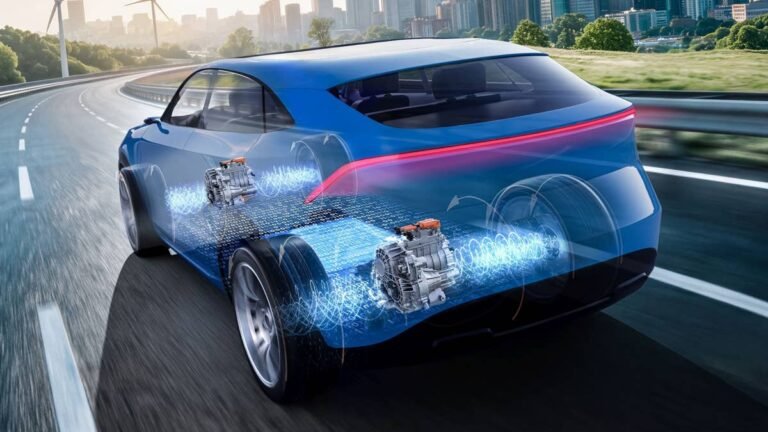
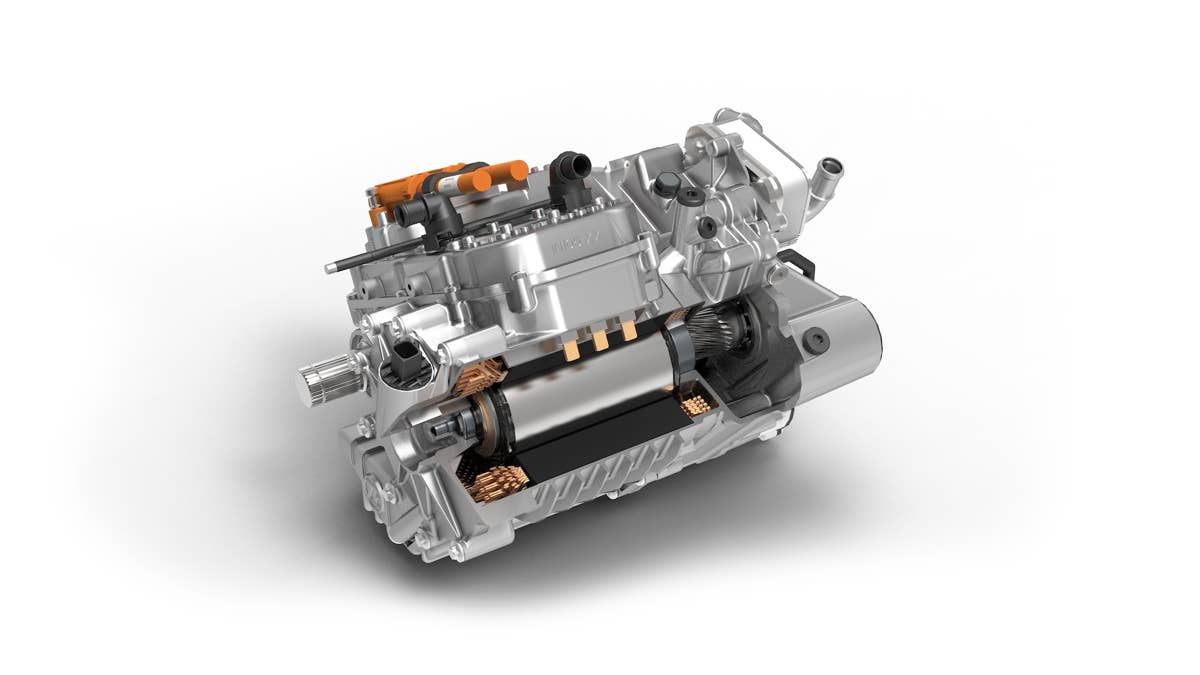
Now, ZF has announced the High Revolution Drive – a 3-in-1 electric powertrain that aims to shrink EV motors and shed some weight, all without giving up on power. The trick? Crank up the motor speed, shrink the hardware, and let clever gearing handle the torque delivery to the wheels.
A 30,000-RPM Motor With Less Weight
The High Revolution Drive doesn’t mess around – it can spin up to 30,000 rpm, which leaves the old ZF SELECT drive’s 18,000 rpm in the dust. To make all that speed useful, ZF uses a two-stage helical cylindrical gear setup with an 18:1 ratio, turning all those revs into real-world wheel torque. The version they’ve shown off puts out up to 200 kW (that’s 268 horsepower) and a hefty 3,500 Nm (2,581 lb-ft) of peak torque at the wheels.
ZF says this new setup is almost 25% smaller and lighter than its SELECT drive, and it uses half as much magnet material. That could mean lower costs and less worry about tricky supply chains. Even with all that extra speed, ZF claims efficiency stays strong at nearly 93%, right on par with the old system.
Noise and vibration were also development priorities with the new High Revolution Drive. ZF addressed these challenges by coordinating the motor, gearing, bearings, and gear-tooth geometry as one integrated system rather than optimizing individual components separately.
Production Target Set for 2030
The High Revolution Drive is built on ZF’s modular SELECT platform, so automakers won’t have to reinvent the wheel to use it in their next-gen EVs. The system’s flexible design means it can handle anywhere from 150 to 200 kW, and it plays nice with both 400- and 800-volt setups. Dropping some weight could also mean more miles between charges, depending on how the rest of the car is put together.
ZF says it’s already talking with automakers about High Revolution Drive, with production aimed for 2030. Sure, that’s a bit down the road, but building on a proven platform could speed things up and keep costs in check. For carmakers chasing lighter, more space-savvy EVs, ZF’s high-rev solution could be just the ticket – no need to just throw in bigger batteries.