An Old Dog With New Tricks
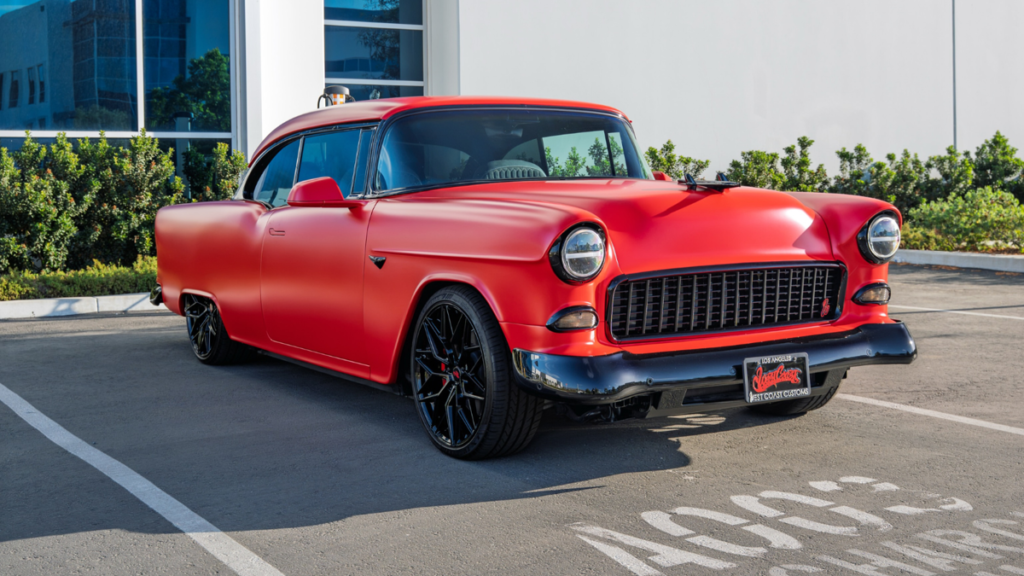
Car mods can be a form of self-expression. For instance, driving a classic Plymouth Superbird can suggest that the owner appreciates American muscle cars and prefers raw V8 power over modern powertrain technology. The same idea applies to a 1955 Chevrolet Bel Air that California-based West Coast Customs converted into an EV using a Tesla Model 3 platform.
The customer, Troy Swope, owns a green company and wanted to fill his entire garage with EVs. His decision to spend money converting a classic Bel Air suggests that he appreciates classic American car styling but also wants to be environmentally conscious. So, despite looking like an old-school car, it should drive like a modern one.
Making the Pieces Fit
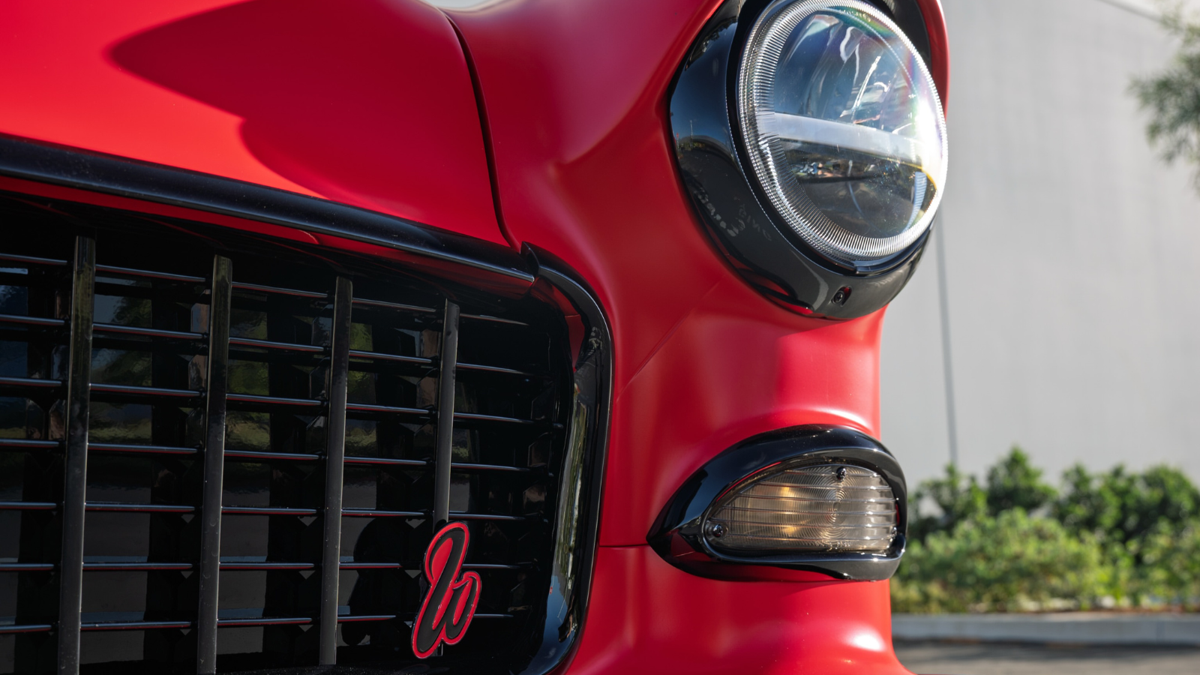
However, the builder encountered certain challenges, including the different wheelbases. To address that issue, the Chevy Bel Air’s rear wheel wells were extended to accommodate the Tesla Model 3 platform. The owner wanted to keep the red exterior, but the builder added a modern twist using a satin red finish with gloss black accents. The look is complemented by a set of 20-inch custom wheels.
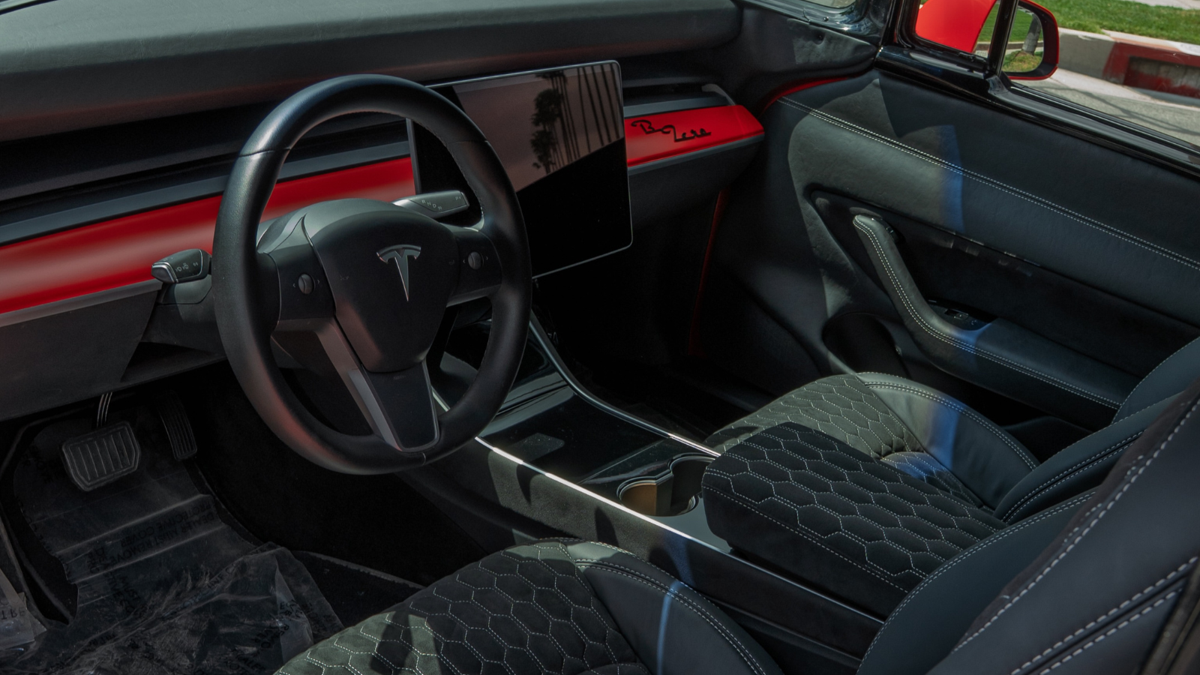
While the exterior is unmistakably a Bel Air despite some tweaks, the interior adopts the Model 3’s cabin with certain modifications. These include custom seats with hexagonal stitching patterns inspired by the Lamborghini Urus, Alcantara upholstery, and red accents.
One of the build’s most interesting features is its ability to charge at a Tesla Supercharger, where it would almost certainly stand out from the crowd. Beyond its distinctive appearance, charging compatibility is also worth noting, as Tesla can disable fast charging on vehicles classified as unsupported, including certain rebuilt or extensively damaged examples. The fact that this custom Bel Air can use a Supercharger makes the conversion more remarkable.
Other features of this build reportedly include functional Autopilot and self-parking capabilities, a fully custom trunk system, and updated LED headlights and taillights.
Two Worlds Collide
West Coast Customs didn’t disclose technical specifications, such as driving range. It could be affected by the use of the Chevy Bel Air body, which wasn’t originally designed to be as aerodynamic as the Tesla Model 3. This could increase aerodynamic drag, potentially resulting in a lower driving range. On the flip side, everyday drivability likely improved thanks to the use of a modern platform.
Purists from both camps might find reasons to dislike this build. But with the paying customer expressing satisfaction with the result, who’s to argue?