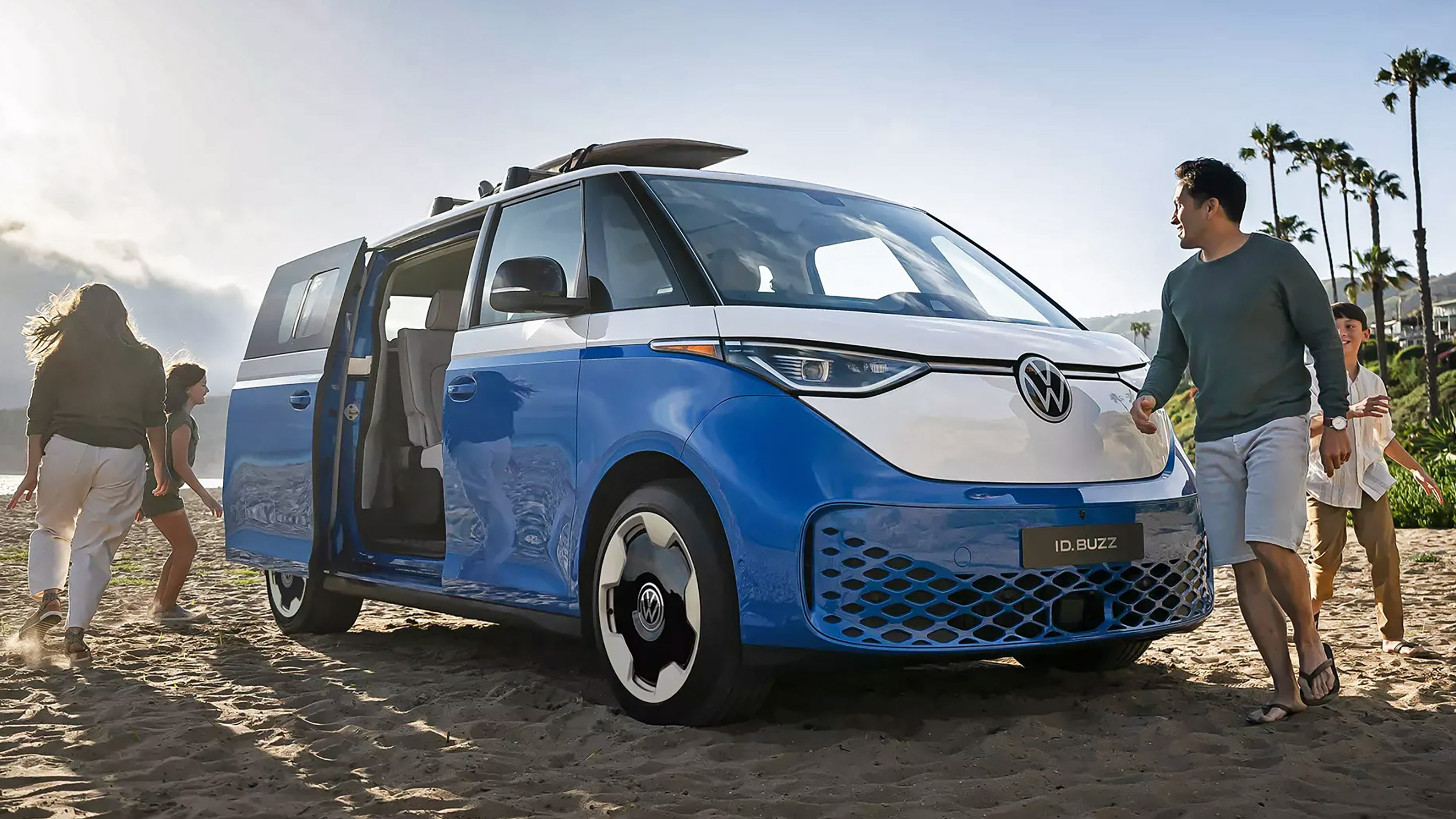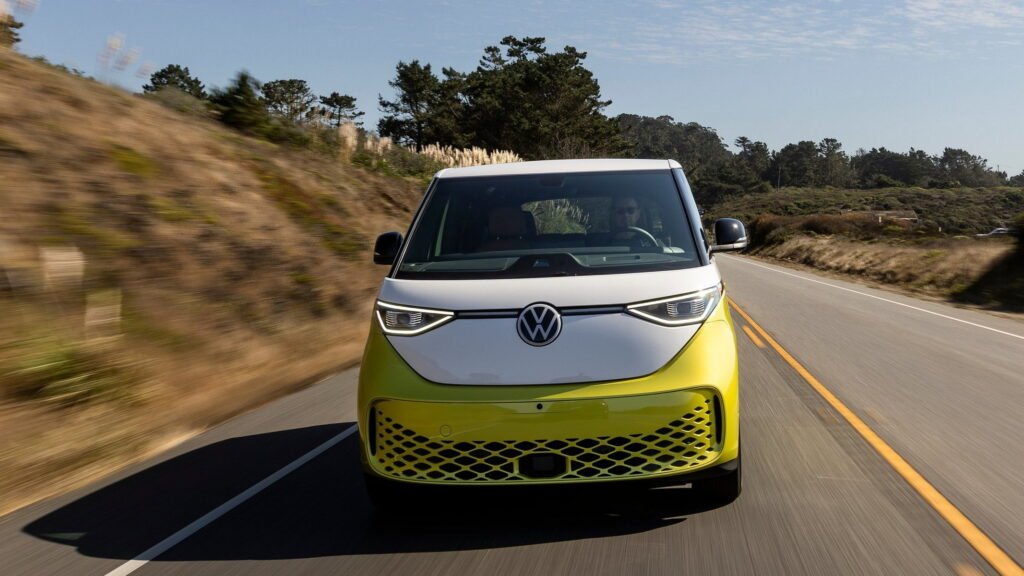
- VW’s ID. Buzz will skip both the 2026 and 2027 U.S. model years.
- The electric van is now expected in the first half of 2027.
- VW promises new software, vehicle-to-load capability, and a digital key.
Volkswagen’s ID. Buzz comeback has hit another delay. After skipping the 2026 model year in the U.S., the electric van was supposed to return this fall as a 2027 model. VW even announced the updated lineup in May, but it turns out that the plan was a bit too ambitious. Buyers will now have to wait until the first half of 2027 for a van wearing a 2028 model-year badge.
Volkswagen informed its U.S. dealers of the change on September 24, according to Automotive News. That means the Buzz will skip two consecutive model years here. That’s an awkward turn, as the vehicle only reached American showrooms in November 2024. That’s a remarkably long pause for a van VW spent several years hyping up before it even went on sale.
Read: VW’s First Electric California Is An ID. Buzz With A Bed
The company says the changes it previously announced for the 2027 van will carry over. Those include a camping-focused Tourer trim, two-tone paint, physical buttons on the steering wheel, and North American Charging Standard capability. The 2028 model will also gain updated software, vehicle-to-load functionality, and a digital key. The brand is pitching this as a way to bring several upgrades out at the same time.
“The 2028 ID Buzz brings together meaningful customer-focused enhancements in a single launch,” the automaker said. Notably, it didn’t mention exactly what caused the delay, nor did it share any other details such as pricing. Those pieces are key because, again, this isn’t the first shift in the timeline. VW told dealers in December of 2025 that it would skip the 2026 model year before the announcement in May.
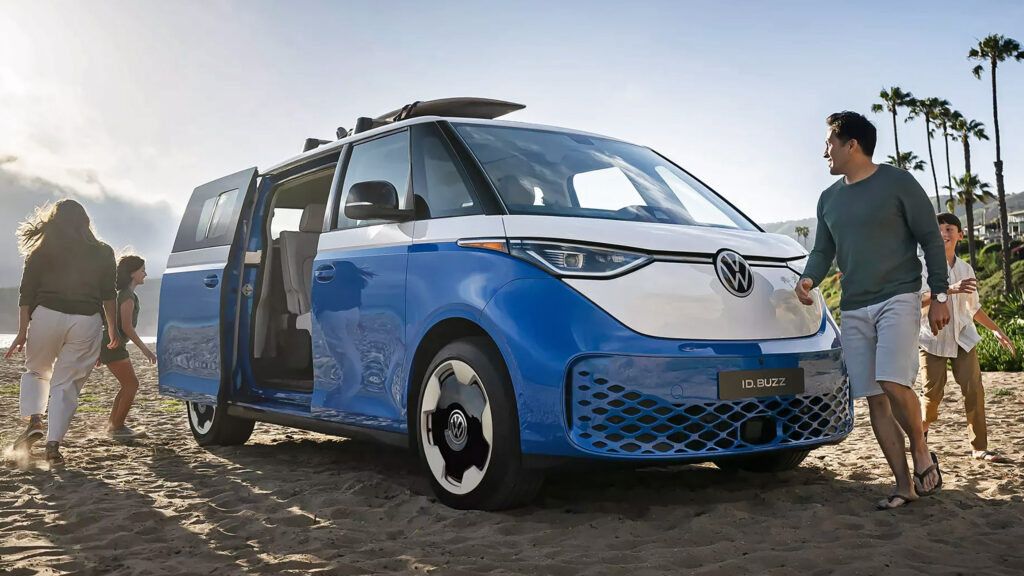
Let’s face it: this isn’t all that shocking given the industry pressures at play. Without a Federal EV tax credit, the ID.Buzz’s high price makes even less sense than it did with that discount. The van arrived some 20 years after VW initially teased the idea and did so with extremely limited range, limited trims, and a very high price. Those conditions led to just 6,140 sales during 2025 and 2,481 in the first half of this year. Now tariffs are no doubt also something VW has to consider.
That all said, it’s clear that the van isn’t dead. Americans will get what sounds like a significantly updated version in the not-too-distant future if VW can stay on track this time. Will the automaker manage to sweeten the deal so much that this big break turns out to be worth it for dealers and customers? Probably not if the price continues to climb.
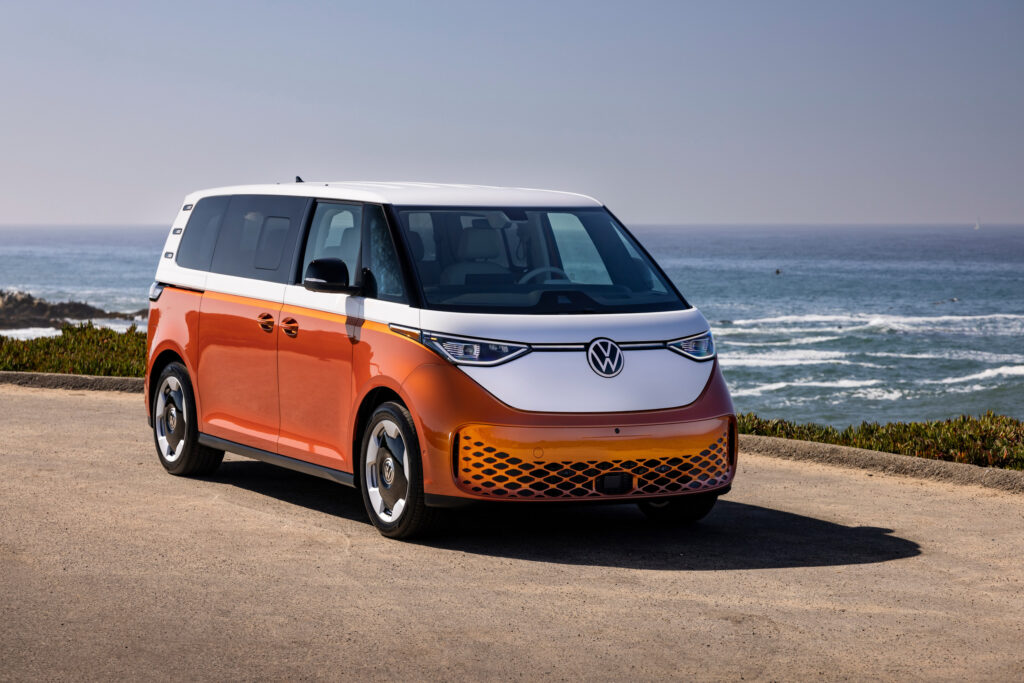
Credit: VW