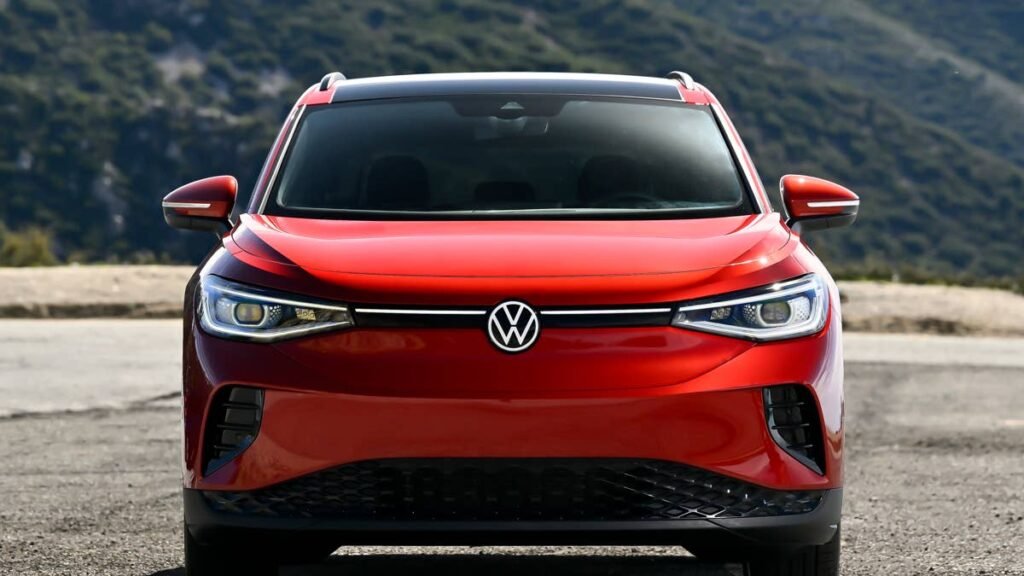
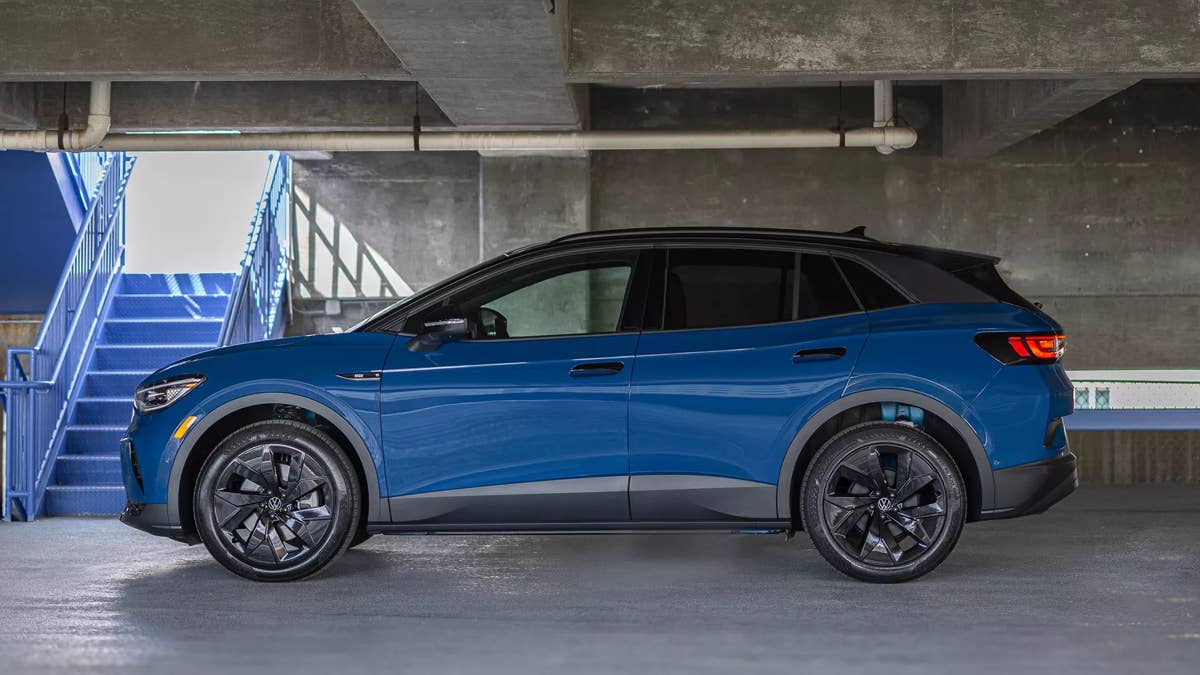
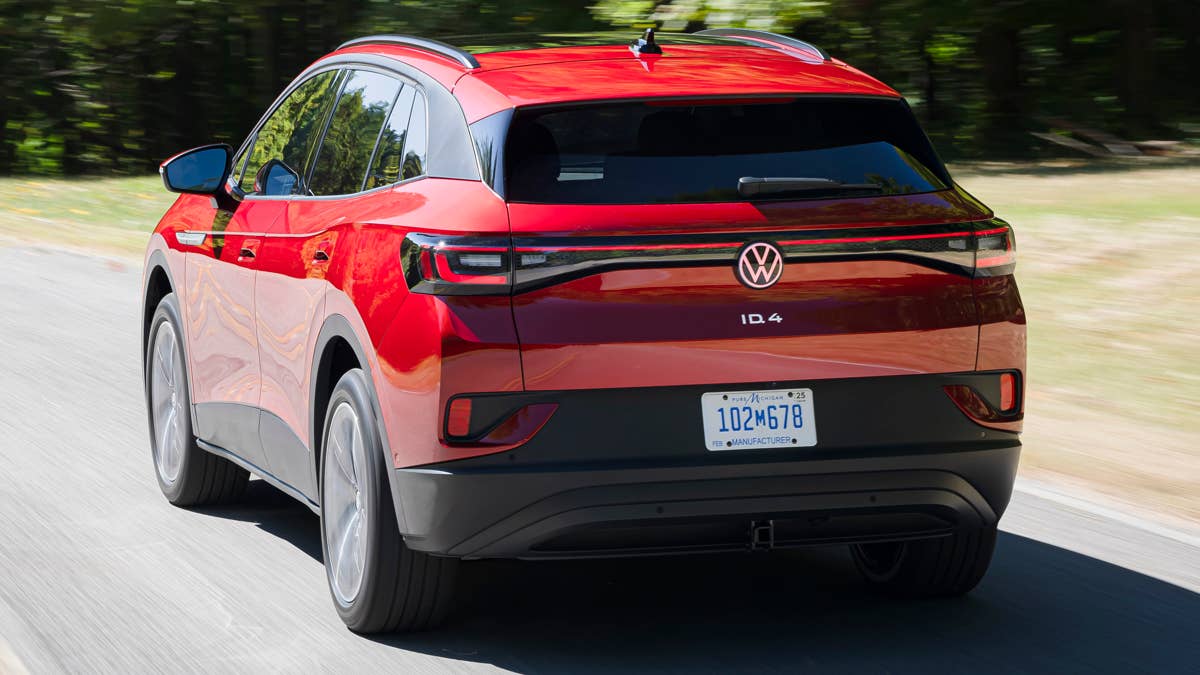
Earlier today, Volkswagen replaced the ID.4 with the ID. Tiguan, aiming to place its EVs in the same light as its combustion vehicles, and the new name will also help distance the compact crossover from its many recalls this year, of which there is now another. Most of the ID.4’s recalls this year have concerned the battery, which could catch fire. It’s even led to some owners suing, and unfortunately for the German automaker, the same issue is at the heart of the latest recall, says the National Highway Traffic Safety Administration. While VW works on its recall solution, owners are advised not to charge their vehicles beyond 80 percent.
VW Doesn’t Know Why Its ID.4 Could Catch Fire
VW
According to the amended recall report shared by the NHTSA, Volkswagen is still unable to determine the root cause of an issue that causes some vehicles to potentially experience thermal propagation, leading to a fire. Because of this, it is recalling 22,524 Volkswagen ID.4 compact crossovers produced between January 1, 2023, and February 1, 2025, and where possible, it will use an over-the-air update to temporarily limit the vehicle to a maximum charging capacity of 80 percent, with a permanent fix yet to be developed. VW advises all owners to familiarize themselves with the owners manual to ensure they get this right, but it also says that only certain charging profiles combined with a state of charge (SoC) above 80 percent may trigger the sequence of events that could cause a fire. In other words, it wants all ID.4s limited to 80 percent SoC because it knows that’s a definite factor, but beyond that, it’s still investigating. Is the issue to be found in a specific charging rate, a problem with energy recuperation, or something else? VW doesn’t know, but as the litigation and recall reports earlier this year indicate, it’s prevalent enough to be a thorn in VW’s side, and one its Product Safety Committee has been reviewing since ordering a field study in June of this year.
What Happens Now?
VW
The Volkswagen Group Product Safety Committee last month asked its battery cell supplier, SK Battery America Inc., for “additional clarifications […] concerning the production measures and the potential clean date.” In other words, it suspects that the root cause of the issue lies with production methods, and after a certain point, the high-voltage batteries should be good. VW also noted that vehicles outside the abovementioned production population “contain cells that were produced outside the suspect range or contain cells that have sufficiently recent and complete data indicating charging usage below the defined threshold.” For the record, the new ID. Tiguan, which has yet to be revealed in U.S. spec, is offered with a larger battery, so we expect it to be unrelated to the troublesome ID.4 and therefore unaffected by this issue. Sadly, ID. 4 owners can only expect interim notifications at the end of next month (November 27), and while VINs are already searchable, a planned remedy date range has not been estimated, so VW expects the fix to take a while to find.