Toyota Motor Corporation, the undisputed world leader in hybrid vehicles, is expecting 2026 to be a record year for sales of electrified cars.
In an otherwise unremarkable press release dedicated to the first-quarter results for the 2027 fiscal year, Toyota mentions that it expects to sell more than 5 million hybrid electric vehicles (HEV) this calendar year, which would mark an all-time record.
Initial Capacity For 600,000 Toyota Hybrids With Next-Gen Batteries
Toyota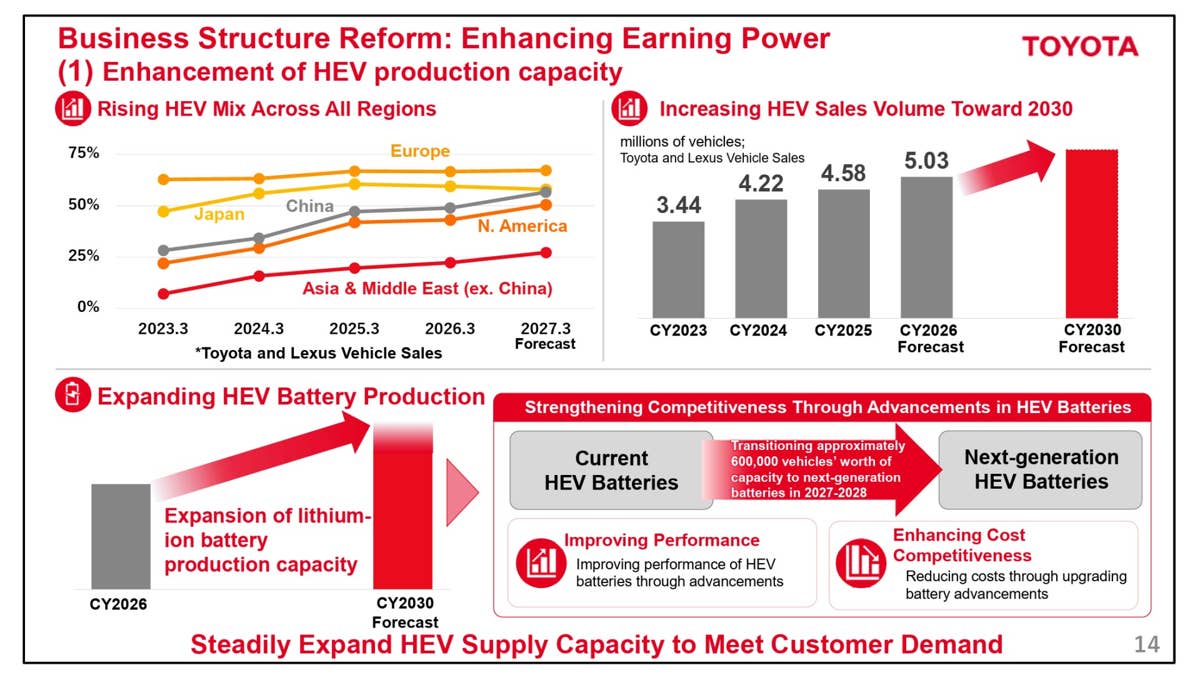
“Demand for HEVs remains strong, and the HEV mix continues to rise in many regions around the world. Toyota plans to sell more than 5 million HEVs for the first time in 2026. To steadily meet customer demand, we will continue to expand HEV battery production capacity,” said Toyota’s Chief Accounting Officer, Takanori Azuma.
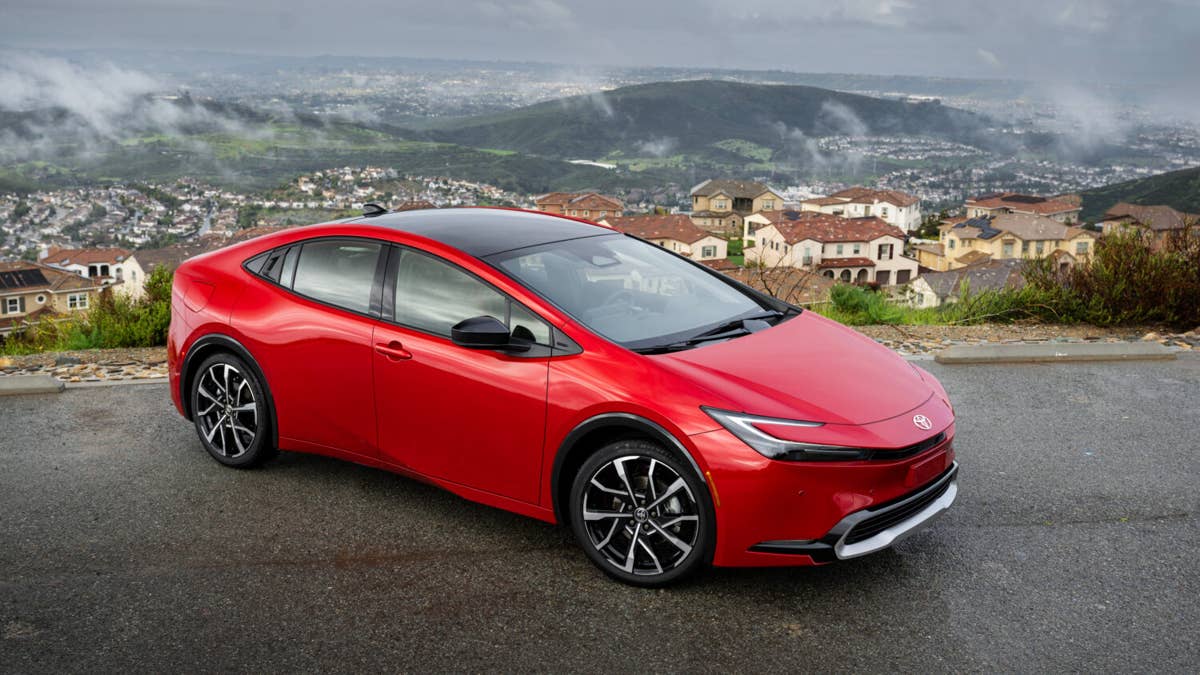
As the world’s pioneer in hybrid vehicles with the Prius, the first mass-produced hybrid car launched in 1997, Toyota’s know-how in this area needs no introduction. The Japanese automaker has stood by the technology and has gradually expanded it across its range to the point where pretty much its entire U.S. model lineup is available with hybrid powertrains—and hybrid variants have started to outsell their gas counterparts.
Of course, Toyota isn’t resting on its laurels and is preparing a major update for its hybrid vehicles: the introduction of a new generation of batteries. We learn from the same press release that the next-generation batteries will be rolled out from 2027 in Japan, bringing improved performance and costs for approximately 600,000 HEVs per year.
“For example, in Japan, we plan to convert HEV battery production lines with capacity for approximately 600,000 vehicles to next-generation batteries offering enhanced performance and cost competitiveness between 2027 and 2028,” Takanori Azuma added.
Next-Gen Hybrid Batteries To Offer “Enhanced Performance And Cost Competitiveness”
Toyota
While the executive did not go into detail regarding the improvements that Toyota’s next-gen hybrid batteries will bring, the automaker mentioned “improved performance of HEV batteries through advancements” and “reducing costs though upgrading battery advancements.”
That’s kind of ambiguous, but you wouldn’t expect Toyota to divulge secrets that help it maintain its competitive edge over rivals, wouldn’t you? The bottom line is the efficiency of Toyota and Lexus hybrids will be enhanced, which is always what you want to hear if you’re in the market for a hybrid car.
As for the production cost reductions, that’s always good news for any automaker, but whether those will translate into price cuts for customers is an entirely different issue.
One thing is certain: Toyota expects even higher hybrid vehicle sales in the coming years, so it’s contemplating an expansion of lithium-ion battery production for hybrids. The production increase is projected to continue until at least the end of the decade.