As legacy market growth stalls, the world’s largest carmaker is quietly placing a massive hedge with the poster child of rapid development, India. As reported by Nikkei Asia, Toyota Motor Corporation has formally committed roughly $1.9 billion (300 billion yen) to establish three new vehicle assembly plants in Maharashtra, India. This is a calculated investment in one of the world’s fastest-growing economies and a rising export hub. Toyota is tapping India to be its export hub for the Middle East, Africa, and South Asia.
Toyota
Toyota in India
Historically, Toyota’s relationship with the Indian market has been notoriously turbulent. Just six years ago, in 2020, executives effectively halted local expansion, citing a highly punitive taxation regime that crippled organic growth, making it a hostile regulatory environment. But shifting economics and policy reforms have transformed India into one of the decade’s most attractive manufacturing economies.
The Indian passenger vehicle market has officially eclipsed Japan to become the third-largest globally, offering the explosive growth trajectory that traditional automotive strongholds currently lack. India already functions as an export hub for car-makers such as the Hyundai Group and Suzuki. The new Maharashtra facilities, slated to begin initial operations in 2029 and fully ramp up through the early 2030s, will completely transform the automaker’s footprint on the subcontinent.
Toyota
The investment is designed to triple Toyota’s Indian production capacity to a staggering one million units annually. Upon completion, the expansion will elevate India to Toyota’s fourth-largest global manufacturing hub behind only Japan, China, and the U.S.
Toyota’s Strategy
The Maharashtra operation serves a highly lucrative dual mandate. These assembly lines are built to function as strategic export hubs. Toyota is engineering a localized fortress to feed vehicles directly into the rapidly expanding consumer markets of the Middle East and Africa, effectively bypassing the logistical and geopolitical friction of exporting from East Asia. While competitors throw billions at domestic pure-EV mandates, Toyota will employ the new Indian plants to heavily support plug-in hybrid vehicles (PHEVs) alongside its broader electrified portfolio.
In 2025, Toyota Kirloskar Motor, Toyota’s Indian joint venture, recorded its strongest year on record with nearly 389,000 units sold—a 19 percent surge driven heavily by hybrid demand. By expanding local hybrid and PHEV assembly, Toyota circumvents the immediate limitations of India’s fragile charging infrastructure while navigating a regulatory landscape that recently scaled back specific electric vehicle subsidies.
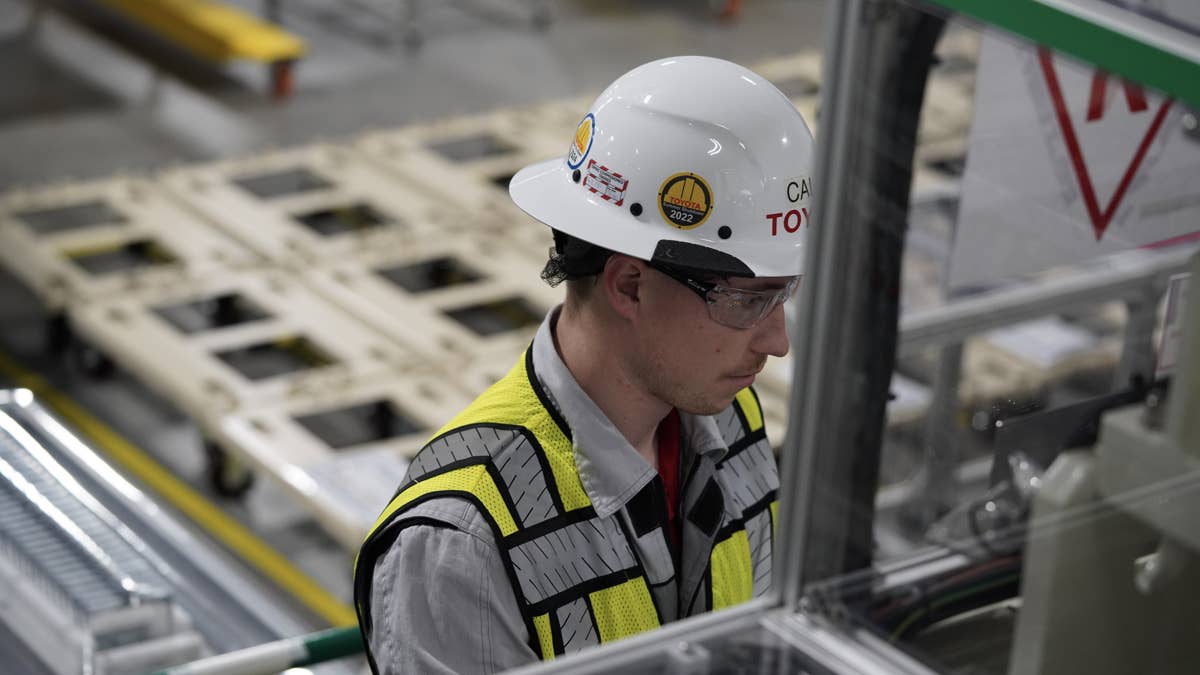
Relying strictly on American consumers and European mandates is a blueprint for stagnation. Toyota recently invested $800 million in its Kentucky plant to prepare for North American BEV production, part of a larger $1 billion commitment to US manufacturing.
However, Toyota recognizes that the next decade of automotive supremacy will not be decided in California or Beijing. It will be won on the factory floors of India, building pragmatic, electrified platforms for the emerging economies that the rest of the industry is actively ignoring. Automakers that fail to build supply chains in fast-growing economies risk losing future volume growth.