The subcompact crossover segment is now a bustling segment in the United States, with practically every mainstream brand having a competitor in this segment. Three popular models in this category are the Toyota Corolla Cross, Honda HR-V, and Volkswagen Taos. Despite their affordable price tags, all are generously equipped with the latest safety technologies, but which one holds up best in crashworthiness and crash-prevention tests? We’ve consulted the 2026 ratings from the Insurance Institute for Highway Safety, so strap in to see which small SUV leads the way for safety.
Crashworthiness: Honda is Safest, VW Falters
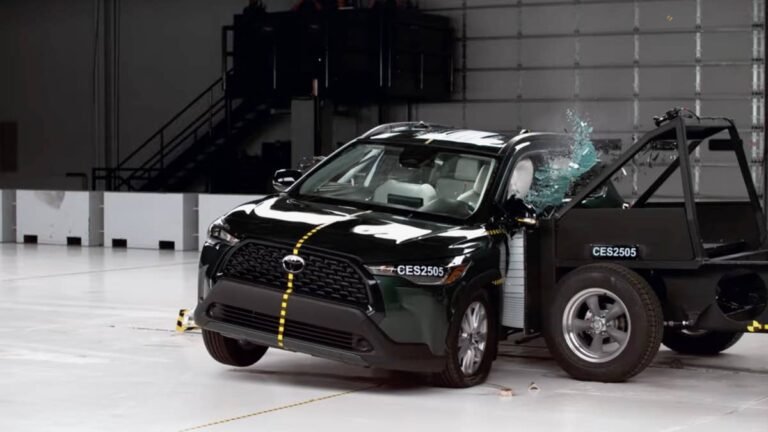
The IIHS runs three key crash tests on new vehicles, those being the small overlap front, moderate overlap front, and side tests. The small overlap front involves a collision with the front corner of the vehicle, while the moderate overlap front analyzes an offset crash between two vehicles. Each test receives an overall score of Good, Acceptable, Marginal, or Poor.
|
Toyota Corolla Cross |
Honda HR-V |
Volkswagen Taos |
|
|
Small Overlap Front |
Good |
Good |
Acceptable |
|
Moderate Overlap Front |
Acceptable |
Good |
Marginal |
|
Side |
Good |
Good |
Acceptable |
The final results are a mixed bag for these SUV rivals. The HR-V is clearly the most secure, with three Good ratings helping it achieve a Top Safety Pick+ award—the only one of these three to do so. The Corolla Cross wasn’t bad, but its score for the rear passenger restraints and dummy kinematics brought down its rating in the moderate overlap front test.
Finally, the Taos was clearly the poorest performer of this trio. It failed to achieve an overall Good rating in all three tests, which is disappointing for a 2026 vehicle, regardless of size. In the moderate front overlap test, the testers found an elevated risk of chest injuries for rear passengers, which brought down the overall rating to Marginal.
If you’re unlucky enough to be involved in a crash, the HR-V’s results show that it’s the safest vehicle to be in between these three.
Related: Toyota Corolla Vs. Mazda 3 Vs. Honda Civic: Which Is Safest?
Crash Prevention: Room For Improvement Across The Board
2026 Toyota Corolla Cross Hybrid Kristen Brown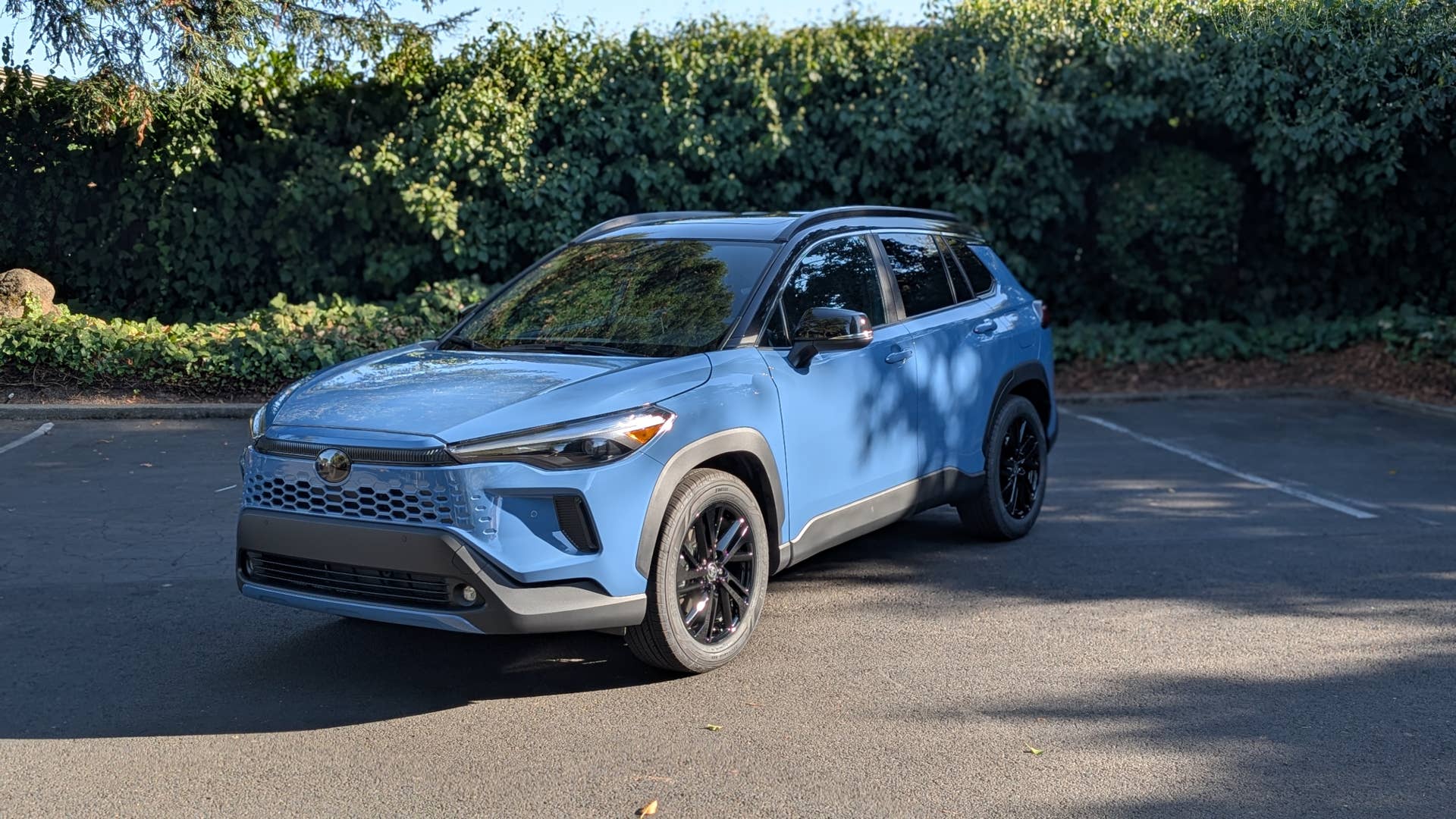
In crash avoidance and mitigation, the cars are tested for how effectively they can avoid striking another car or a pedestrian. These tests are conducted at various speeds and the effectiveness of the warning systems for the driver is also evaluated. Finally, the IIHS also tests headlights on low and high beams.
|
Toyota Corolla Cross |
Honda HR-V |
Volkswagen Taos |
|
|
Headlights |
Acceptable |
Acceptable |
Good or Acceptable (depends on trim) |
|
Crash Prevention (vehicle-to-vehicle) |
Not tested |
Acceptable |
Poor |
|
Crash Prevention (pedestrian) |
Good |
Good |
Marginal |
No SUV was perfect here, but the Honda and Toyota are once again superior to the VW. The Japanese SUVs achieved a maximum Good rating in pedestrian crash prevention, whereas the Taos scored a Marginal rating in the same test. For example, while the Toyota successfully avoided hitting a child crossing in front of it when driving at 25 mph, the Taos could only reduce its speed by 9 mph, not avoid the collision.
The HR-V achieved an Acceptable rating in vehicle-to-vehicle crash prevention, but the Corolla Cross wasn’t tested for this. The Taos was very disappointing here, with a Poor rating and not a single collision avoided with its standard Front Assist system. The VW was also the only vehicle with a Poor rating for its seat belt reminder system.
The only area where the Taos did better than its rivals relates to the headlights fitted to the S trim, which were rated as Good.
Related: The Safest New Cars Under $30,000, According to IIHS
Final Verdict: VW Has Work To Do
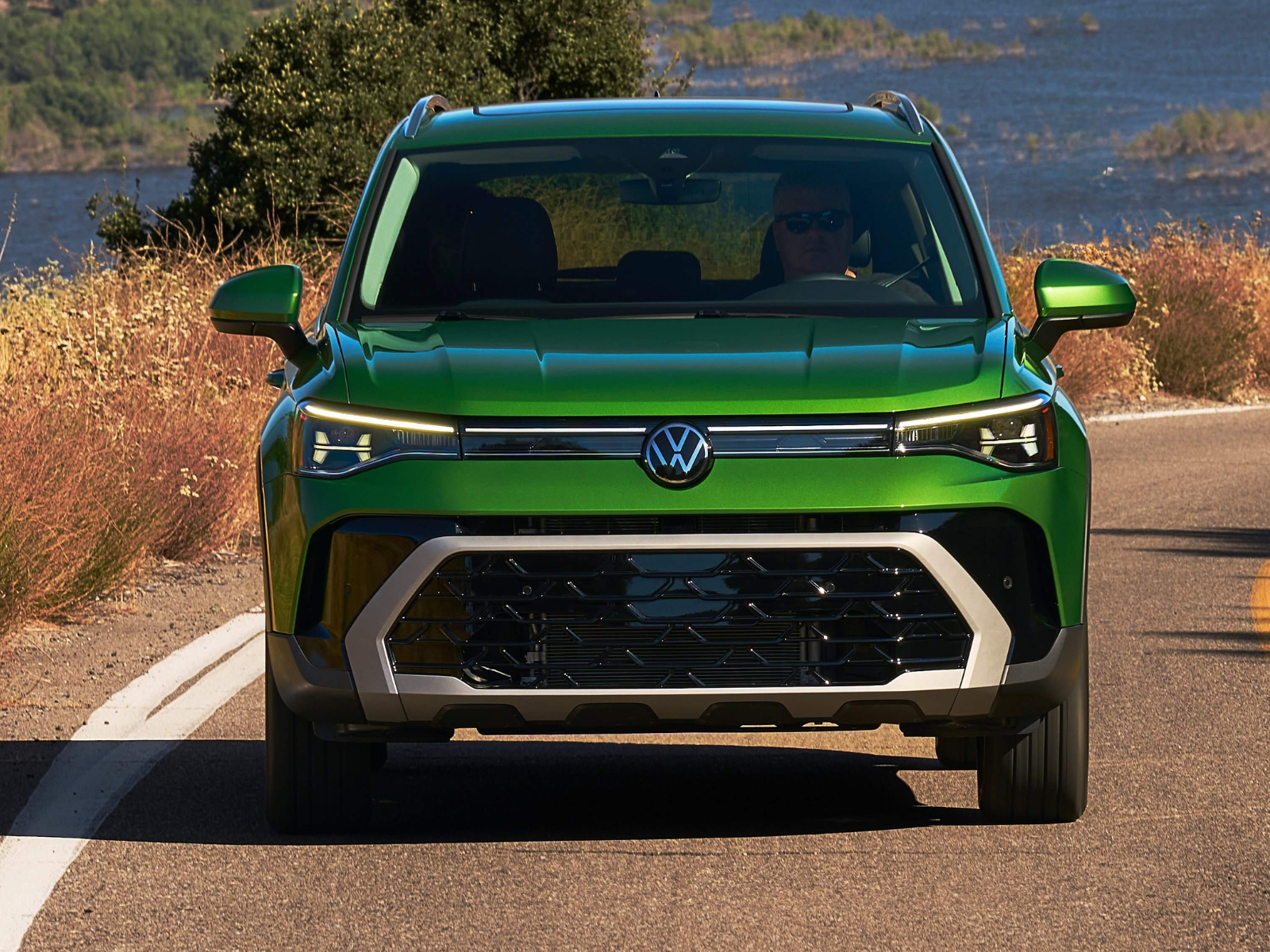
The Honda HR-V is the best small SUV of these three for overall safety. Next in line is the Toyota, which has no serious red flags and could potentially achieve a perfect rating with some enhancements. The VW is by far the most disappointing vehicle here. It’s the only one with Marginal or Poor ratings of any kind, and the gaps in its performance apply to both crashworthiness and crash prevention. The VW has not kept up with tougher safety tests, but its age alone (it was introduced here in 2020) isn’t solely to blame, as other small SUVs of a similar age have performed a lot better.