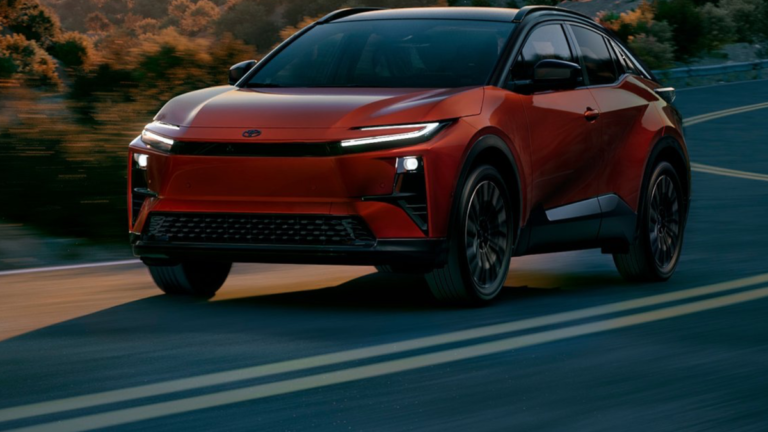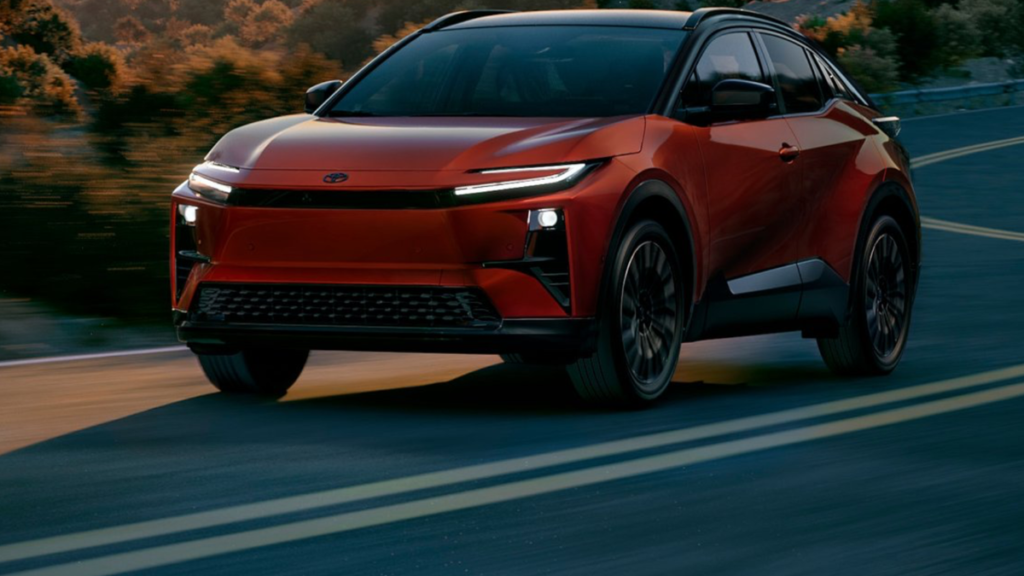
The Toyota C-HR returned for the 2026 model year as a sporty EV, pitched as a less practical but more engaging alternative to the bZ. It’s a package that’s surprisingly compelling, but the small EV has just suffered its first recall in North America. Affecting around 10,000 models, Toyota says some C-HRs can experience an overcharged battery, leading to a potentially dangerous loss of motive power. The recall is at an early stage, as Toyota will only notify owners in early November, but here’s what we know so far.
Toyota C-HR Recall Detailed
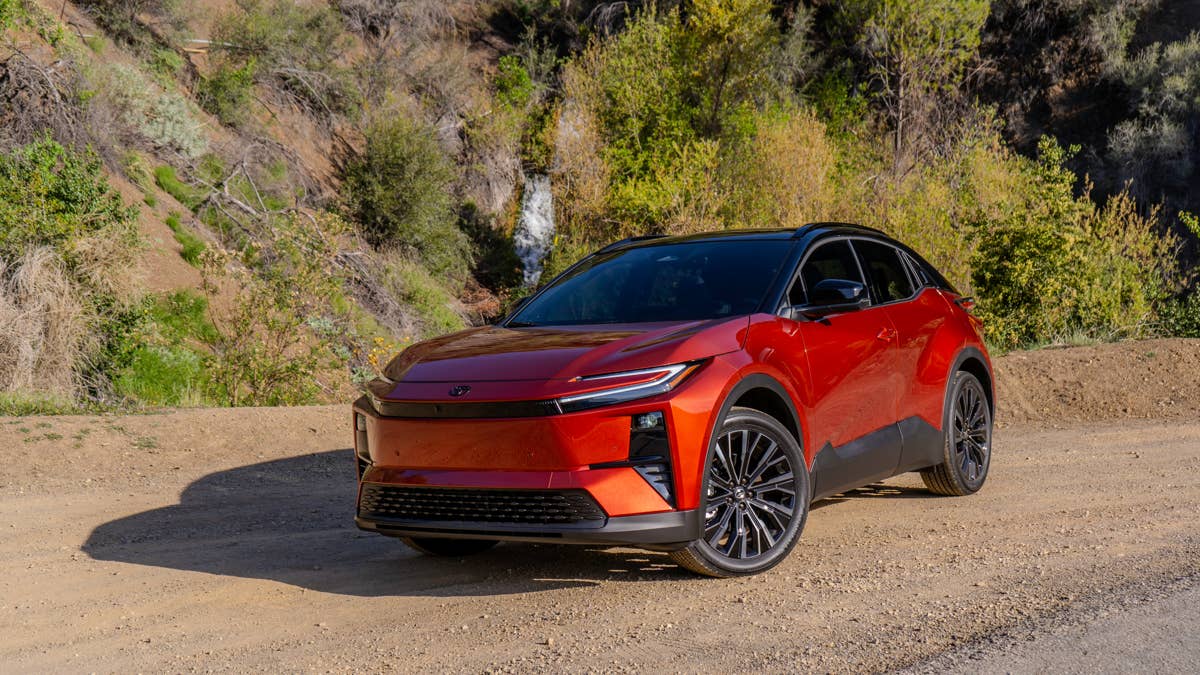
2026 Toyota C-HR XSE in Tandoori with Midnight Black 2-tone
Cole Attisha
A software issue related to the Toyota C-HR’s regenerative braking system—which helps charge the battery—has been identified as the cause of the problem in some 2026 models of the crossover.
“Under certain conditions when the battery has a high level of charge, regenerative braking can cause the battery to become overcharged due to a software issue,” said the automaker. “If this occurs, the electric drive system can shut down, causing a loss of motive power. A loss of motive power while driving at higher speeds can increase the risk of a crash.”
The fix for this problem is straightforward, with Toyota saying dealers will update the software for the Battery Electric Vehicle Electronic Control Unit. Owners of affected C-HR models will be notified by early November 2026.
Before that date, owners can contact Toyota’s customer support at 1-800-331-4331 for more information. Although the National Highway Traffic Safety Administration (NHTSA) has not yet published information about this recall, owners should soon be able to use their VINs on this site to see if their particular vehicle is impacted.
Toyota’s Initial Quality Below Average as Software Issues Bite
Toyota
While proven gas-powered Toyota models like the Corolla and RAV4 are still renowned for exceptional dependability as they age, the Japanese brand’s initial quality hasn’t been as strong as expected. In the most recent JD Power Initial Quality Study—a survey of the number of problems customers experienced with 2026 model-year vehicles after 90 days of ownership—Toyota was ranked 15th out of 27 brands.
The GR86, Corolla, Crown Signia, Sequoia, and Tundra were among the highest-ranked models in their segments. However, not a single 2026 Toyota EV was mentioned as a top-ranked model or runner-up. It’s possible—although not confirmed in the study—that the C-HR’s drive battery issues dragged down Toyota’s overall score. The brand’s lineup experienced 181 problems per 100 vehicles, worse than the industry average of 175 problems per 100 vehicles.
A heavier reliance on software has proven to be a challenge, even for brands like Toyota with tight quality control measures. Already this year, Toyota has recalled hundreds of thousands of vehicles due to software issues. Over 500,000 Camry sedans alone were recalled for blank driver’s displays. The bZ EV was also recalled this year for a software error that could cause a loss of drive power.
The upside of the C-HR’s recall is that owners can expect the issue to be easily and quickly resolved via a software update.
Related: Toyota, Lexus And Subaru EVs Recalled Over Sudden Power Loss Risk