Rethinking One of EVs’ Biggest Drawbacks
Battery weight remains one of the biggest hurdles for EVs. Yes, larger packs offer better range, but they also add weight, hurting efficiency and handling. Solid-state batteries hold promise, but for now, automakers are rethinking how batteries are packaged.
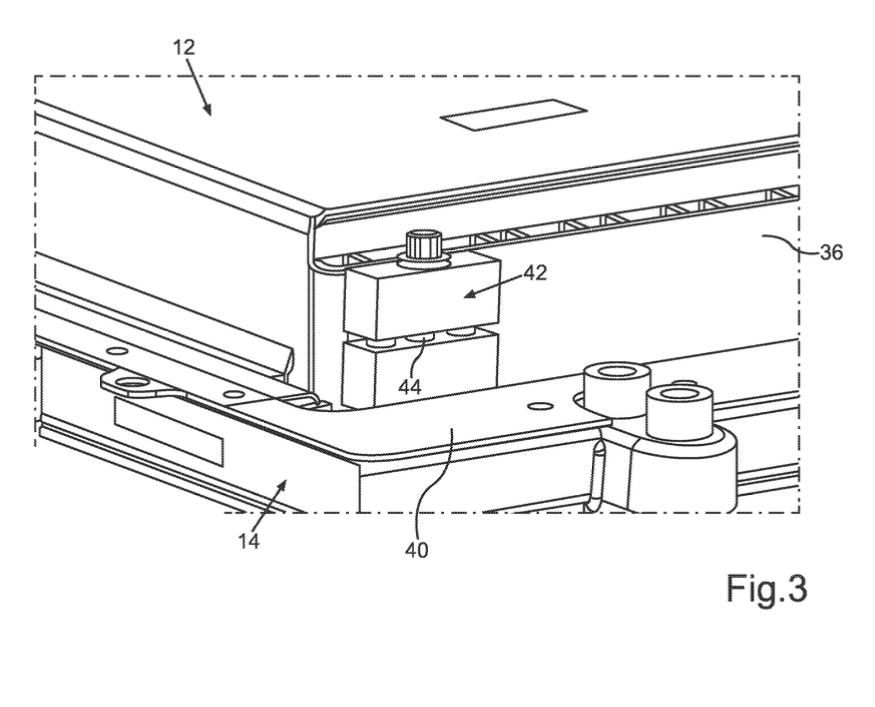
Mercedes-Benz is taking a different route. A recent patent (USPTO no. 12614774, published April 2026, if you want to check) lays out a new way to mount battery modules inside an EV pack. Instead of loading up on bolts, brackets, or just one kind of adhesive, Mercedes is looking at a more specialized bonding method.
Mercedes-Benz
Two Adhesives, Two Jobs
The idea is simple: instead of asking one adhesive to do it all, Mercedes splits the job between two, each with its own purpose.
The first adhesive goes under the battery module and is designed to pull heat away from the cells into the battery housing. It helps with cooling and also anchors the module in place.
The second adhesive runs along the sides and is all about strength. It resists mechanical stress, so the module stays put whether you’re cruising or hitting rougher roads.
Most current setups use screws or thick adhesive to handle both cooling and structure. By splitting the tasks, Mercedes lets each material do what it does best. The patent even points out that you can use less of the bottom adhesive, since it doesn’t have to hold everything together.
The patent diagrams show a tray-style battery housing, with modules sitting on a base layer and lockable sides. It’s a tidier setup that cuts down on hardware and could make assembly easier.
Mercedes-Benz
Why It Might Matter in the Real World
If Mercedes brings this to production, there are some real-world perks. Fewer screws and heavy mounts mean less weight and a simpler build. Using less adhesive could also help keep costs in check.
There’s also a service benefit. The side adhesive is strong but can be cut through, so a damaged module can be swapped out without tearing down the whole pack. That’s not always possible with today’s designs.
Thermal management is another piece of the puzzle. By improving how heat is transferred away from the cells, the system could support more consistent performance and potentially extend battery life.
As with most patents, it’s worth noting that this is not a guarantee of production. Automakers file a wide range of ideas, and only a portion of them make it into actual vehicles. Still, it offers a look at how Mercedes-Benz is thinking about refining EV fundamentals beyond just range and power figures.
USPTO