
When Porsche introduced a drag-reduction system to the rear wing of the 992 911 GT3 RS, it brought motorsport aerodynamics to the road, with a flap in the rear wing opening to let more airflow through and allowing the car to go faster. Now, a new patent filed in Germany, first uncovered by CarBuzz, suggests that Mercedes wants to do something just as radical, but instead of altering airflow that travels over the main wing, the patent is for adaptive end plates that move up and down depending on the requirements of the car. Could this appear on the next Black Series model from AMG? Maybe, maybe not, but it’s worth exploring anyway.
How Mercedes’ Clever New Wing Works
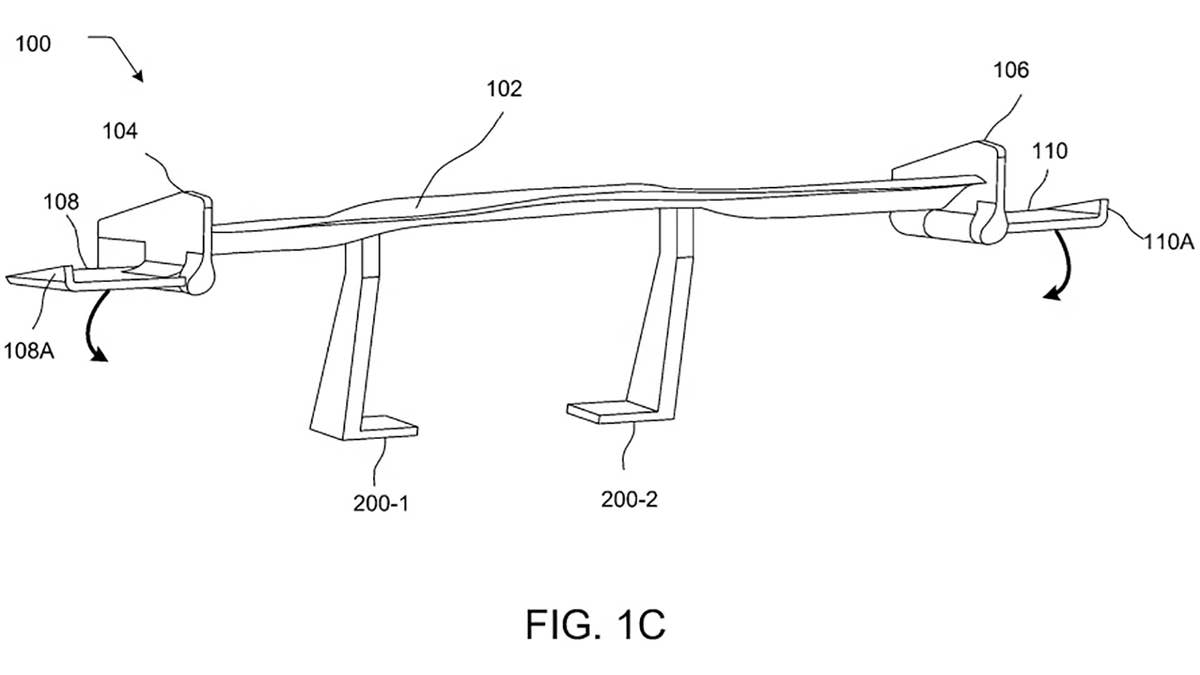
End plates help keep the low-pressure air under the wing separated from the high-pressure airflow passing over it, and the patent documentation describes a wing with unusually long lower end plates connected to a pivot. This attaches to the bottom of a regular end plate with an actuated motor and a hinge. In its more extreme setting, these additional end plate elements would flip up at a 90-degree angle, transforming into stubby wings sticking out from either end of the main wing. This provides extra downforce, creating more grip and thus improving overall performance and enhancing directional stability on the track. When less downforce is needed, these side wings would flip down again, helping guide more air under the wing.
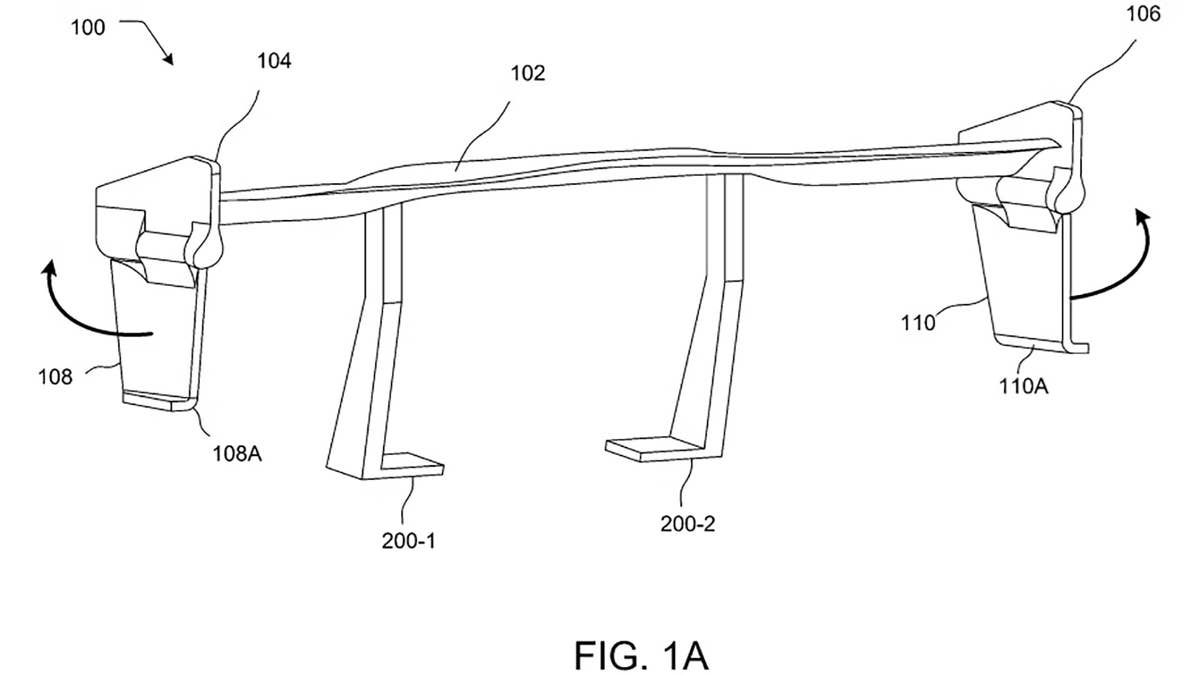
The idea is not necessarily to use the two wing configurations in different parts of the same track, as is the case with the aforementioned GT3 RS. Instead, Mercedes says that each track requires different downforce levels, and until now, the most practical solution has been a manually adjustable wing, with various angle settings possible through various holes in the conventional end plate. Mercedes says this requires “large inventories, enormous procurement costs, time-consuming installation/removal, and an increased risk of installation errors.” To us, that sounds like Mercedes intends to use the invention for a motorsport application, but as evidenced by teasing both the AMG GT Black Series and its GT3 racing counterpart at the same time, many motorsport innovations can be shared with road cars. We’ve made a crude render of what it might look like below, but the real thing would look better.
Pros and Cons of Mercedes’ New Wing Patent
ChatGPT/Sebastian Cenizo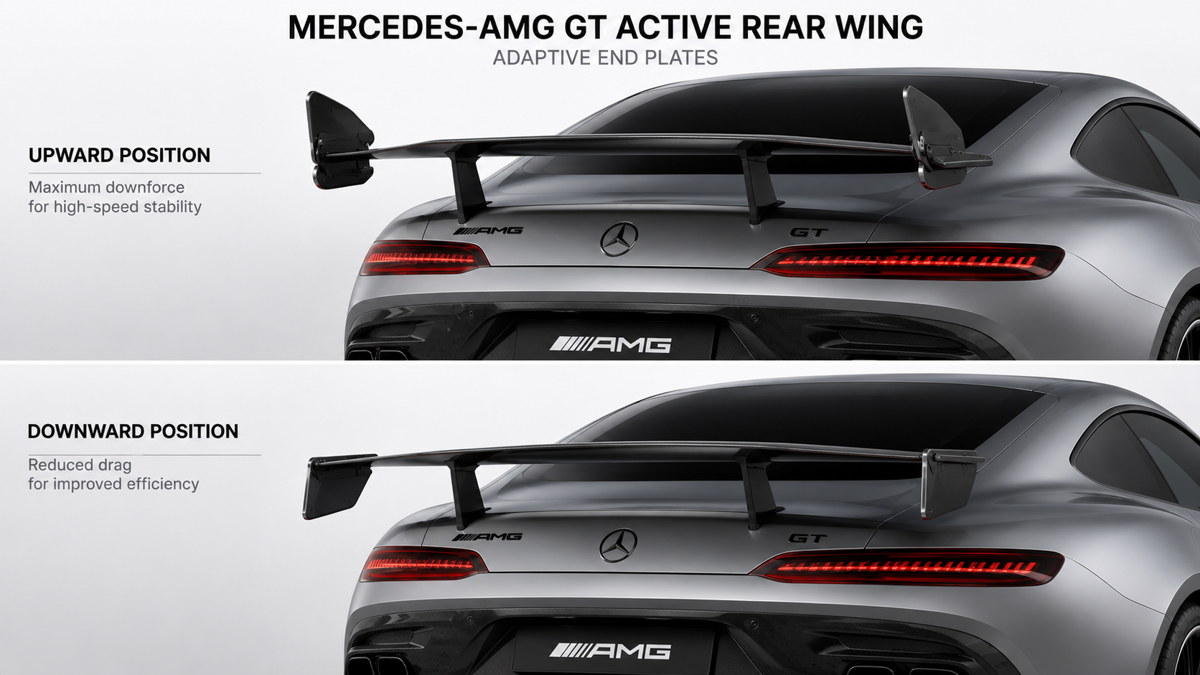
The obvious drawback is that adding a motor and controller increases weight, but not by much. The other concern is that, if the controller fails, tracing the issue is far trickier than with a manually adjustable component. But it should be more cost-effective, at least according to Mercedes, and that could encourage more customer racing teams to take part in motorsport. And if it finds its way to a road car, such an invention could be locked to a track mode, allowing Mercedes to push the boundaries of wing size without contravening safety requirements. In fact, we can see Mercedes or others expanding on the idea with a wing that extends beyond the bodywork on the longitudinal plane, so long as this, too, is restricted to track use. With the refreshed Porsche 911 GT3 RS set to be even more extreme than today’s 992.1, Mercedes may need to introduce something like the invention in this patent to keep the competition tight.


