The two almanacs are forecasting very different snow seasons this winter. The Farmers’ Almanac expects quick bursts of snow and bitter cold across much of the north, and the Old Farmer’s Almanac calls for a mostly mild winter with the snow concentrated in a few places. Their maps disagree on four regions.
The newest winter outlook from the National Weather Service lines up with each almanac in different regions, while offering no clear answer on the biggest split. In its latest El Niño discussion, NOAA’s Climate Prediction Center also gives the El Niño shaping this winter a 75 percent chance of becoming the strongest on record this fall.
Where the Almanacs Disagree
The northern Plains. This is the widest gap. The Farmers’ Almanac warns of sudden snow squalls, gusty winds and bursts of bitter cold across the Plains. The Old Farmer’s Almanac has the High Plains warmer and drier than normal, with below normal snow.
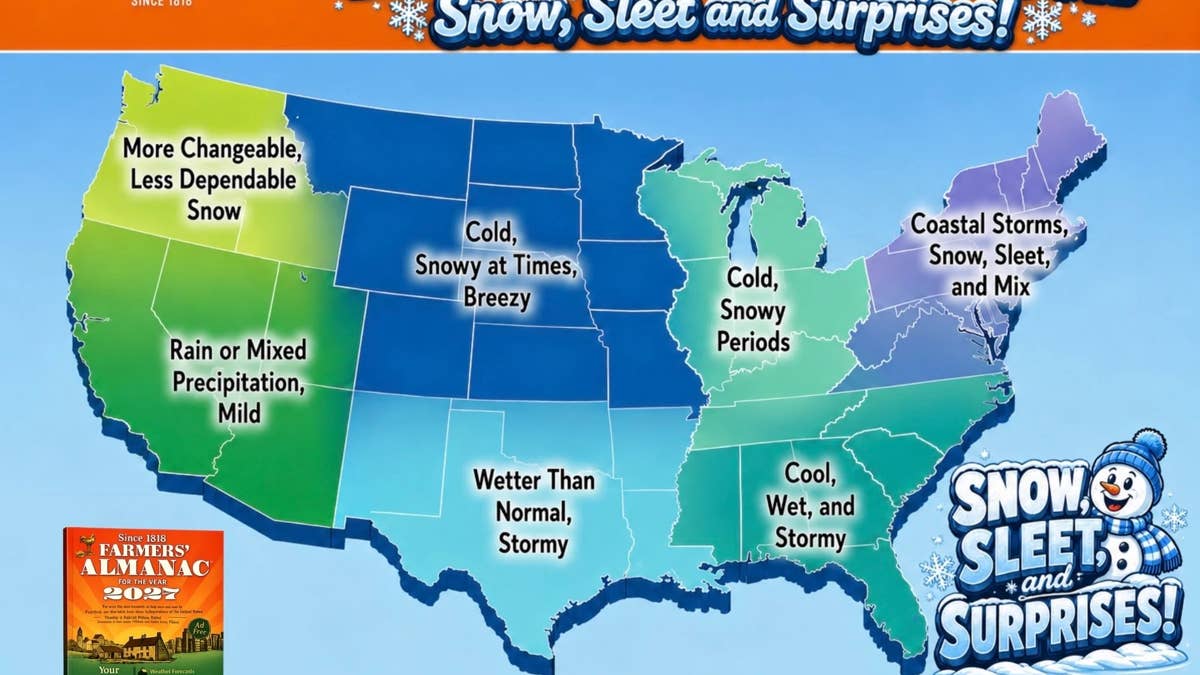
The Farmers’ Almanac winter outlook for 2026-2027
Farmers’ Almanac
The Great Lakes. Fast moving clippers and snow squalls are what the Farmers’ Almanac has in store for the region. The Old Farmer’s Almanac expects the Lower Lakes to run warmer and less snowy than normal, with plenty of precipitation, more of it falling as rain or a wintry mix.
The Pacific Northwest. The Old Farmer’s Almanac calls for above normal snowfall, making it the snowier forecast of the two in this region. The Farmers’ Almanac expects a changeable season with less dependable snow.
The southern tier. The Farmers’ Almanac sees an active storm track from Southern California through Texas, the Gulf Coast and the Southeast, with sleet, freezing rain or heavy, wet snow whenever cold air reaches it. The Old Farmer’s Almanac has Texas and Oklahoma warmer and drier with near normal snow, and the Desert Southwest drier with below normal snow.
Which Almanac NOAA Backs
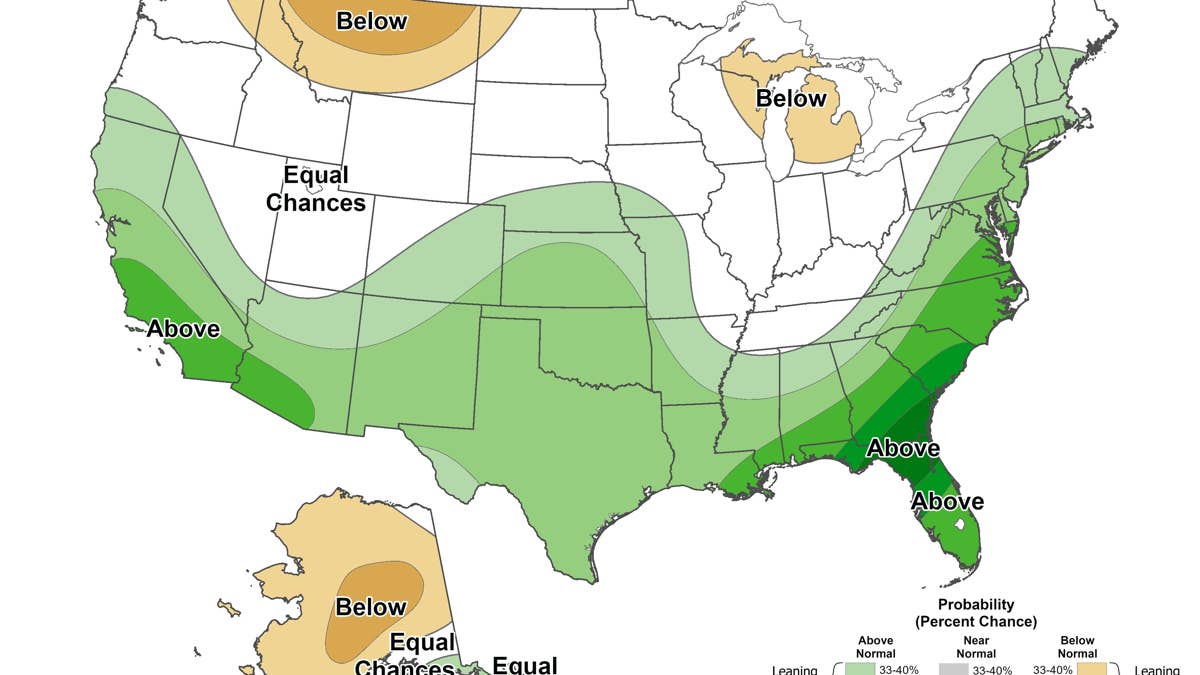
The Climate Prediction Center doesn’t publish a snowfall forecast. Its December through February map, issued September 17, shows the odds of above or below normal precipitation, rain and snow combined. It doesn’t settle the snow question, but it does show which almanac’s setup looks more likely.
NOAA
In the South, NOAA puts its strongest odds for above normal precipitation and lines up with the Farmers’ Almanac. The northern Plains get no lean for most of the region, though drier odds over Montana fit the Old Farmer’s Almanac a little better. Michigan also leans drier, which works against both a snowy Great Lakes winter and a wet one. Washington shows no lean at all, leaving the Pacific Northwest split unresolved.
Where the Most Snow Is Expected
Between them, the two maps point to above normal snow in the inland Northeast, the Appalachians and parts of the Rockies. The Old Farmer’s Almanac adds the Pacific Northwest, where the Farmers’ Almanac disagrees.
The inland Northeast is the one place both almanacs call snowy. The Farmers’ Almanac expects several rounds of heavy, wet snow away from the coast, mostly in January and February, with rain and mixed precipitation closer to the shore. The Old Farmer’s Almanac gives the southern part of its Northeast region below normal temperatures and above normal snow, and extends its snowier call from central New England down through the Appalachians.
Neither expects much along the coast. The Old Farmer’s Almanac has the Atlantic Corridor, home to the big East Coast cities, mild with slightly below normal snow, and Maine milder and less snowy than normal. NOAA’s map favors above normal precipitation up the East Coast to Maine, so how much of it turns to snow depends on the cold.
Both almanacs also see a snowy winter in parts of the Rockies. The Farmers’ Almanac expects the southern Rockies to fare especially well for mountain snow, while the Old Farmer’s Almanac calls for above normal snowfall across the Intermountain region.
NOAA’s next El Niño update arrives Thursday, October 8, and a new set of winter maps follows on October 15.
What It Means for the Roads
Snowy, slushy and icy pavement accounts for 24 percent of weather-related crashes, according to the Federal Highway Administration, with more than 1,300 people killed and over 116,800 injured on those surfaces each year.
Freeze and thaw in the middle of the country. The Farmers’ Almanac expects frequent swings between thawing and freezing across the central U.S. Meltwater that refreezes overnight leaves black ice on shaded curves and low spots well into the morning, and each cycle opens new potholes by late winter.
Snow squalls around the Great Lakes and the Plains. Squalls can drop visibility to near zero within minutes on an otherwise clear highway. Drivers caught in one should slow down gradually and turn on their headlights rather than brake hard with traffic behind them.
Long empty stretches on the northern Plains. The bursts of bitter cold in the Farmers’ Almanac forecast would hit a region where interstates run for long distances between services. That makes a basic winter kit, with blankets, a charged power bank and a small shovel, especially useful here, along with a tank kept above half in case traffic stops.
Heavy, wet snow in the inland Northeast. The one region both almanacs call snowy is also where the Farmers’ Almanac expects heavy, wet snow, and that kind of snow packs into slushy ridges between lanes that tug at the steering wheel. Plows need longer to clear it, so the road surface can change from one lane to the next.