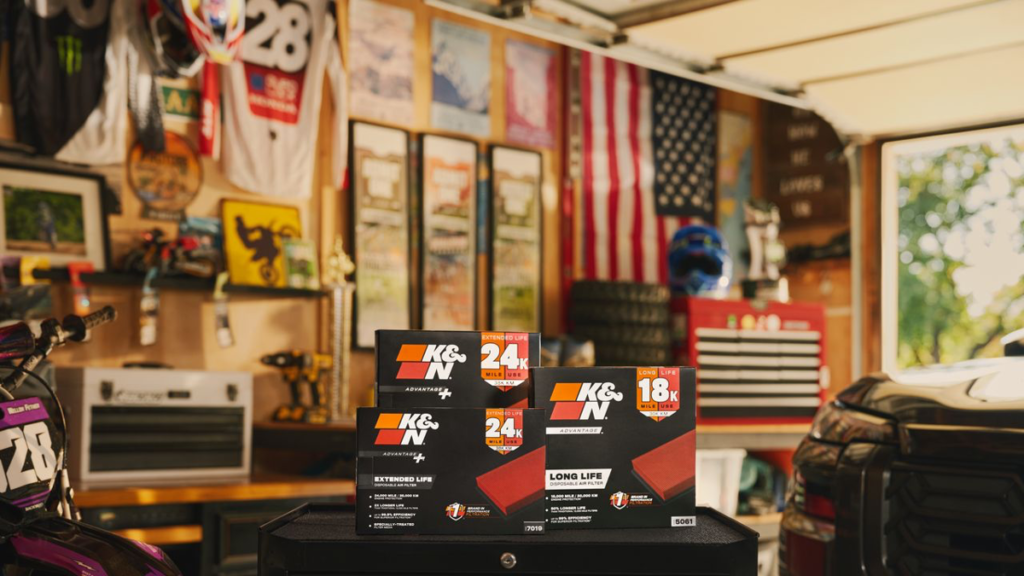
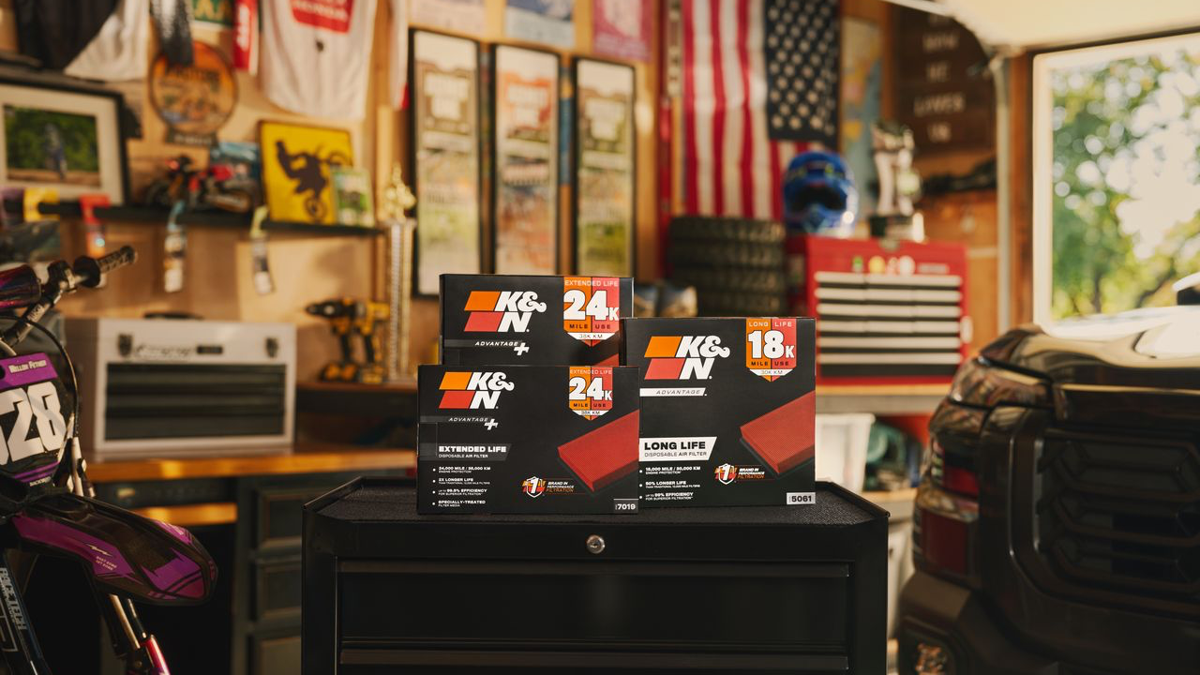
K&N is a familiar name among enthusiasts who regularly browse performance car part catalogs, but its latest retail expansion targets a much broader audience: people who simply want to keep their daily drivers well-maintained for longer. Its Advantage disposable air filters are reaching select Walmart stores nationwide, bringing the brand into another routine ownership decision.
Announced October 20, the U.S. rollout also includes regional availability at Blain’s Farm & Fleet. Advantage first appeared online in 2024, but the big news is that K&N’s long-lasting filters are now easier than ever to buy. K&N’s announcement details the launch. The headline attraction is an engine filter K&N says can last up to 24,000 miles without the cleaning washable alternatives require, which sounds quite appealing, especially if vehicle maintenance already competes with everything else on your calendar. That said, the mileage claim deserves some context before you add one to your cart.
Thinking about selling your car? Get an instant cash offer online now. Click here to get started.
K&N
Three Filters For Two Different Jobs
The Advantage family comprises two engine-filter lines and one cabin-filter line. Their purposes differ: engine filters protect the engine’s intake air, while cabin filters treat the air entering the passenger compartment. Start by identifying which maintenance item your vehicle actually needs.
|
Product |
Claimed service life |
Starting U.S. MSRP |
|---|---|---|
|
Advantage Long Life engine filter |
Up to 18,000 miles |
$20.99 |
|
Advantage Plus Extended Life engine filter |
Up to 24,000 miles |
$36.99 |
|
Advantage Plus Replacement cabin filter |
12,000 miles |
$24.99 |
These are starting MSRPs from K&N’s announcement; fitment and retailer pricing can change the bill.
K&N says the engine filters use synthetic or cellulose-blend media, depending on the application. It claims filtration efficiency of up to 99% for Advantage and up to 99.5% for Advantage Plus. These are manufacturer-claimed figures, not results from an Autoblog comparison test. According to K&N, the cabin filter is also designed to reduce unwanted odors. The Advantage and Advantage Plus specifications describe the engine-filter claims.
The engine filters fit the factory airbox, and K&N says installation typically requires no tools. Owners should still check their vehicle’s instructions, since access varies. These are disposable filters, so buying one does not add a washing or reoiling routine to your weekends. K&N says Advantage Plus engine filters carry a one-year limited warranty. That is separate from the advertised mileage interval, which some drivers may not reach for two years.
Shopping for a new car? Click here to get a great deal on your next vehicle. Powered by Carvana: no-haggle pricing, 100% online.

Getty Images
What The 24,000-Mile Claim Actually Means
K&N specifies normal highway driving conditions for the 24,000-mile engine-filter interval. Its 18,000-mile product carries the same condition. Dust exposure can change replacement needs considerably; anyone regularly driving unpaved roads should pay attention to filter condition and their vehicle’s maintenance guidance. The “twice the life” comparison also uses a specific baseline: a disposable filter replaced every 12,000 miles. That is not a universal factory interval. For example, Ford’s 2026 F-150 owner’s manual specifies engine-filter replacement every 30,000 miles, with inspection and earlier service as conditions require.
Consequently, a 24,000-mile rating does not automatically extend your existing maintenance schedule. It may actually be shorter than the interval your vehicle manufacturer specifies. Compare the exact replacement filter’s instructions with your owner’s manual before treating the packaging as permission to postpone service. The economics need the same scrutiny. At its advertised starting MSRP, the $36.99 filter costs about $1.54 per 1,000 miles if it reaches 24,000 miles. That provides a comparison point, but proving savings requires the price and service life of a competing filter for the same vehicle. Fewer replacements only become better value when the full calculation supports them.

Expect Sensible Maintenance Benefits
Air-filter advertising can often make a routine replacement sound like a performance modification. Replacing a clogged filter can help with acceleration, but expectations about fuel savings should be tempered. Federal FuelEconomy.gov guidance says replacing a clogged filter on modern fuel-injected vehicles doesn’t improve fuel economy, though it can improve acceleration. Older carbureted vehicles can respond differently. K&N’s racing heritage doesn’t prove an Advantage filter adds horsepower over a fresh factory filter. Without comparative testing, the appeal comes down to convenient maintenance, suitable filtration, and a price that makes sense for your application.
Overall, I like the accessibility of K&N’s proposition. An approachable maintenance job becomes easier to consider when you can pick up the replacement part where you shop for groceries. Just check compatibility, compare prices for your specific vehicle, and keep the service guidance in view. The most convincing air filter is ultimately the one that does its job properly while asking an appropriate amount of your time and money.
Autoblog aims to feature only the best products and services. If you buy something via one of our links, we may earn a commission.