I’ve owned a BMW i4 for years, and the new BMW i3 50 xDrive is the car meant to replace it. After a day on the backroads around Aix-en-Provence, where I drove the M350 the day before, my answer to whether I’d trade is mostly yes. The i3 drives better than my i4, goes farther and charges about twice as fast, and the only thing it takes away is physical buttons. What stops me is the back seat, because my kids’ car seats need more room than the i3 has.
The name is all it shares with the original i3, the carbon-fiber city car that started my 12 years of driving EVs. This one is a 3 Series sedan with 463 hp, an estimated 468 miles of EPA range and a starting price of $61,500 before destination. It isn’t an electric version of the gas 3 Series, either: the M350 and other gas models stay on an updated CLAR platform, while the i3 rides on the Neue Klasse architecture it shares with the iX3.
Two 3 Series That Share A Face And Little Else
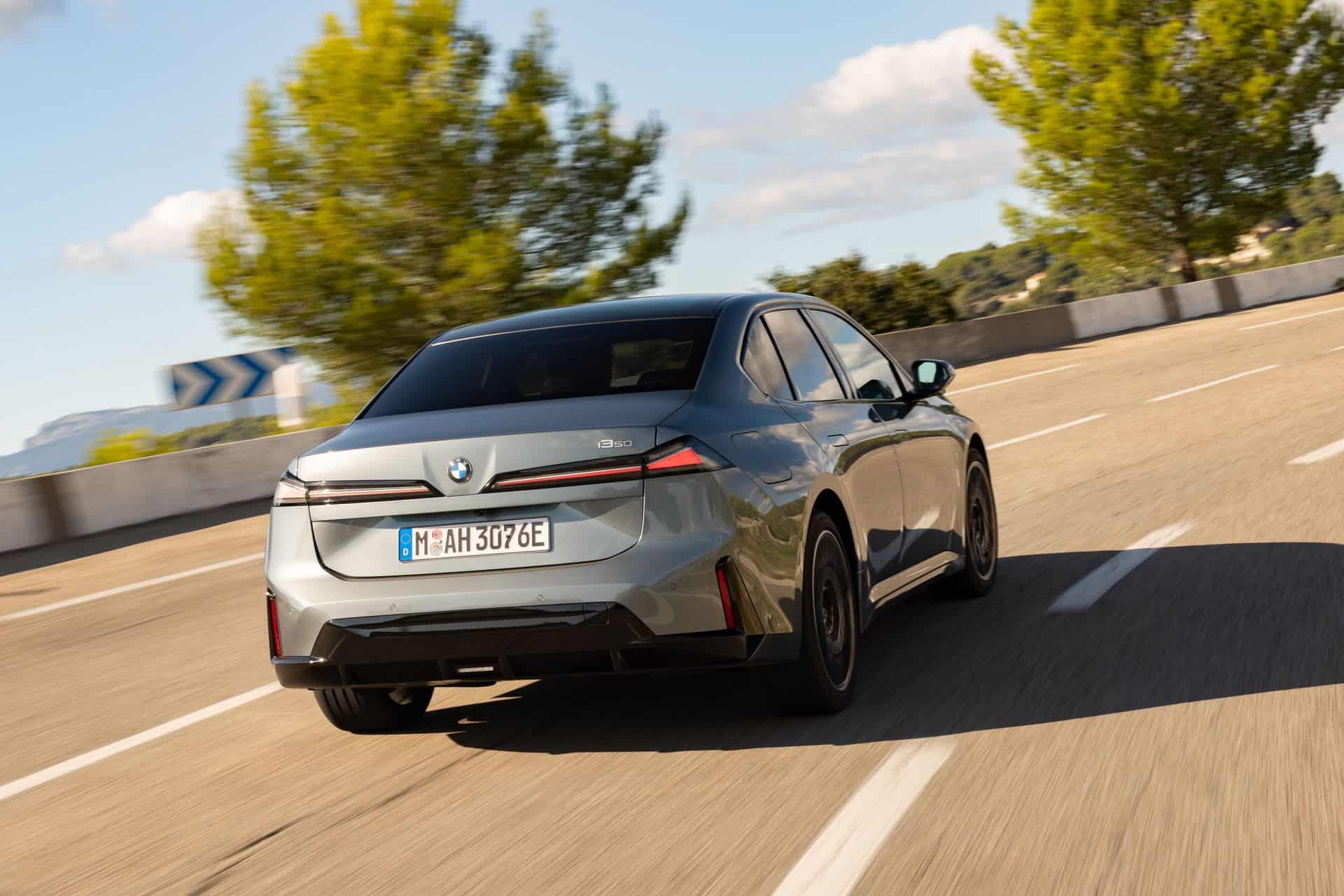
From the front, you’d struggle to tell the i3 from the M350, but the two share little more than the grille and the headlights. The body panels, the glass and the chassis are all different. With no engine to package, the i3 has a shorter hood and a 2,897-mm (114.1-inch) wheelbase, 37 mm (1.5 inches) longer than the M350’s, and it sits 25 mm (1 inch) taller.
That’s the opposite of my i4, a conversion of a gas car on the CLAR platform, with the packaging compromises that come with it. The i3 was designed as an EV from the start, and it shows from the first corner.
It Drives Better Than My i4, And It Isn’t Close
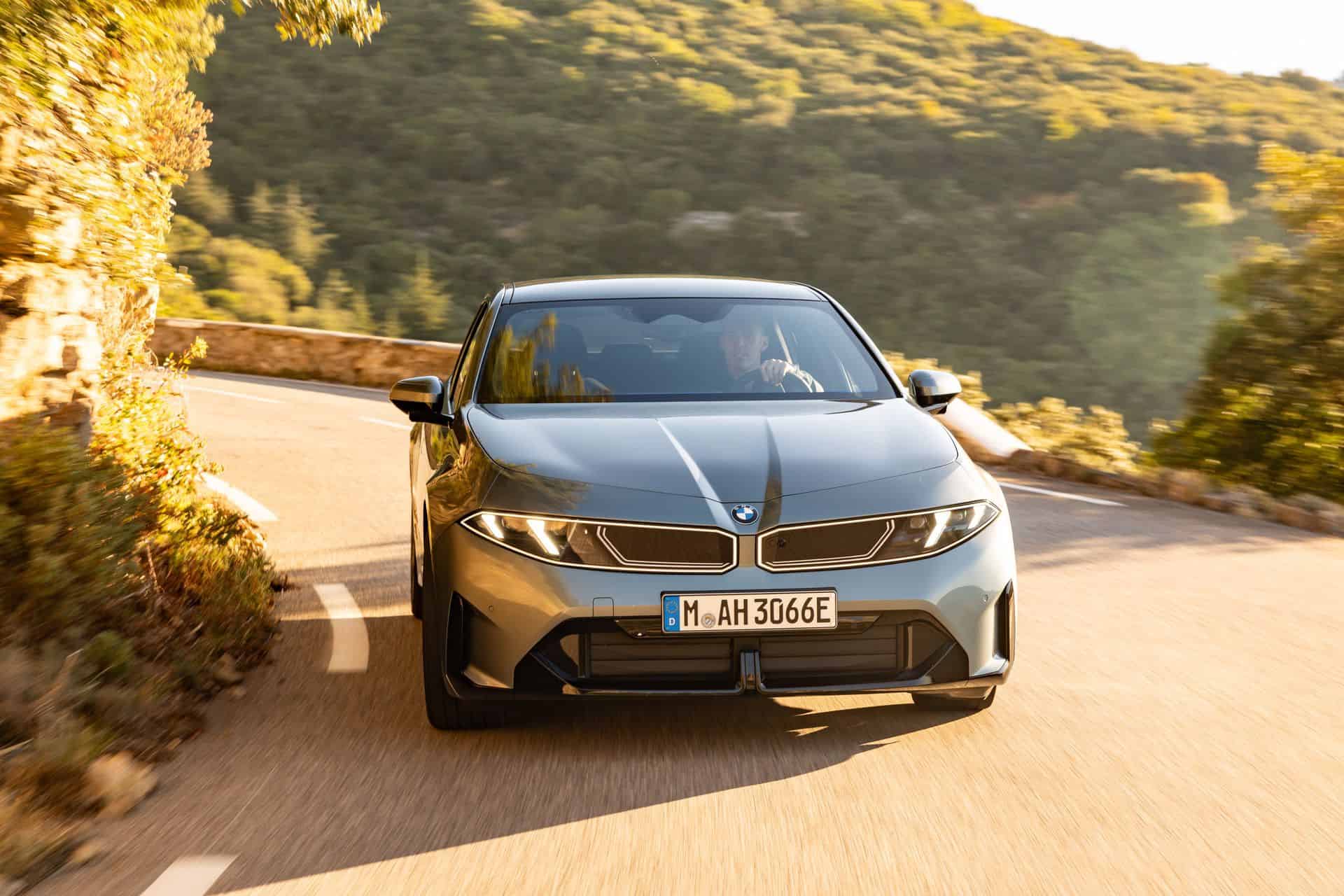
The i3 is quick. We timed it at 4.1 seconds from 0-60 mph on a dry, grippy surface, well ahead of BMW’s own 4.5-second claim, and with 476 lb-ft (645 Nm) from two motors, it passes slower traffic on the highway without any effort. That’s the 50 xDrive, too, not the more powerful i3 M60 that’s coming next.
What surprised me more is how it corners. On the backroads around Aix, it stays almost flat, and I took it to the limit of the tires, loud enough to hear, without feeling unsafe for a second. Push past that and the nose starts to run wide, which is normal for a car this heavy once its weight shifts forward. The battery is part of the structure, so even though the i3 is taller than the M350, its center of gravity is lower, so it doesn’t need stiff anti-roll bars that toss your head around.
The reason it feels so alert is the Heart of Joy, the central computer that runs the i3’s driving dynamics. BMW says it cuts the car’s reaction time from about 20 milliseconds to 1, and you notice it right away. The 50 xDrive has an open rear differential, so the computer pulses the brakes on individual wheels to send torque where it’s needed, and the i3 puts its power down out of tight corners with very little wheel spin.
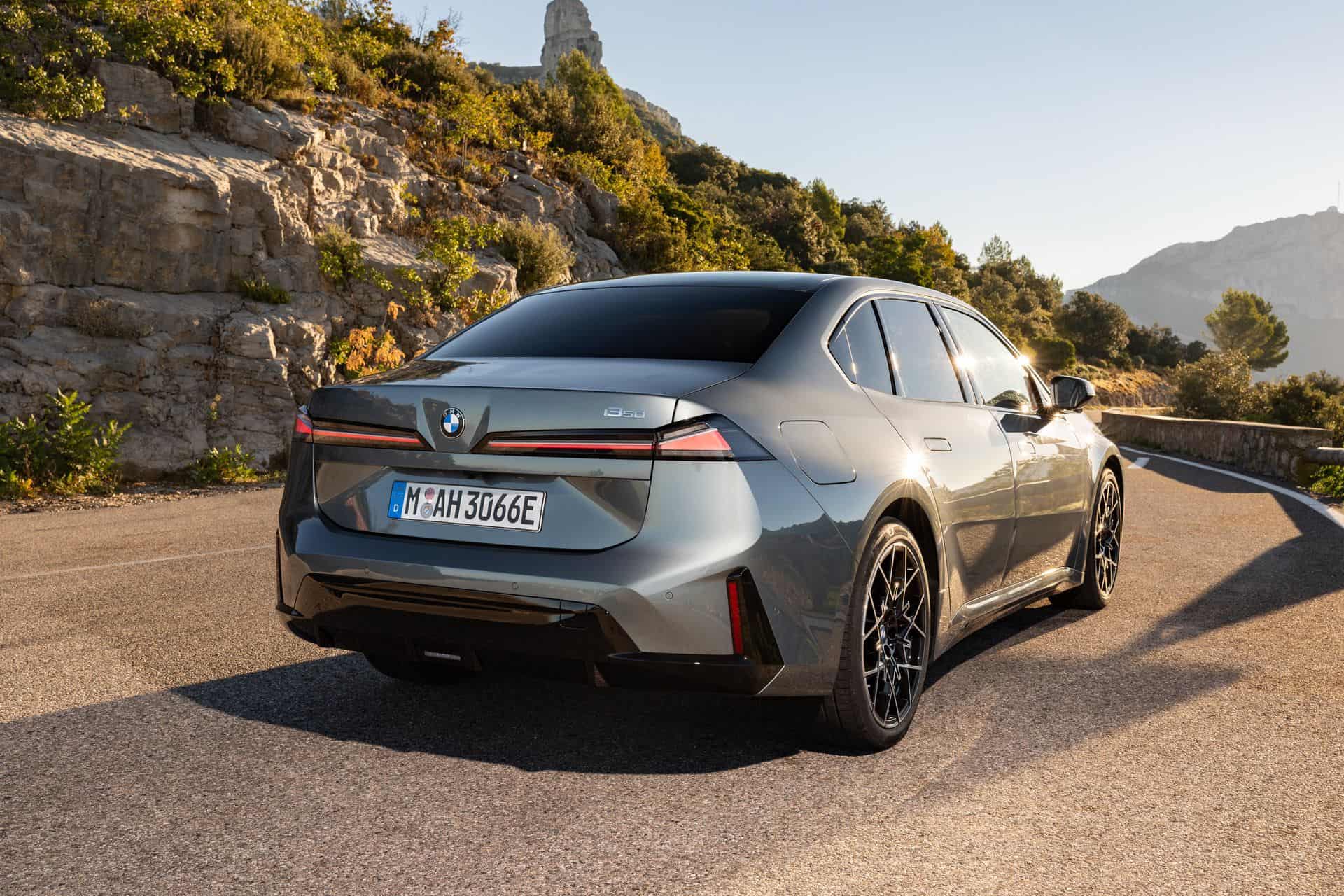
It is heavy, at 4,950 lb in US spec, or about 350 lb more than my i4 eDrive40 on BMW’s European figures, mostly because of its 108.7-kWh battery. You feel the weight when the nose dives under hard braking, but not in normal driving. Through fast corners, it also feels more planted than my car, which BMW’s engineers told me was a priority.
The steering is the one area where my i4 still has an edge, and only in Comfort. BMW heard the complaints that the iX3’s steering was too light and vague, so it revised the software for the i3, but Comfort is still light, with a dead zone on center. Switch to Sport and it gains weight and decent feedback, about where my i4 sits. You feel less of the road than in an M car, which is fine in a car built to be fun when you push it and easy to live with every day.
The Base Steel Suspension Is Pretty Good

Every test car had the standard steel suspension, and it’s better than I expected. In the town centers around Aix, with one speed bump after another, Personal mode with everything set to Comfort soaks them up more gently than my i4 does, because BMW spread the modes further apart, as it did on the M350. The one place the weight shows is over sharp bumps, which the passive dampers can’t fully hide.
Sport firms everything up, turns the displays orange and changes the sound, and it’s where I spent most of the day. You hear a little more from outside and feel more of the front tires through the wheel, but the ride stays comfortable unless the road is really broken. To find one, I took the i3 down an unpaved gravel road, and even in Sport, the damping and rebound control were good enough that you’d think the car had adaptive suspension. The i3 is also quiet: on 21-inch aero wheels, I measured 55 to 60 decibels at 90 km/h (56 mph).
The Smoothest One-Pedal Driving I’ve Felt In 12 Years Of EVs
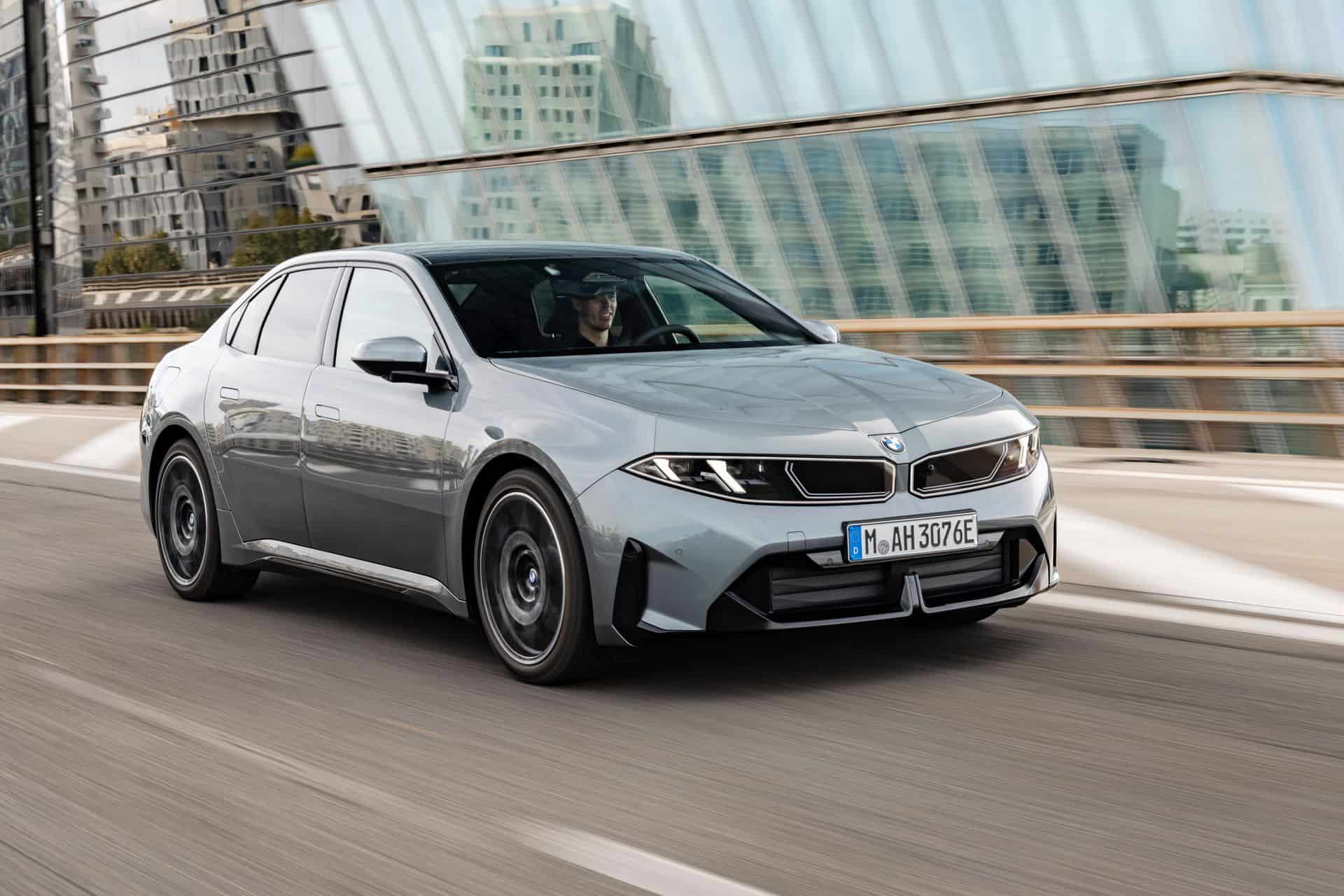
None of the EVs I’ve lived with, from the original i3 to my i4 and the iX, had regen this smooth. With BMW’s sixth-generation eDrive, the Heart of Joy can brake each wheel individually, so even in B mode, the strongest setting, the i3 comes to a stop without pitching your head forward. If anyone in your family gets carsick in EVs, they’ll notice the difference.
Adaptive regen is the setting I’d leave it in. It uses the front camera, the car’s other sensors and the navigation to slow down for roundabouts and stop signs on its own, and it does that more naturally than my i4.
The optional Highway/Motorway Assistant makes it just as easy on the highway. It drives hands-free up to 130 km/h (81 mph), changes lanes when you glance at the mirror, and no longer switches off when you touch the brake or the accelerator. In the tight French towns, the i3 also felt easier to turn and park than my i4.
How Far Does The i3 50 xDrive Go On A Charge?
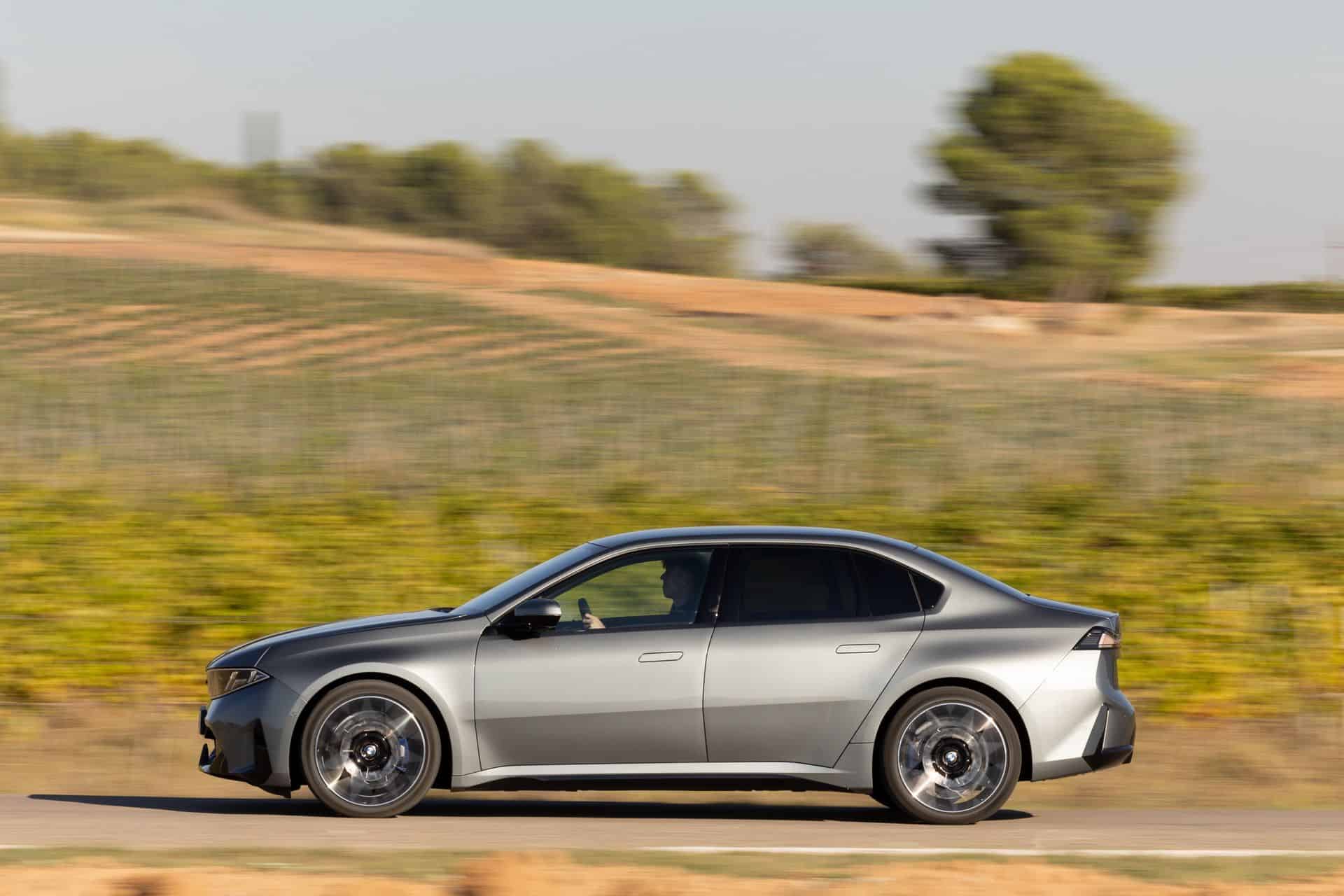
BMW estimates up to 468 miles on the EPA cycle and 912 km (566 miles) on the European WLTP cycle. Driving hard, I averaged at the end around 16.1 kWh/100 km, which works out to about 676 km (420 miles) from a full battery. Gentler driving will get you closer to BMW’s figures.
Winter is another story: in Chicago, my i4 loses 25 to 30 percent of its range when I don’t precondition it.
For me, charging speed is the bigger story. On its 800-volt architecture, the i3 charges at up to 400 kW, so 10 to 80 percent takes 21 minutes, and BMW says 10 minutes adds up to 208 miles. My i4 peaks at about 200 kW and needs 31 minutes. With Ionna opening 400-kW stations in Chicago and a NACS port that opens up Tesla’s Superchargers, range stops being the number I’d worry about.
More Room Up Front Than The i4, But Fewer Buttons
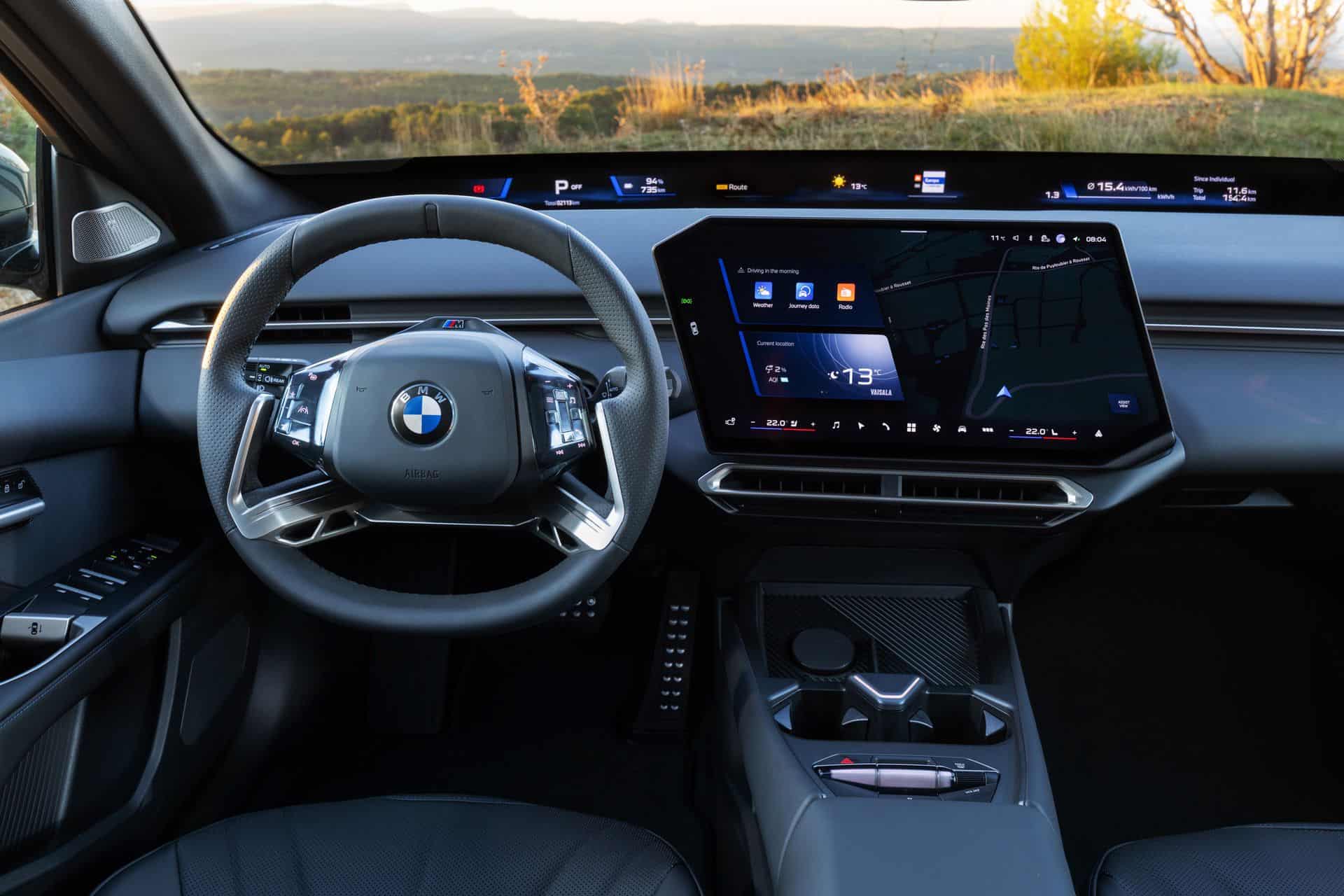
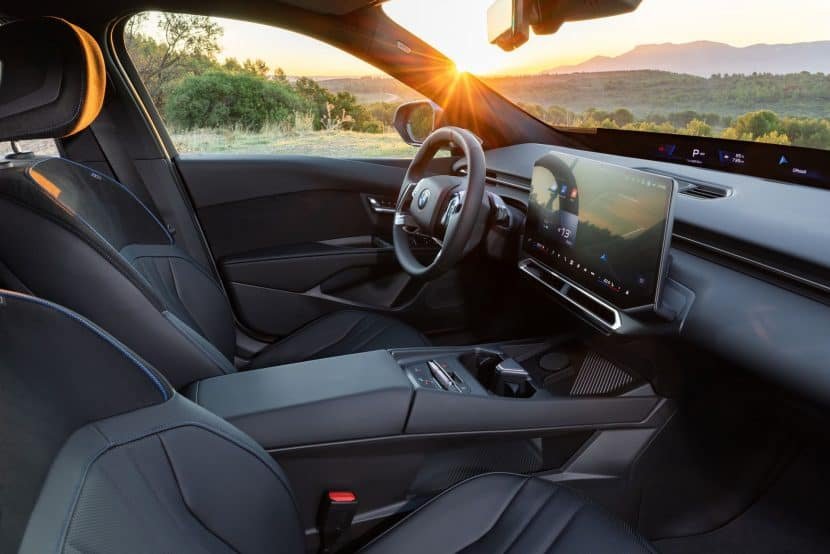
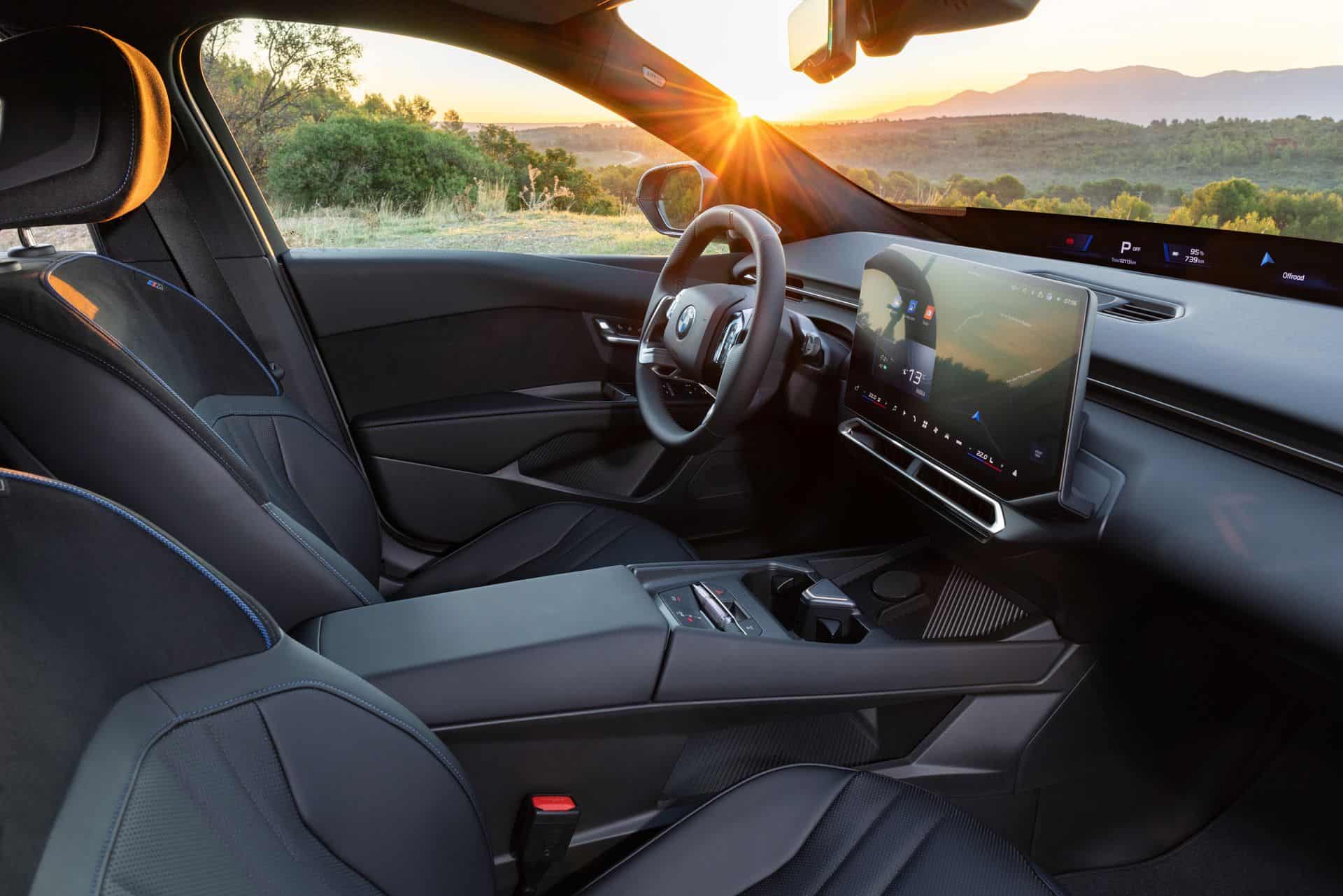
The cabin is where the i3 most clearly moves past the i4. With no need to house an engine up front, BMW pushed the dashboard forward, and with no transmission tunnel, the front seats are wider than in the M350 and there’s more legroom and width than in my i4. The i3 is also 32 mm (1.3 inches) taller than an i4, and you sit higher, which makes getting in and out easier.
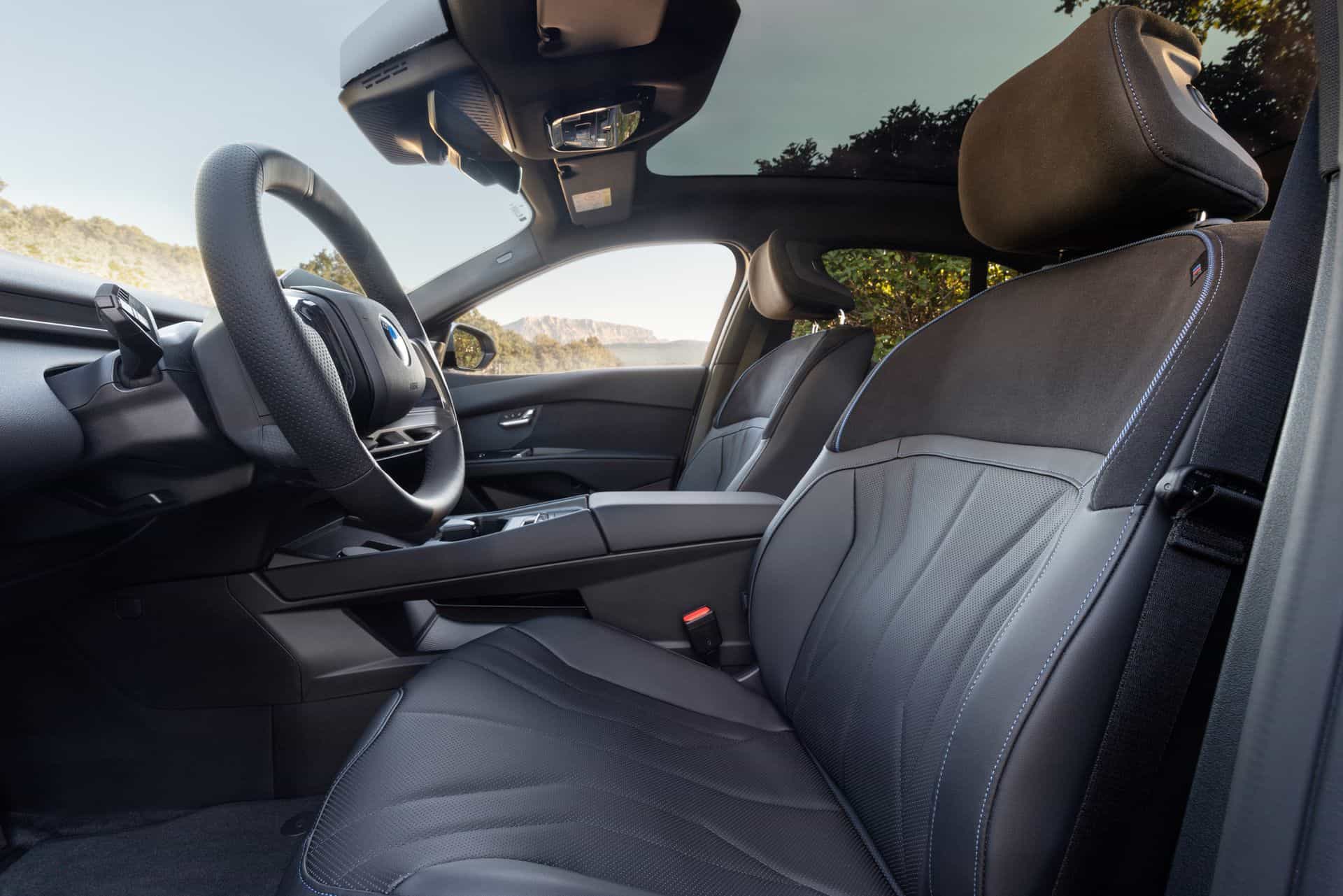
The M Sport seats are comfortable on a long drive and supportive on a twisty road, with plenty of lumbar and side support and a massage function, though every adjustment goes through iDrive X and ventilation is only coming later.
There are a lot of screens, for sure. It starts with the Panoramic iDrive which puts your speed and navigation along the base of the windshield,. Then there is the head-up display. And lastly, a new 17.9-inch central screen which likely has better ergonomics than the widescreen in the i4. The trade-off is that almost nothing is physical anymore, including the air vents, which you adjust on the screen. If you want buttons, the i4 has far more.
The voice assistant understands far more than the laggy one in my i4’s iDrive 8.5, and you just say “BMW” to wake it. Not ideal for people like me who use the word “BMW” a 100 times while filming a review. The top Harman Kardon system has 13 speakers plus a subwoofer and 430 watts, with the subwoofer in the trunk because the battery leaves no room under the seats. Tesla owners will miss one thing: there’s no dog mode yet.
The Back Seat Is Where The Battery Costs You Room
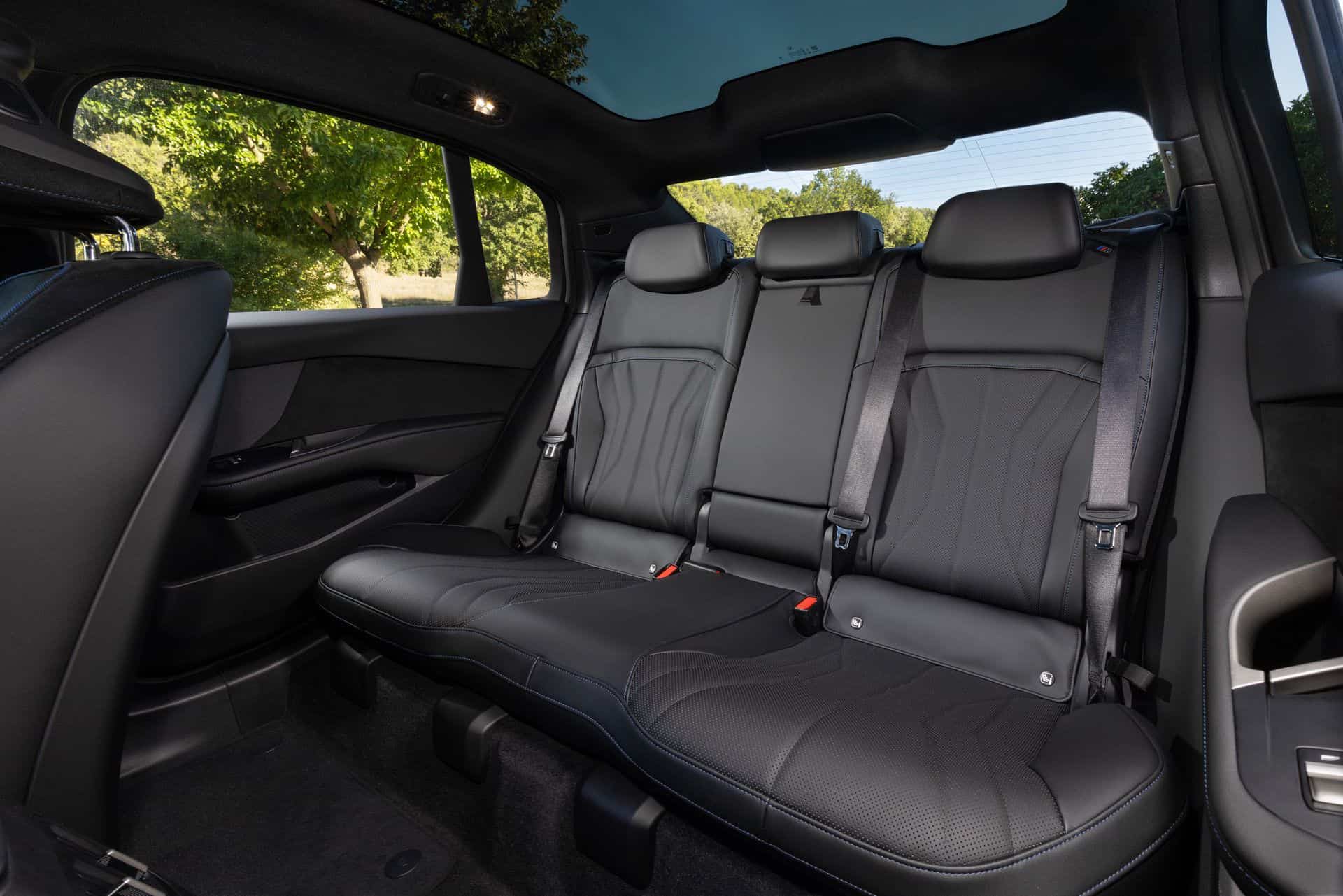
You pay for that battery floor in the back. Our friend and photographer Tom is 2.03 m (6’7″) tall, and we always joke that he plays basketball. With the front seats set for my 6’2″ (1.88 m) driving position, he kinda fit, but his head touched the glass roof and his knees sat higher than in the M350, because the floor is raised. Foot room under the front seats is tight too, and by BMW’s preliminary figures, the i3 gives up more than an inch of rear headroom and shoulder room to the gas 3 Series.
The middle seat is better than in the M350, with no tunnel in the way. For child seats, the ISOFIX anchors on each outboard seat are 12 inches apart center to center, and the bench is 49.5 inches wide. In my i4, our booster’s bolster covers the latch, but I figured out that Clek’s Oobr should fit both the i3 and the i4.
The trunk holds 420 liters (14.8 cubic feet), 30 fewer than the M350’s, and the rear seats fold from toggles on their sides rather than from the trunk. There’s a 31-liter frunk, but it only fits the charging cables.
Is The i3 A Better Buy Than A Tesla Model 3?
The i3 50 xDrive starts at $61,500 before destination ($1,350), the same as an iX3 50 xDrive, and a loaded one gets close to $80,000. A base Model 3 starts at $38,630, so the BMW has a big premium to justify. I think it does: the i3 has better interior quality, and it drives like a BMW. Tesla can still point to its software and to Full Self-Driving, which BMW doesn’t offer.
The Better Car, Just Not The Right One For My Family
The i3 is the electric 3 Series BMW should have built years ago. Next to my i4, it drives better, rides better, goes farther and charges about twice as fast, and the only thing it gives up is physical buttons. The coming i3 M60 will add more power, and BMW may yet add a sleeker body style, but the 50 xDrive already feels complete. If you’re deciding between an i4 and an i3, the i3 is the easy choice.
Replacing my own i4 is harder. If I were single, or married without kids, I’d get the i3, because I enjoy driving, I don’t need much space and I rarely take road trips. But my kids are small, their car seats need room, and the back seat is the one place the i3 asks for a compromise. So my next BMW will probably be an iX3 or an iX4, even though the i3 is the one I’d rather drive.
First published by https://www.bmwblog.com