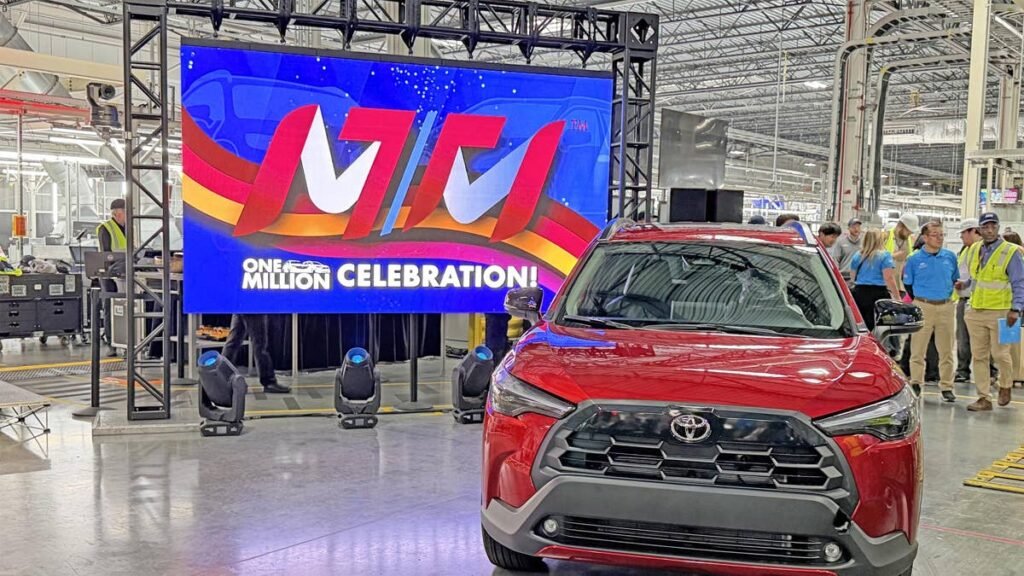
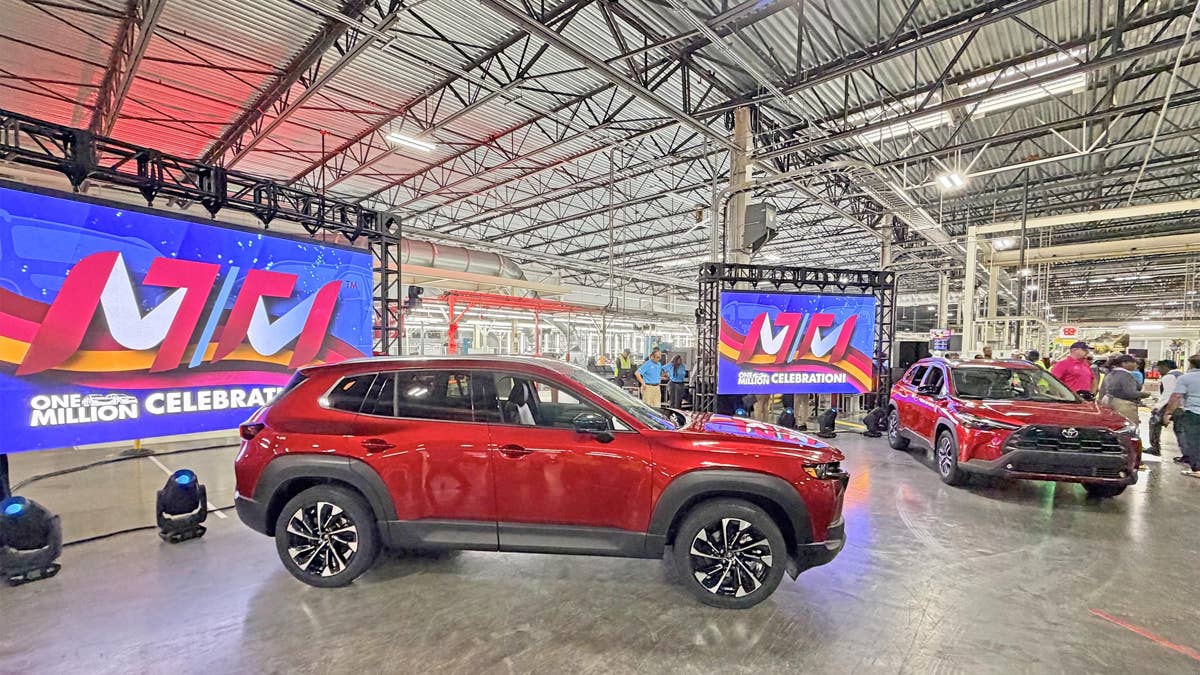
As a crowd of dignitaries gathered on the factory floor in Huntsville, Alabama on Wednesday morning, they got a look at two Soul Red crossovers – a Mazda CX-50 and a Toyota Corolla Cross. The event marked the production of the 1 millionth vehicle to roll off the line at the Mazda Toyota Manufacturing operation in Huntsville, Alabama. Which vehicle actually achieved the milestone? Factory officials weren’t saying, craftily letting both automakers claim credit.
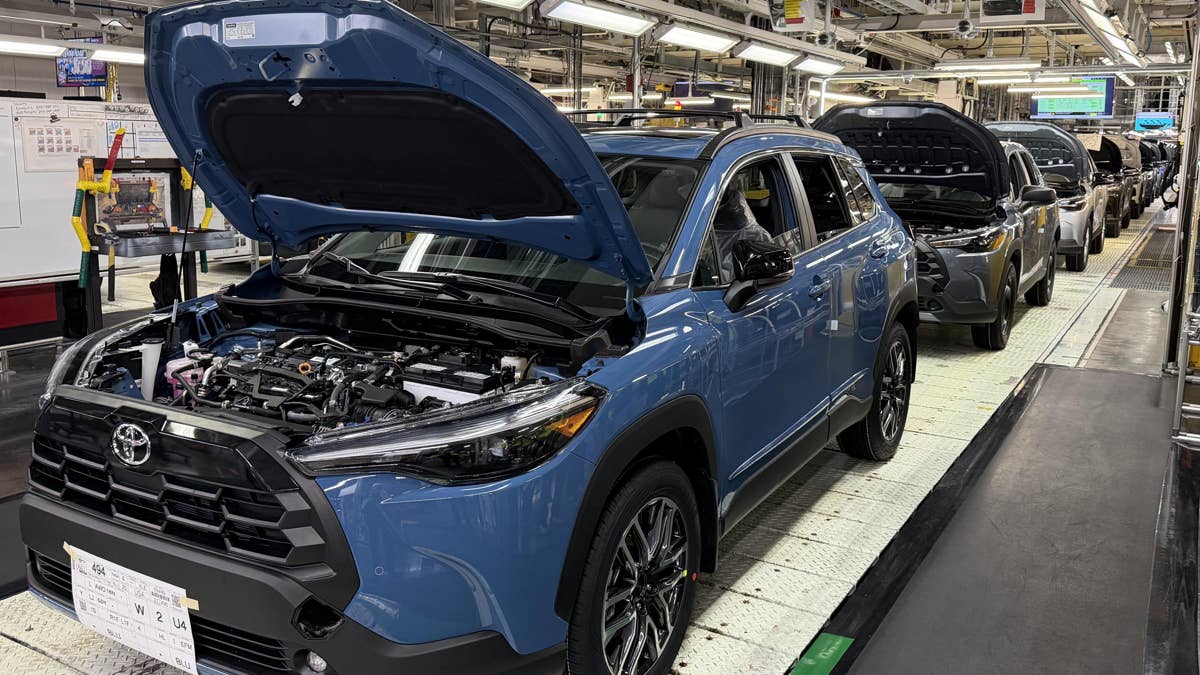
What mattered more was the rapid pace at which the $2.3 billion operation has ramped up. After ground was broken in 2018, construction ran into a major roadblock when COVID hit. It threatened to put the operation on hold until the two companies came up with ways to keep work going and begin the process of hiring a factory workforce now numbering 4,500 – plus another 3,500 supplier employees.
Production has steadily ramped up since a Toyota Corolla Cross rolled off the line on September 30, 2021, with Mazda’s first CX-50 following four months later. The partners expect to reach 100% of the plant’s two-shift capacity this coming month – and, with demand for the two models still growing, they’re likely to look for ways to squeeze out even more vehicles from the Alabama plant. That could mean a major expansion.
What’s MTM?
Toyota has had a long history of building vehicles in the U.S., starting in 1984 at a factory in Fremont, California. The short-lived venture was part of an unusual joint venture pairing the Japanese giant with its erstwhile rival, General Motors. Since then, Toyota has set up a network of its own plants across the Southern half of the U.S.
For its part, long-struggling Mazda entered into its own joint venture going in Flat Rock, Michigan in 1987, ultimately selling the operation to long-time partner Ford Motor Co. in 2012. But it soon became clear it faced challenges operating without a U.S. manufacturing base.
With Toyota needing still more U.S. production capacity and Mazda seeking a way back int, “they (found) multiple strategic reasons to collaborate,” said Mark Brazeal, MTM’s Vice President of Administration and Quality. The 50/50 joint venture broke ground in 2018 and, after struggling through the pandemic, the operation launched production three years later.
A Rapid Ramp-Up
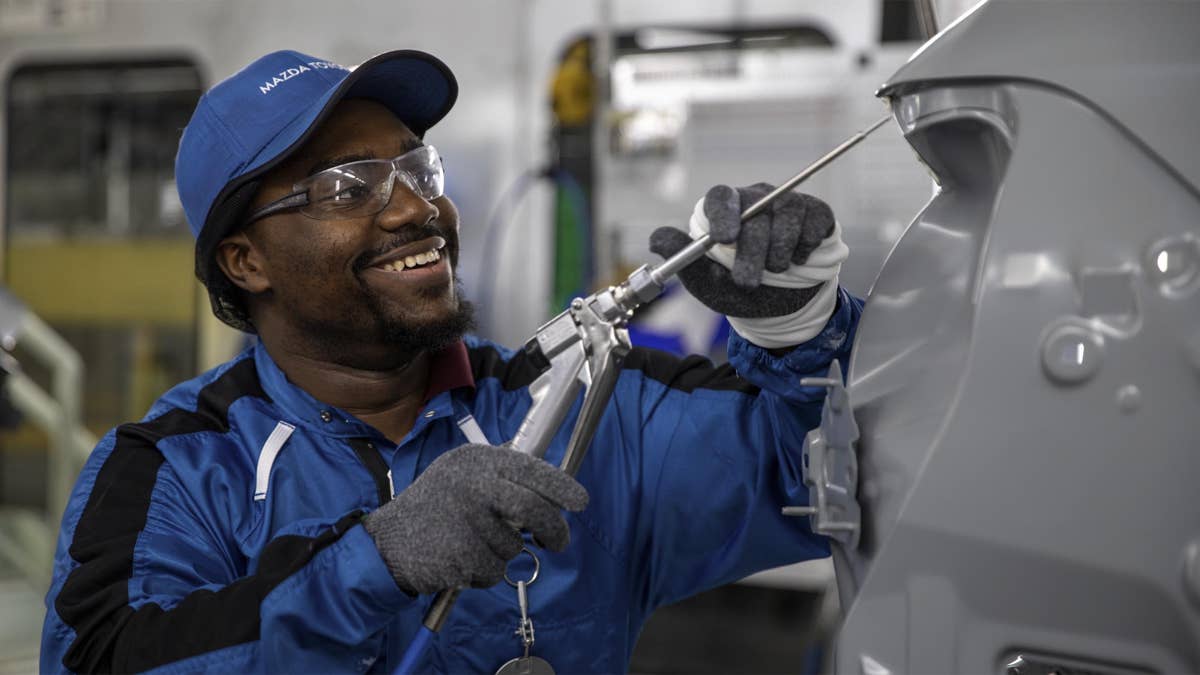
Beyond those posed by the pandemic, plenty of other challenges needed dealing with, including finding a way to blend two very different corporate cultures. The 3.7 million-square-foot plant also had to accommodate the very different designs and processes used by Mazda and Toyota.
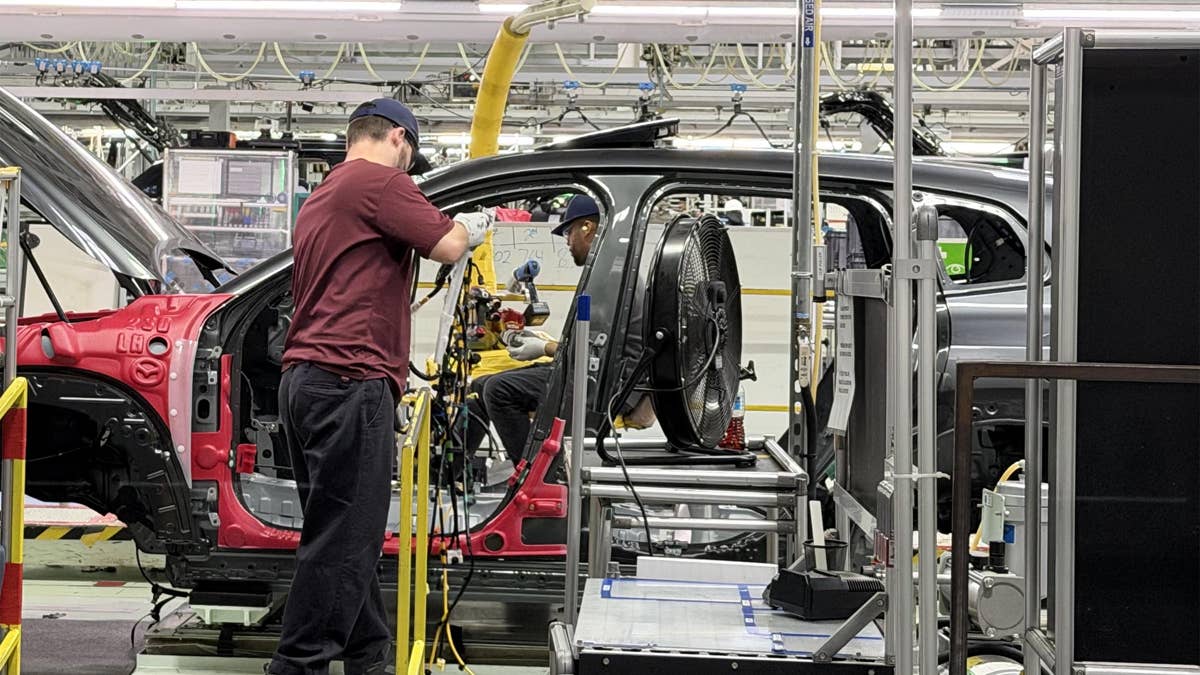
As it stands now, each Corolla Cross and CX-50 start out together in the stamping plant but quickly shift to separate Mazda and Toyota assembly lines. More precisely, the Corolla Cross rolling down the “Apollo” line, with the CX-50 using the Discovery line. (The names reflect Huntsville’s roll as a major center of the NASA space program.) Plant officials chose those names so the factory wouldn’t seem to be divided up into two distinct halves.
Production began slowly, both automakers focusing on quality over quantity, officials explained, the process being further complicated when hybrid versions of the two vehicles were added. But the plant is now weeks away from reaching its rated capacity of 300,000, said Rhonda Gilyard, MTM’s Vice President of Manufacturing, divided evenly between the two brands.
What’s Next
While officials with MTM and the two automakers won’t discuss specific plans, it’s clear that they see an opportunity to further boost production, considering the strong demand for the product assembled in Huntsville. The CX-50 is now Mazda’s second best-selling model, Tom Donnelly, the automaker’s U.S. CEO, told Autoblog in an exclusive interview.
In the near-term, insiders hinted, the addition of a third shift could deliver a production boost. But that could be just a first step. “We have room to grow,” confirmed Brazeal, noting that the Huntsville factory campus has plenty of open space where additional production lines could be added. “The plant was laid out in a manner in which it could grow in the future.”
Toyota, in particular, has signaled a desire to expand U.S. production, the company last year announcing plans to invest another $10 billion in the U.S. While an all-new plant could follow, it has signaled that much of the investment would go towards expanding existing operations. As for Mazda, the small, Hiroshima-based company has nowhere near the cash resources but is still determined to grow, Donelly said. It delivered 410,346 vehicles in 2025 and has set a target of reaching 500,000 in the not-too-distant future. As with Toyota, the company sees significant advantages in local production, especially in light of the Trump tariffs on Japanese auto imports. Expanding the MTM joint venture appears to be high on the list of options for both of the partners.