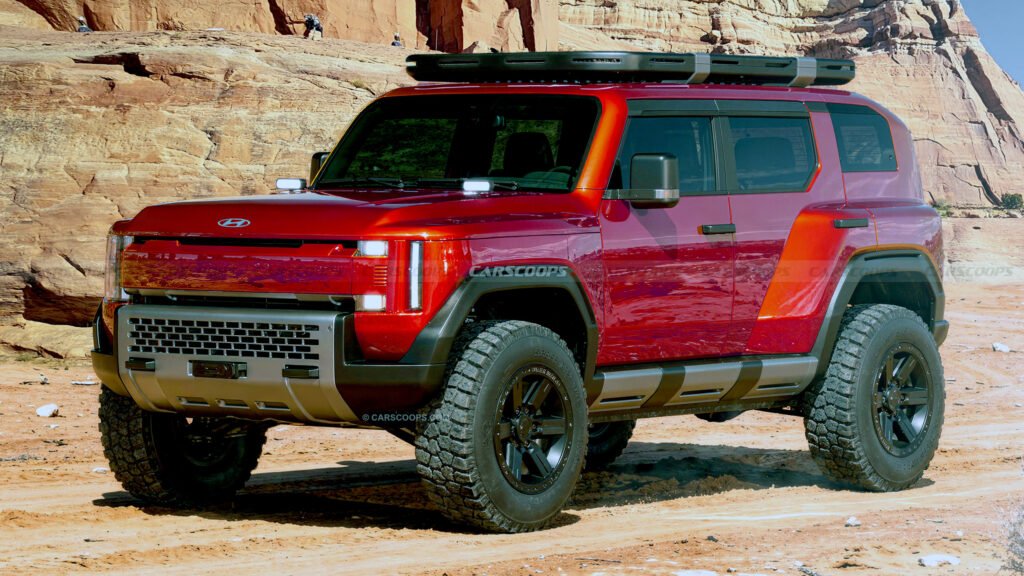
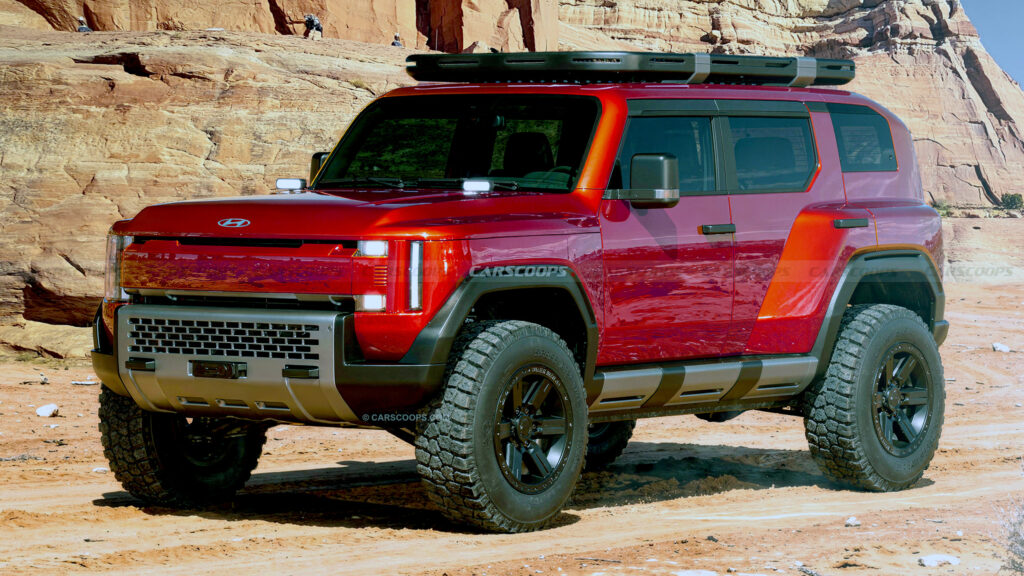
- Hyundai’s Boulder concept previews its first body-on-frame off-roader.
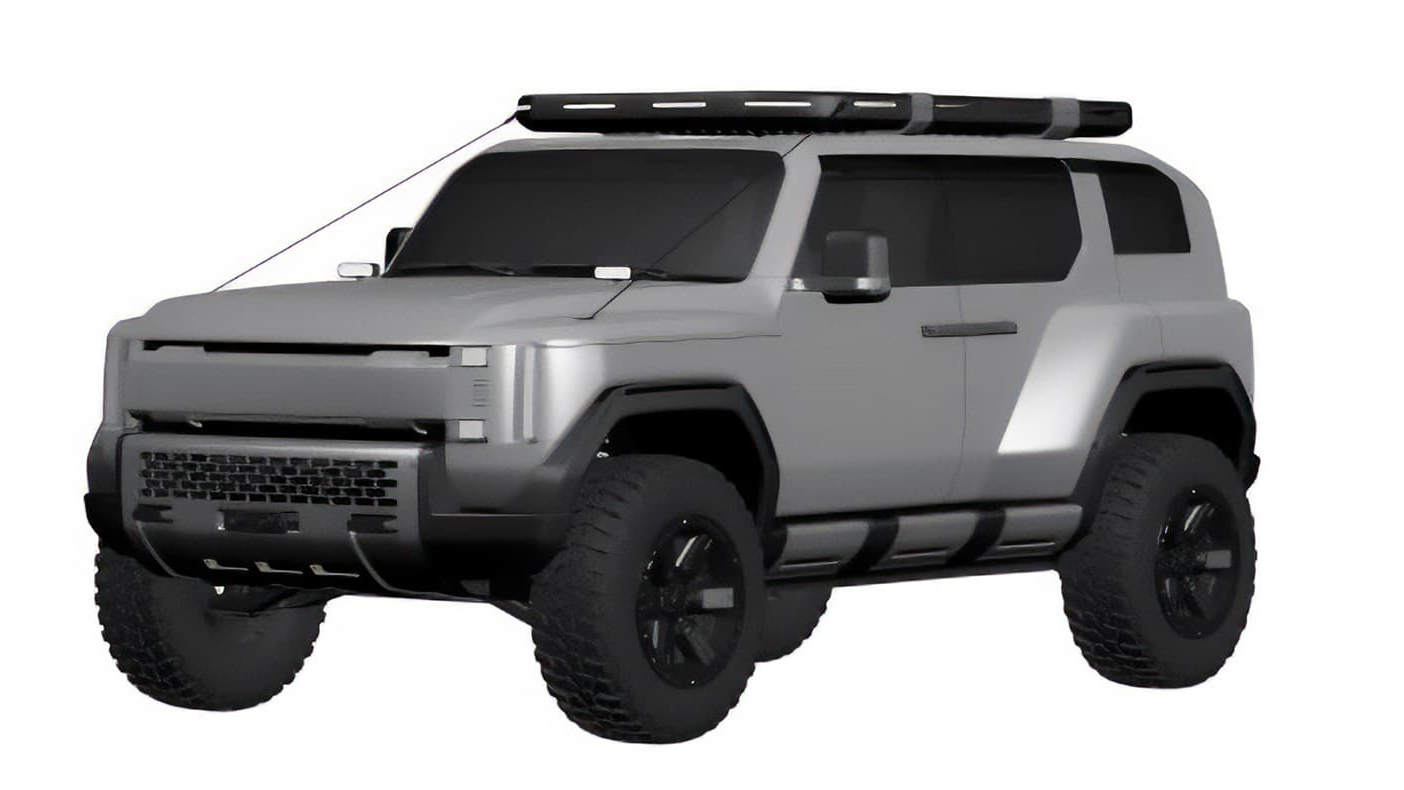
- A patent image may show the production version ahead of its debut.
- The boxy design borrows cues from both the Bronco and the Wrangler.
Seoul has spent years toughening up its crossovers with XRT badges, and now it wants a crack at something considerably more serious with the Boulder SUV. Shown at this year’s New York Auto Show, the off-road concept previewed Hyundai’s first body-on-frame vehicle and clears a path for a midsize pickup due before the end of the decade.
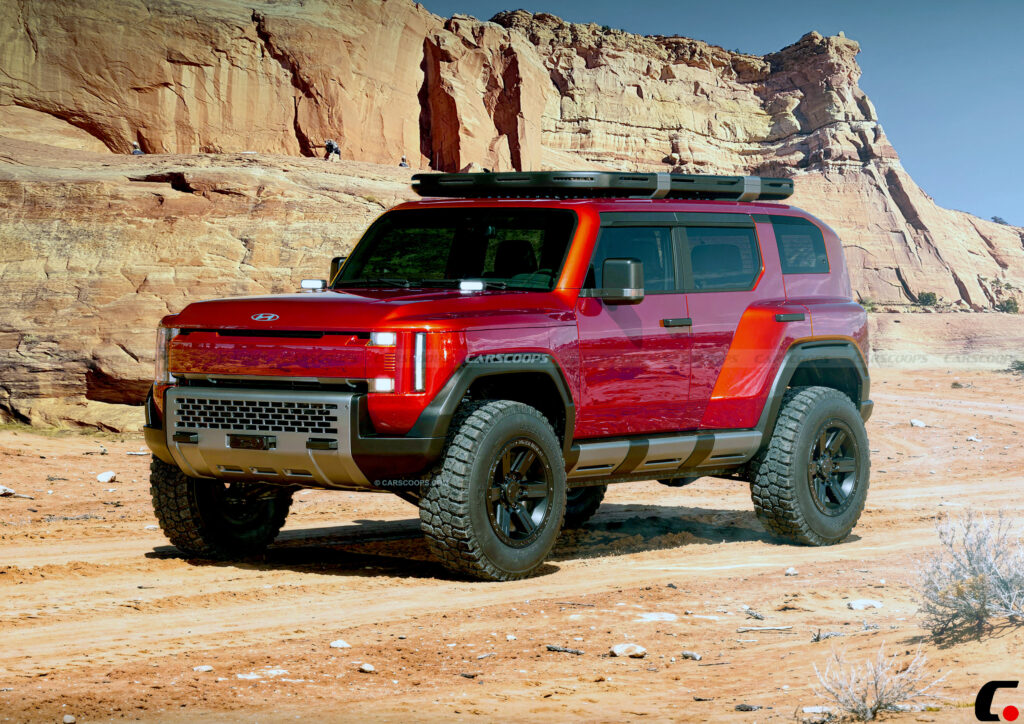
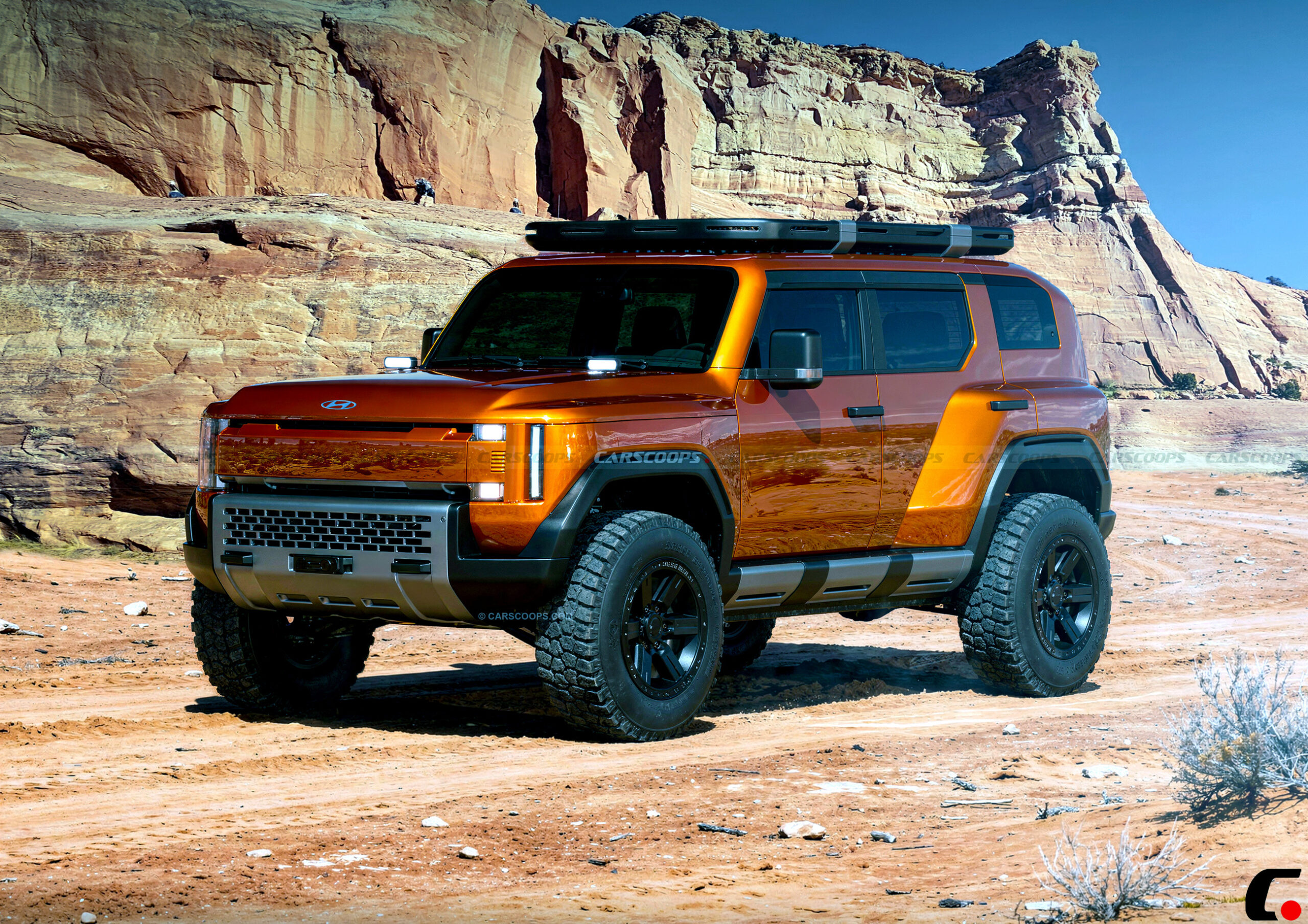
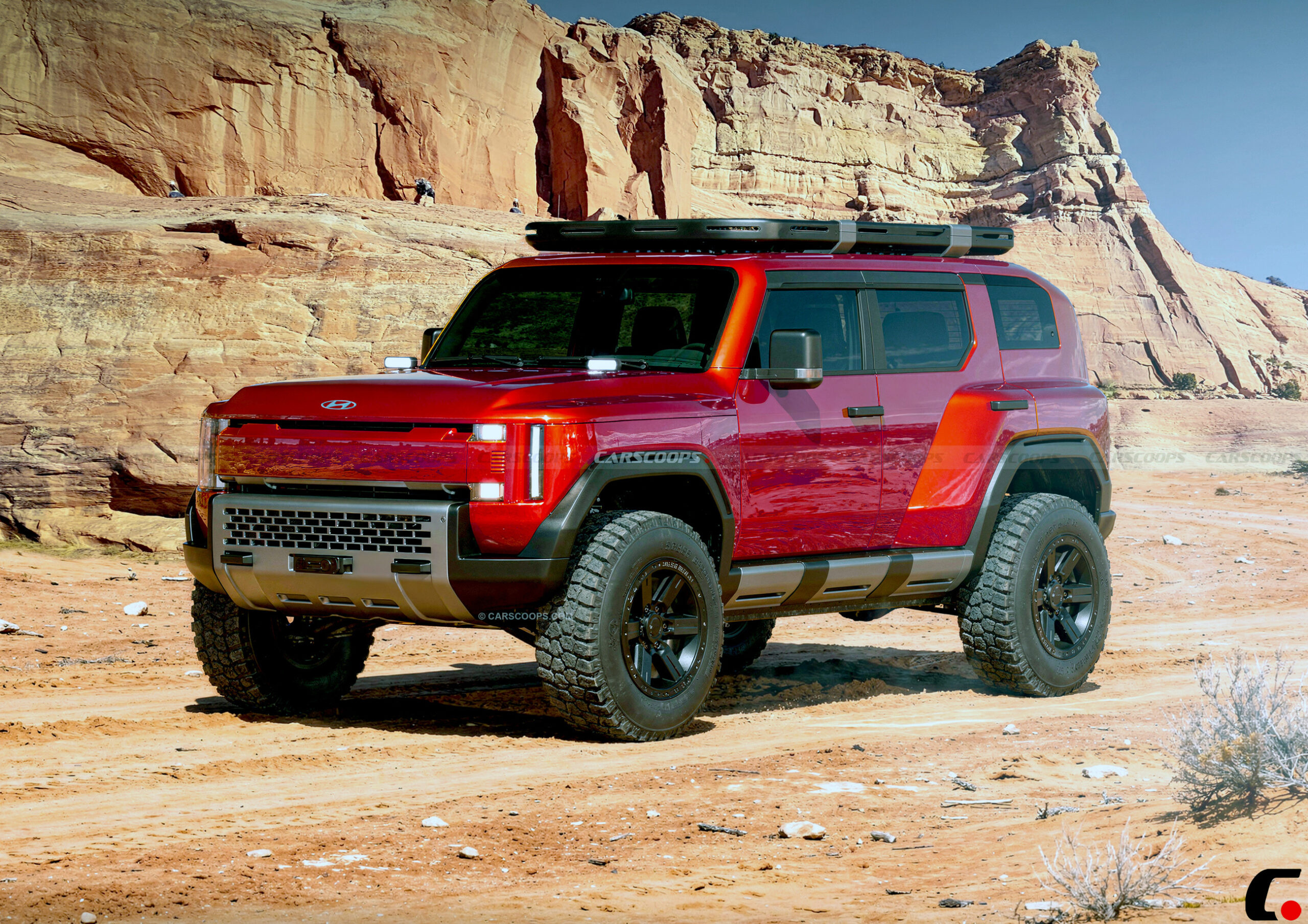
Curiously, an image lodged by Hyundai with India’s patent office surfaced back in May and appears to show what could very well be the production-spec Boulder. Armed with that intel, we’ve digitally translated the patent into the real thing and dive into everything there is to know about it.
Bold Design
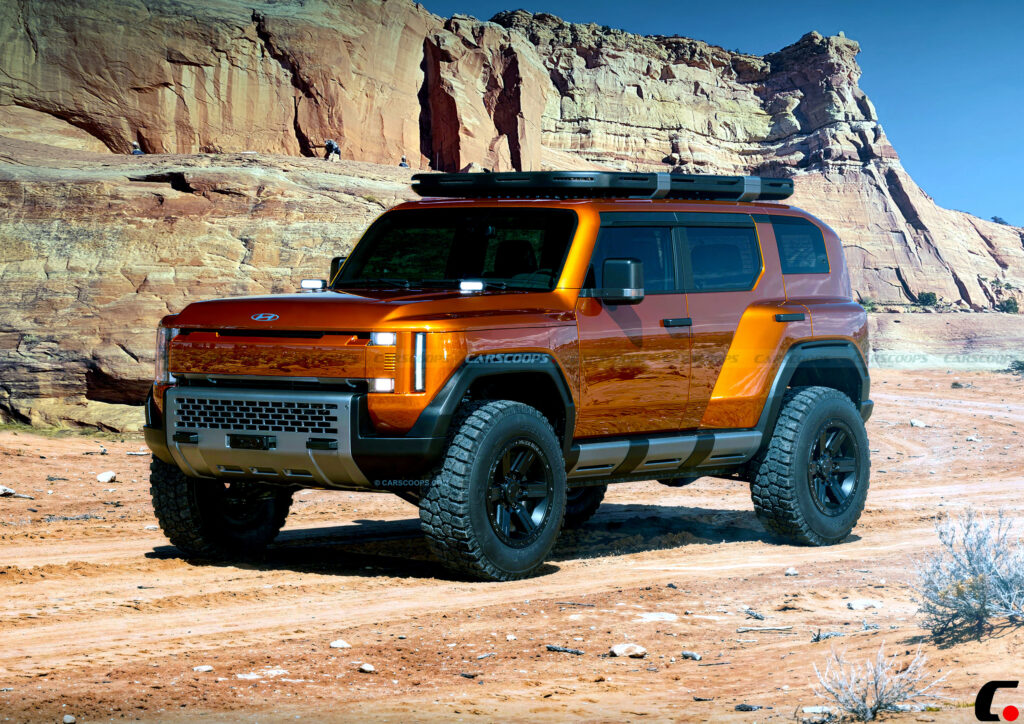
The Boulder embraces Hyundai’s “Art of Steel” design language but is far more brutal and utilitarian than the brand’s road-going SUVs. Up front, a bluff hood meets a full-width panel containing small rectangular headlights and vertical LED signatures, with a substantial lower grille, exposed recovery points and a skid plate below.
Hyundai Boulder Concept
In profile, it looks like a futuristic Mars Rover with boxed wheelarches, chunky cladding, slab-sided doors and wheels with huge 37-inch rubber. In a nod to the Bronco and Wrangler, the A-pillars are rounded near the roof, while contrasting rear pillar trim adds visual intrigue. Out back, it’s stubby and upright, retaining the concept’s external-mount spare wheel and roll-down rear glass.
Ruggedly Connected
Hyundai Bolder Concept’s interior.
While no patent images of the interior have surfaced, it’ll likely mirror the concept’s aesthetic by pairing a broad horizontal dash with exposed structural elements and chunky switchgear. Expect five- or seven-seat configurations with an emphasis on durability rather than a premium fit-out.
While the concept had four configurable displays, we believe these will be replaced by a large central screen running Pleos Connect. The Android Automotive-based system combines connected navigation, app marketplace, OTA updates and Gleo AI voice assistance. Physical controls would be retained for low-range, differential locks and terrain mode settings.
Platform and Powertrains
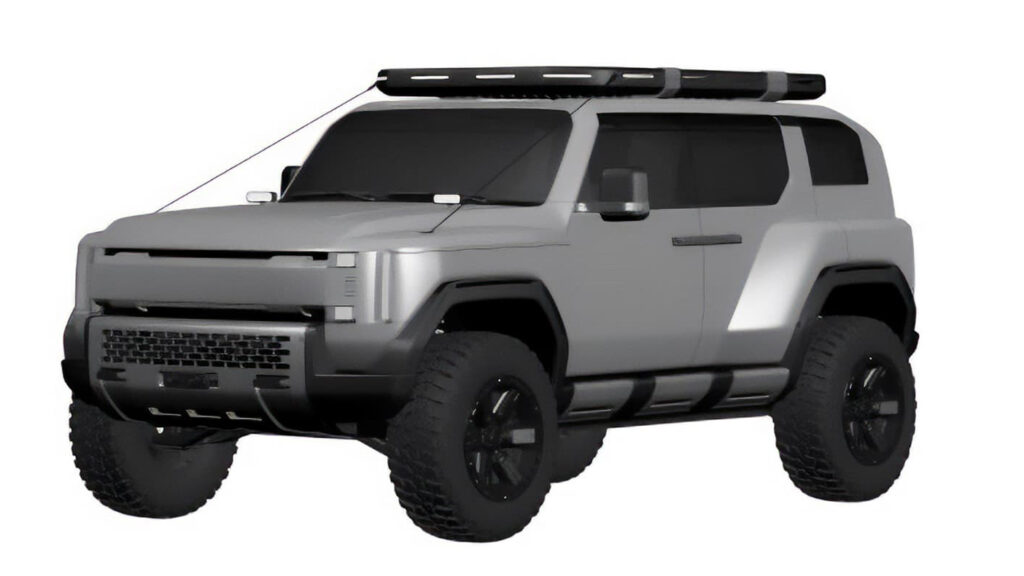
Hyundai has confirmed the Boulder uses a body-on-frame architecture made from US-produced steel, but core details remain under wraps. One possibility is sharing hardware with the Kia Tasman, although the automaker’s official messaging points toward a new US-focused program rather than using the Tasman’s platform.
The likely powertrain roster could include a 330 hp (245 kW) 2.5-litre turbocharged petrol-electric hybrid, a 400 hp plug-in hybrid and fully electric options for North American markets. Other markets could receive the Tasman’s 207 hp (154 kW) 2.2-liter turbo diesel and 8-speed auto.
Equipment for hitting the trail will include four-wheel drive with front and rear diff lockers, low-range gearing, independent front suspension with a solid-axle rear, and tank-turn functionality.
Rivals and Reveal
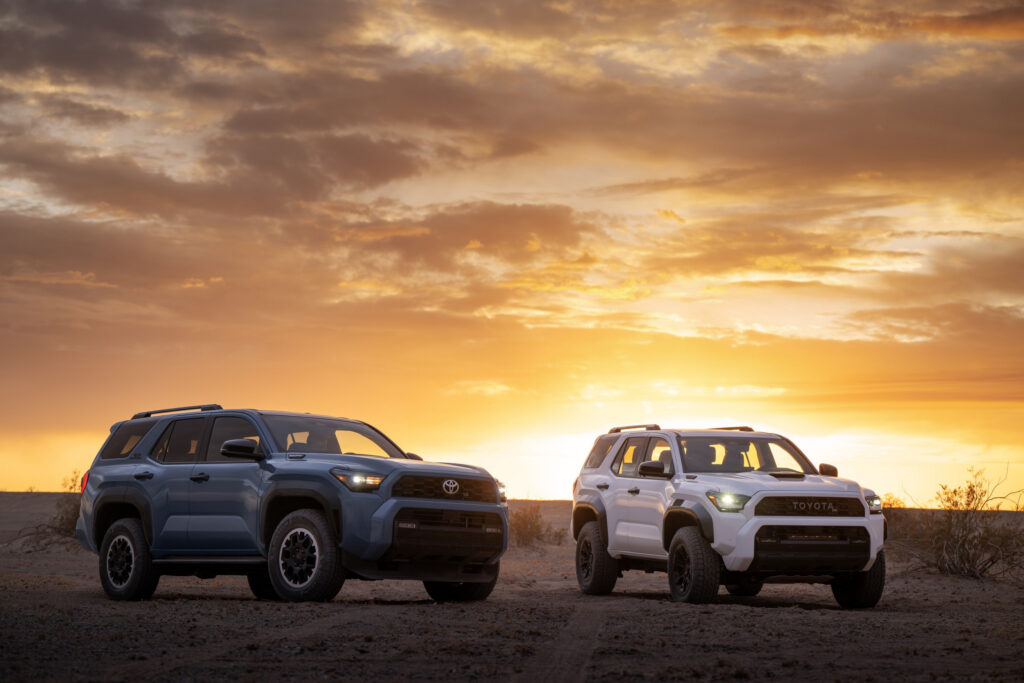
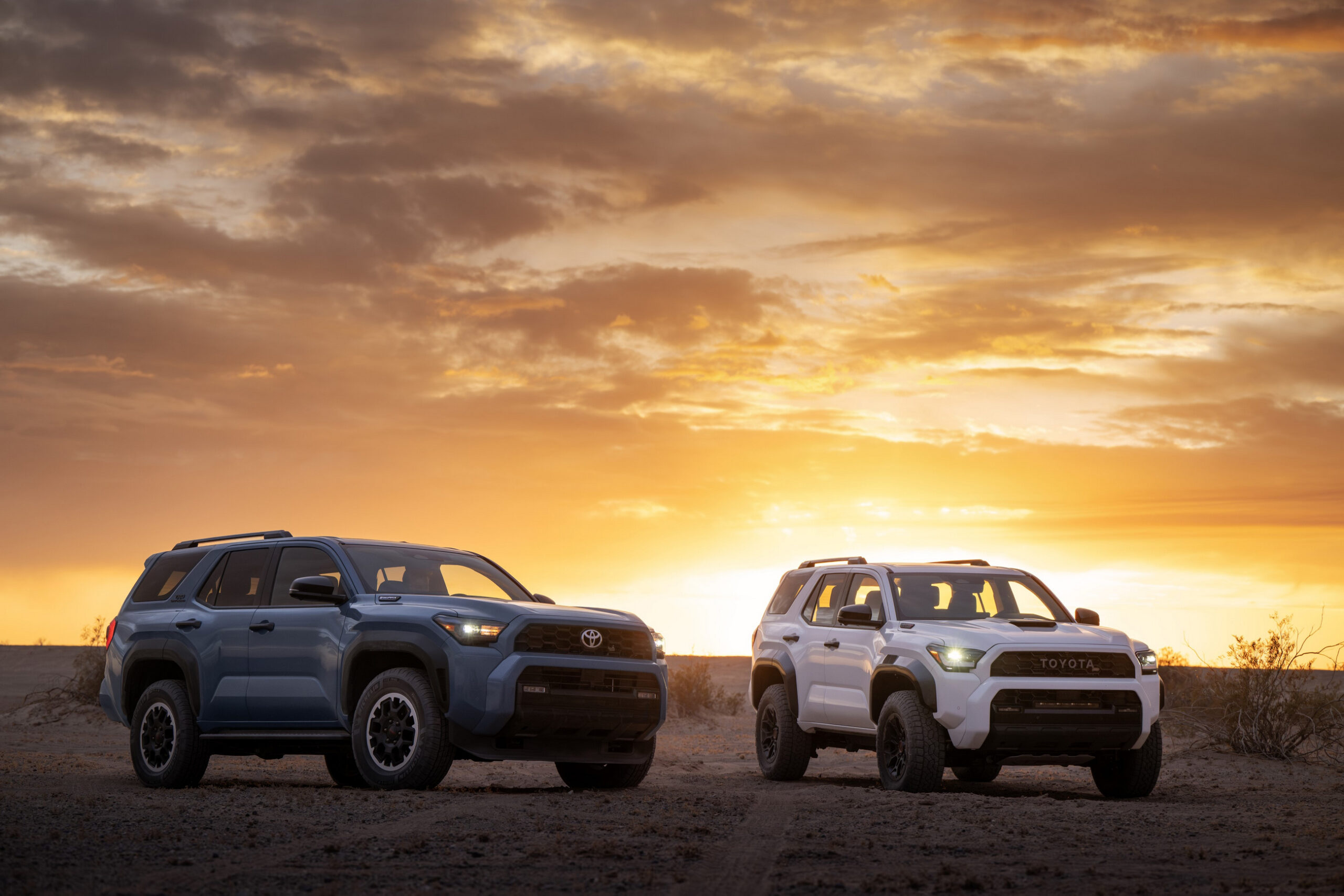
If approved, the Boulder would square off against genuine off-road rivals, such as the Jeep Wrangler, Ford Bronco, Toyota 4Runner, and Land Rover Defender.
Hyundai has committed to bringing 36 all-new and refreshed vehicles to America by 2030, and patent activity suggests a body-on-frame SUV will be one of them. Reports indicate that it could be built at Hyundai Group’s HMGMA plant in Georgia, where the Ioniq 5 and Ioniq are currently produced.
What do you think of the Boulder’s bold look? Let us know in the comments below.