Genesis has spent the last few years proving it can build luxury cars that deserve to be taken seriously. The GV70 and GV80 gave the brand real showroom credibility, while its sedans showed that Genesis was not afraid to do things differently. Now, the company appears to be looking at something far more emotional. A proper Genesis supercar.
Related: Genesis’ V8 Supercar Finally Shows Off Its Gorgeous Analog Interior
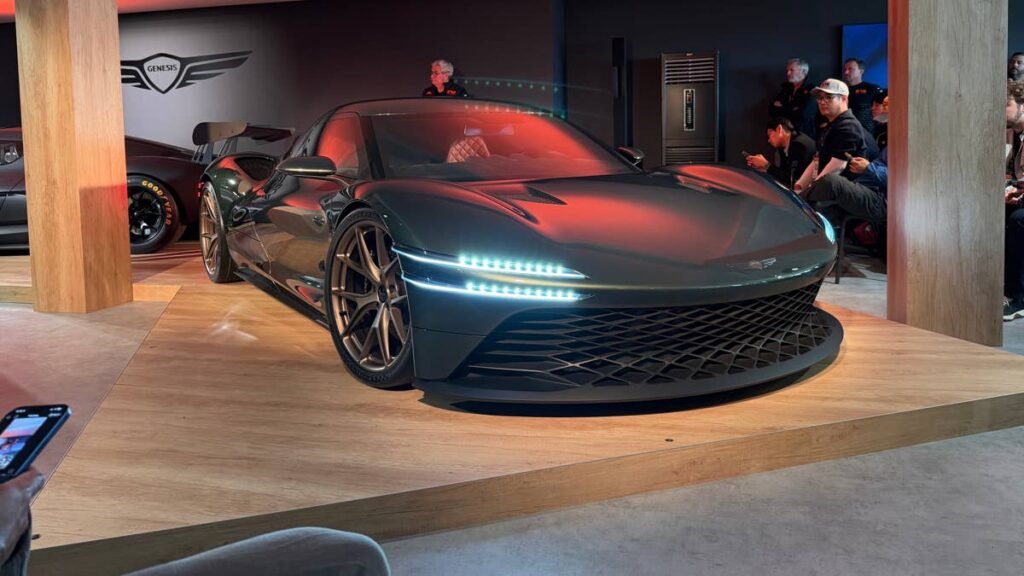
The Magma GT Concept shown at Le Mans is still not confirmed for production, but Genesis executives made it clear that this is not just another design study with no future. The car is under serious consideration, and the brand is now looking at the part that usually decides whether a dream becomes reality: the business case.
Adam Lynton / Autoblog
The GT3 Concept Sparked The Road Car
The Magma GT was discussed alongside Genesis’ GT3 ambitions, and according to Genesis CEO Jose Muñoz, the two projects are closely linked.
“The GT3 was the vehicle that gave us the direction to potentially develop the GT,” Muñoz said. “That’s how it goes.”
Related: Genesis Just Took Its BMW M And AMG Fight To Le Mans
That is a revealing line. It suggests the Magma GT was not simply designed as a wild concept car to sit under the lights. Instead, the racing project helped push Genesis towards considering a road-going performance flagship. Muñoz stopped short of saying the car is definitely heading for showrooms, but he also did not shut the door.
“The GT is a product that is right now under consideration,” he said. “Everything is under consideration, but it depends on your reaction. It depends on the public reaction. If we see that there is a lot of interest, we’re going to really go for it.”
That puts the Magma GT in an interesting position. It is not approved, but it is clearly alive.
Adam Lynton / Autoblog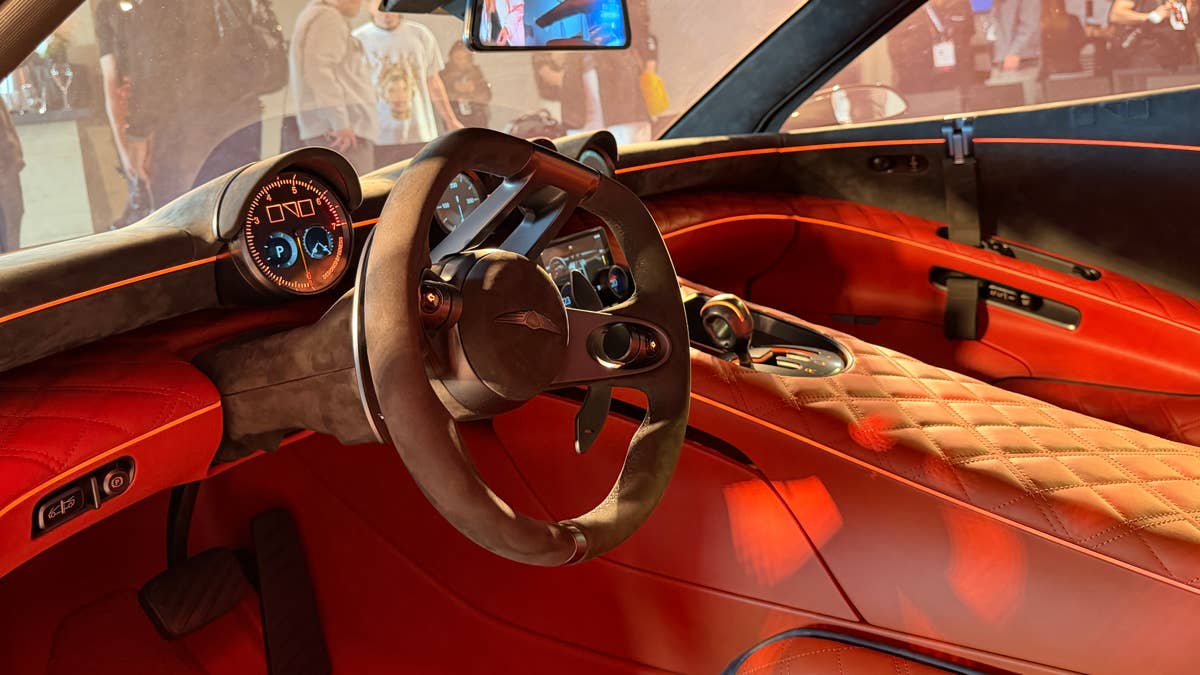
Genesis Says The Hard Engineering Work Is Mostly Done
The strongest hint came when Muñoz explained how Genesis evaluates a project like this. According to him, there are three major stages.
“As you know, in everything that has to do with technology, there are three steps,” he said. “The scientific feasibility, I think we have achieved that. Second one is the technical feasibility, achieved. The third one is the financial feasibility, and that’s my job.”
That is about as clear as executives usually get without making a formal product announcement. The takeaway is simple: Genesis believes it can build the car. The question now is whether it makes enough sense commercially. That means working out investment, price, volume, positioning and whether the Magma GT can lift the rest of the brand.
“GT3 is what triggered GT,” Muñoz added. “GT, we’re doing the numbers as we speak. Everybody says they love it. I would love it personally.”
Adam Lynton / Autoblog
A Race Car Would Follow
Genesis is not thinking about the Magma GT as a standalone toy. The company is looking at the wider performance ecosystem around it, including a potential GT3 racing version.
Cyril Abiteboul, who leads Genesis Magma Racing, said the GT3 concept remains an ambition for now, but he made clear that the road car and racing car would go together.
“What you see below is our dream, our aspiration,” Abiteboul said. “We are at this stage of seeing how we can ascertain the business case of both the production car and the racing car.” And then came the key line: “Absolutely, if there is a production car, there will be a racing car.”
That makes the Magma GT feel more serious. Genesis is not only testing public reaction to a dramatic shape. It is studying whether Magma can become a proper performance division with a real halo car at the center.
Even A Halo Car Has To Make Sense
Genesis also knows that cars like this rarely exist for volume. A low-slung GT would not sell in the numbers of a GV70 or GV80, but that does not mean it has no business value. Muñoz said halo cars still have to justify themselves, even if their impact is wider than direct sales.
“Halo cars are important,” he said. “Halo car means that you think by selling a certain vehicle, other vehicles are going to benefit. Of course, this is also an economic feasibility.”
That is the real test for the Magma GT. It has to do more than look good. It has to make Genesis feel more desirable, more credible and more exciting. For a brand still building its identity in the US luxury market, that could matter. Genesis already has competent luxury products. What it still needs is emotional pull, and a proper Magma GT could deliver exactly that.
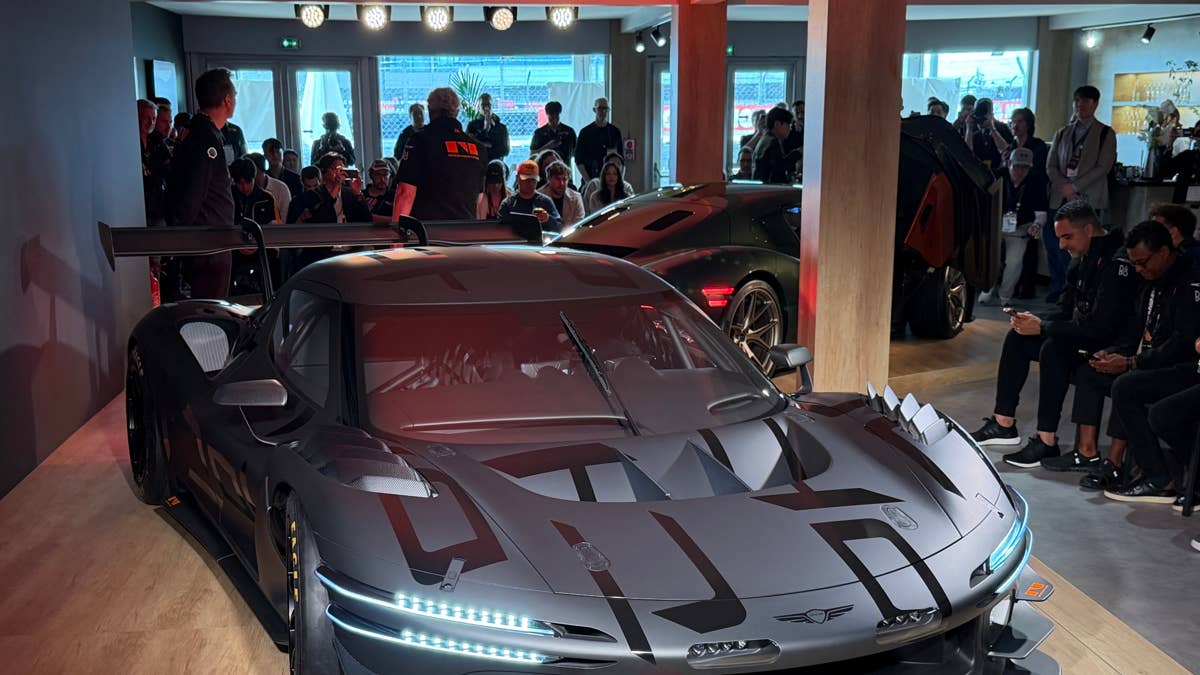
Adam Lynton/Autoblog
Le Mans Has To Make Genesis Better
The Magma GT is also part of something bigger. Genesis is not just trying to create a dramatic concept car or a low-volume halo model. It wants the whole Magma project to feed back into the brand.
I asked Hyundai’s president what would make Genesis look back in five years and say Le Mans was the right investment, and Muñoz replied that success would not simply be measured by trophies.
“This is not about winning all the races or one race,” he said. “It’s about improving.”
That means improving the way Genesis develops cars, solves problems and brings products to market. The company sees endurance racing as a way to test the qualities it wants buyers to associate with its road cars.
“If we’re able to finish the races, it means we are learning about quality, durability and reliability,” Muñoz said.
That is the bigger story behind the Magma GT. It is not just about whether Genesis can build a beautiful performance car. It is about whether that car, and the programme around it, can make Genesis feel more serious, more credible and more exciting.
For now, Genesis is still doing the numbers. But the fact those numbers are being done at all makes this one of the most interesting Genesis projects to watch.