A Quiet Corner, A Big Statement
We previously reported on Geely developing one of the most fuel-efficient hybrid engines to date. Seeing it installed in a production-ready, driveable sedan at Auto China 2026 in Beijing brings that claim into sharper focus. This is no longer an isolated lab result or a theoretical benchmark. It is now a fully realized application, engineered to deliver that efficiency in real-world conditions.
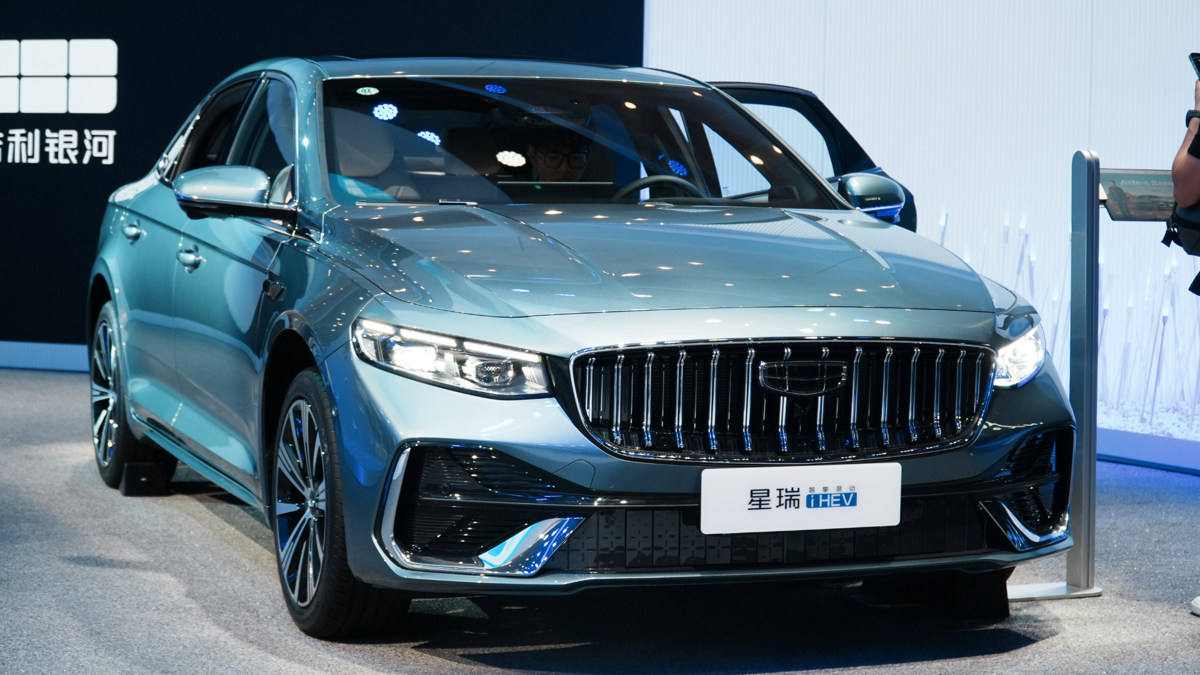
Tucked in a quieter section of the Geely stand sits the Preface iHEV. It does not rely on spectacle. Instead, it draws attention through proportion and restraint. The stance suggests confidence rather than flash. Based on its size and presence alone, it feels like a car engineered with purpose.
Autoblog / Leroy Marion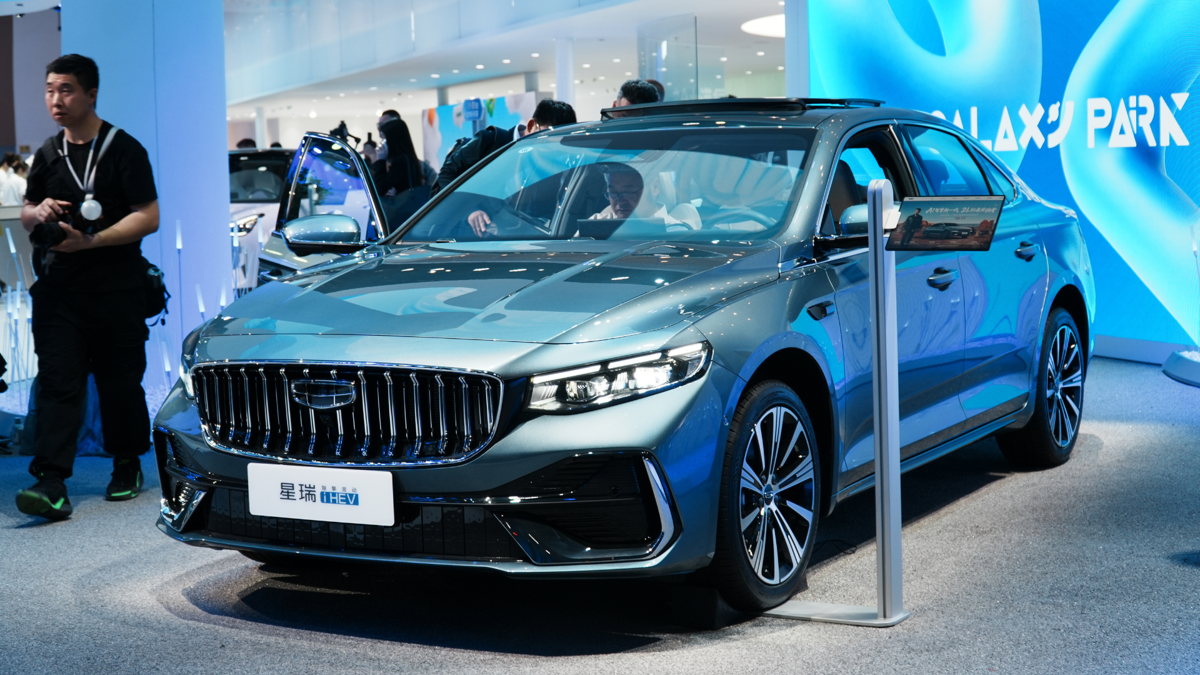
Design That Punches Above Its Class
The Preface is classified as a compact sedan, yet its footprint leans closer to mid-sized models like the Toyota Camry and Honda Accord. It even sits visually between the Volvo S60 and Volvo S90. It’s 110.2 inches, giving it a planted and upscale stance.
Full LED lighting and chrome accents complement the “Eric Blue” finish. A darker trim option would sharpen its sporting edge. Traditional door handles are a welcome choice. The 18-inch wheels suit the car, though its proportions could support larger rims. The design feels mature and well resolved.
Autoblog / Leroy Marion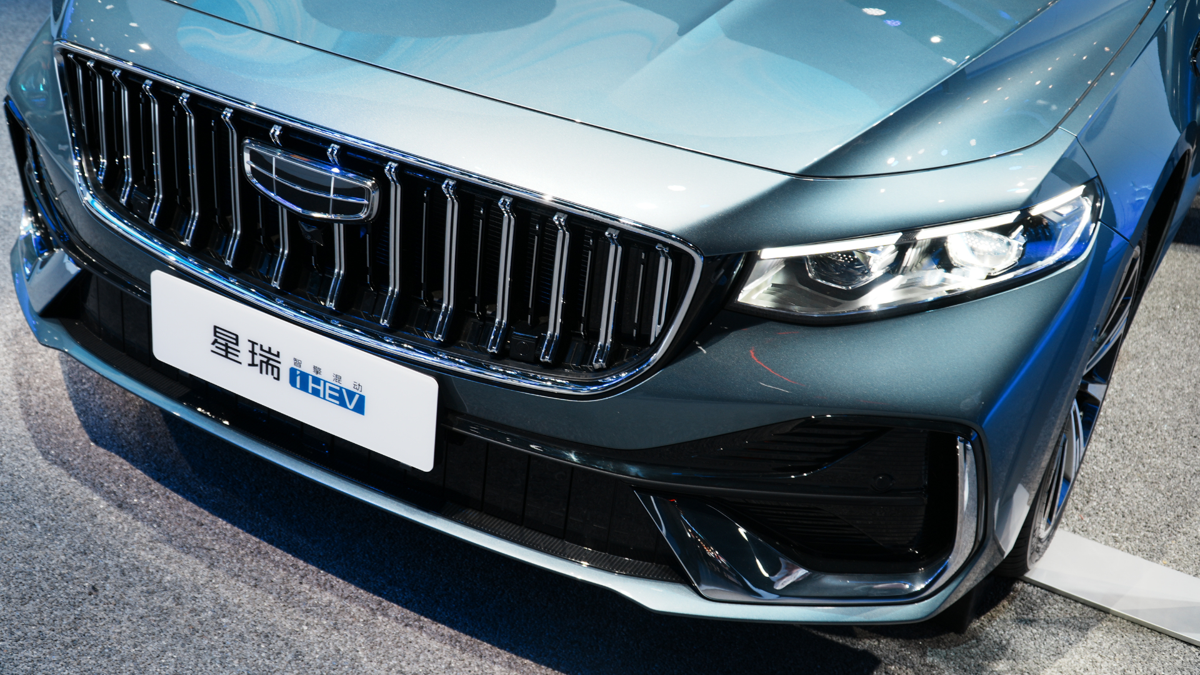
Interior and Technology Blend
Inside, the Preface presents a clean, premium-leaning cabin. The white interior theme complements the ambient lighting, adding depth and a more upscale feel at night. A 10.2-inch digital instrument cluster sits ahead of a 14.6-inch central display, both powered by Geely’s Flyme Auto system on a Snapdragon 8155 chip. Apple CarPlay is supported, though Android Auto is absent, as expected for a China-market model.
Comfort is a strong suit. Ventilated seats, a 16-speaker audio system, and generous cabin space give it a near-luxury edge. Material quality is not class-leading, but fit and finish are well executed. Ergonomics takes some getting used to, though the inclusion of physical climate controls is a welcome addition.
Autoblog / Leroy Marion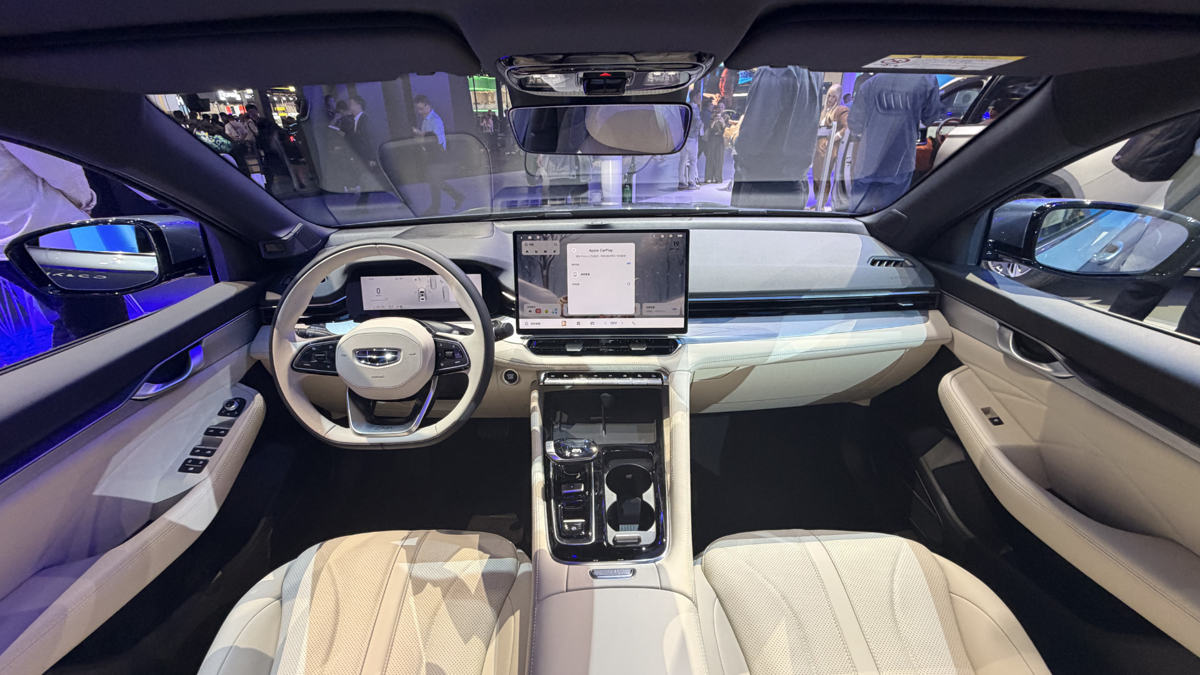
Powertrain and Intelligent Backbone
The Preface rides on Geely’s GEEA 3.0 architecture with support for fast over-the-air updates. Driver assistance is handled by a system with 128 TOPS (trillion operations per second) of computing power, enabling highway assist and automated parking. It positions the car competitively in the tech space.
The star of the show is, of course, the iHEV system. Combining a 1.5-liter engine with an integrated electric drive to produce 308 horsepower. It delivers a strong low-speed response and can drive electrically up to 41 mph. Fuel economy is rated at 59 mpg WLTC, beating key rivals while maintaining strong performance figures.
Autoblog / Leroy Marion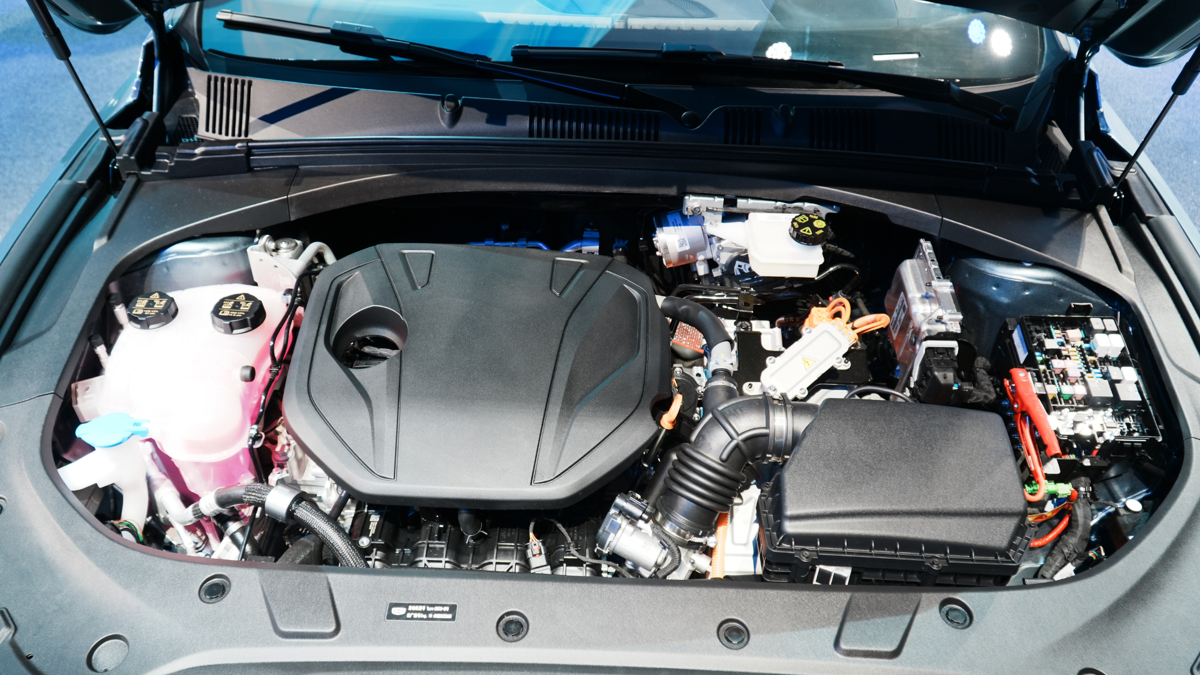
From Nanjing Road to Bourbon Street?
I asked Victor Yang, Vice President of Geely Holding Group, whether the company sees an advantage in its U.S. manufacturing footprint through Volvo Cars and Polestar plants in South Carolina. Specifically, could Geely leverage those facilities to position itself as the first Chinese automaker to sell vehicles branded as made in the USA?
His response was emphatic but measured and non-committal. He said there are no current plans for the U.S. market. Still, the industrial groundwork already exists. The supply chain, the production capacity, and the brand links are in place. The denial may be official, but the strategic potential is difficult to ignore.
Autoblog / Leroy Marion
The Era of Hybrids
The question now is whether a car like this can reach markets like the United States. The industry has been leaning heavily into PHEVs, REEVs, and full EVs, especially as demand patterns fluctuate. Yet the Preface iHEV presents a compelling case for a different path. It shows that conventional hybrids still have room to evolve and improve in meaningful ways.
Hybrids are not fading. If anything, they are entering a more advanced phase where efficiency no longer comes at the expense of performance. This feels like the beginning of a new hybrid arms race. Toyota may have set the benchmark, but competitors like Geely are closing the gap quickly. The result could be a golden era for hybrids that finally deliver on all fronts.
Autoblog / Leroy Marion