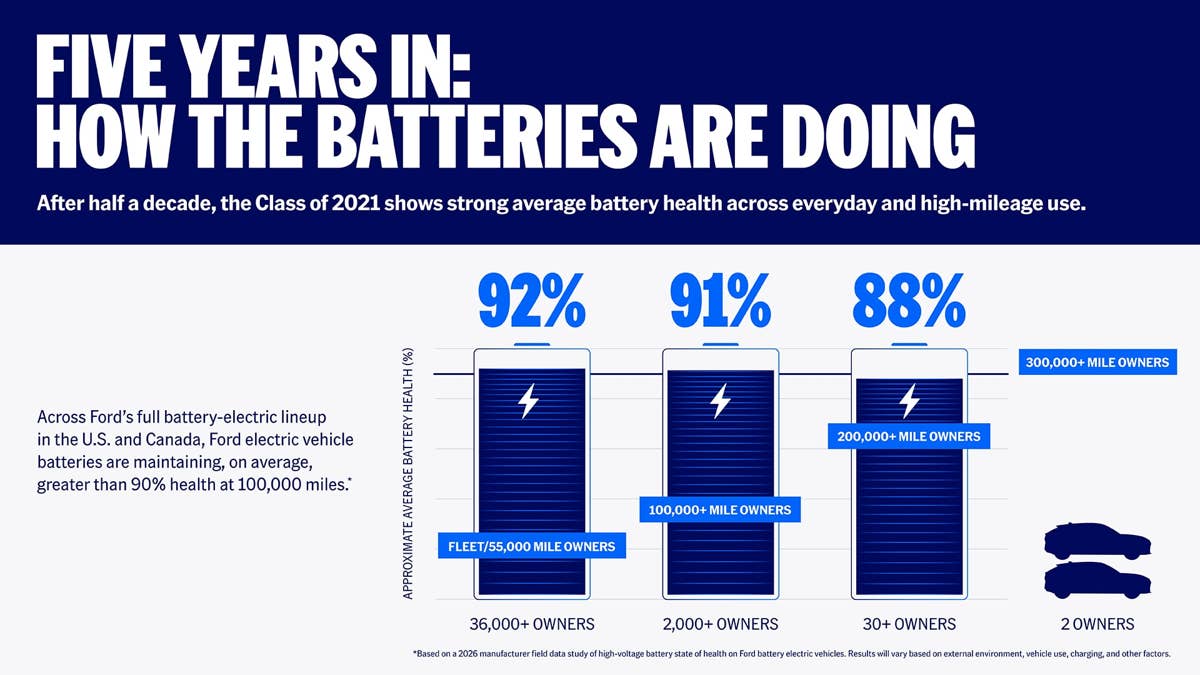
Ford recently released data on the 2021 Mustang Mach-E to detail how its electric vehicle batteries perform over time. After tracking 36,000 electric SUVs across five years of ownership, the automaker reported that the average battery health retained is 92 percent. This data comes from two billion miles driven by retail and fleet customers across all 50 states and Canada.
According to a recent post from Ford’s From the Road blog, modern battery packs maintain their capacity in everyday driving conditions. While Tesla Model 3s have also logged high mileage on original hardware, Ford’s data provides a broader look at average commuter habits. With 95 percent of the analyzed Mach-E fleet maintaining between 87 and 97 percent battery health, the numbers indicate that rapid capacity degradation is relatively rare.
Ford
High Mileage Fleet Results
The long-term health numbers remain consistent when examining the frequent drivers within the 2021 fleet. Over 2,000 owners have crossed the 100,000-mile mark on their original battery packs, maintaining an average health rating of 91 percent. Furthermore, a smaller group of 30 drivers who surpassed 200,000 miles still retain an average of 88 percent usable capacity.
This real-world data supports what industry analysts have suggested regarding long-term ownership. Recent research indicates that electric vehicle batteries degrade more slowly than early consumer estimates predicted. Outliers, such as one Mach-E owner who crossed 400,000 miles on a single original battery, show that these electric powertrains can endure typical automotive ownership cycles.
Best Charging Practices Are Key
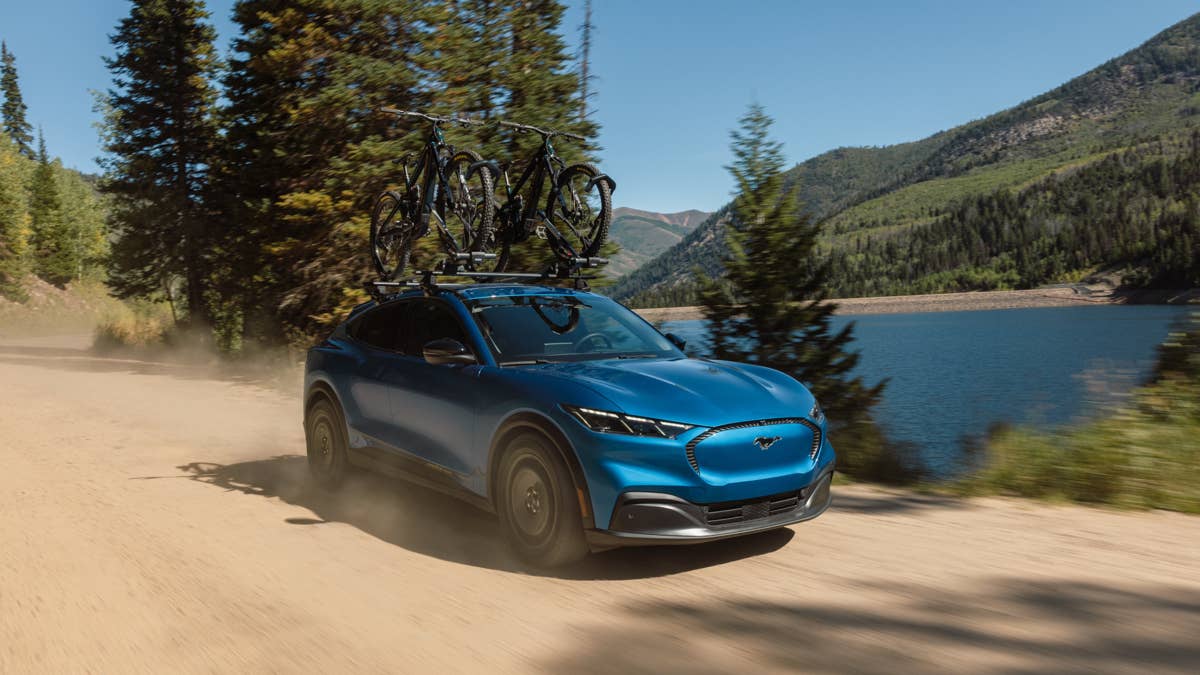
To maintain this longevity, Ford simply recommends relying on Level 2 home charging for daily driving, saving DC fast charging for road trips, and utilizing shade during summer heat. Because this five-year data shows such steady performance, used EV buyers finally have concrete information when shopping for secondhand electric crossovers. As these vehicles age over the next decade, third-party suppliers will inevitably step in to provide affordable replacement modules.
This is exactly the concrete data a lot of people have been waiting for, myself included. For years, the biggest hesitation surrounding electrification has been the looming fear of sudden, catastrophic battery degradation. This massive 36,000-vehicle dataset proves that with basic care, modern electric architecture ages gracefully and is genuinely built to survive real-world ownership.
Ford