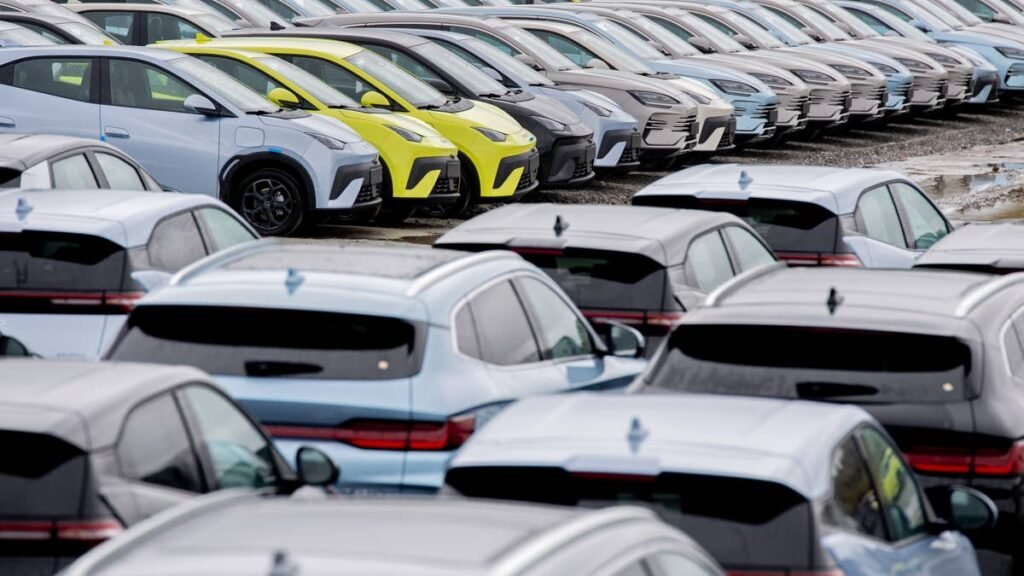
Tesla‘s return to the top of the EV sales charts globally lasted just one quarter. BYD delivered 557,090 fully electric vehicles between April and June, according to Bloomberg data. Meanwhile, Wall Street analysts expect Tesla to report roughly 396,500 deliveries when it posts official numbers this week. That’s a gap of well over 150,000 cars in three months. The comparison is limited to battery-electric vehicles, excluding BYD’s much larger plug-in hybrid business.
Including plug-in hybrids, BYD delivered more than 1 million new-energy vehicles during the quarter, underscoring how much larger its electrified business has become. But the bigger story here isn’t the quarter itself; it’s the pattern. BYD briefly ceded the lead in Q1 amid softer domestic demand and seasonal factors, allowing Tesla to edge ahead. Tesla took the win, barely, and even then, it built more cars than it could sell. BYD, instead, leaned harder into export markets.
Exports Are Doing The Heavy Lifting
Nearly half of BYD’s total sales last month came from outside China. Overseas sales have become increasingly important as competition inside China intensifies, with dozens of domestic automakers engaged in an aggressive price war. The company has told analysts it expects 1.5 million export sales this year, beating its own target of 1.3 million. It’s been quietly outselling Tesla in Europe’s biggest EV markets for months now, helped by aggressive pricing despite new European tariffs. BYD isn’t just shipping more cars either. It has also accelerated investment in batteries, semiconductors, and driver-assistance technology as it expands globally.
Second Place For a Reason
The widening gap also reflects diverging trajectories. While Tesla continues to rely heavily on the aging Model 3 and Model Y lineup ahead of its next wave of products, BYD has rapidly expanded its portfolio across multiple price points and accelerated its international rollout.
Despite BYD’s lead in EV sales, Tesla’s stock story barely blinks, because Tesla’s valuation is increasingly tied to its AI, robotics, and autonomous driving ambitions rather than vehicle deliveries alone. Stock valuations aside, for now, BYD appears firmly back in front in the global battery-electric vehicle race.