CONS ›› Tough competition, Uninspiring dynamics, Forgettable styling
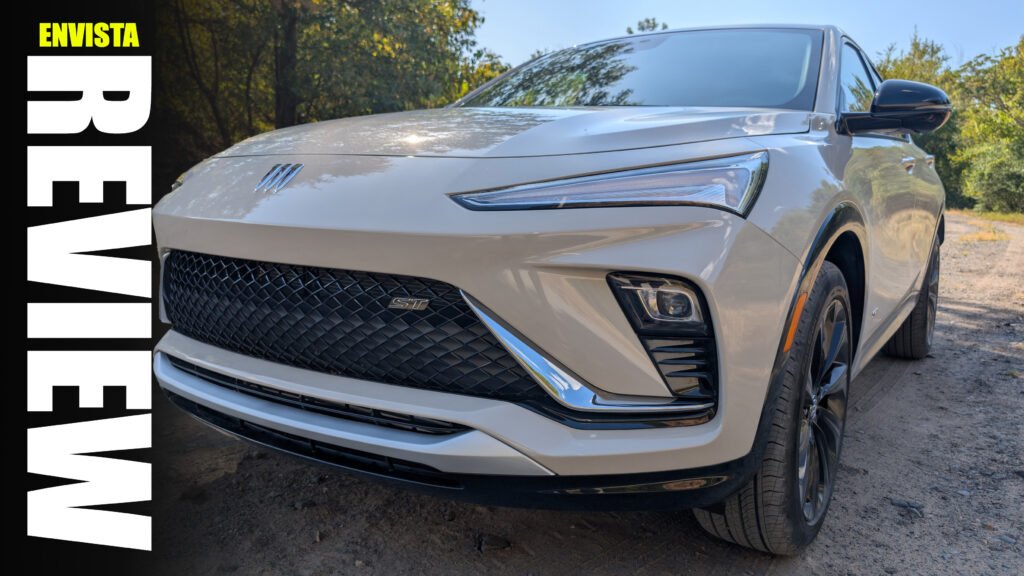
The 2026 Buick Envista is the sort of car that makes a pretty good first impression. It’s stylish enough, comfortable, easy to drive, loaded with useful technology, and doesn’t immediately feel like something powered by just 137 horsepower. Spend some time with it, and you’ll find surprisingly little to complain about.
That’s particularly true of our Sport Touring tester. Buick loaded it with heated seats, a heated steering wheel, adaptive cruise control, a power liftgate, wireless charging, a moonroof, and a few other niceties. It even rides better than its Chevrolet Trax cousin. Then you look at the window sticker.
Our Envista started at $26,200, picked up $4,360 worth of options, and landed at $32,355 after a substantial $1,795 destination charge. Suddenly, this pleasant little Buick is sharing airspace with some seriously good cars. That’s where things get complicated, because the Envista doesn’t have a glaring flaw. Instead, its biggest problem might be finding something it does better than everyone else.
Quick Facts
SWIPE
Styling: Looks The Part… Mostly
Photos: Stephen Rivers
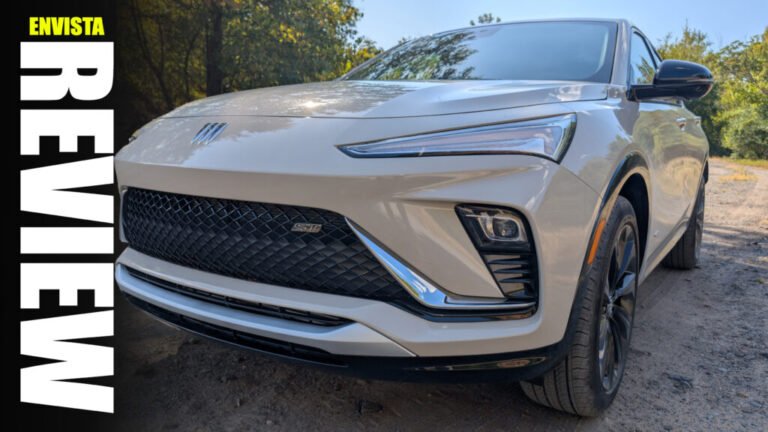
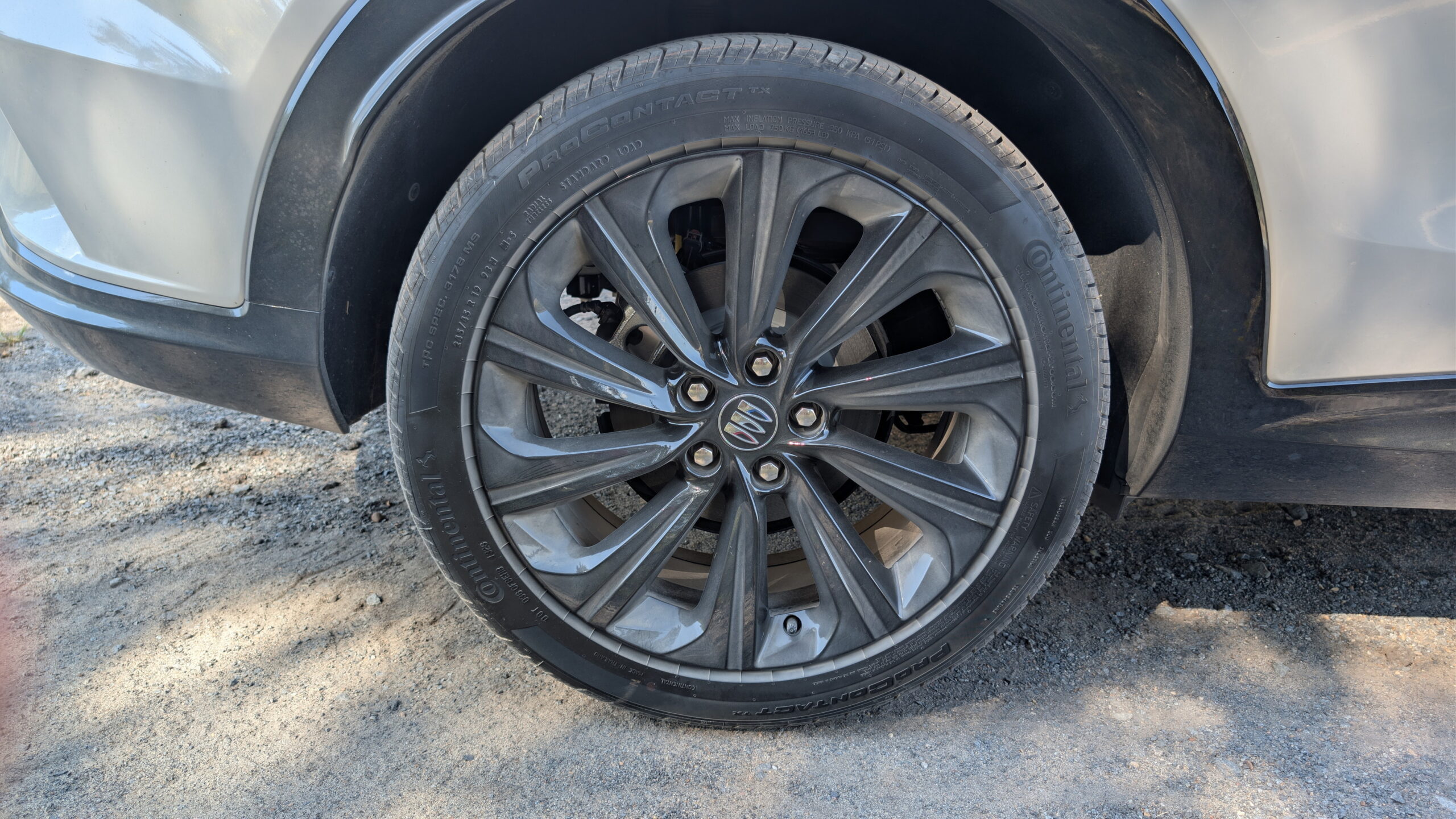
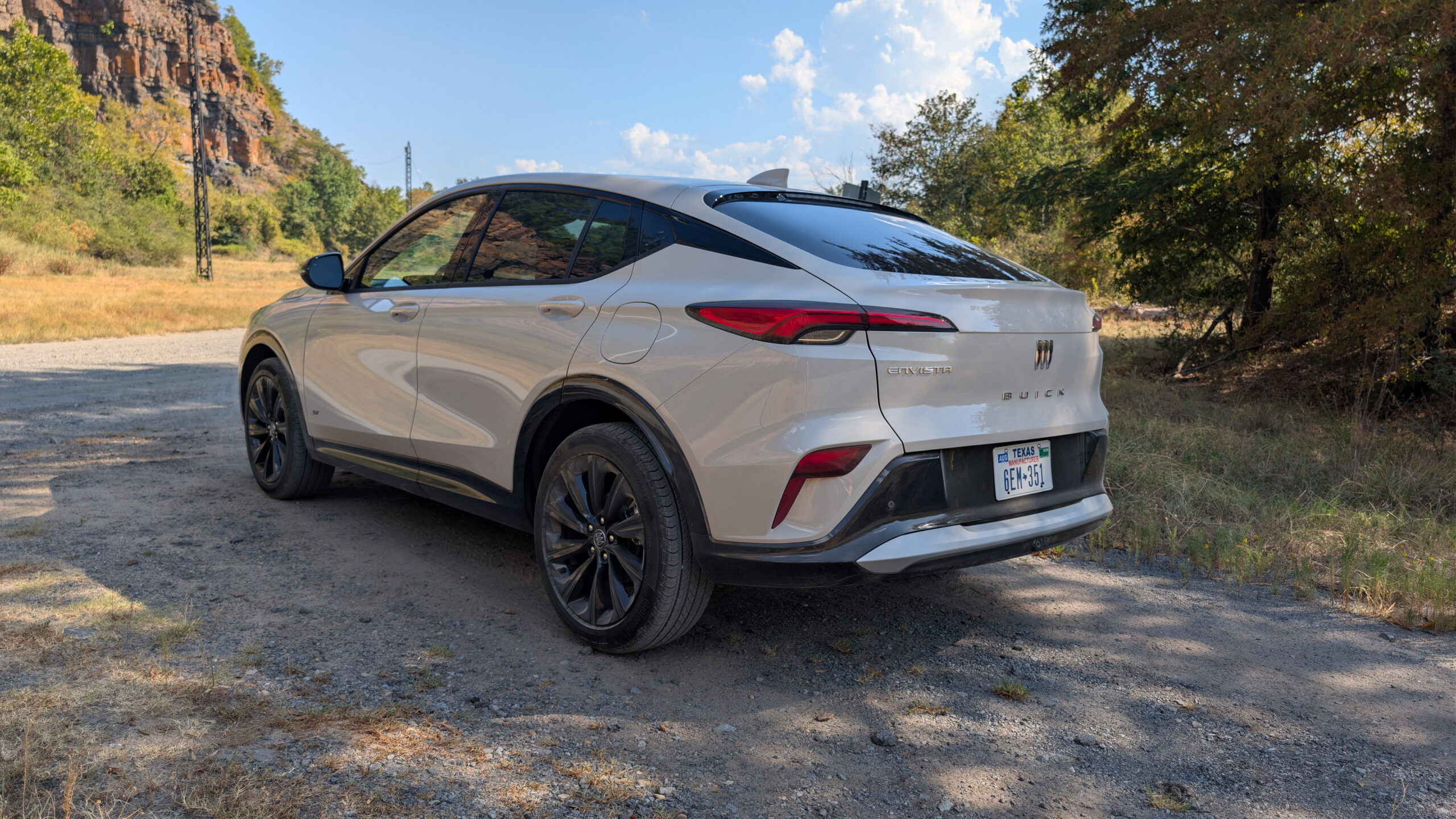
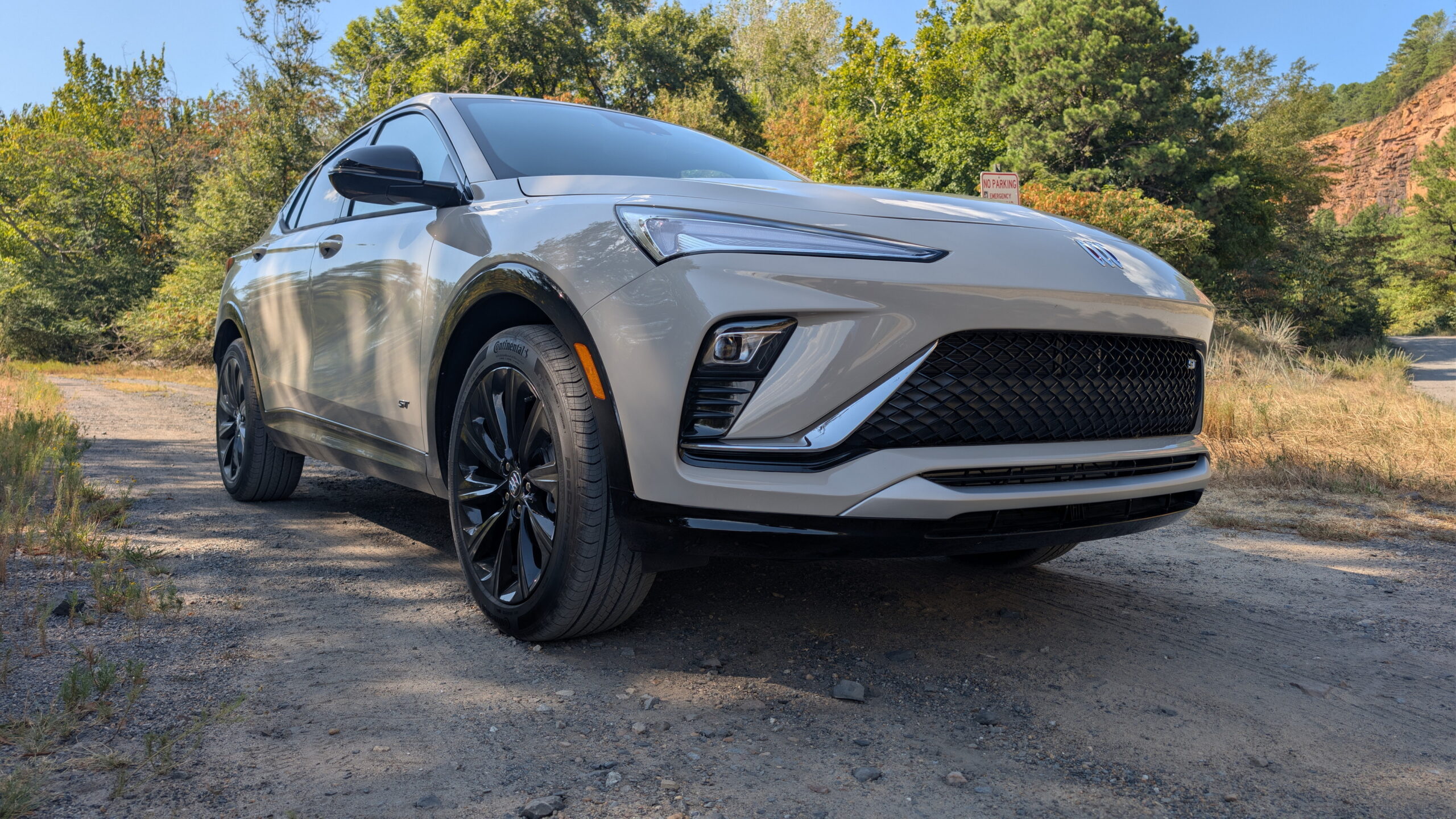
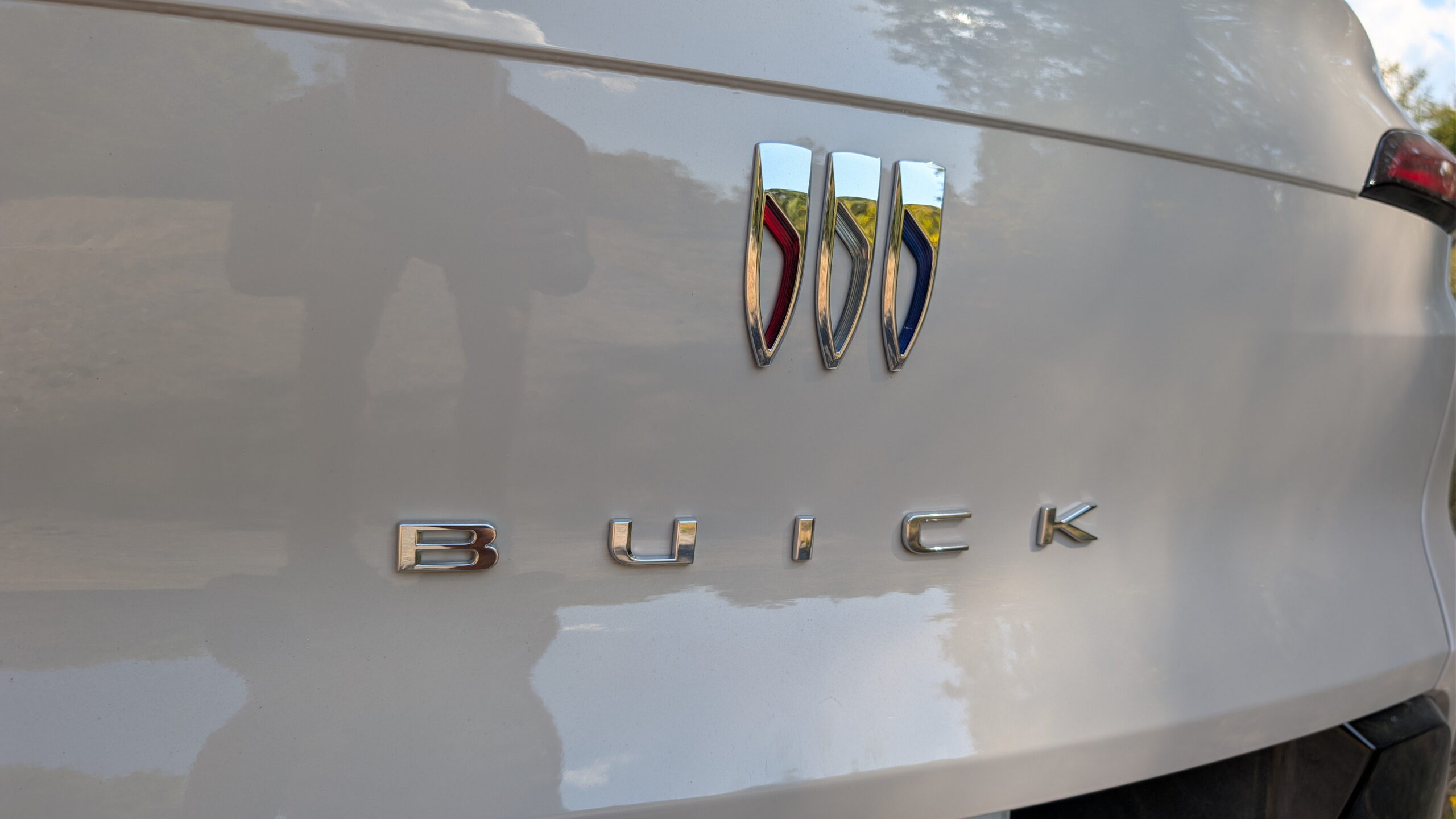
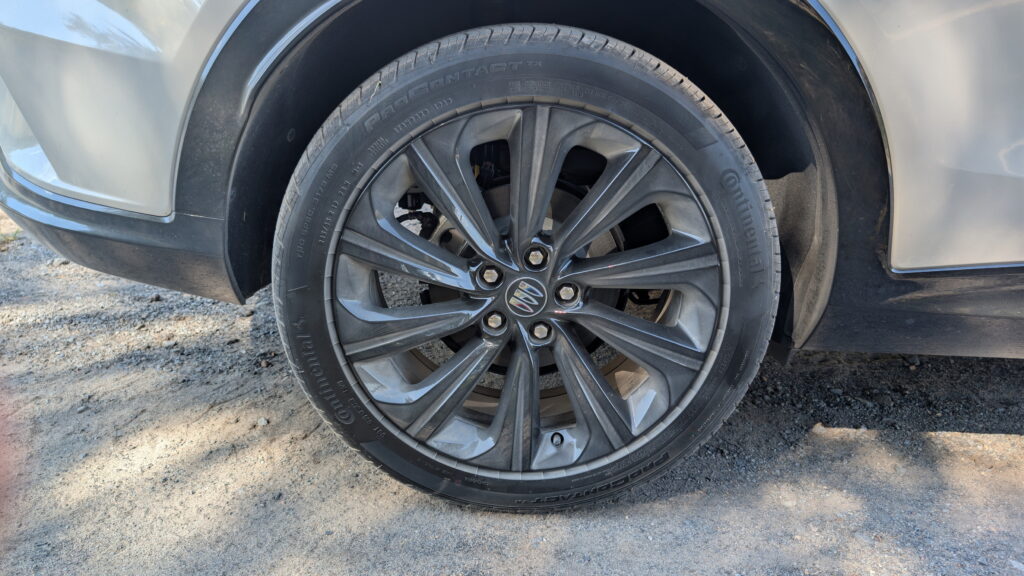
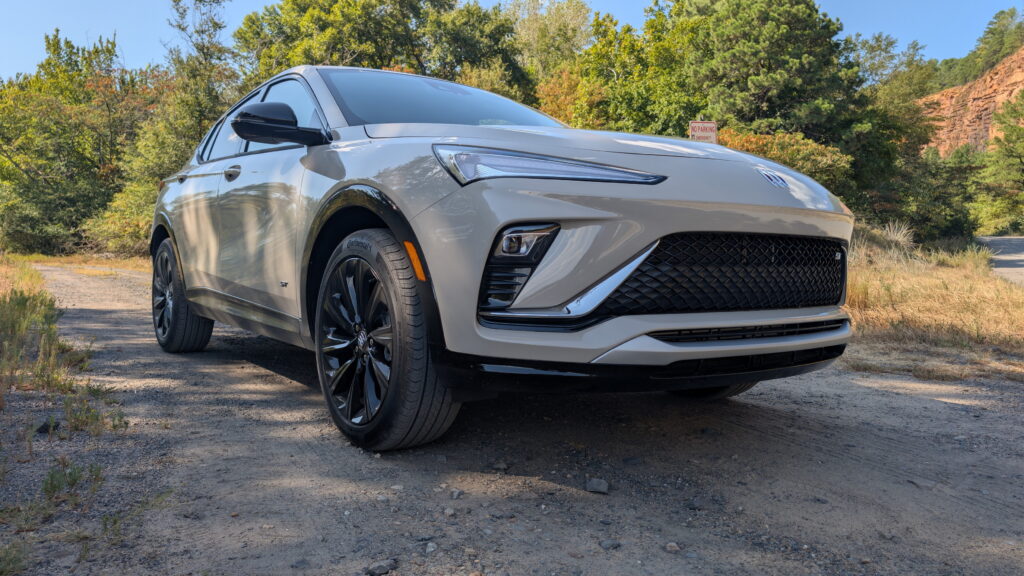
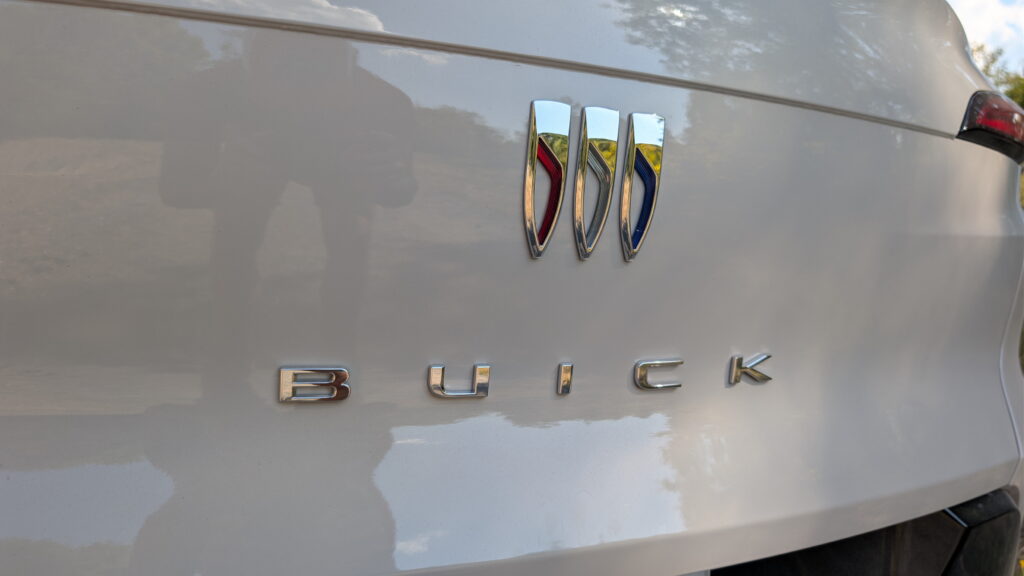
The Envista isn’t a conventional boxy crossover. Buick gave it a sloping roofline, relatively low stance, and some of the same design cues that have spread across the rest of its lineup. Up front, that means razor-thin daytime running lights sitting high above the actual headlights, along with a wide grille and Buick’s newer tri-shield badge. Our ST adds a mesh-style grille and black accents, while the optional Studio Series package brings 19-inch black-painted wheels.
It’s all fine. That’s going to become something of a recurring theme. I don’t find the Envista particularly beautiful or interesting, but it’s certainly not ugly. The rear three-quarter view is probably its strongest angle, where the narrow taillights, sloping roof, and relatively wide haunches work together nicely.
More: Buick’s Kendrick Lamar Ad Dangled The GNX, Then Cut To A Korean-Made SUV
Elsewhere, the styling is simply inoffensive. The wheels are attractive enough, but there are also little pieces of shiny brightwork scattered around the exterior that seem intended to remind you this is the Buick rather than the Chevrolet. Whether they actually make it look more expensive is another question.
There’s at least one practical advantage to the Envista’s proportions. Despite measuring 182.6 inches (4,638 mm) long, it’s only 71.5 inches (1,816 mm) wide. That makes it wonderfully easy to maneuver around town. Narrow residential streets, tight parking lots, and cramped spaces require very little thought. For someone who wants the slightly elevated seating position of a crossover without driving something that feels enormous, that’s a legitimate selling point.
Cabin: Premium From A Distance
Photos: Stephen Rivers
The same styling strategy continues inside. There’s a lot of visual effort here. Our ST’s seats feature attractive contrast stitching and embroidered logos. The dashboard wraps its 8-inch digital gauge cluster and 11-inch infotainment screen into one large black panel, while additional stitching, metallic-look trim, and textured inserts break up the otherwise dark cabin.
It photographs quite well. Touch it, though, and the illusion gets a little shakier. There’s plenty of inexpensive plastic and foam around the cabin, and relatively little of the richer leather, faux suede, or genuinely upscale trim you’d find in a true premium vehicle. Piano black plastic surrounds much of the center console and control stack, too, which doesn’t help matters.
Still, Buick deserves credit for resisting the urge to turn everything into a touchscreen. The climate controls use real buttons and knobs. After a little familiarity, I could change the temperature without even looking down. The steering wheel controls aren’t especially attractive or expensive-feeling, but they’re physical switches that work every time. I’ll take that over a haptic scroll wheel that only recognizes what I wanted half the time.
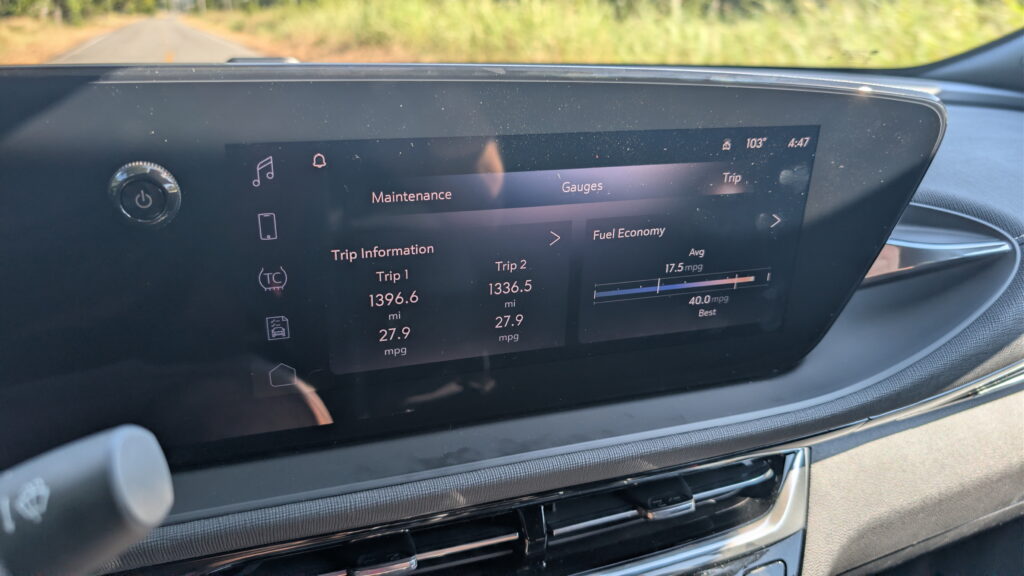
The infotainment system follows the same philosophy. It’s responsive, menus are logically arranged, and wireless Apple CarPlay and Android Auto are included. The digital gauge cluster isn’t nearly as configurable as I’d like, but the basic information is clear and easy to read.
Storage is similarly straightforward. There’s a dedicated wireless charging slot for a phone, USB ports immediately nearby, useful door pockets, seatback pockets, and a reasonable center console. The seats themselves are another highlight. They look good, are comfortable and supportive, and our tester’s Convenience package brought heating along with an eight-way power driver’s seat and two-way lumbar adjustment.
Photos: Stephen Rivers
At 6-foot-6, I could fit without craning my neck, although finding a seating position that kept the steering wheel clear of my legs required some compromise. Rear passengers behind me wouldn’t exactly be celebrating either, but four adults can manage shorter trips without much drama. The cargo area is arguably more important. There’s 20.7 cu-ft (586 liters) behind the second row and 42 cu-ft (1,189 liters) with it folded. The opening is wide, the seats fold nearly flat, and there’s a small amount of additional storage beneath the floor. It’s a useful little car.
Driving Impressions: Nothing Bad, Nothing Brilliant
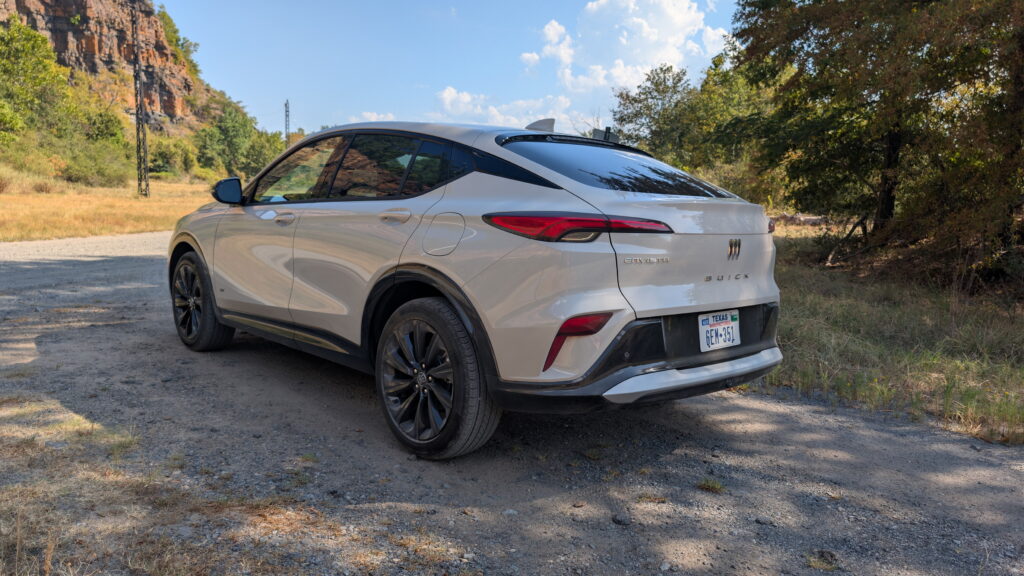
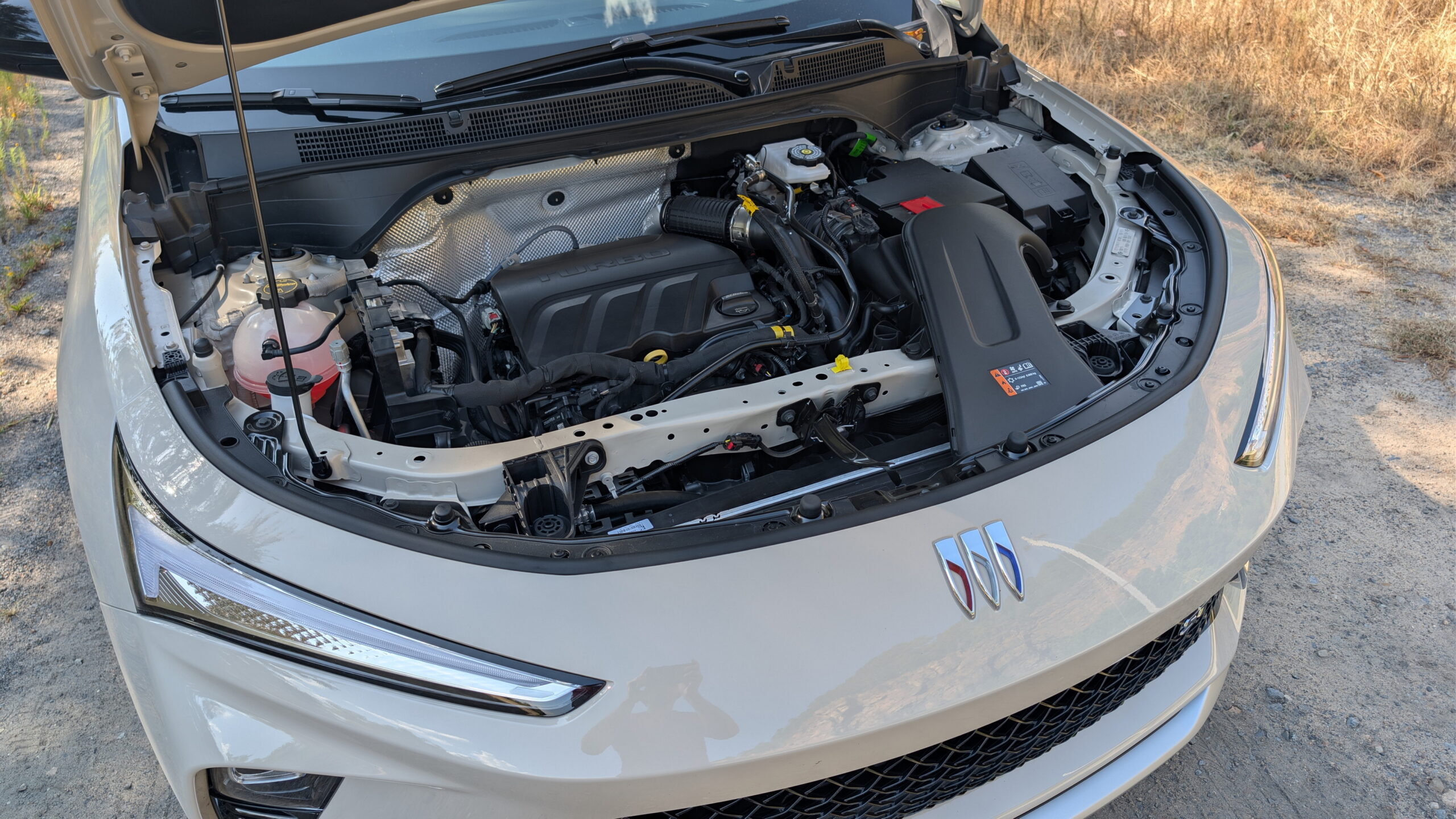
If you’re expecting the ST badge to mean there’s some hidden performance lurking underneath, adjust those expectations now. Every Envista uses a turbocharged 1.2-liter three-cylinder making 137 hp (102 kW) and 162 lb-ft (220 Nm). It sends everything to the front wheels through a six-speed automatic, with no all-wheel-drive option. Those aren’t impressive numbers, but there’s an interesting distinction between how slow the Envista looks on paper and how it actually feels. Around town, it’s perfectly adequate.
From a stop, throttle response is good enough that you don’t immediately notice the lack of power. Pull away from a traffic light normally, and there’s nothing particularly frustrating about it. Things change once you’re already moving. Get beyond roughly 30 mph (48 km/h) and ask for serious acceleration, and suddenly all 137 horses appear to have received your request in writing and are considering their response.
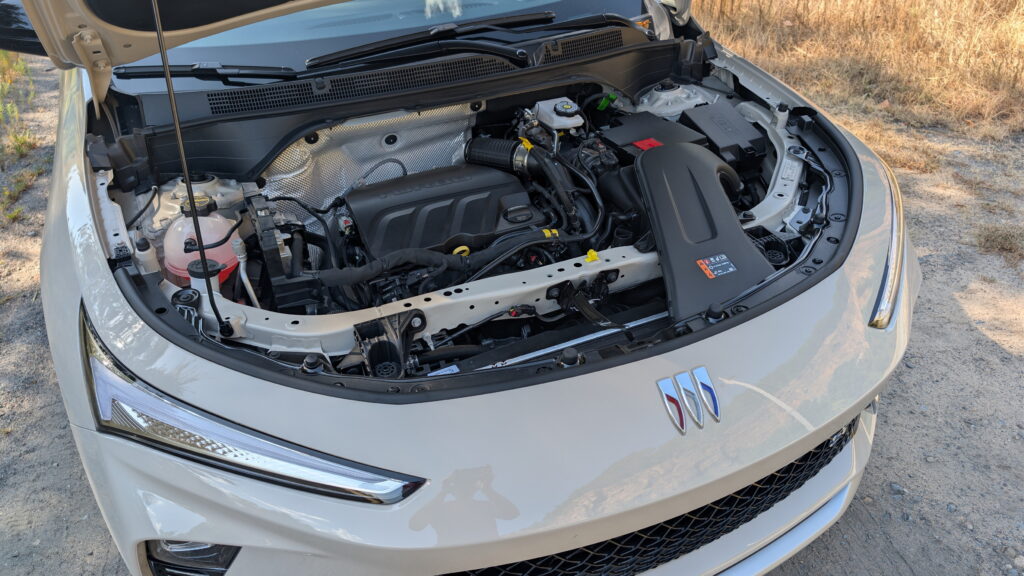
The six-speed automatic isn’t the problem. In fact, it’s quite good. Shifts are smooth, it generally picks the correct gear, and it avoids the elastic feel and constant droning that can plague some CVTs. But the transmission can’t manufacture power. Ask for a quick pass, and it’ll dutifully kick down, leaving the little three-cylinder buzzing away at high rpm while you wait for the speedometer to catch up. It’s not painfully slow. It just doesn’t have much in reserve.
Read: GM’s China Sales Are Down 75%, And The Clock Running Out Isn’t One It Controls
Thankfully, Buick hasn’t tried to make the suspension live up to the ST badge. The Envista rides genuinely well. It’s softer than the Kia K4 Hatchback and, from my experience, softer than the Chevrolet Trax too. Broken pavement is dealt with comfortably, and highway cruising is smooth and relatively quiet. It’s not whisper-quiet luxury-car stuff, but there’s no obvious fly in the ointment either.
Steering is light and predictable. The brakes are similarly linear and easy to modulate. Body roll isn’t excessive, but push the Envista hard, and it gets unsettled fairly quickly, with understeer arriving readily. Nothing about it encourages spirited driving, and that’s okay. It’s an Envista, not an Elise. More importantly, those relaxed responses make it incredibly approachable. Combined with good visibility and its compact width, this is a very easy car to drive around a crowded city.
The driver assistance systems reinforce that impression. Our tester included adaptive cruise control, lane-change alert with blind-zone monitoring, rear cross-traffic alert, lane-keeping assistance, automatic emergency braking, and several other safety features. They worked without making themselves unnecessarily irritating.
About That Fuel Economy
The EPA rates the Envista at 28 mpg city, 32 highway, and 30 combined. Our car’s trip computer showed something interesting. Across 1,396 miles accumulated by multiple drivers, it had averaged 27.9 mpg. That’s reasonably close to the official combined figure, particularly given that we don’t know how kindly everyone before us treated it.
I certainly didn’t help. For example, across 33.9 miles of my own driving during one day, I managed just 18.8 mpg. The Envista isn’t secretly a gas guzzler. I was driving like the ST badge meant something. In short, you can get terrible mileage in this car if you drive it hard.
There’s another ownership consideration worth mentioning. Buick covers the Envista with a three-year/36,000-mile bumper-to-bumper warranty and five-year/60,000-mile powertrain warranty. That’s perfectly conventional coverage, but rivals such as Kia offer considerably longer protection. And that brings us to the Envista’s real problem.
Competition: $32,355 Changes The Conversation
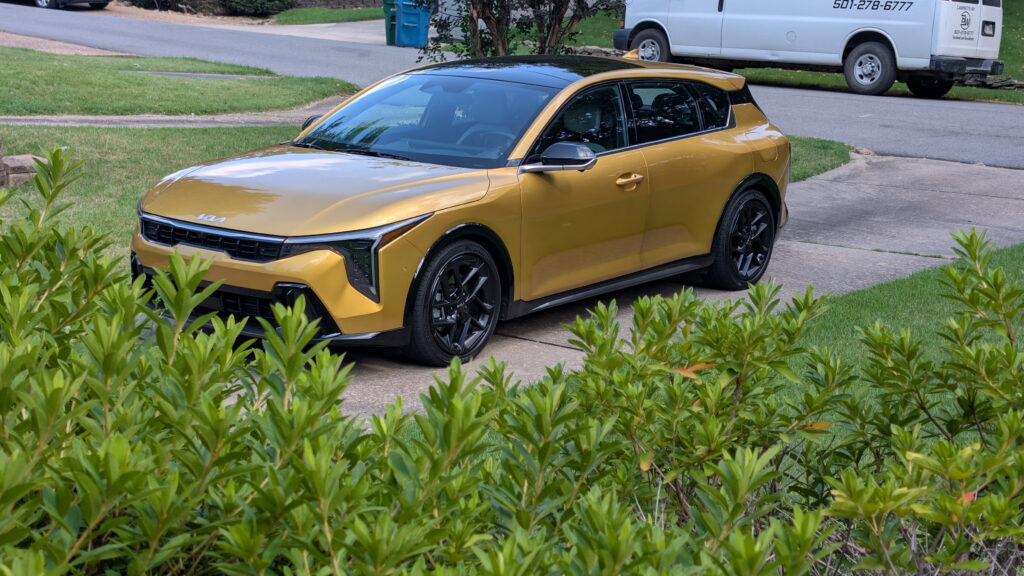
A $26,000 Envista is one thing. A $32,355 Envista is another. Our ST had $4,360 worth of extras, including heated seats and steering wheel, a moonroof, power liftgate, wireless charging, rain-sensing wipers, adaptive cruise control, additional safety technology, and 19-inch wheels. Those are worthwhile features. They’re also features attached to the same 137-hp, front-wheel-drive Envista underneath.
The Chevrolet Trax is impossible to ignore because it’s so closely related. It offers essentially the same basic mechanical recipe for thousands less. Having driven both, I’m struggling to identify something the Buick does dramatically better. The Envista just rides a little softer.
Beyond that? I don’t think it looks better. It isn’t meaningfully more enjoyable to drive. And despite Buick’s best attempts to dress up the cabin, the interior doesn’t feel sufficiently expensive to explain the premium. Then there’s the Kia K4 Hatchback.
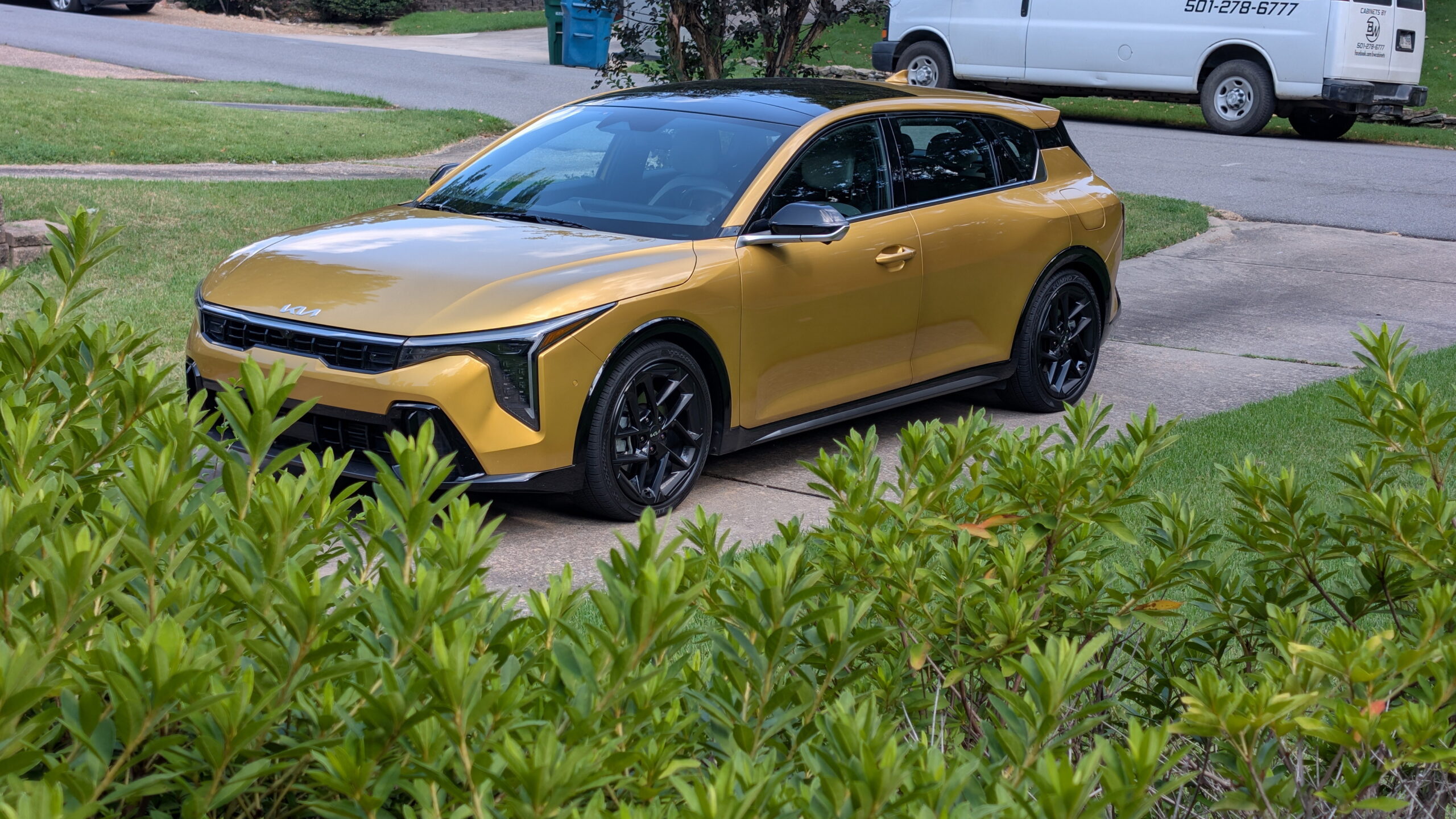
That’s not technically a crossover, but if what you actually need is an affordable, practical five-door vehicle, I’d take the Kia without hesitation. It has a nicer cabin, better technology, more cargo room, a longer warranty, and is dramatically more engaging from behind the wheel. To my eyes, it’s considerably better looking, too. Even limiting the comparison strictly to small crossovers doesn’t save the Envista.
The Chevrolet Trax, Mazda CX-30, Kia Seltos, and Honda HR-V all offer compelling alternatives. Some are cheaper. Some have better interiors. Some are more engaging to drive. Some offer all-wheel drive, which the Envista doesn’t. Each has something that makes me think, that’s why you’d buy this one. I struggle to identify the Envista’s equivalent.
Verdict: A Love Letter To Buick Loyalists
None of this makes the 2026 Buick Envista ST a bad car. In fact, that’s arguably what makes it such a difficult vehicle to judge. The ride is good. The transmission is smooth. It’s comfortable, practical, efficient under normal circumstances, and wonderfully easy to maneuver. The infotainment doesn’t fight you, physical controls remain where they should be, and its driver aids quietly do their jobs.
There isn’t some catastrophic shortcoming hiding beneath the surface. There just isn’t a killer feature hiding there either. If you’ve owned Buicks for years, like the brand’s current styling, and want something smaller and cheaper than its larger crossovers, I completely understand the Envista. Likewise, if you love the Trax formula but want a softer ride, a few nicer touches, and a Buick badge, this is effectively that car.
In that sense, the Envista feels almost like a love letter to Buick loyalists. Everyone else should probably shop around first. At $26,000, the Envista makes a reasonably convincing case for itself. At our tester’s $32,355, though, the competition becomes far too talented to ignore. The Envista doesn’t give you much to complain about. Unfortunately for Buick, it doesn’t give you much to remember, either.
Lead Image: Stephen Rivers for Carscoops