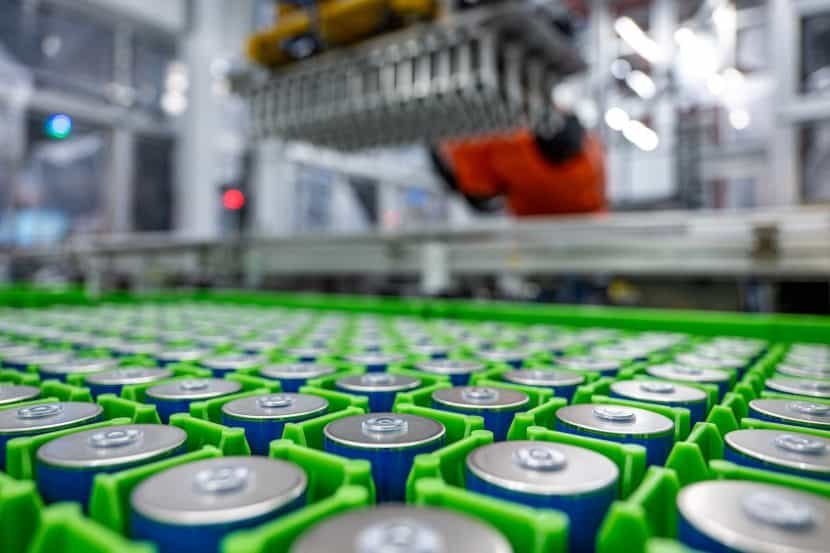
BMW has officially opened its new Irlbach-Straßkirchen battery plant in Bavaria, marking the start of series production at a facility that will play a crucial role in the Neue Klasse rollout. And if you’re wondering which model benefits from the shiny new factory first, look no further than the new i3.
The roughly €1 billion facility is now producing sixth-generation high-voltage batteries for BMW’s German vehicle plants. The first batteries are heading to Munich for installation in the first i3 sedan sold globally. As a refresher, its predecessor was a China-only product based on the locally made long-wheelbase 3 Series, the G28. Series production at the battery plant has already started with two shifts because demand for Neue Klasse models has apparently given BMW little reason to take things slowly. At full tilt, the plant will assemble several hundred battery packs per day.
The battery takes a relatively short trip before reaching the car. Irlbach-Straßkirchen is in Lower Bavaria, roughly 90 minutes by car from Munich, allowing BMW to keep key parts of the i3’s production within the region. The company calls this its “local for local” strategy, and it extends beyond just the battery. The i3’s Gen6 electric motor comes from the Steyr plant in Austria, while the motor housing is produced at Landshut.

BMW Employees And Robots Are Working Together
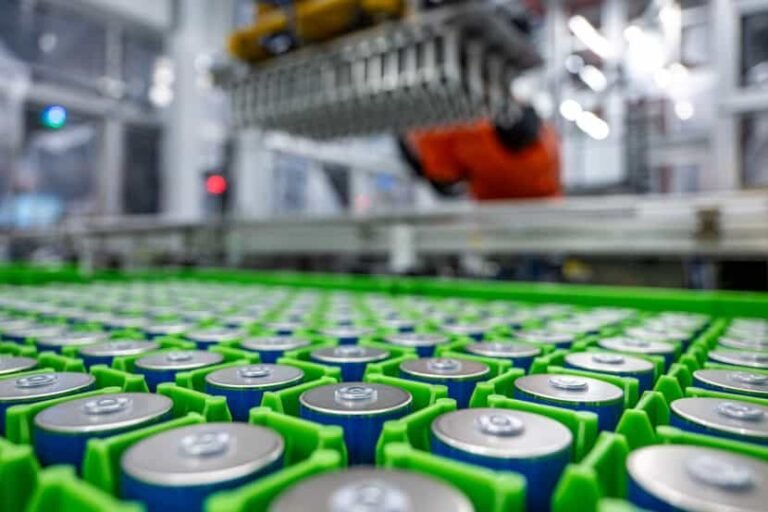
Mind you, this isn’t some glorified battery warehouse. BMW says around 1,600 employees will eventually work at Irlbach-Straßkirchen, which has a 50,000-square-meter production area and around 500 robots. More than 3,500 data points are monitored in real time for every battery, with AI assistants helping maintain BMW’s ambitious zero-defect production target.
The batteries use sixth-generation tech with a cell-to-pack design, meaning the cylindrical cells are integrated directly into the battery pack. The battery itself also contributes to the vehicle’s structure through what is known as a pack-to-open-body concept.
The new Irlbach-Straßkirchen site is responsible for juicing up the electric 3 Series sedan’s 108.7-kWh battery. The fairly large pack delivers up to 912 km, or 567 miles, on a single charge. That figure applies to the most efficient i3 50 xDrive version available. BMW is also selling a cheaper i3 40 xDrive with a smaller 82.8-kWh pack, which delivers 710 kilometers or 441 miles on a full charge in the same WLTP cycle.


BMW’s New Batteries Use Recycled Materials
These Gen6 cells used for the i3 contain secondary materials for portions of their cobalt, lithium, and nickel content. BMW claims it uses renewable energy to produce the anode, cathode, and cells, and that the CO₂e footprint per watt-hour has been reduced by about 33 percent compared with the Gen5 cell used in the i4. The latter won’t be discontinued overnight, but the five-door electric liftback won’t live to see another generation. Alongside the 2 Series Active Tourer, the i4 is one of several models that BMW won’t renew.
Irlbach-Straßkirchen is part of a much larger global strategy. BMW is building five new battery assembly facilities close to its vehicle plants. The other sites are in Debrecen, Hungary; Shenyang, China; Woodruff, USA; and San Luis Potosí, Mexico. The idea is simple enough: build the batteries close to where the cars are built instead of shipping giant battery packs halfway around the planet.
So while the new i3 is technically built at the historic plant in Munich, you could say its biggest power source now comes from a brand-new home in Bavaria. It won’t be long before those batteries go into a second Neue Klasse model. As previously reported, the more practical i3 Touring (NA1) is coming as early as next year. Predictably, it’ll share the assembly line with the sedan and could go into production before the end of next year.


First published by https://www.bmwblog.com