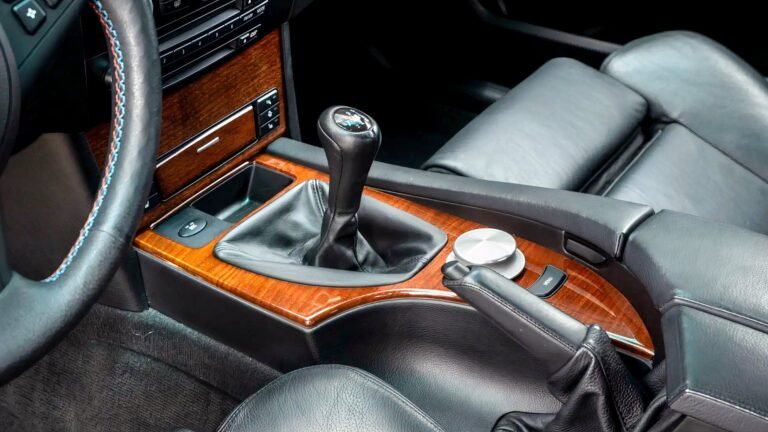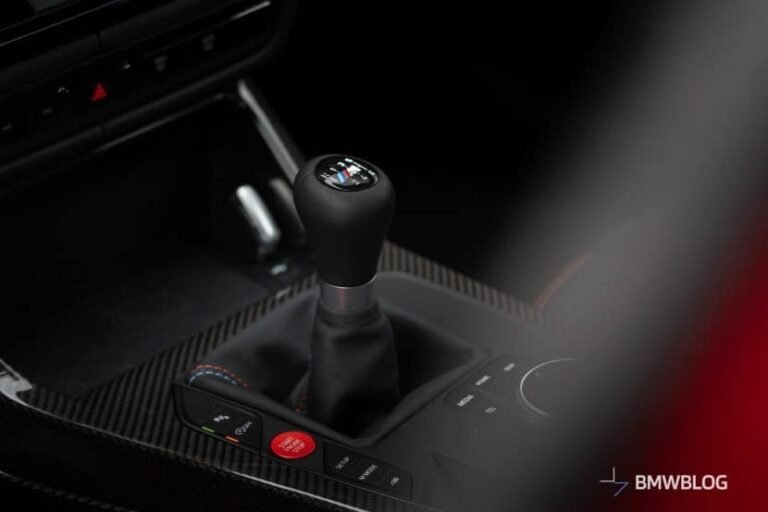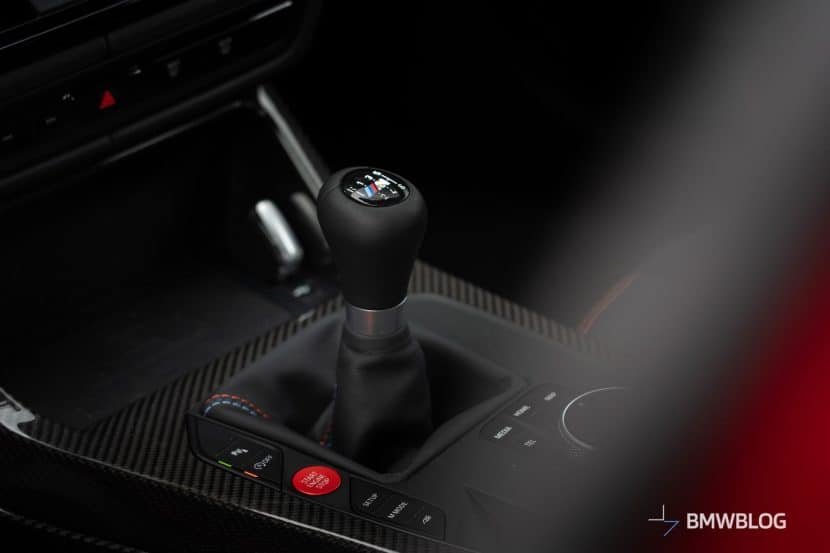
Half of all G87 BMW M2s sold in the US still have a six-speed manual, but van Meel told BMWBLOG during the M Festival in Shanghai that 48-volt electrics, stronger engines, and a shrinking supplier base all work against the clutch pedal. BMW M hasn’t given up on the manual gearbox, but its boss won’t promise one either. “It’s going to be really difficult,” BMW M CEO Frank van Meel told us. Asked whether the manual was off the table for good, he said it wasn’t.
His comments come as BMW M’s manual lineup is already shrinking. The 2027 M2 with M xDrive is automatic-only, and the G80 M3 is winding down with the manual-only M3 CS Handschalter as its likely last stick-shift version.
Why Is The Manual So Hard For BMW M To Keep?

Van Meel didn’t want to turn the answer into an engineering lecture. “I don’t want to explain why it’s difficult, because every engineer always explains why things are difficult,” he said. He gave the short version anyway: the world evolves, engines get stronger, the supplier base keeps getting smaller, and BMW now integrates 48-volt systems, which he said don’t work with a manual.
The strength problem isn’t new. As we’ve reported, the current six-speed can’t handle the full torque of the S58 inline-six, and the M3 and M4 Competition models are automatic-only. Fewer gearbox suppliers make a new manual harder to justify for the volumes BMW M sells.
The 48-volt point carries the most weight for the next M3. We have reported that the G84 M3, expected around 2028, pairs the S58 with mild-hybrid assistance and comes only with xDrive and an automatic. If a 48-volt system rules out a clutch pedal, that decision may already be made, however many buyers ask for three pedals.
Van Meel didn’t close the door. Earlier this year, he said the clutch pedal would stay in the M2 and M4 for the next couple of years, and this time he said BMW M would take another look “because we know it’s very emotional.” He also said: “I can’t promise anything.”
Demand Isn’t The Problem: Half Of US M2 Buyers Shift Themselves

Van Meel knows the numbers as well as any enthusiast. Half of the G87 M2s sold in the US have a manual, he said, and the M3 CS Handschalter sold out more or less within its first week. “We do acknowledge that there is a high demand, and it’s a very emotional issue,” he said.
The Handschalter is a good example of what that demand looks like. It’s a rear-wheel-drive, manual-only M3 CS built for the US and Canada, and it starts at $108,450, about $11,000 less than the automatic, xDrive M3 CS. BMW hasn’t said how many it’s building for the US, though Canada gets only 40. We’re estimating less than 500 for America.
We put the obvious comparison to him. Porsche keeps building manual 911s and sells them at prices well into six figures without having to try very hard, and every limited manual BMW M announces only seems to make people want the next one more. So is the technology finished for good?
“No, it’s not off the table,” van Meel said. “As you can hear, we are always trying to find solutions.”
Rear-Wheel Drive Is Running Into The Same Power Problem
At BMW M, the manual and rear-wheel drive tend to go together, and van Meel sees the same limit on both: power. BMW M made the M5 M xDrive-only when it crossed the 600 hp line, he said, and the M3 and M4 aren’t far behind. The G82 M4 CSL already had 550 horsepower. “Does it still make sense in a rear-wheel drive?” he asked. “Because you’re just burning rubber.”
If you want a manual BMW M car, the window is the current lineup: the rear-drive M2, the base M4 Coupe, and whatever base G80 M3s are left before production ends. We reported the M2 and M4 could stay in production until around 2029, though order books usually close earlier.
After that, our best hope is that any manual M car will look like the Handschalter, a small run built for the market that asks loudest. Yet, 2029 is still far away so luckily BMW M fans will have that option.
First published by https://www.bmwblog.com