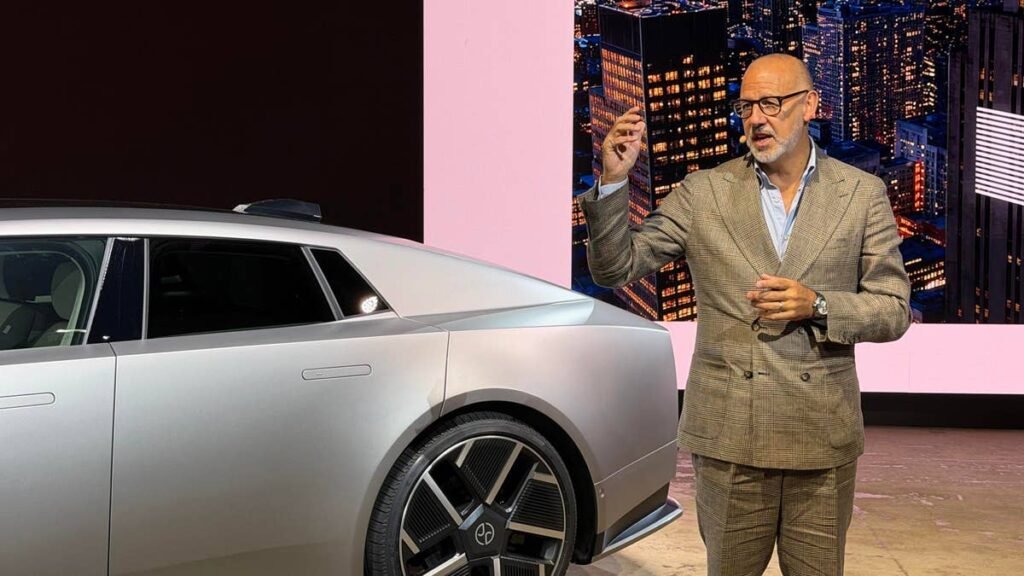
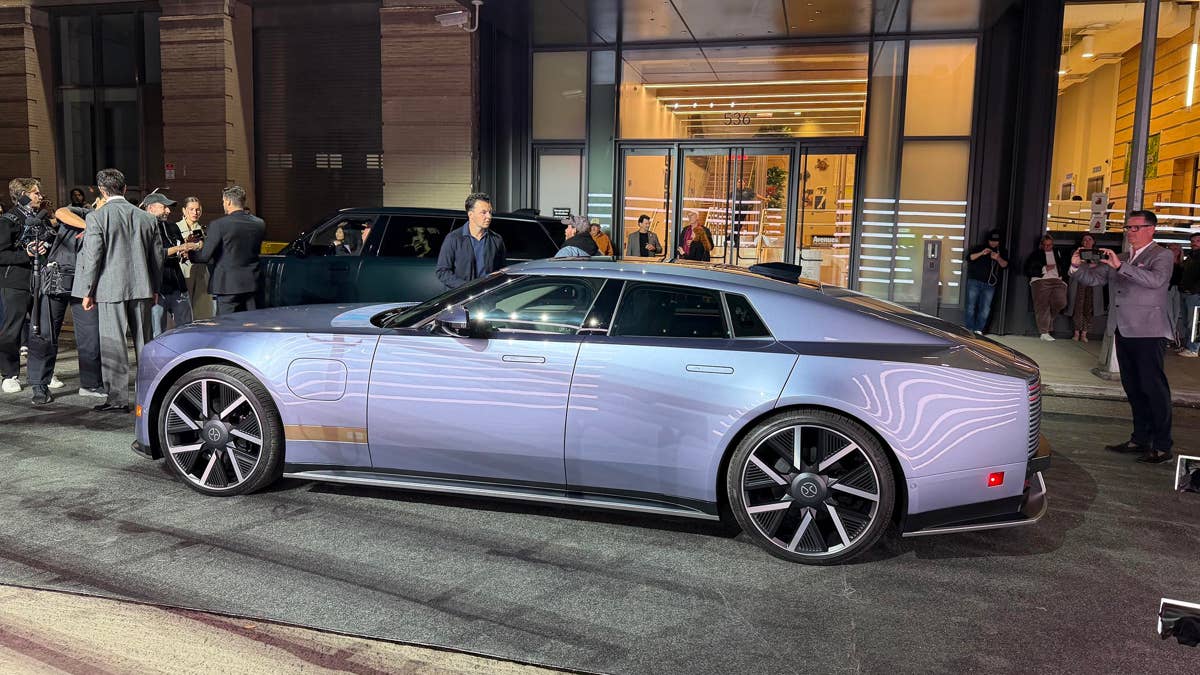
It took six years for Jaguar to deliver what is arguably the most controversial model in its storied history. The Type 01 battery-electric sedan made its debut in Manhattan last week and will begin rolling off a British assembly line early next year.
But a lot has changed since the project began, many observers questioning the logic of Jaguar’s plan to become an all-electric brand at a time when EV sales have tanked in the U.S., traditional its largest market.
Related: The 6-Year Wait is Over: The Jaguar Type 1 Is Finally Here
For now, however, Managing Director Rawdon Glover insists Jaguar is staying the course and while he declined to discuss what comes next, other sources gave Autoblog inside details about the Type 02 EV set to follow roughly a year after the 01 sedan reaches showroom by mid-2027.
Kyle Edward
Taking a Break
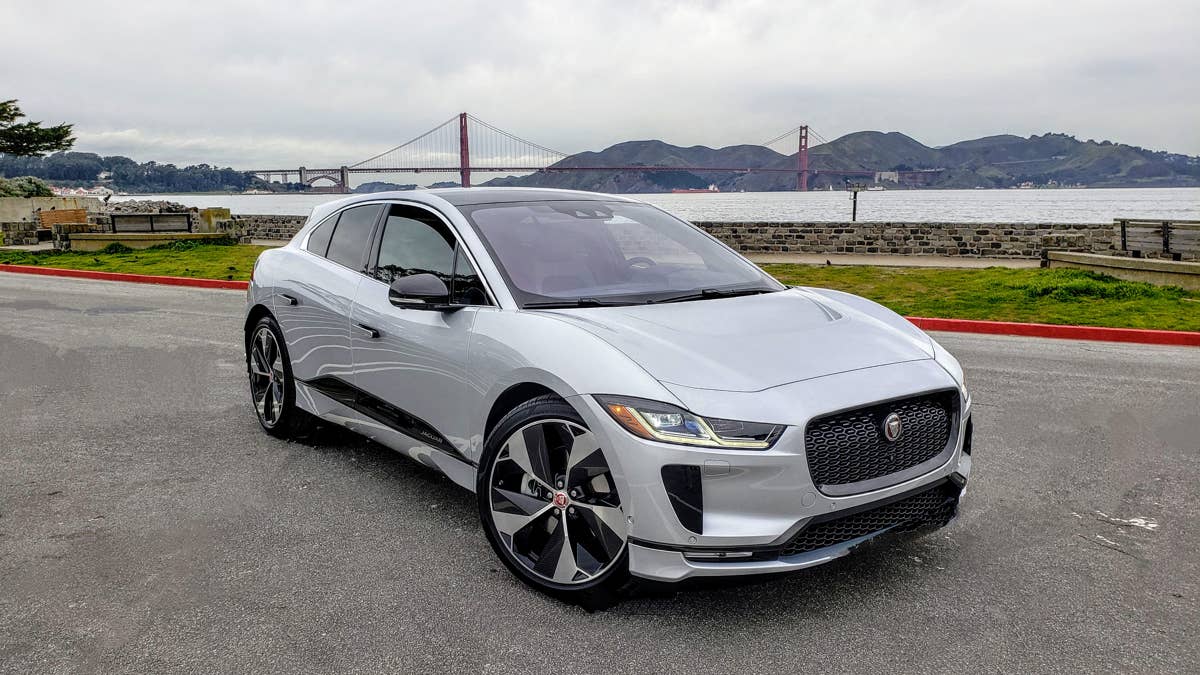
Jaguar was one of the first luxury brands to bring an EV to market. But the original I-Pace failed to generate much buyer enthusiasm and was discontinued in 2024 due to slow sales and a shift in strategy. Parent Jaguar Land Rover subsequently halted production of all of its Jaguar models as it moved ahead with plans to go all-electric. That was easily the most controversial move of all, essentially meaning that by the time the brand resumes production with the Type 01 its factories will have been idled for about 18 months.
“Our business needed to change,” Glover said in an exclusive interview with Autoblog following the Type 01 debut. “We needed to reset.” And while it was business-as-usual on the Land Rover side of the company, it was “just not viable” to continue Jaguar production while investing heavily in the development of Type 01 and the products to follow.
Holding Course
Back in 2020, when Jaguar’s all-electric transition was approved, the move seemed to make sense. European rules were put in place calling for a phase-out of internal combustion engines by 2035 and China was moving in a similar direction. When the Biden administration took power in the U.S. it signaled plans that would give EVs a big boost here, as well. But things began to change, especially in the States, when Pres. Donald Trump returned to office. He and the Republican-controlled Congress have taken a number of steps that have led to a plunge in EV sales, most notably the September 2025 phase-out of federal tax credits.
Early this year reports began circulating that Jaguar might reverse course or, at least, stretch out its all-electric transformation. Some sources suggested the company was looking to add range-extender technology which would “alleviate the issue many buyers have: concerns about range and charging,” Sam Fiorani, lead analyst with AutoForecast Solutions, said at the time.
But in a lengthy conversation, Glover said Jaguar is holding course. Asked whether hybrids, plug-ins and range-extenders might be worked into the mix, at least as mid-term solutions, the executive responded with a simple, “No,” adding that, “I think the range extender question is the answer to a question that nobody’s asked, because if somebody loves the Type 01, great. If they don’t like it because it’s an EV, I’m not sure how giving an extended range solves that particular problem. So, for us, Type 01 has been all about refusal to compromise. We want to make sure we stay focused on what we think makes the best possible Jaguar. So, yeah, it’s EV for us.”
What’s Up Next?
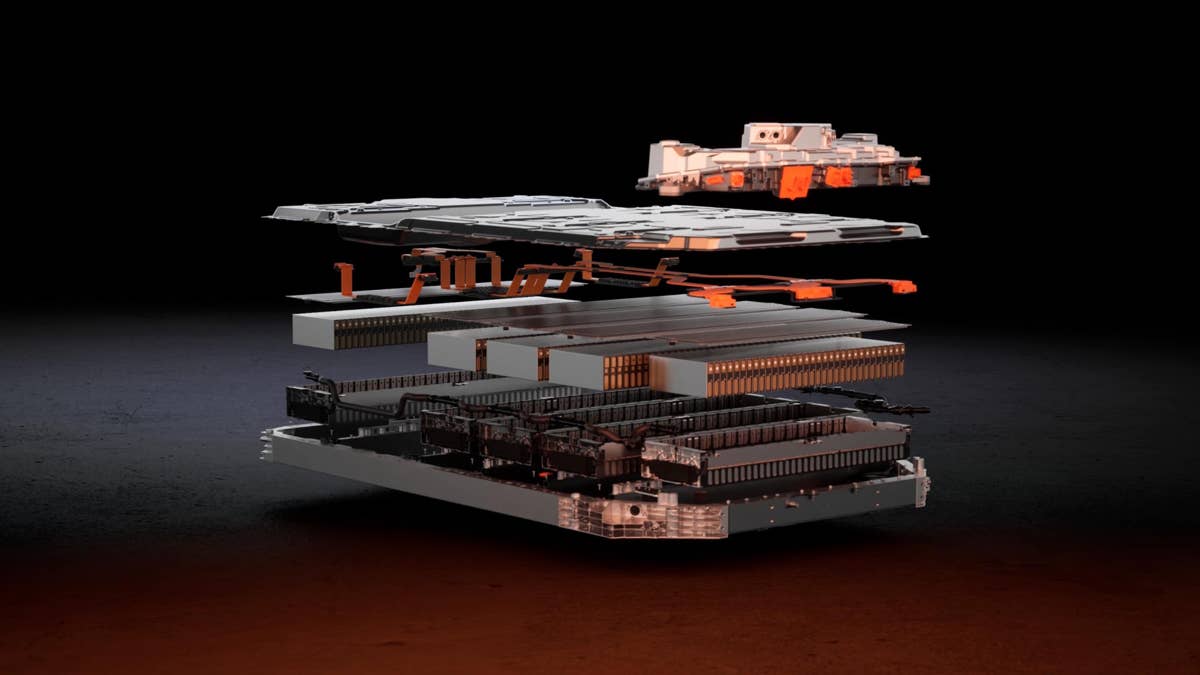
One product line does not a brand make. “We’re being very, very focused on the first car, (but) “clearly, there needs to be a family of vehicles,” Glover acknowledged. That said, he isn’t ready to offer specifics beyond acknowledging that the second model is already well under development – and it will use the same basic architecture, or platform, as the Type 01, including its prismatic lithium-ion battery pack and 950-volt electrical system.
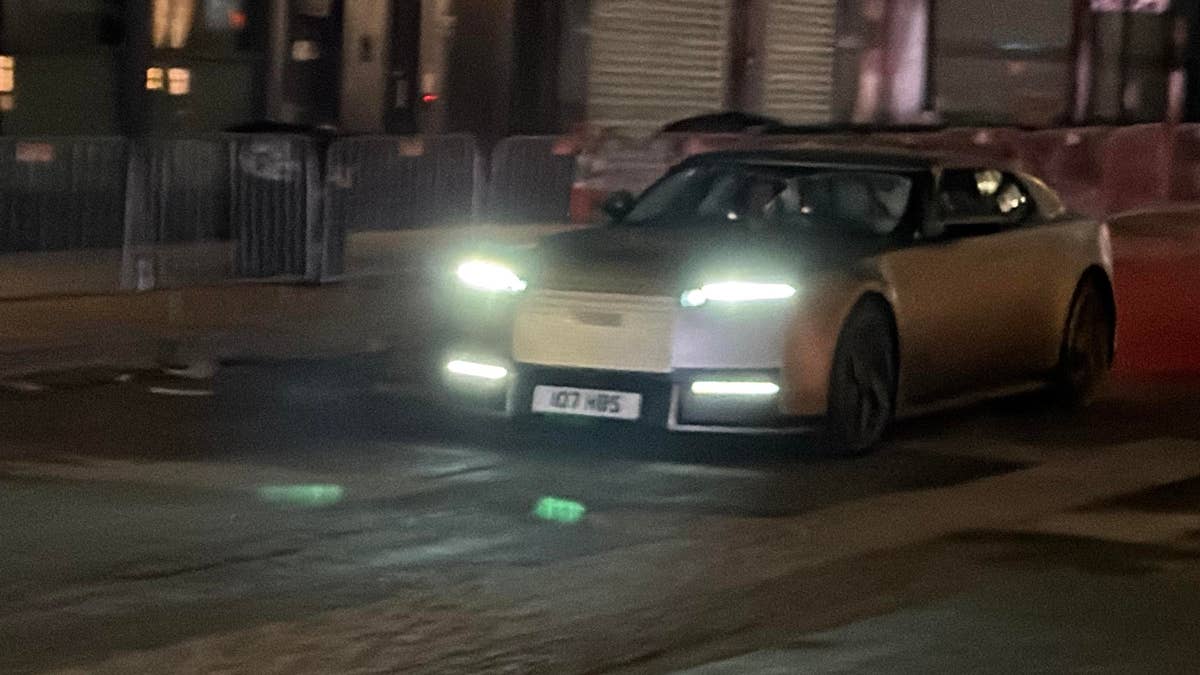
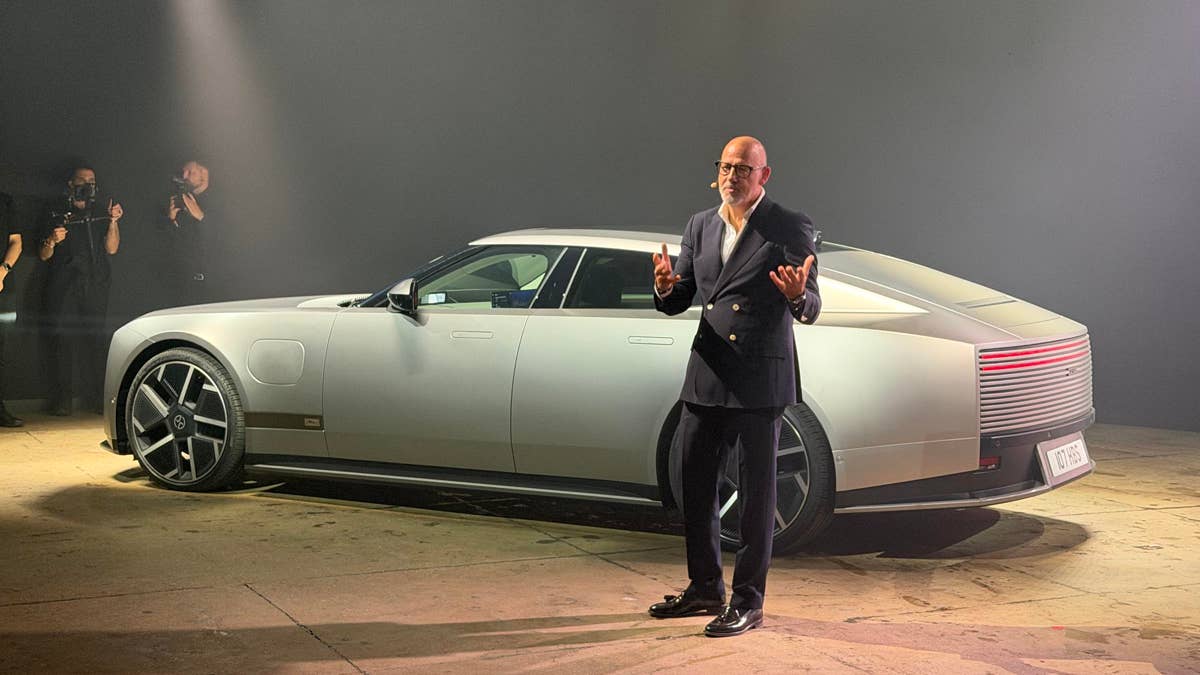
While the Jaguar chief wouldn’t provide more details, however, I spoke to several retail sources, including a senior executive from the Sonic Automotive dealer group, who attended a Type 01 background event in Britain last month. Beyond getting a glimpse of the production-ready sedan, they also were treated to a look at what will come next: a sleek crossover-utility vehicle bearing more than a slight resemblance to the long-nosed Type 01 sedan. Set to be called the Jaguar Type 02, it also will pick up on the sedan’s curvaceous roofline, albeit raised to permit a higher seating position and far more cargo space.
“Clearly, We Need to Expand the Portfolio”
Jaguar’s rollout plans echo what we’ve seen with a number of other manufacturers, particularly EV start-ups like Tesla and Lucid: launch with your sexiest product line and then shift focus to the products that will deliver the real volume levels you need to make a business case. Considering Jaguar has been out of production for quite some time, one might expect it to add the Type 02 as soon as possible. But Glover, surprisingly, is not in a rush. Clearly, we need to expand the portfolio as quickly as we can,” he acknowledged. “What I don’t want to do is stack (the Types 01 and 02) on top of each other. We’ve seen that in the past with Jaguar where we had too many launches in too short a period,” confusing potential buyers and even losing sales from models that didn’t get a chance to build awareness.
Those briefed on Jaguar’s plans anticipate we won’t get to see the Type 02 until sometime later next year, after production of the original sedan gets underway and Type 01 has a chance to build some momentum.
Jim Bennett via Historic Auctioneers
Moving Upmarket
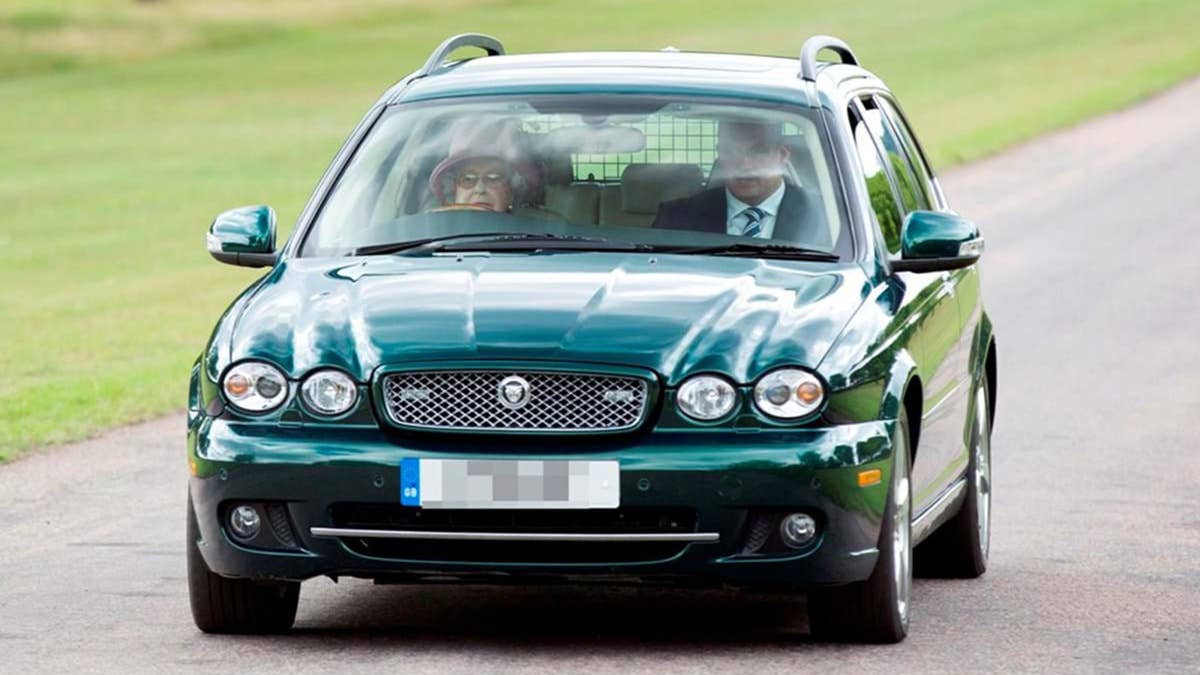
In the years following its acquisition by Ford Motor Co. in 1986, Jaguar made several attempts to broaden its appeal, launching products such as the S- and X-Type which targeted buyers with far thinner wallets. That approach largely continued after the brand – along with Land Rover – was maintained right up until Jaguar production was halted on December 19, 2025. The average price of a Jaguar, at that point, was in the $60,000 range, noted Glover.
Though final pricing has yet to be announced, Type 01 will start at somewhere close to $130,000. That gets you a lavishly executed sport sedan with a 3-motor all-electric drivetrain delivering 1,000 horsepower and 1,007 pound-feet of torque. U.S. versions are likely to deliver somewhere between 300 to 350 miles range – with overseas models rated around 400 miles using the looser WLTP test cycle. The obvious question is whether more affordable variants will follow, perhaps a less powerful 2-motor version. Again, Glover said tersely, the answer is “no,” before adding, “We want to make this the best possible Jaguar we can. We’re not going to compromise on the design. We’re not going to compromise on the range. We’re not going to compromise on the dynamic capability, and we think that will give us the best shot at breaking through.”
“From a price point of view,” he added, “all Jaguars will be in broadly the same price point. $120,000, $130,000. We don’t see ourselves bringing a variant in at 80 or 90 (thousand). That isn’t going to work. Initially, we’ll come in with 1000 horsepower only. Later on in life, there will be other variants, but… we need to reframe people’s expectations.” The “center of gravity” for Jaguar going forward, Glover concluded, will “be around that $120,000 mark. Now, obviously, with products like limited editions, collection cars, bespoke in time, those sorts of things, great, we might be able to elevate it, but that will be the center of gravity.”