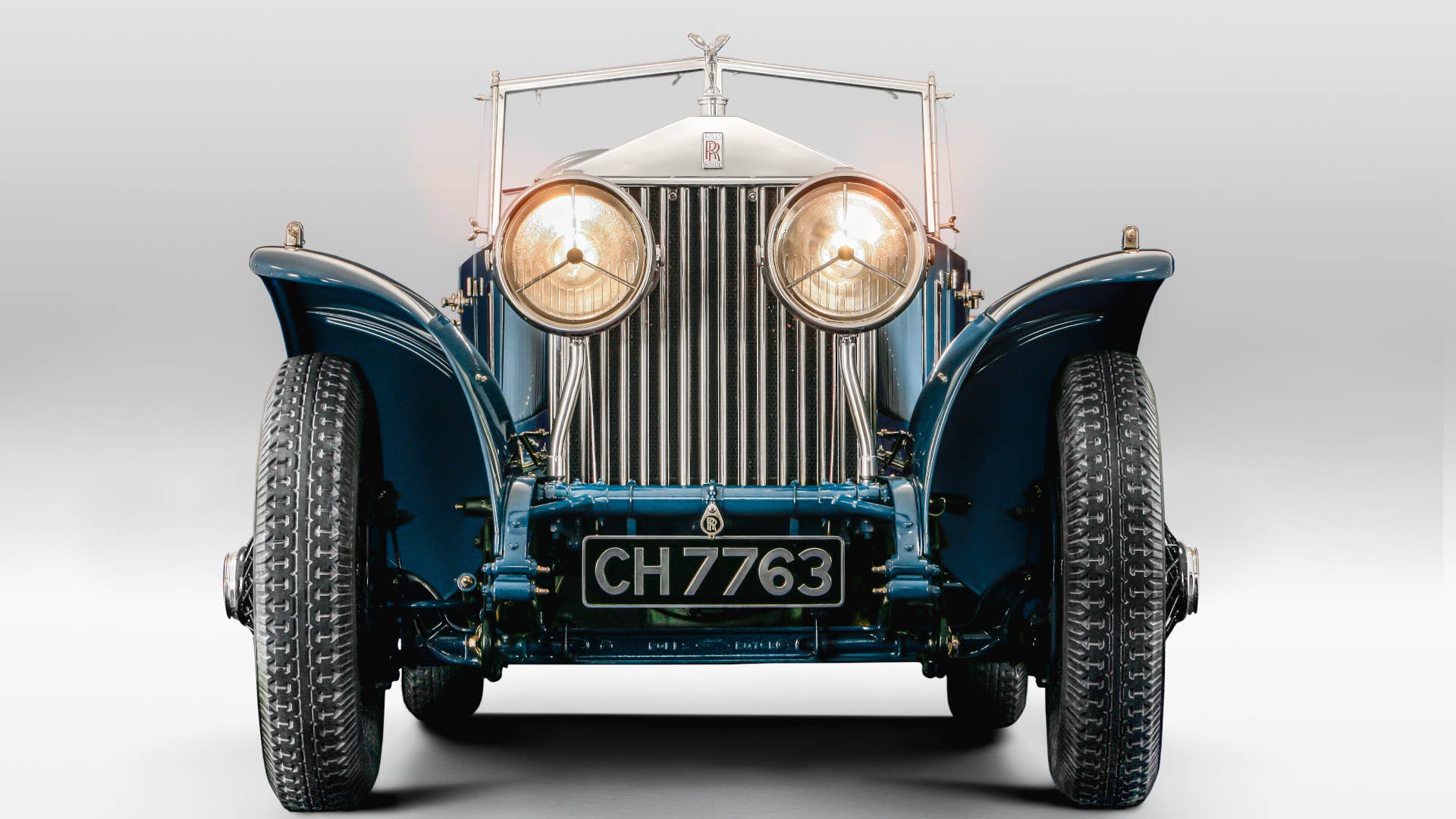
Rolls-Royce has just created what may be the first EV ever to be immune to depreciation. The British automaker announced its new invitation-only Coachbuild program specializing in ultra-rare EVs last month, and this is the first product from that initiative, dubbed Project Nightingale. Not only is this an exceptional production-bound concept, but it’s also a hint of what future Rolls-Royce products could start to look like, eschewing current Rolls-Royce products’ horizontal headlights for a design this writer feels is slightly reminiscent of a Buick Riviera (don’t tell them I said that). It’s inspired by high-speed experimental ‘EX’ Rolls-Royces of the 1920s, though, pictures of one of which are included at the bottom of this article, and it’s built on the same Architecture of Luxury platform as every other contemporary Rolls-Royce, including the Spectre.
Rolls-Royce’s First Electric Convertible Is Majestic
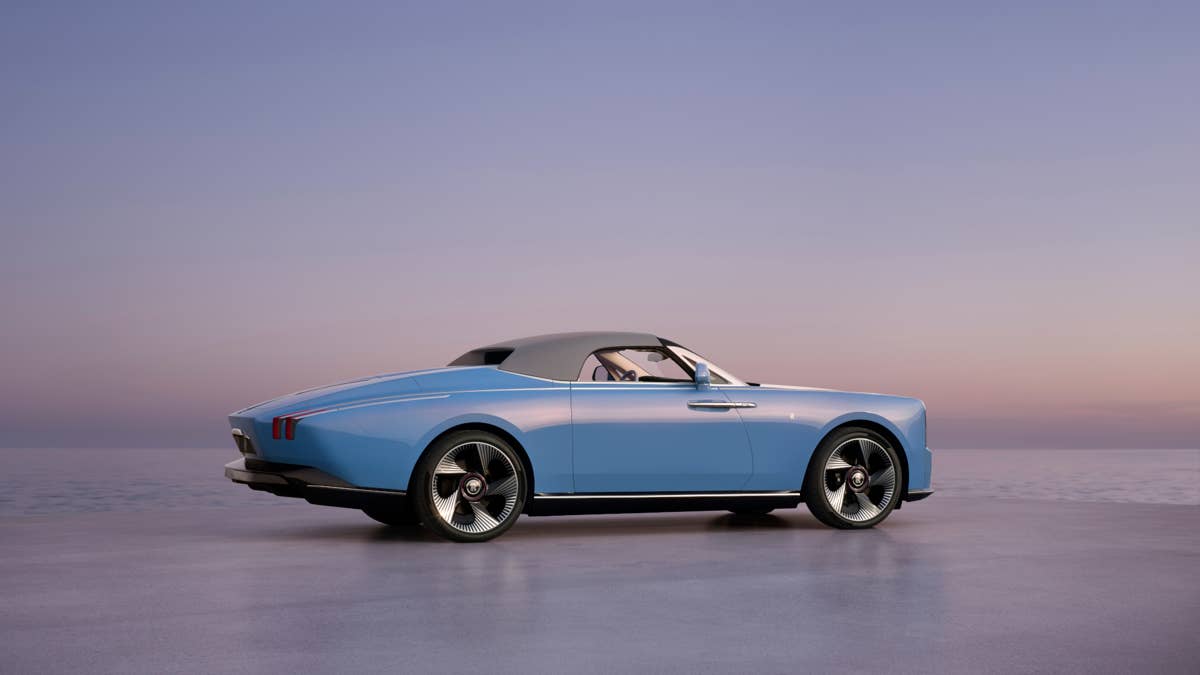
The Spectre with which Project Nightingale doubtless shares much is a coupe, and Goodwood’s second series production EV will be an SUV (with a spectacular front end), so this coachbuilt creation fits neatly into a niche Rolls-Royce has yet to fill. The name, by the way, is derived from Le Rossignol (French for ‘the nightingale’), which is the name of the designers’ and engineers’ house at company co-founder Henry Royce’s winter estate on the Côte d’Azur area of the French Riviera. The monolithic aesthetic, meanwhile, draws inspiration from Streamline Moderne design from the end of the Art Deco era, and like the aforementioned EX prototypes, particularly 1928’s 16EX and 17EX, Project Nightingale is adorned with red badges. Also like those cars, this is a massive EV, measuring 226.7 inches, or nearly 19 feet in length. The flagship Phantom is similarly long, but it seats four in comfort; this seats just two, increasing the sense of opulence. Even the grille is abnormally large, carved from a solid block of stainless steel and measuring almost 3.2 feet or 40 inches across.
As an EV, Goodwood’s designers didn’t need a long front end for an engine, but they made one anyway, not for luggage space, but because it’s imposing and fits with the extravagant vibe Rolls-Royce customers demand. Polished stainless steel bands inspired by yachts run down the whole length of the car to exaggerate the length, connecting the headlights to the tail lamps, and the latter are a more sculptural design than those of existing Rolls-Royces.
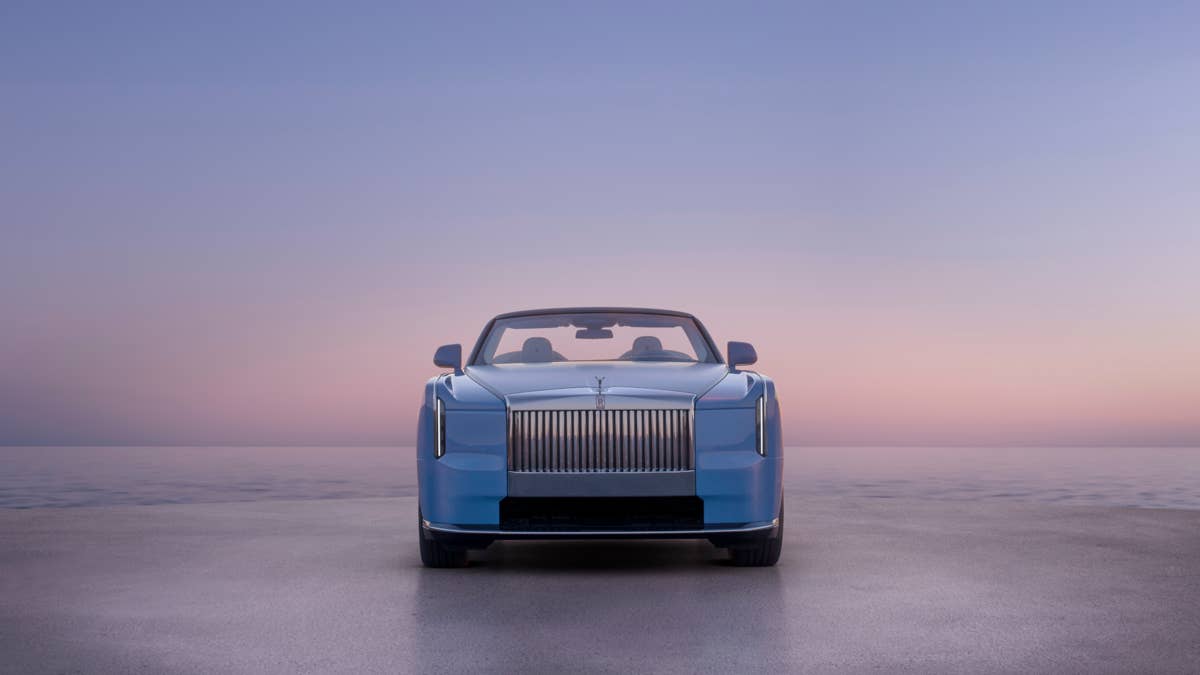
A steeply raked windshield draws partial inspiration from the Phantom Drophead Coupe, contrasting with the tall side bodywork to cocoon occupants, while a carbon fiber sill helps minimize the slab-like effect slightly. This element, says Rolls-Royce, is also meant to evoke the running boards of classic Rollers, while hidden door handle locks and indicators are a nod to contemporary luxury design. Unsurprisingly, the wheels are the largest on a Rolls-Royce yet, measuring 24 inches in diameter and taking design inspiration from how yacht propellers look when viewed from underwater. Aluminum flakes and machined stripes make the wheels appear as if they’re turning even when stationary, and when the car is in motion, a large carbon fiber diffuser eliminates the need for a spoiler. A single brake light and a recessed chrome license plate surround finalize the distinctive look.
A Magical Cabin Inside Project Nightingale
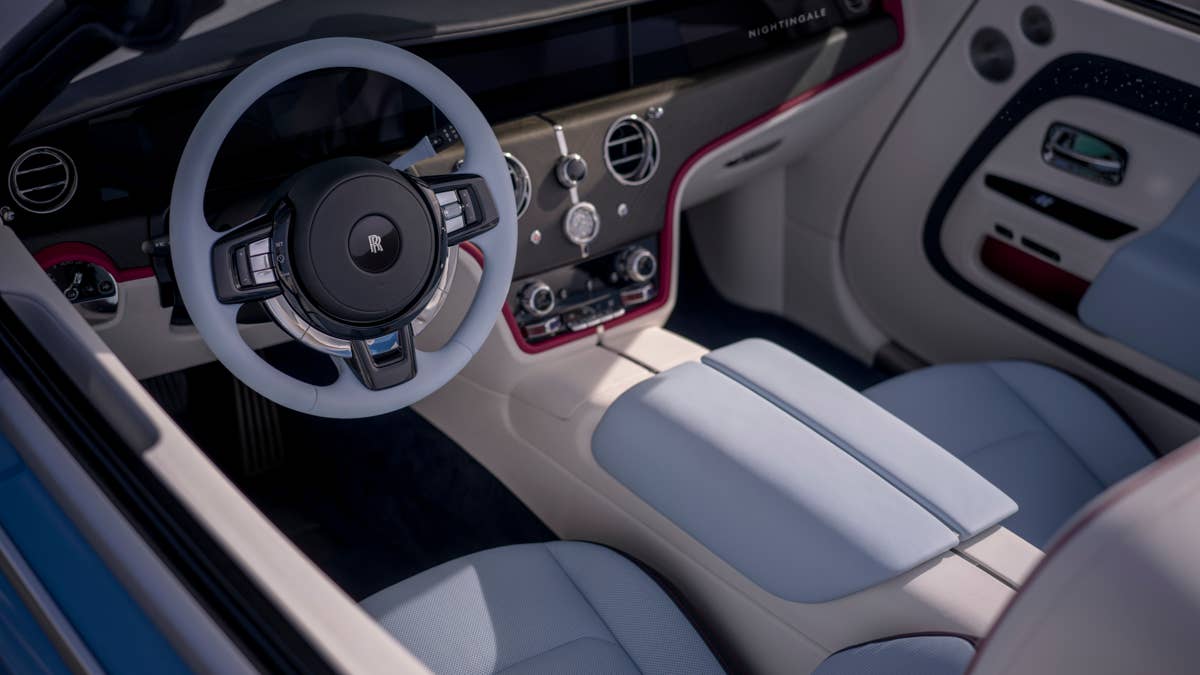
Inside, Rolls-Royce has used materials like cashmere, fabric, and composites to craft a new sound-deadening material that the marque says helps create a serene driving experience without cancelling out sounds like raindrops on the canvas roof, or birds singing in the countryside. Speaking of, hearing birds during prototype drives inspired the engineers to come up with a visual representation thereof, analyzing the sound-wave patterns created by nightingales and expressing them in the Starlight Breeze suite, a composite of 10,500 lights in three varying sizes on the doors and around the seats, behind which the so-called ‘Horseshoe’ rises.
Related: What Is the Most Expensive Rolls-Royce Ever Built?
Leather upholstery in Charles Blue and Grace White with Deep Navy seat inserts and Peony Pink highlights, faceted and glass-blasted metal switchgear, and polished billet aluminum cupholders further enrich the ambiance, and an electronically operated cover reveals a compartment for personal effects. There’s also a hidden shelf behind the seats for hand luggage, while the wood is Openpore Blackwood laid in a V shape.
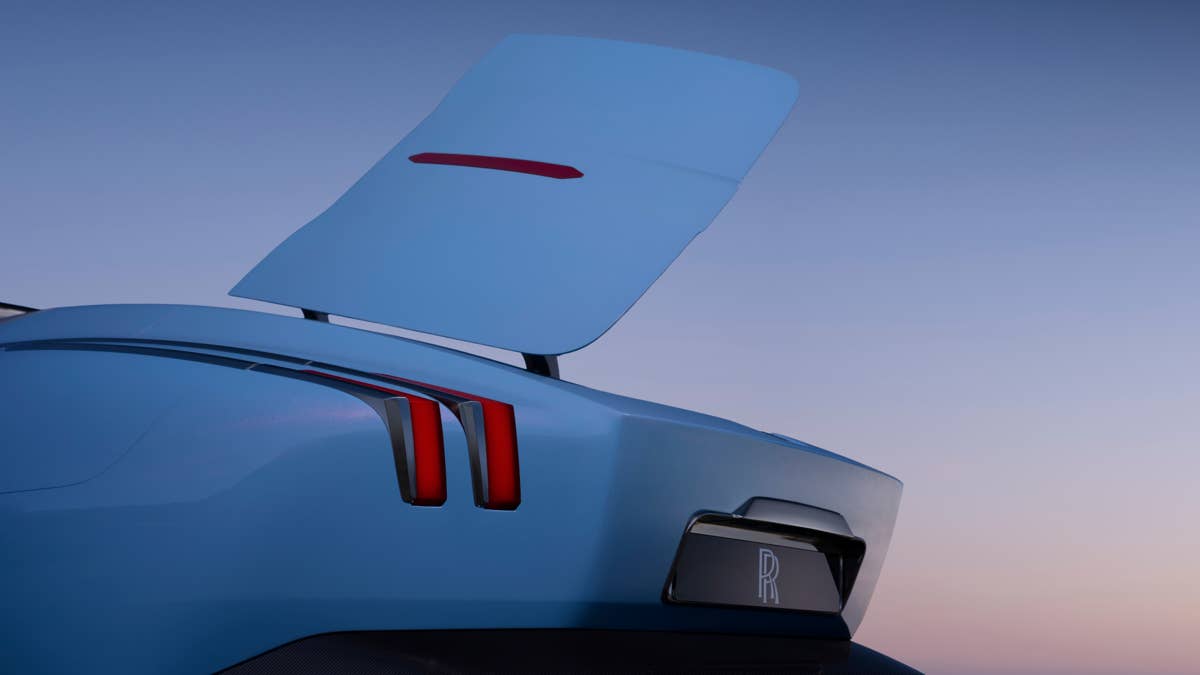
Just 100 of Rolls-Royce’s most esteemed customers will have the opportunity to own a version of this project, and they’ll be granted access to exclusive new paint colors and materials currently in development, including the 17EX-inspired Côte d’Azur Blue paint and silver canvas top seen here. These won’t be available on any other Rolls-Royce, helping ensure the EV is special for all time, and those lucky enough to be invited into the program will have plenty of time to design their dream EVs, with deliveries only planned to begin in 2028. As for pricing, Autocar reports that buyers will pay around £7 million, or roughly $9.5 million. Compared to the Droptail, that’s a bargain.