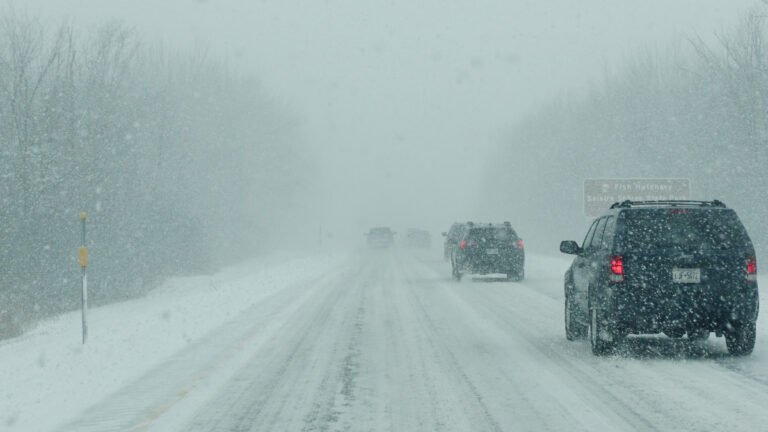
A Winter Storm Watch is in effect across the Dakotas and northern Minnesota as back-to-back late-season systems line up to hammer the Northern Plains through Easter weekend. The National Weather Service offices in Bismarck, Aberdeen, and Grand Forks have all issued Watches ahead of a second, more powerful storm arriving Friday, and conditions from the first system are already creating hazardous travel across the region today.
What to Expect
The first storm is moving through the Northern Plains now, producing 2 to 5 inches of snow across central and southeast North Dakota and 5 to 7 inches in north-central South Dakota, with wind gusts up to 35 mph generating areas of blowing snow and sudden reductions in visibility. The NWS Bismarck office warned that falling and blowing snow will cause rapid drops in visibility, particularly on rural roads prone to drifting.
The second system is the one forecasters are watching more closely. It arrives Friday and will intensify through Saturday, with the NWS Bismarck office forecasting 6 to 12 inches of snow across central North Dakota, including Burleigh, Stutsman, and Emmons counties. The NWS Aberdeen office is calling for 8 to 11 inches in north-central South Dakota and 6 to 9 inches across Brown, Marshall, and Roberts counties, extending into Traverse County, Minnesota. Wind gusts of 30 to 40 mph will combine with heavy snowfall to produce periods of whiteout driving conditions.
The Weather Prediction Center’s extended forecast discussion flagged this second system specifically, noting that heavy snows in excess of 6 inches are possible from northern South Dakota into much of North Dakota and across northern Minnesota. Combined totals from both storms could exceed a foot in parts of the eastern Dakotas and northern Minnesota.
Road Conditions
The combination of back-to-back systems means road surfaces across the region will see little recovery time between rounds. Snow from the first storm will compact and refreeze overnight before the second system arrives, layering fresh accumulation on top of already compromised surfaces. The I-94 corridor through Bismarck and Jamestown, the I-29 corridor through Fargo, and I-90 across South Dakota are all at risk for extended periods of hazardous driving through Saturday. Rural secondary roads in the Watch zones are likely to see drifting that reduces them to single-lane or impassable conditions, and the NWS is urging drivers to allow extra travel time, keep emergency supplies in their vehicles, and avoid travel altogether during peak accumulation windows. For the latest road conditions, drivers can call 511 or visit 511mn.org in Minnesota and 511 in North Dakota and South Dakota.
Need New Tires? Save Up To 30% at Tire Rack
Find the perfect tires for your exact vehicle and driving style. Click here to shop all top-tier brands, including Michelin, Bridgestone, and more, directly at Tire Rack.
Easter Weekend Travel Impact
This is a particularly disruptive setup for holiday travelers. Easter weekend falls on April 5-6, and the second storm’s heaviest snow is forecast to fall Friday into Saturday, landing squarely on what would normally be the peak travel window. Temperatures across the region had been running well above average earlier this week, with highs in the 50s and 60s across the Dakotas and Minnesota, making this late-season reversal even more jarring. Conditions are expected to improve by Sunday, but refreezing overnight Saturday into Easter morning could leave residual ice on road surfaces, particularly on bridges and overpasses along the interstate corridors.
Winter Driving Tips
If you are driving into the Watch zones this week, your tires are the single most important variable. All-wheel drive will help you get moving on snow-covered roads, but it does nothing to reduce stopping distance on ice, a point worth keeping in mind on any bridge or overpass along I-94 or I-29 where black ice can form without warning.
Autoblog’s winter car readiness checklist recommends a minimum of 4/32 inches of tread depth for safe winter driving, and cold temperatures will drop tire pressure by roughly 1 to 2 PSI for every 10 degrees, so check your pressures before you leave. Give yourself at least triple the stopping distance you would use on dry pavement.
If this storm is a reminder that your vehicle still is not set up for winter, Autoblog’s full breakdown of the best cars and SUVs for snow and winter driving is worth a read, and our guide to best practices for driving in snow and ice covers everything from skid recovery to what to keep in your trunk for emergencies.
Timing
The first system clears the region Thursday evening, with a brief break overnight before the second storm arrives Friday afternoon and intensifies through Saturday. The heaviest accumulations from the second system are expected Friday night into Saturday morning. Conditions should begin improving late Saturday, but refreezing overnight into Easter Sunday means hazardous conditions may linger into the holiday morning.