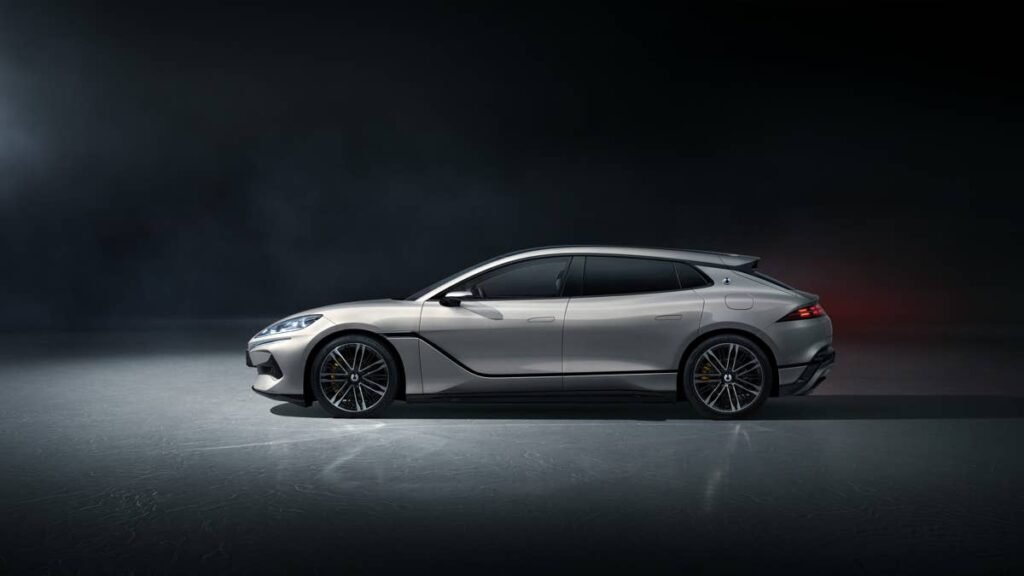
BYD launched its Denza Z9 GT in Europe with a bang. Daniel Craig, the most recognisable face of James Bond, fronted the campaign. The car itself is genuinely impressive: a 1,140-horsepower electric shooting brake that charges from 10 to 97 percent in nine minutes, covers up to 372 miles on the WLTP cycle, and crab-walks into parking spaces. In China, it starts at around $39,300. In Europe, that same car starts from roughly $134,500. That’s more than three times the price. Europe’s tariff wall on Chinese EVs is real and significant, but it does not explain a gap this wide.
Denza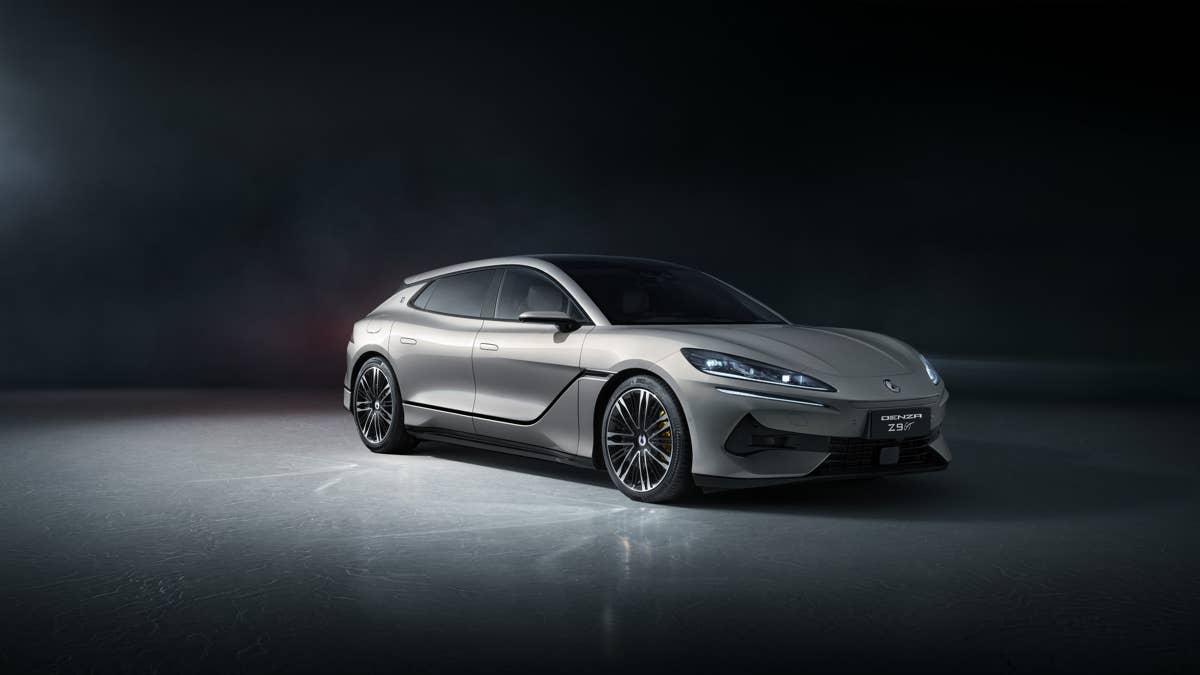
What the Numbers Actually Reflect
The EU’s countervailing duties on Chinese-built EVs sit at 17 percent for BYD, on top of a standard 10 percent import tariff. That combined 27 percent bite adds roughly $10,500 to a $39,000 base. Shipping, homologation, suspension retuning for European roads, dealer networks, warranty infrastructure, and VAT stack on top of that. Still, none of this math produces a number anywhere near $134,000.
Denza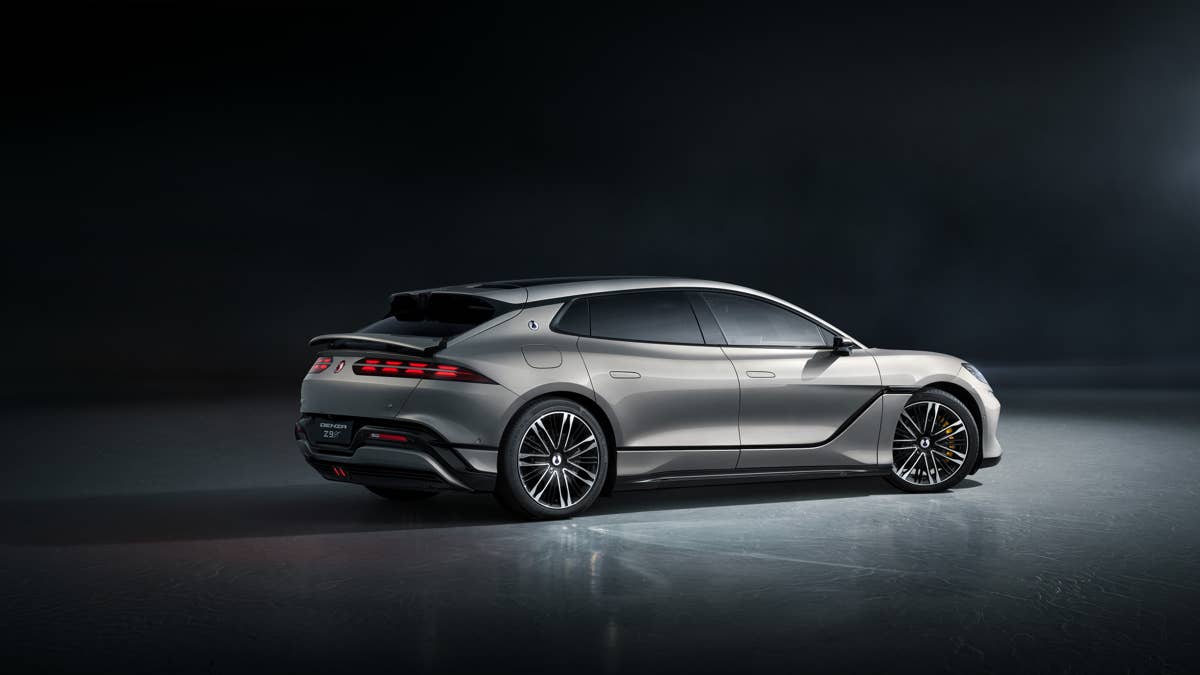
Analysis from S&P Global Mobility suggests the price gap between Chinese models at home and in Europe is unlikely to be explained solely by import tariffs and shipping costs, pointing instead to a deliberate OEM pricing strategy. BYD is choosing to price the Denza here. At $134,500, the Z9 GT just undercuts the Porsche Panamera. That is not a coincidence. This is a car placed deliberately beside Europe’s most aspirational names, not beneath them.
The “Cheap Chinese EV” Narrative Has a Shelf Life
There is a persistent assumption that Chinese EVs are inherently budget products. At the mass-market end, BYD has weaponised cost efficiency brilliantly, with analysts identifying a sustainable 25 percent manufacturing cost advantage over traditional European rivals. But the Denza Z9 GT is aimed at a different buyer entirely. It is not meant to be another race-to-the-bottom product. It is built to compete on prestige, technology, and desirability.
BYD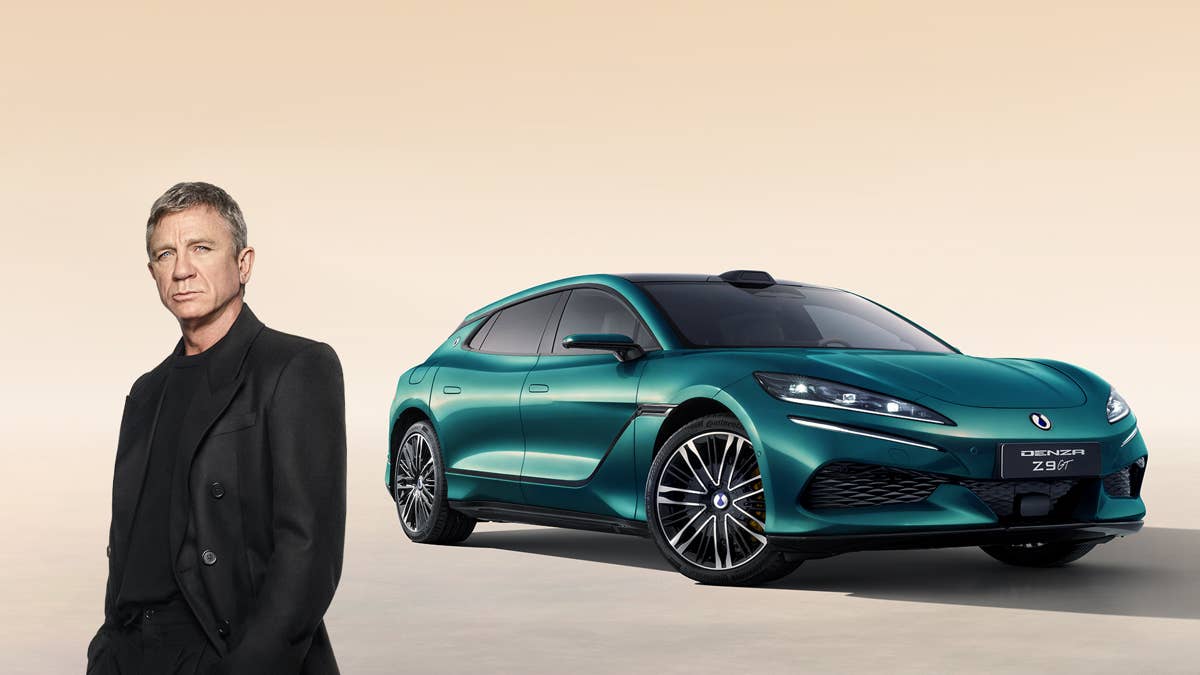
Lexus, Genesis, and Infiniti have already demonstrated the enormous challenge of cracking the European premium market. Each arrived with technically strong products. None fully broke through. Brand trust at this price point is built slowly, and buyers spending six figures tend to be conservative about unfamiliar badges. BYD knows this. The triple-the-price strategy is partly about surviving that reality, using the margin to fund European infrastructure, retail expansion, and the kind of marketing that put James Bond in the front seat. Tariffs made it more expensive. Ambition made it this expensive.