A Deep Dive Into a Failed 6.7L Power Stroke Diesel
A recent teardown video from automotive YouTube channel I Do Cars sheds light on just how catastrophic modern diesel engine failures can become when problems go undiagnosed.
The subject: a core 6.7-liter Power Stroke turbodiesel V8 removed from a high-mileage Ford F-250 Super Duty that arrived at auction in non-running condition with more than 200,000 miles on the clock.
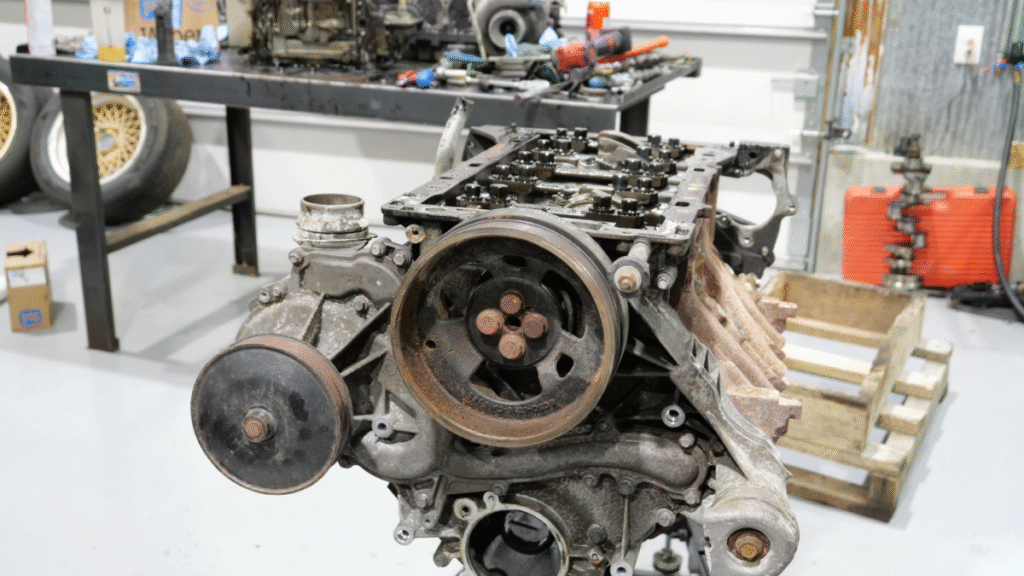
The engine had reportedly sat around the shop for over two years after a customer replaced it with a good used unit. With limited background information available, the teardown effectively became a mechanical investigation. What initially appeared to be a routine parts recovery – prompted by demand for the desirable gasket-style 2011 upper oil pan – quickly evolved into a forensic examination revealing severe internal damage hidden beneath an otherwise intact exterior.
The 6.7L Power Stroke: Ford’s Modern Heavy-Duty Diesel
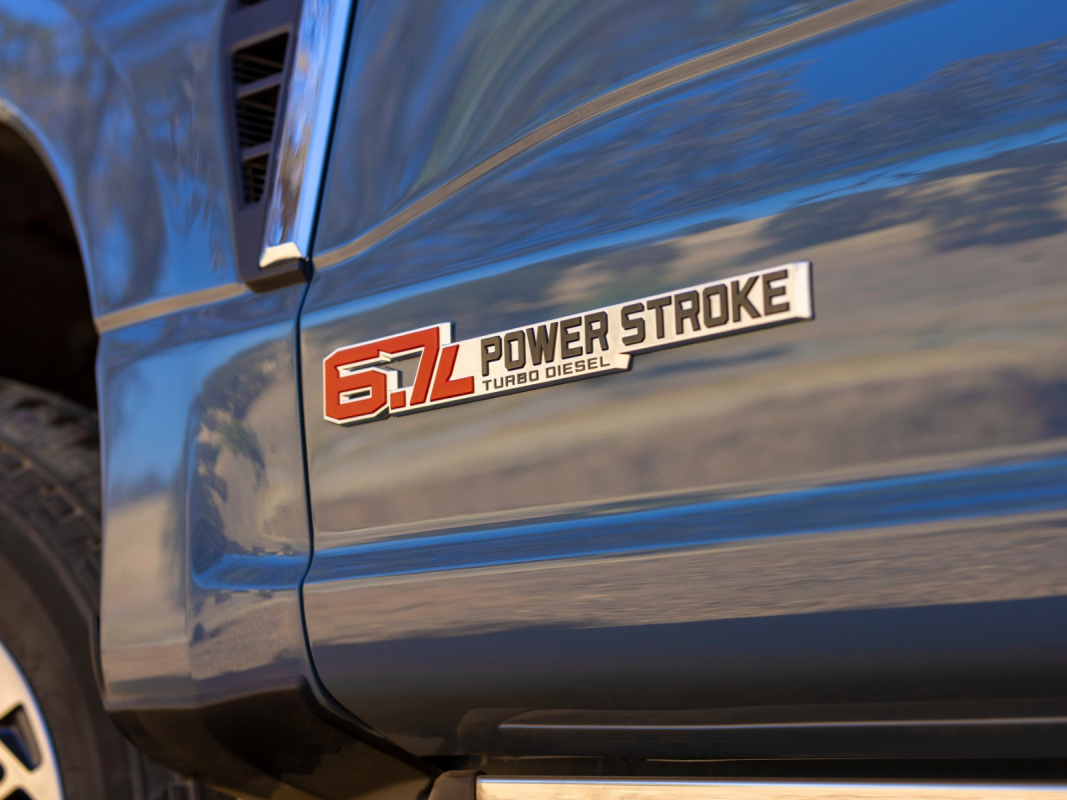
Introduced for the 2011 model year, the 6.7-liter Power Stroke marked a major turning point for Ford’s Super Duty lineup. Unlike previous diesel engines co-developed with Navistar, this V8 was engineered entirely in-house by Ford. It features a compacted graphite iron block, aluminum cylinder heads, high-pressure common-rail fuel injection, and a single sequential turbocharger designed to balance low-end torque with high-load efficiency.
The engine quickly became the backbone of Ford’s heavy-duty truck range. Beyond the F-250, the 6.7 Power Stroke is also used in the Ford F-350 Super Duty, Ford F-450 Super Duty, and Ford F-550 Super Duty models, powering everything from personal tow rigs to commercial fleet vehicles. Known for producing massive torque and long-haul durability, properly maintained examples regularly surpass hundreds of thousands of miles—making the failure uncovered in this teardown particularly notable.
Inside the Failure: When One Cylinder Destroys an Engine
Disassembly initially revealed little cause for concern. The turbocharger showed minimal shaft play, the valvetrain on one cylinder bank appeared clean, and the rotating assembly still turned smoothly. However, once the opposite cylinder head was removed, evidence surfaced that someone had previously attempted repairs, including missing head bolts and loosely assembled valvetrain components.
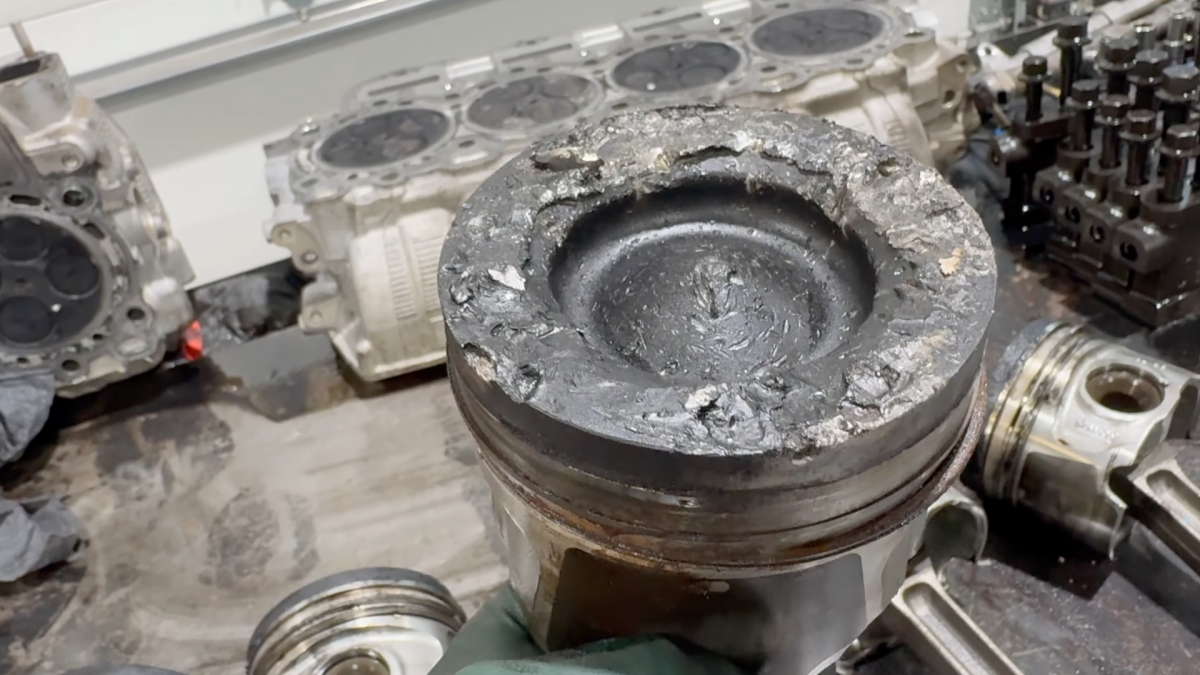
The real damage centered on a single cylinder. The piston was heavily cratered, the cylinder walls were deeply scored, and multiple valves had been destroyed after apparent contact with the piston. One combustion chamber showed extreme deformation, including cracked valve seats and shattered guides, damage consistent with a foreign object or valve failure repeatedly impacting the piston. Interestingly, the bottom end told a different story: bearings, crankshaft, and camshaft remained largely serviceable, ruling out lubrication failure.
While the exact cause remains speculative, the most plausible explanation points to debris entering the combustion chamber during prior repair work or a valve-related mechanical failure that triggered catastrophic internal contact. Either way, the teardown highlights how even Ford’s robust 6.7L Power Stroke can suffer terminal damage from a single localized event, especially in auction vehicles where failure history remains unknown.
YouTube – @I_Do_Cars