Electrified Kodo Design
It’s been over a decade since we first saw the first cars wear Mazda’s Kodo Design language. From the very first all the way up to now, I’m fairly certain it’s been working well for the Japanese brand.
As the world started to turn to electrification a few years back, I turned to Mazda and asked: “What would a fully-electric Mazda look like?” Among the Japanese brands, Mazda seemed to be the most resistant Japanese automaker when it came to electrification, but now that I’ve seen one in the metal, “Why didn’t they make one sooner?”
Mazda’s global strategy will see an uptick in new EVs for some markets, like Australia and Southeast Asia, but U.S. availability remains to be seen – if at all. Still, seeing what an all-electric Mazda looked like for the first time did leave a lasting impression, so let’s talk about it.
Before that, I have to thank the organizers at the 2026 Bangkok International Motor Show (BIMS) for setting the stage for this one. “Soon-soon,” Mazda states, but sooner would be better.
Earl Lee/Autoblog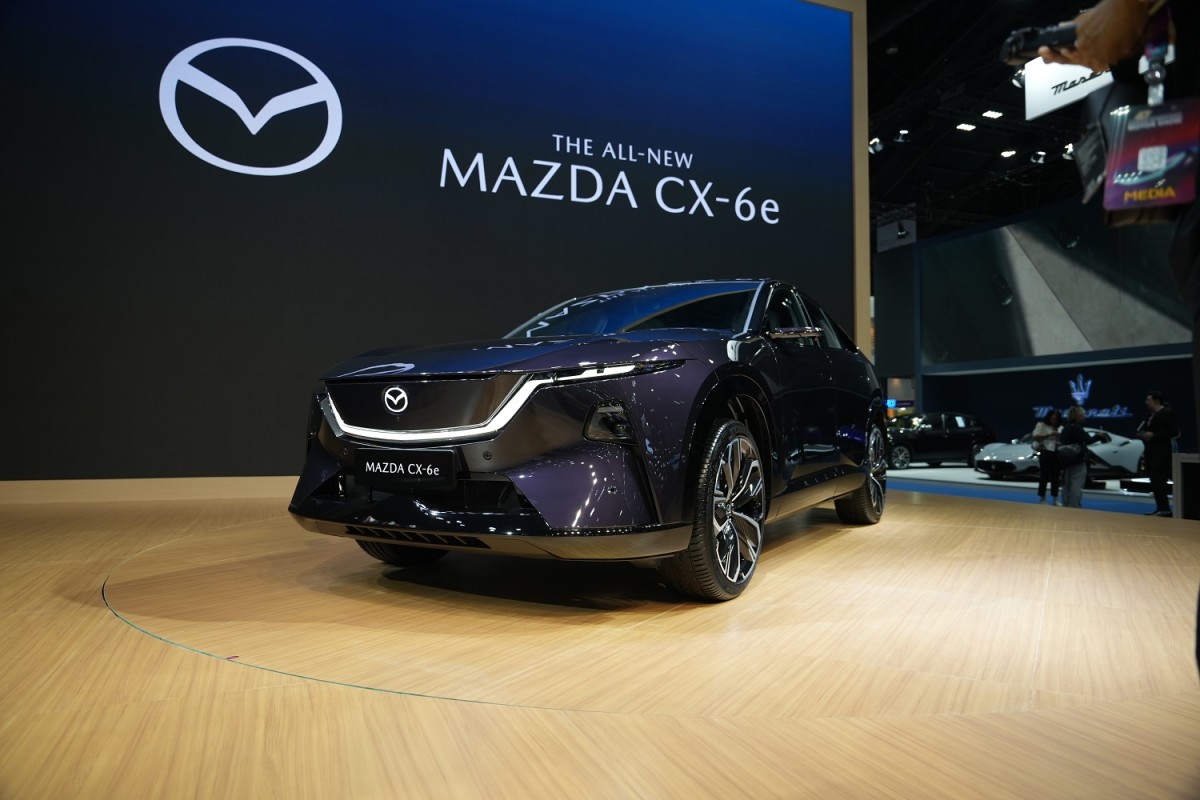
First Impressions: I Love It
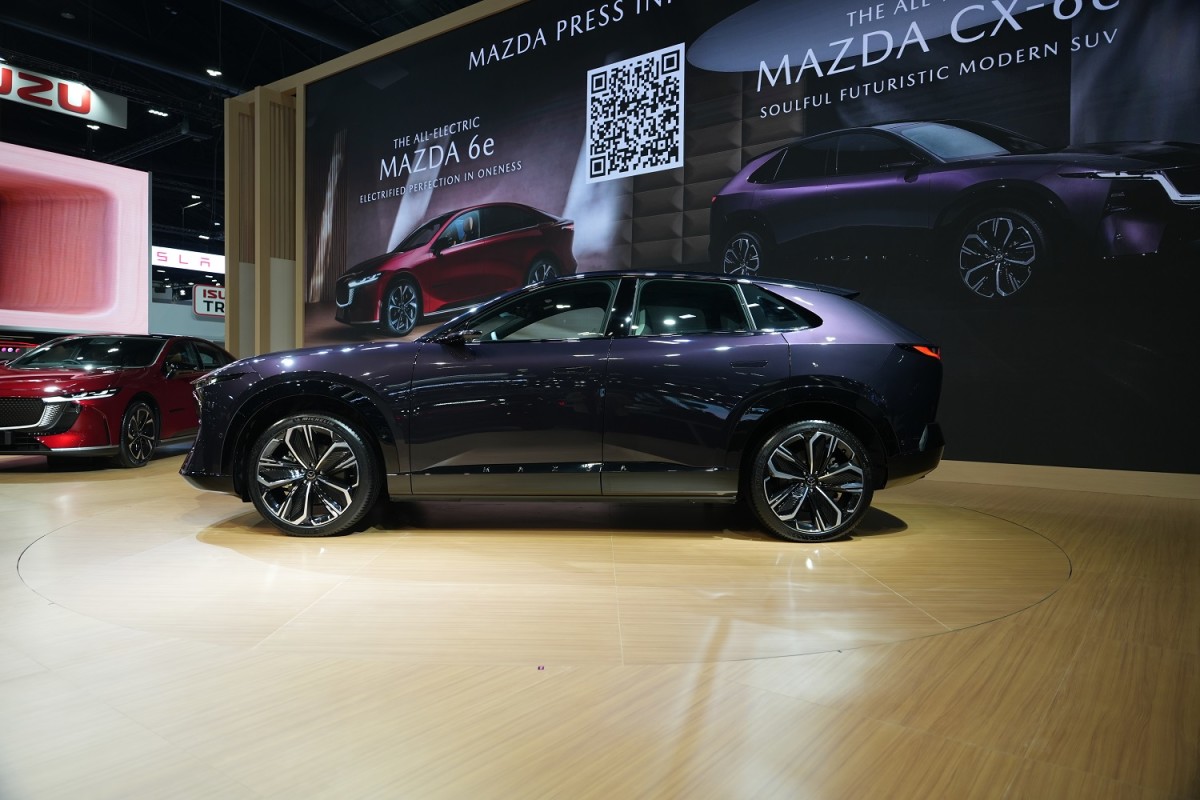
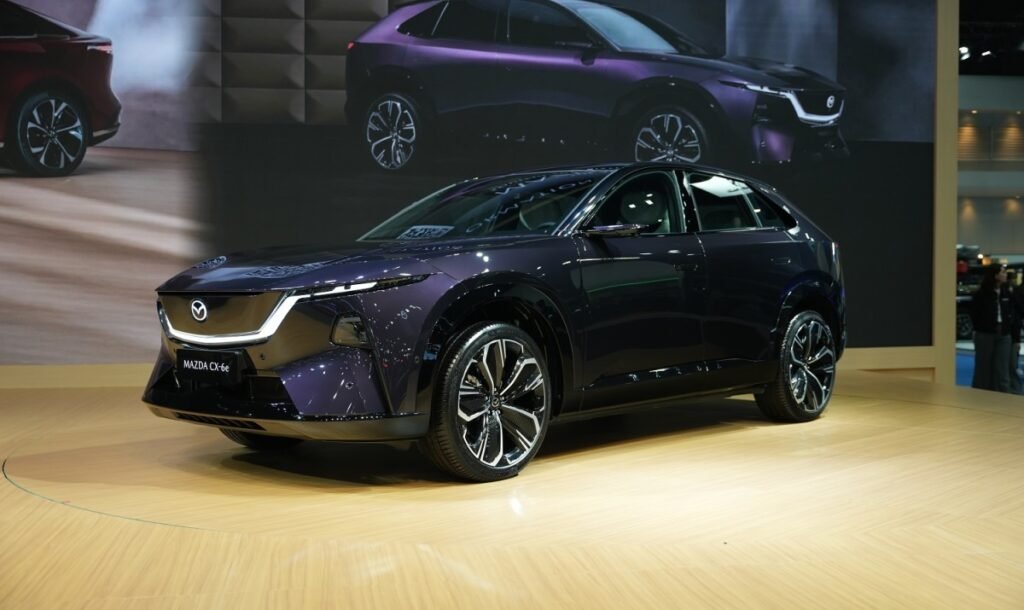
The Kodo Design Language works so well. It’s as if Mazda knew that it would still be using it far into the future. Whether it was intentional or a case of serendipity is up for debate, but regardless, it looks good. It might as well be one of the best EV designs I’ve seen in a while.
Mazda has mastered its own design language and brought it into the future. Kodo Design isn’t worn like a costume on the CX-6e; it’s worn like a well-tailored suit. The new Soulful Futuristic Modern language met all my expectations and then some. Mazda did a bang-up job of making this car as good as it looks.
It’s not just the sheet metal, but the proportions of the thing that got me. It’s similar in principle to the Mazda CX-70, with an elongated hood and a coupe-like design. The low roofline and the fastback rear only help make it look faster and sleeker. The driver is positioned in the middle of the chassis, making for a very driver-centric layout – for a crossover.
The front-end design fits well with the rest of the Mazda lineup. It looks like a natural next step. The DRLs are well-executed, and instead of shying away from a “grille,” Mazda decided to make it part of the car’s face, much like BMW did with the iX3.
If I were to nitpick, the rear is a radical departure from current Mazda products. Now, the taillights don’t span the entire length of the vehicle (at least not yet), but they do frame the “Mazda” logo, which is spelled out nicely on top of the tailgate. Speaking of, the flatness of the rear door somewhat bothers me. Nice and clean, but maybe more could have been done in this area.
Earl Lee/Autoblog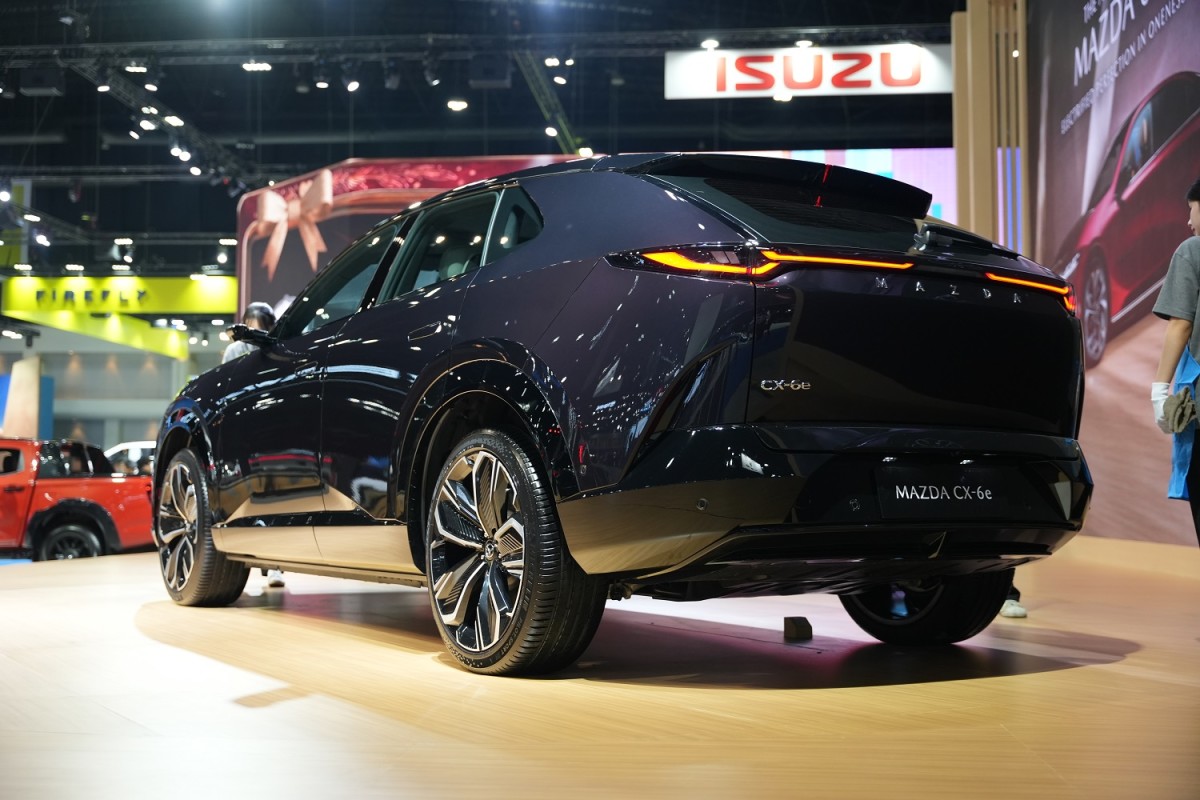
Locked Out
So I didn’t have the key to open the display unit. The spec for Thailand is not yet final, but I’ve selected a few details. The exterior color is a deep metallic violet, while the interior features a mix of beige and violet leather accents. Could Mazda offer certain exterior colors with standard interior color combinations in the future?
Options are options, but aside from the colors, the screen is the next big piece that ruffled some feathers back when Mazda first dropped its teasers. At 26 inches, it’s a behemoth, and it also eliminates the need for Mazda to go with the trend of giving the passenger a separate screen. It’s so big that both the driver and the passenger get a share of the screen, and that’s not really a great thing for me.
While the exterior played to Mazda’s strengths, the interior is a bit of a miss for me. While I do appreciate the steering wheel and (what look like) upmarket materials, the rest of the interior isn’t Mazda, or at least the Mazda that I’ve come to like over the years. This could be chalked up to the fact that the CX-6e isn’t technically a Mazda through and through, because, just like the equally gorgeous Mazda 6e, it’s based on the Deepal S07, a fully electric vehicle from China’s Changan brand.
Looking at the two cars side-by-side, you can tell that the interior is pretty much the same except for the larger screen on the Mazda. There are also other features shared between the two, such as the move to a heads-up display (HUD) for all driving data, which I’m not totally convinced is the right move for the industry in the near future. Maybe BMW‘s Panoramic iDrive is a bit more my speed in terms of execution, but even then, you may still call me a skeptic.
Earl Lee/Autoblog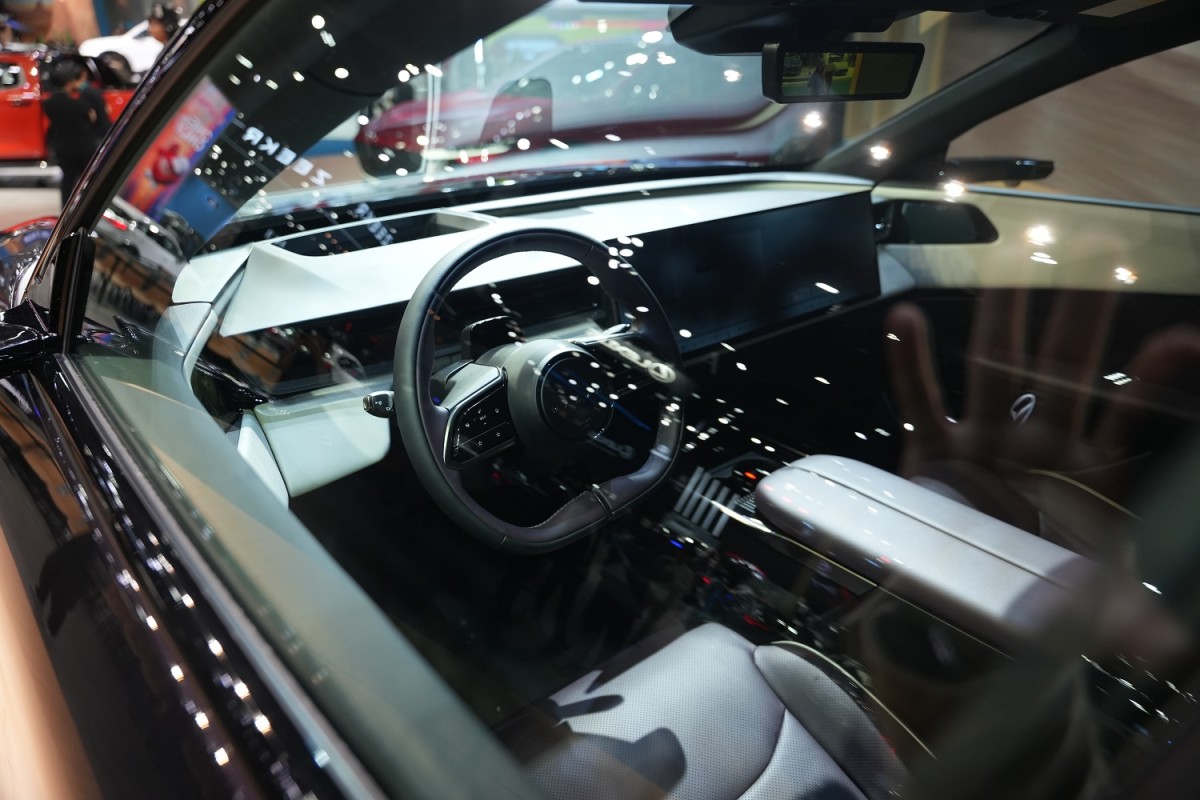
Mazda’s Platform Sharing Again
Even with its shortcomings, there is something to be said about how Mazda approached the CX-6e. This is not the first time Mazda has used another brand’s platform as its own. For other markets, the Isuzu D-Max served as Mazda’s canvas for the BT-50, and it’s the same story all over again. On that car, the exterior was striking, putting Mazda’s Kodo Design Language on full display. The moment you got inside, however, the Isuzu side of things started to show.
That’s the same story here. The exterior is captivating, but the interior isn’t totally Mazda. While it’s not ideal, the general design isn’t a total mismatch, and this may be the best the brand has done so far. It’s still rear-wheel drive, and the car’s overall architecture matches what we’ve come to expect from the Japanese brand’s driver-centric approach.
Earl Lee/Autoblog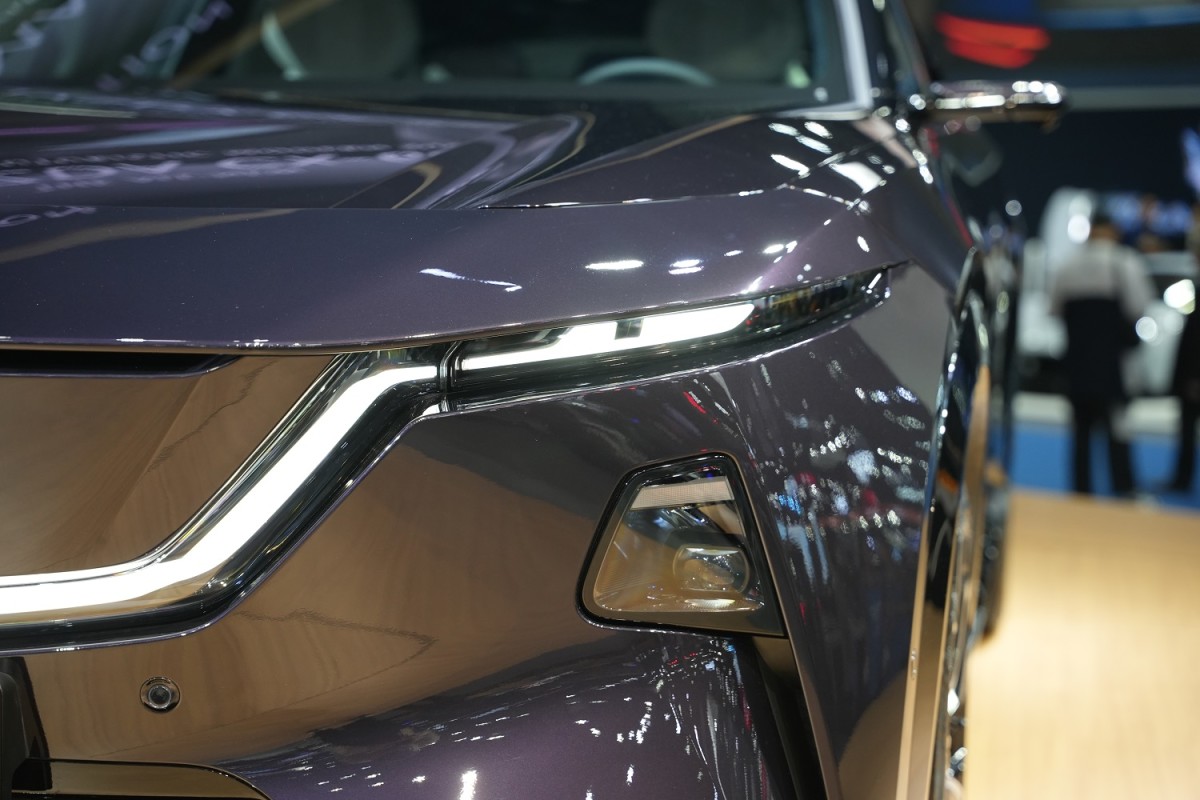
It Looks Like a Mazda
Now I want to know how well the car drives and whether that, too, is Mazda-approved. From what I gather, the CX-6e is a rear-wheel-drive electric crossover that produces 254 horsepower and 290 Nm of torque, with a claimed range of about 300 miles. It’s about the same power figure as the CX-70 with its 3.3-liter gasoline engine, except for torque.
The exterior design seems to be the only thing that makes the CX-6e a Mazda, but the interior and the drive remain to be seen. Perhaps the transition from Deepal to Mazda isn’t just skin-deep, and I’d like to think there’s more to this car than just another straight-up rebadge. The likelihood of Mazda bringing the CX-6e to the U.S. market is slim because tariffs are keeping it out.
Still, it seems likely that the brand’sJinba Ittai philosophy will be on full display for this run of fully electric models. I’m afraid of being disappointed, but I’m looking forward to being proven wrong, if ever.
Earl Lee/Autoblog