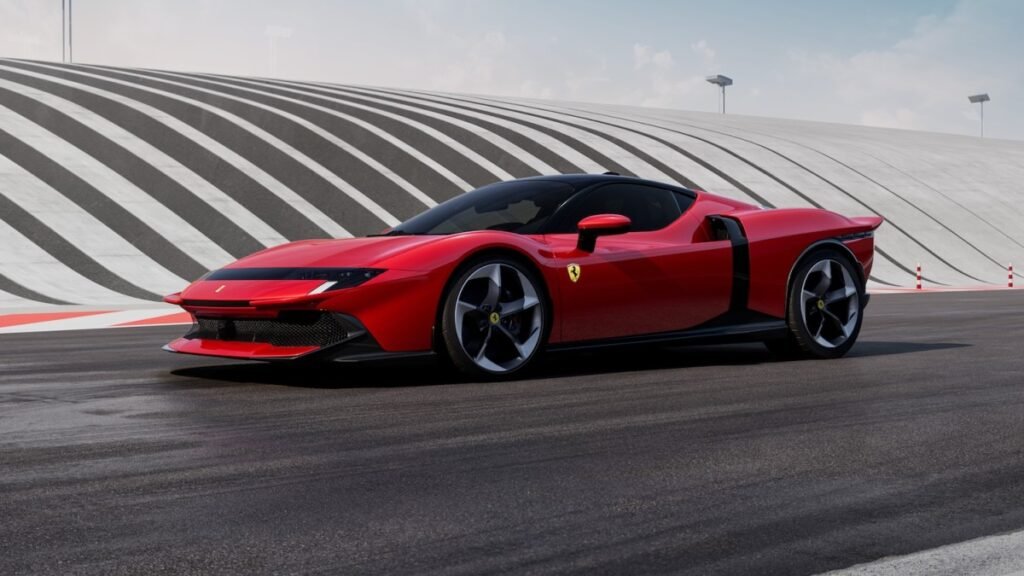
Last year, Ferrari unveiled the 849 Testarossa, and it instantly divided opinions. Some said it was just a reskinned SF90 with some mild updates under the skin, others berated its styling, and still others complained that its name was unsuitable for a car with fewer than 12 cylinders. But as a new video from Hagerty explains, featuring Henry Catchpole in the driver’s seat, this is so much more than just an updated SF90, and both its ethos and styling fit the name to a tee. You can watch the video at the bottom of this article to discover just what has changed to make this a new car in terms of driving dynamics, but in the meantime, we’re going to address naming and styling criticisms and why they may be unfounded.
849 Testarossa: Styling That Seizes the Gaze
Ferrari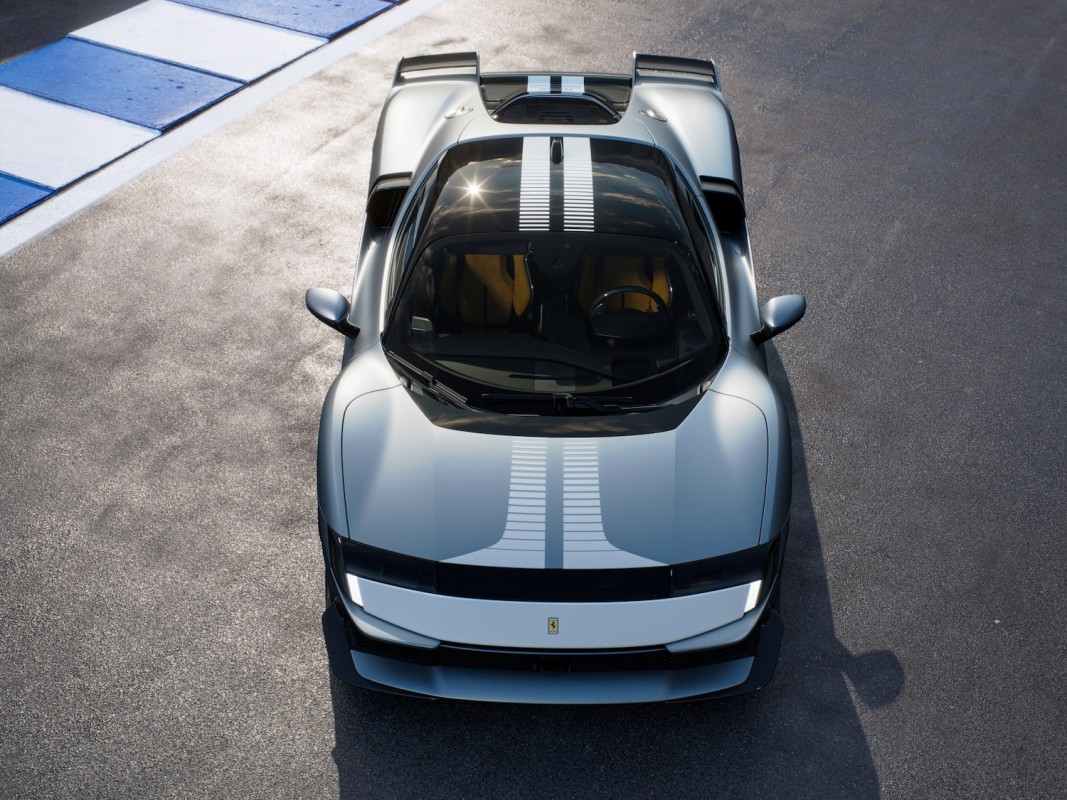
Some felt that a new Testarossa needed to have slatted side intakes, or high-mounted wing mirrors, or something else to serve as an obvious retro visual callback to the last Prancing Horse to wear the Testarossa name, but Catchpole implies that this new supercar references it in presence and character, saying, “I think this actually has some of the same big-shoulder-pad visual impact and intimidating sense of size as the 1980s Testarossa.” Indeed, the 849 Testarossa is a far more attention-grabbing car than the SF90 it replaces, and just as the car that starred in Miami Vice was polarizing yet unmistakable in its looks, so is this.
Related: Ferrari Is Working on Shapeshifting Bodywork to Keep Supercars Beautiful
The headlights of the new model couldn’t be pop-ups because of pedestrian safety laws, but Ferrari has done a decent job in paying homage with their silhouettes and the winglets that sit beneath them. Even the mask-like stripe across the front is not dissimilar from the shapes created by the shutlines of the ’80s car. Another nod to the past comes in the form of the rear winglets, which Top Gear’s Jethro Bovingdon recognizes in his film as being inspired by those of Ferrari’s Le Mans contenders from 1970, the 512 S and 512 M. The latter racer’s name was eventually applied to the final iteration of the previous most recent Testarossa in 1994, the F512 M, bringing the association between overt styling and iconic nomenclature closer still.
849 Testarossa: A Generations-Old Name with Varying Applications
Ferrari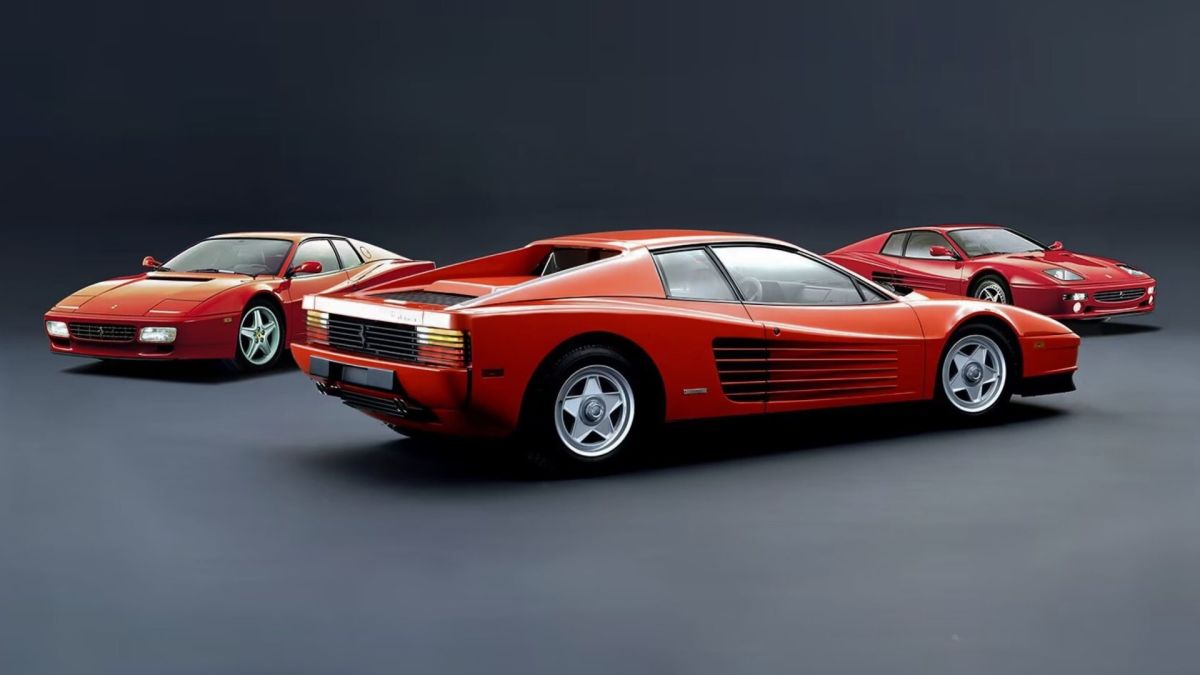
Our discussion of the new car’s aesthetics somewhat justifies the name, but the film digs deeper, going back to the first application thereof 70 years ago: the Scaglietti-designed 1956 500 TR. TR, obviously, stands for Testa Rossa, which is Italian for “red head,” and the name comes from the red cam covers of the engine. Just as the contemporary 849 is a revised SF90 Stradale, the 500 TR was an update of the car that came before, the 500 Mondial. Furthermore, the 500 TR was not powered by a 12-cylinder engine like the 1980s model would be, but a four-cylinder engine displacing just 1,984 cc. And, in the colors of Écurie Francorchamps, a Belgian racing team, the example Catchpole uses to show the correlation between old and new wears a livery that Maranello nowadays pays tribute to with its Assetto Fiorano package, adding hammer-shaped striping that spans the front end and swoops up the hood.
Since that performance-minded package is best suited for those who use their cars on track, the film’s correlation with the 500 TRC, a 500 TR modified to comply with Appendix C of the FIA’s racing regulations, fits particularly well. As a side note, the ‘849’ in 849 Testarossa refers to its eight cylinders, each of which displaces 499 cc for a total of 3,992 cc, or 4.0 liters.
Ferrari Testarossa: A Symbol of Technological Progress
Drew Phillips/Autoblog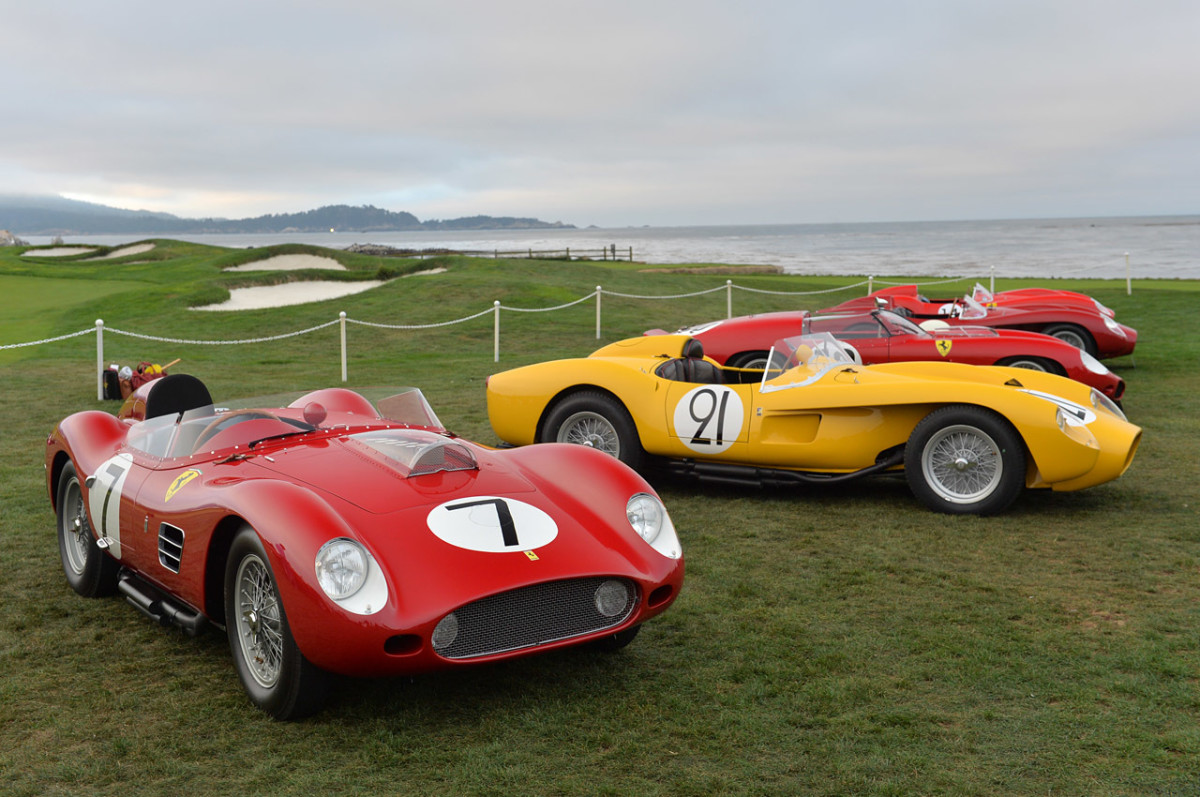
The original Testa Rossa was powered by a small four-cylinder engine making an impressive 180 horsepower, while the famous 250 Testa Rossa from 1957 got a 3.0-liter Colombo V12 making just shy of 300 hp, but both cars sited their engines ahead of the cabin. The Testarossa variants of the 1980s, on the other hand, had their engines behind the occupants. Those later cars used flat-12 engines to lower their centers of gravity, and today’s all-wheel-drive (and, in electric mode, front-wheel-drive) 849 Testarossa uses electrification and digitalization to enhance performance and efficiency.
Clearly, Maranello does not consider the Testarossa name a blueprint for any specific formula. All that matters is that any car with that denomination showcases innovation that advances performance. And that its engine is topped in scarlet paint, which the twin-turbocharged 4.0-liter V8 in the latest car naturally is. Thus, Testarossa may be the most apt name Ferrari has chosen in years, and it certainly sounds far more exciting than three digits scrambled together but otherwise unaccompanied ever could. Whether the supercar’s styling is regarded as beautiful or not will always be a subject of debate, but there’s no denying that the 849 Testarossa is truly worthy of its iconic moniker, one which signifies prowess in the realm of performance and carries an impossible-to-ignore wow factor along with it.