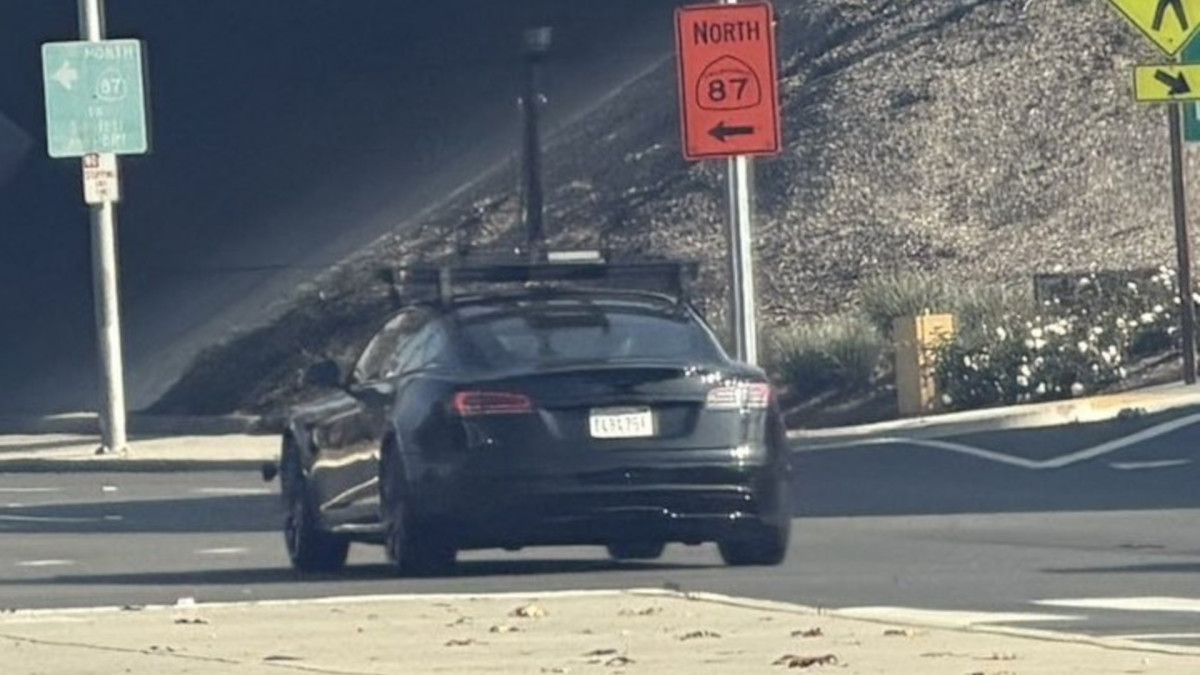
Tesla is all but guaranteed to miss its original claimed goal of launching the Cybercab by 2026, but the company is still making progress. While the Cybercab and the Robovan may still be some way from reaching public roads, Tesla appears to be getting closer to some sort of stopgap. The automaker was recently seen testing two different Model S sedans in California, both equipped with validation rigs previously used on the Model Y, which Tesla uses as a robotaxi while developing the aforementioned Cybercab and Robovan. This indicates that the Model S may soon be used as a robotaxi, offering a more upmarket feel to its service.
Tesla’s Version of Uber Black?
Two Model S vehicles spotted in California with the same validation rig that Tesla has been using on their Model Y’s all over the U.S. pic.twitter.com/7WhC7OrhEY
— Sawyer Merritt (@SawyerMerritt) December 11, 2025
As noted by Teslarati, it appears that Tesla may be preparing to launch a more premium alternative to its existing robotaxi service, much like Uber offers Uber Black and Lyft has Lyft Black for those who want a slightly more luxurious trip. Arriving in a sleek sedan is arguably better than doing so in a tall SUV, after all. Presumably, Tesla is preparing to use the Model S in small numbers initially, and if enough customers take advantage of its availability, the relatively slow-selling sedan could see more widespread use.
Related: Rivian’s Real Tesla Killer May Be a Chip, Rather Than a Car
Of course, without any official announcement from Tesla, this is just speculation. Tesla may well be using the rigs atop these sedans for another purpose, such as improving its Full Self-Driving (Supervised) semi-autonomous driver aid. Whatever the case, Tesla is facing more competition in the technology race than ever before.
Tesla Has a Fight on Its Hands
Mercedes-Benz recently showed off the upcoming S-Class as a robotaxi in Abu Dhabi, while Rimac-backed Verne just revealed a full fleet of robotaxis that is ready to begin testing. Meanwhile, Waymo robotaxis have made the news of late for achieving self-driving on highways, and the service is expanding into new cities. All of these entities have numerous challenges ahead, but it’s clear that competition is heating up and progress is being made. Even Rivian is aiming to become a serious player in the self-driving space, which adds another rival to the retail arena, and it could someday decide to move into a robotaxi service of its own with future, more affordable products like the R3. Thus, the more data a company like Tesla can collect and the more variety of services it can offer to prospective clients, the greater chance it will have of success in this highly competitive space.