It’s been a quarter century since the minivan market hit peak. Since then, sales have tumbled by nearly 70%, with these people-movers largely relegated to a narrow niche of “soccer moms.”
Or so goes conventional wisdom. But a closer look at the numbers reveals that reports of the minivans demise, as Mark Twain might have said, have been “greatly exaggerated.”
While unlikely to ever return to its former peak, minivan sales grew by a healthy 20% last year, handily outpacing the 2.2% growth of the overall U.S. new vehicle market. And preliminary figures suggest the upturn is continuing into 2026.
“There’s a relatively small group” of minivans today compared to what the industry offered back in the 1990s, but those that are available are starting to be seen by buyers as a reasonable alternative “to the 3-row crossovers that are popular now,” said Sam Fiorani, lead analysts with AutoForecast Solutions. “And they’re less expensive even while offering a better package for what many customers need.”
Related: 5 Reasons You Should Buy A Minivan Over An SUV
Rise and Fall
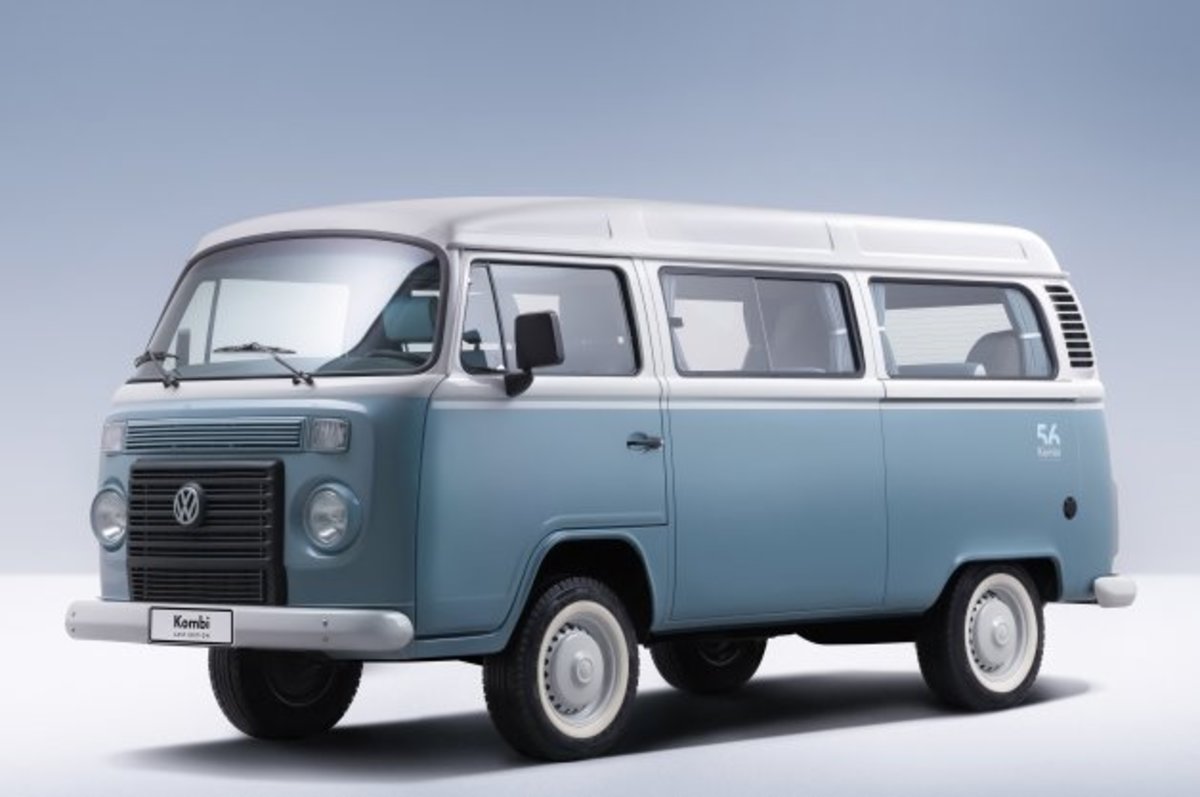
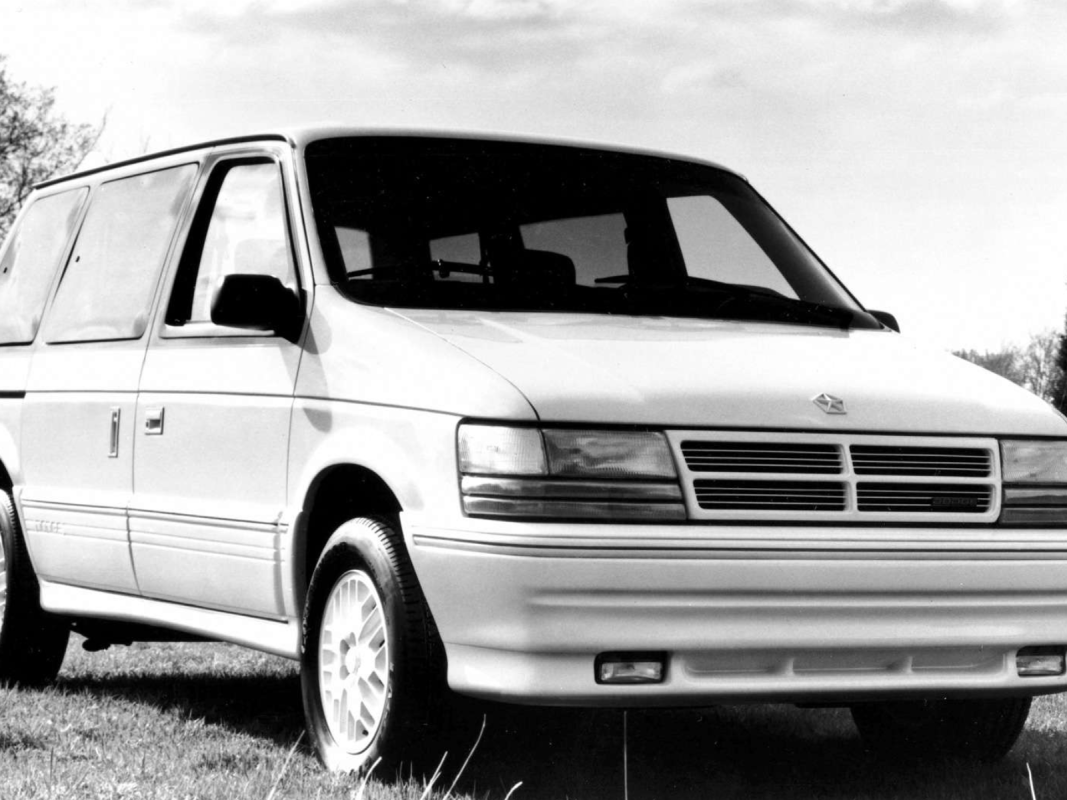
The minivan became the hit of the 1980s and 1990s, a more roomy and flexible alternative to the station wagons that ruled the road when Baby Boomers was children. Though there has been downsized vans earlier, notably the Volkswagen Microbus, it was really the products launched by the old Chrysler Corp. in 1984 that caused a people-moving revolution. At peak, the company struggled to keep up with demand for the Dodge Caravan and Plymouth Voyager, even running both plants flat out.
With Chrysler leading the way, minivan sales surged virtually every single year, hitting a 2000 peak of 1.3 million. Then everything tumbled off the cliff. It didn’t help that the people-movers developed a frumpy image as the vehicle of choice for “soccer moms.” At the same time, manufacturers began rolling out a new generation of more car-like SUVs and CUVs.
From a peak of 1.3 million at the dawn of the New Millennium, minivan sales plunged to just 500,000 by 2013, then a mere 310,000 in 2021. The bottom came a year later, at a 162,000, the lowest figure since 1992, according to industry data – though that latter number should be taken in light of the overall U.S. auto market’s pandemic crash.
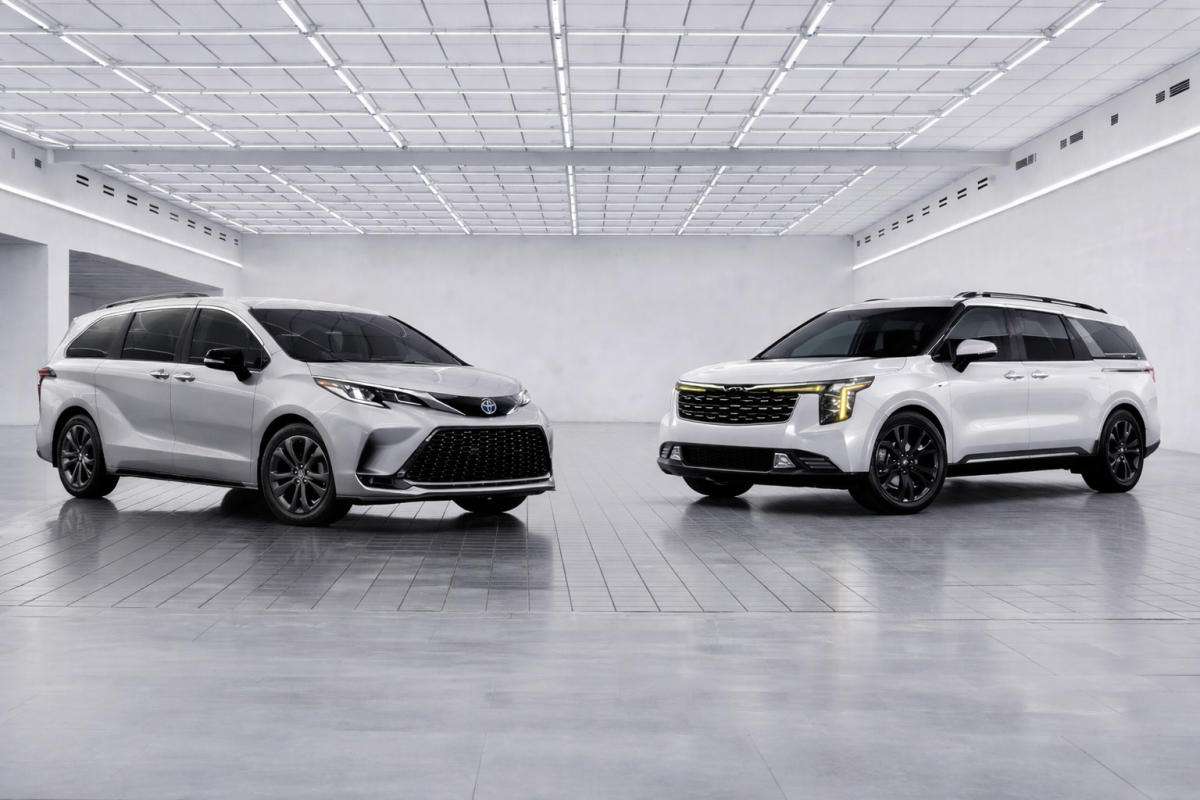
ND Adlen and AI
…and Rise Again
It was no surprise that demand soon perked up. Sales bounced back to 306,000 in 2023 and 311,000 the following year. But the big jump came in 2025, the once seemingly dead market climbing to 395,352, according to industry data. And there are signs we’re seeing momentum push into the new year. While only a handful of manufacturers still post monthly sales reports, Toyota indicated its Sienna model was up a solid 13.9% in a relatively flat new vehicle market. Sales of the recently redesigned Kia Carnival were up 60% for the month.
Of course, it requires some perspective here. Even sport- and crossover-utility vehicles suffered during the pandemic, but as the economy regained momentum, so did “ute” sales. The compact segment alone represented 21% of the U.S. market in 2025, a total of 3.3 million vehicles.
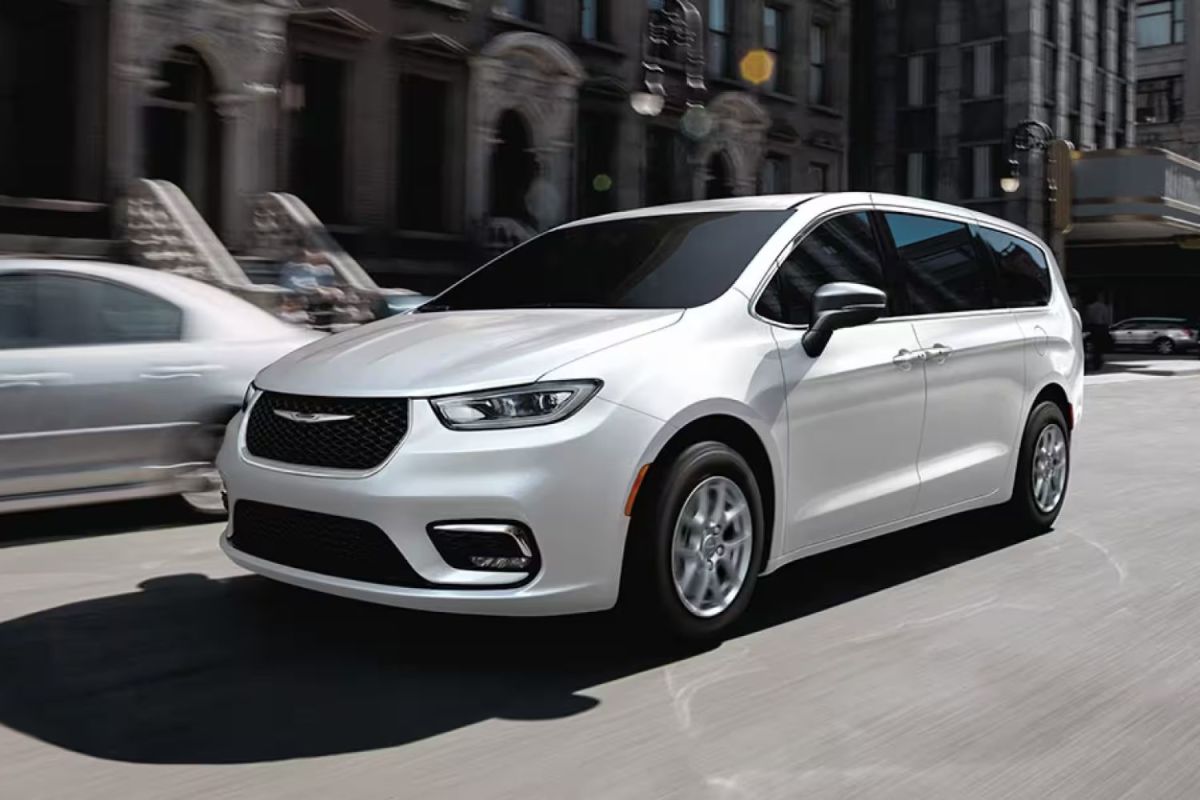
Chrysler
Winners and Losers
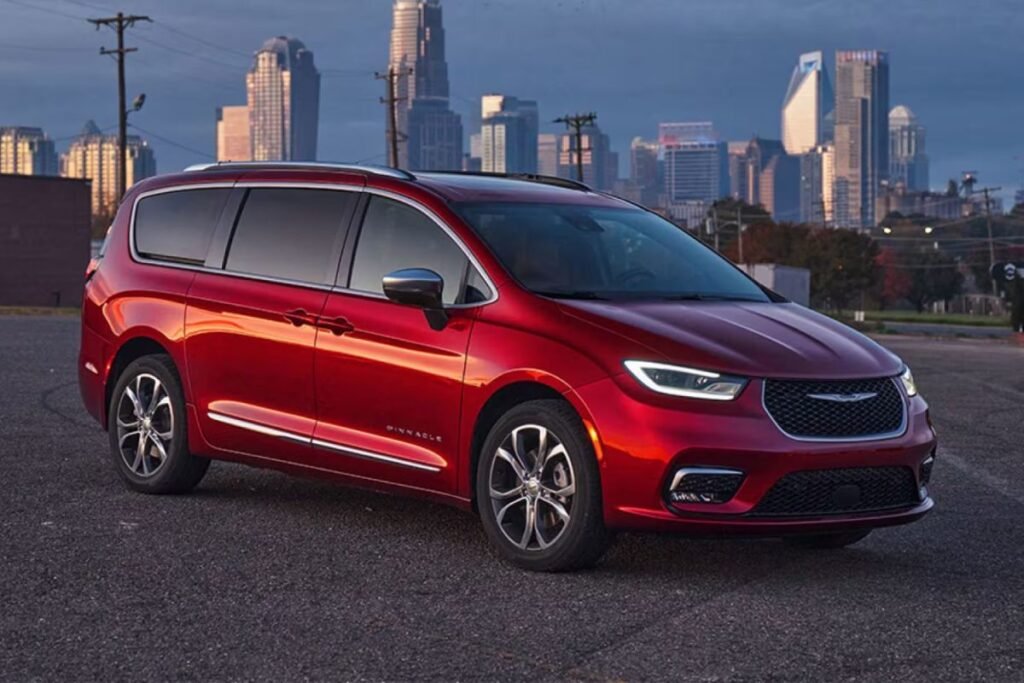
The old Chrysler brands were traditionally the dominant players in the minivan segment, though the automaker today is down to just one people-mover, the Chrysler Pacifica – offered with either a gas or plug-in hybrid option. After struggling for a while, the Stellantis brand landed was solidly in place as king-of-the-minivan hill in 2025, selling 110,006 Pacificas in the U.S. The Euro-American automaker only reports sales on a quarterly basis but industry analysts believe Pacifica had a solid double-digit hump in January, as well.
Related: A Million Kilometers Later, This Toyota Sienna Shows How Long a Simple Powertrain Can Last
As for the rest of the minivan segment:
- The Toyota Sienna was second in 2025, at 84,346 minivans, a 28.5% increase;
- Honda came in third, with Americans buying 76,408 of its Odyssey model, a 10% jump – though the Japanese minivan was down 18.7% in January;
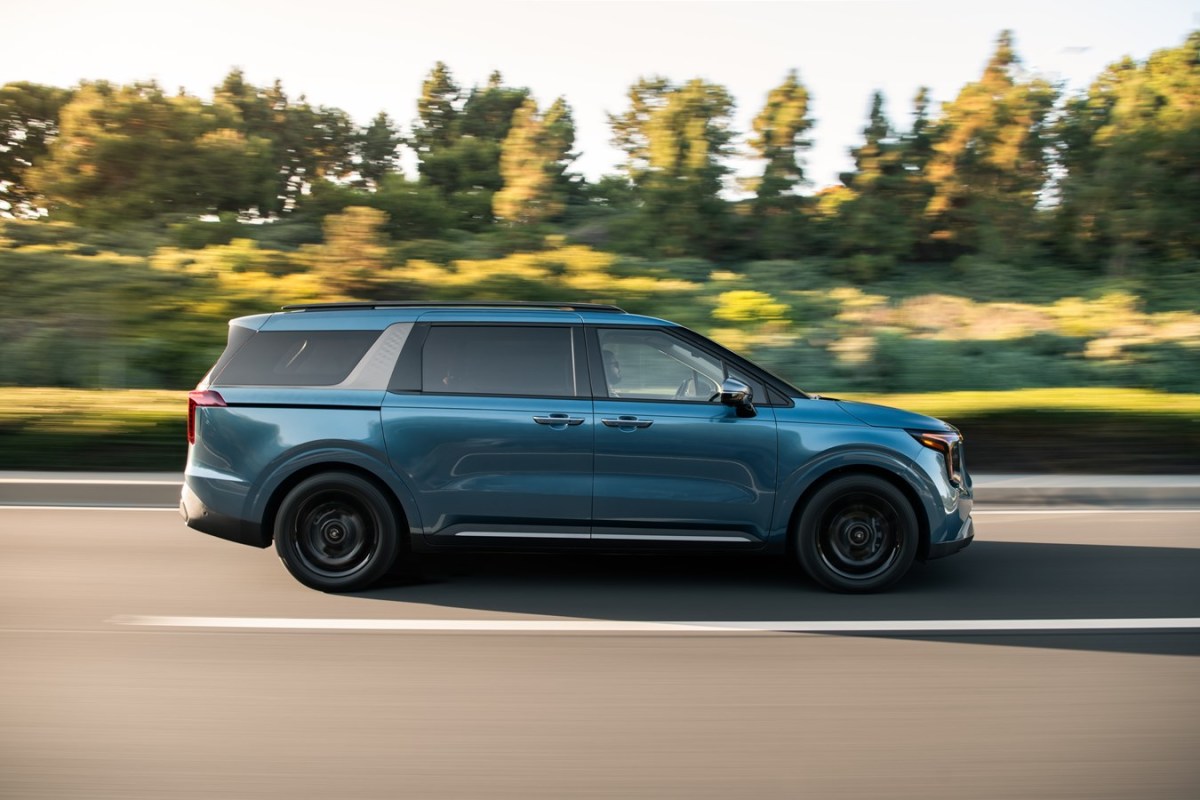
- Kia came in close behind, its Carnival clocking sales of 71,917, a 45% year-over-year increase boosted by the arrival of that all-new version.
Last year did see one hard-luck story: the newest entry in the segment, the Volkswagen ID.Buzz. Designed as the long-awaited, all-electric replacement for the iconic Microbus, it simply hasn’t generated the, er, buzz that VW expected, sales coming to barely 7,300 in the U.S. last year. VW has idled production for the 2026 model year but has indicated Buzz will be back in 2027, analysts expecting the automaker to take steps to address concerns about the minivan’s limited range and high price.
A New Customer
The challenge for automakers like Chrysler, Toyota, Honda and Kia has been to find a way to redefine the minivan, a critical step in climbing out of the soccer mom ghetto. That proved the undoing of numerous manufacturers that eventually gave up on minivans, like Pontiac – which tried with the Montana it billed as a rugged, go-anywhere form of transportation. The marketing campaign, complete with cowboys on horseback, failed to move the needle, one reason parent GM walked away from minivans entirely.
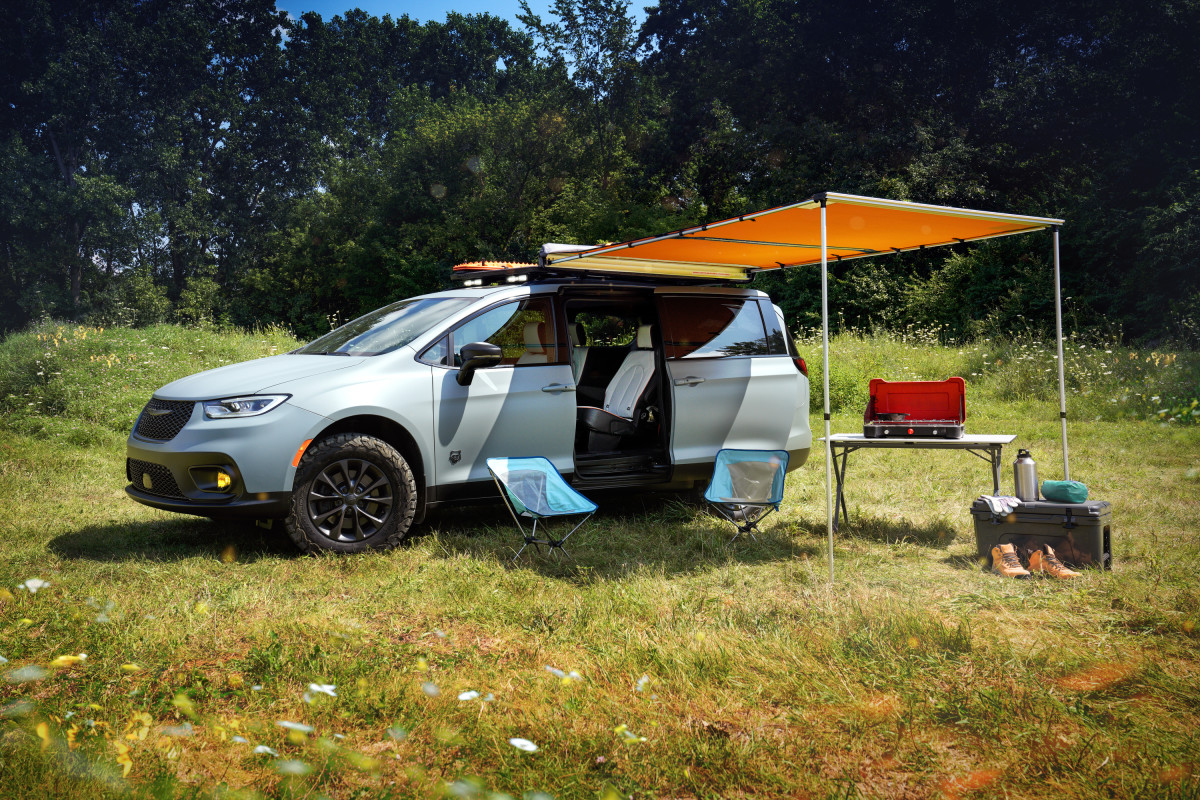
Chrysler has had some success with Pacifica, targeting older empty-nesters with more luxurious versions meant to provide plenty of room and comfort on vacations and other long excursions. It remains to be seen where it will go with the updated Pacifica due out later this year but the Grizzly Peak, a recent concept version with a raised suspension and outdoor life accessories, could signal what’s to come.
Mercedes-Benz is pushing things to an even greater extreme with the new V-Series van it’s soon to roll out, billing them as extreme luxury transportation. A range of trims “will range from high-end family vehicles and exclusive VIP shuttles to spacious limousines tailored to the most discerning customers,” the automaker said.
Why a Minivan?
While luxury touches may help win over new buyers – and industry data indicate more men have been buying minivans lately – their main selling points haven’t necessarily changed: roominess, flexibility, and the ease of access provided by sliding doors, said Stephanie Brinley, principal auto analyst with S&P Global Mobility.
Kia
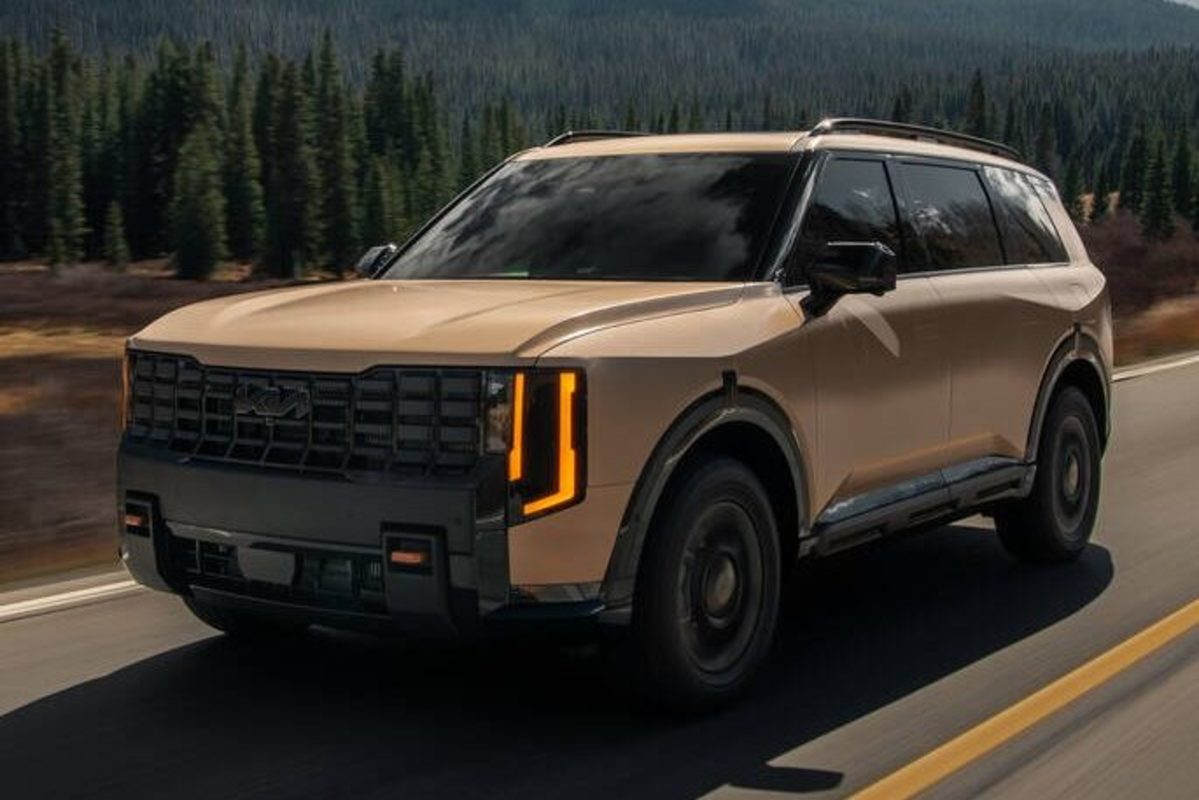
There’s another part of the equation that’s working in favor of minivans at a time when new vehicle prices are higher than ever, passing a record $50,000 late last year. “They’ve become almost as acceptable as utility vehicles, but they’re a lot cheaper.” The base Kia Telluride LX, for example, starts at $39,190 plus $1,395 in delivery fees While the Carnival starts at $37,390 before delivery fees. The base Toyota Sienna is $39,080, plus delivery fees of $1,395, while the 3-row Grand Highlander starts at $41,160.
Related: 2027 Kia Telluride Configurator Goes Live—We Pick the Trim Worth Buying
But everything needs to be put into perspective, cautioned Brinley. “We may be past the soccer-mom image,” which will give these people-mover more moment, “but it’s not enough to make minivans (as successful) as they once were.”