Enforcement Begins
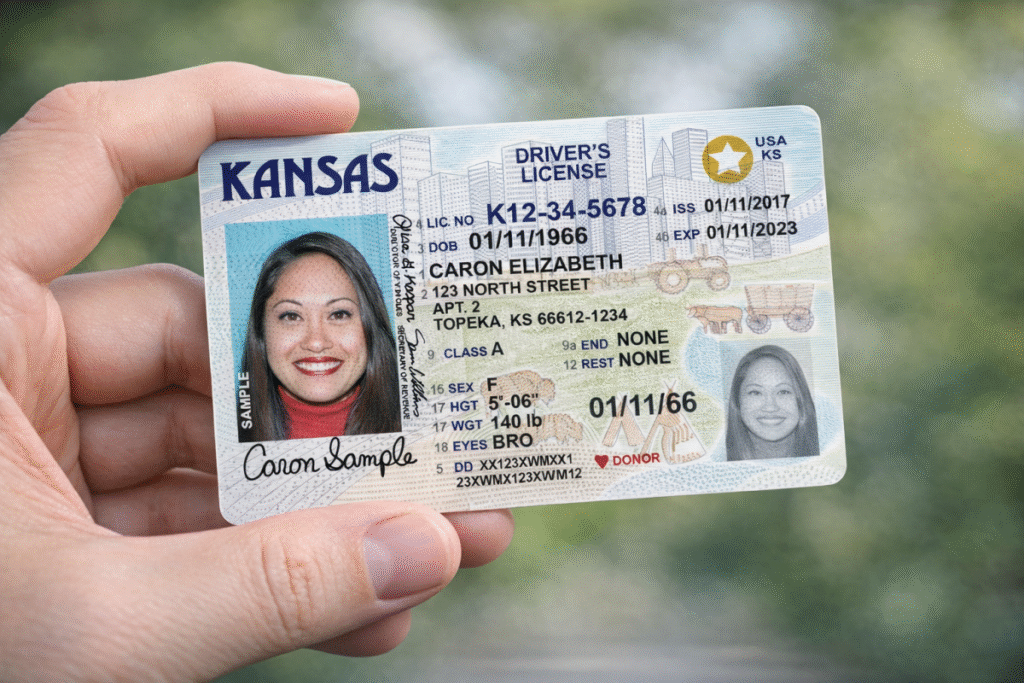
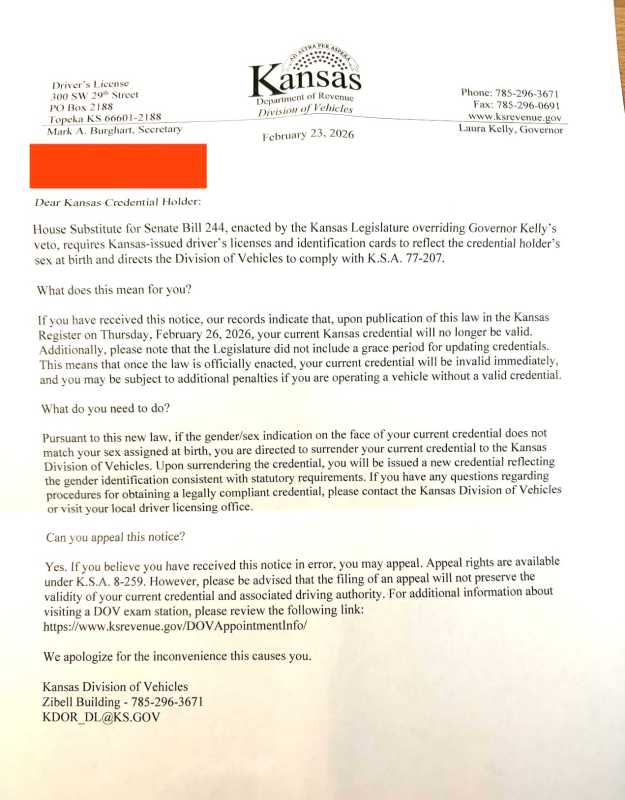
The state of Kansas has ordered transgender residents to surrender their driver’s licenses following a new law that took effect Thursday. According to Erin in the Morning, a letter from the Kansas Division of Vehicles states that Kansas-issued driver’s licenses must now reflect “the credential holder’s sex at birth.”
The new law took effect after the Kansas Legislature overrode Governor Laura Kelly’s veto of Senate Bill 244, which requires all state-issued IDs to reflect a person’s sex assigned at birth. Kelly had previously described the measure as “poorly drafted.” Driving with an invalid license may constitute a Class B misdemeanor under Kansas law, carrying penalties of up to six months in jail and a $1,000 fine.
Notably, the law does not provide a grace period for compliance.
Mandatory Replacement
Affected drivers must surrender their current credentials to the Kansas Division of Vehicles to be issued a new one reflecting the gender designation required under state law, according to the letter. It also states that individuals may appeal the decision, but doing so will not preserve the validity of their existing credentials.
The outlet notes that Kansas may be the first state to go so far as to invalidate previously issued documents. States such as Florida, Texas, and Indiana have also stopped permitting gender marker updates, though transgender residents in those states have not been required to surrender their existing driver’s licenses.
The Law’s Reach
In addition to changes affecting driver’s licenses, the law is also restricting transgender individuals in Kansas from using bathrooms that align with their gender identity and allows private citizens to file civil lawsuits seeking at least $1,000 in damages for alleged violations. These measures come amid broader policy shifts during the Trump administration, as well as changes to federal passport policies requiring passports to reflect the sex assigned at birth.
Beyond social policy, the administration has also introduced regulatory changes across other sectors, including the automotive industry, where certain federal electric-vehicle incentives, such as the $7,500 tax credit, have been scaled back. Reports have pointed to signs of slowing growth in EV sales and adoption, a segment strongly supported by states such as California. The administration has also moved to roll back or eliminate policies implemented by previous administrations, including Obama-era greenhouse gas standards aimed at addressing climate change.
Chevrolet