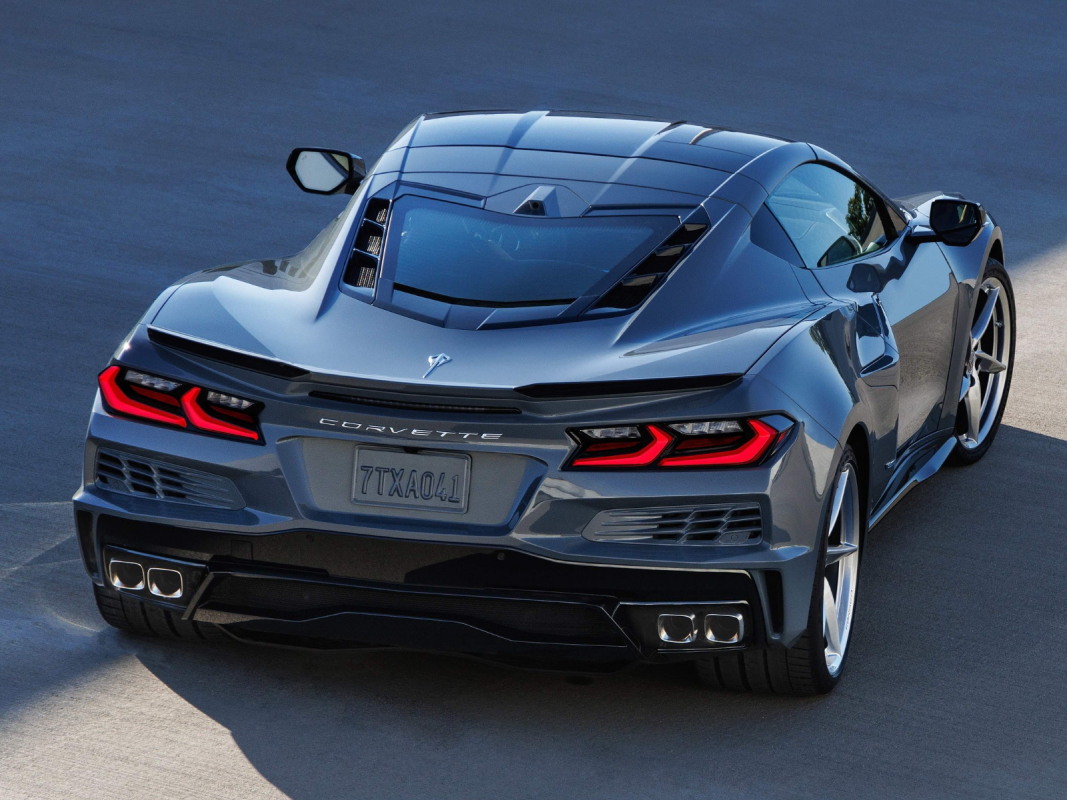
General Motors has issued a stop-sale notice covering certain 2025 and 2026 Chevrolet Corvette C8s, and the reason is more frustrating than it is dramatic. The problem lies in the Rear Brake Light Outage Detection system, a module responsible for alerting drivers when a rear turn-signal lamp stops functioning. When this module misbehaves, the car simply stays quiet when a turn signal goes out, which means there’s no warning light and no chime. GM has identified 2,886 affected units from the 2026 model year and 438 from 2025, bringing the total to roughly 3,300 cars. Dealers cannot deliver any of these until the issue is resolved. A fix currently exists only for 2026 models, in the form of a software flash or an over-the-air update. The 438 affected 2025 units are still waiting on a patch.
A Small Bug With Surprisingly Big Consequences
It is easy to dismiss this as a minor inconvenience. The whole point of the outage detection system is to compensate for something that older cars relied on drivers to catch themselves. Most people never glance at their own rear lights while driving. That is precisely why the system exists. If a turn signal quietly dies and the car never flags it, you could be changing lanes for weeks with no indicator showing, completely unaware, and entirely liable. A traffic stop, a fine, or worse, a collision with a driver who had no idea you were turning. This is a distinctly modern-car problem. The Rear Brake Light Outage Detection system is designed to alert drivers when something is not working out back.
Chevrolet
The C8’s Growing List of Headaches
The C8 generation has seen a steady stream of regulatory attention since its debut. A voluntary recall was issued in 2025 covering certain Z06 and ZR1 models for a fire risk hazard, while dealers have had a handful of cars drop off lifts when in for service. None of these issues individually suggests the C8 is unreliable. What they do illustrate is the reality of building a deeply software-dependent sports car in an era where a lighting module and a calibration file can ground hundreds of vehicles overnight. The good news is that the fix is just a software update. The bad news is that it took a federal safety standard violation to make it happen.