If you’ve ever bought a new vehicle chances are you know the story: you spot a great price on the new model you’ve been eyeing, low enough to manage the monthly payments. But when you go to the showroom and get ready to close the deal, the actual price comes in hundreds, even thousands of dollars more than what was advertised.
It happens so frequently the Federal Trade Commission is finally stepping in. In a letter sent to 97 auto dealer groups, the agency warned that the price retailers advertise must be the same as what a customer actually can buy the vehicle for. No hidden fees, no limited offers available only to select customers, no advertising vehicles dealers don’t actually have available to sell. The commission’s goal is “preventing auto dealers from misleading consumers with low advertised prices and then adding on mandatory fees at the end of the purchasing process,” Christopher Mufarrige, director of the FTC Bureau of Consumer Protection, wrote in his letter to the various dealer groups.

Ford
Bait-and-Switch
“Car buying can be an exciting experience, but it can also be frustrating and overwhelming,” noted Howard Gutman, a New Jersey attorney who specializes in Lemon Law and related automotive issues. “It’s important to remember that car dealers are businesses, and they will do everything they can to make a profit. Unfortunately, some car dealers engage in unethical practices, such as bait and switch tactics, to take advantage of consumers.”
While dealer groups insist the majority of auto retailers play by the rules, there’s no question that there are plenty who stretch them to the breaking point – or worse. “When Americans set out to buy a car, they’re routinely hit with unexpected and unnecessary fees that dealers extract just because they can,” noted Lina Kahn, the former FTC chair under the Biden administration.
Fighting Back
Kahn oversaw the passage of the CARS Rule, shorthand for Combating Auto Retailing Scams, announced in December 2023, and “expected to save consumers nationwide more than $3.4 billion and an estimated 72 million hours each year shopping for vehicles,” an FTC release said at the time.
Even after passage of that tule, however, the FTC continued to receive plenty of complaints. That’s forced the agency to issue a warning to 97 auto dealer groups stressing that, for starters, their ads must include “all required fees.”
While the FTC said its letter wasn’t a specific accusation, “I am concerned that your company may be engaging in one or more” of the practices the agency has banned, Christopher Mufarrige, director of the FTC Bureau of Consumer Protection, said in a statement. “The FTC will remain focused on monitoring auto dealerships to ensure that the market functions efficiently and competitors are transparently competing on price.”
Banned Practices
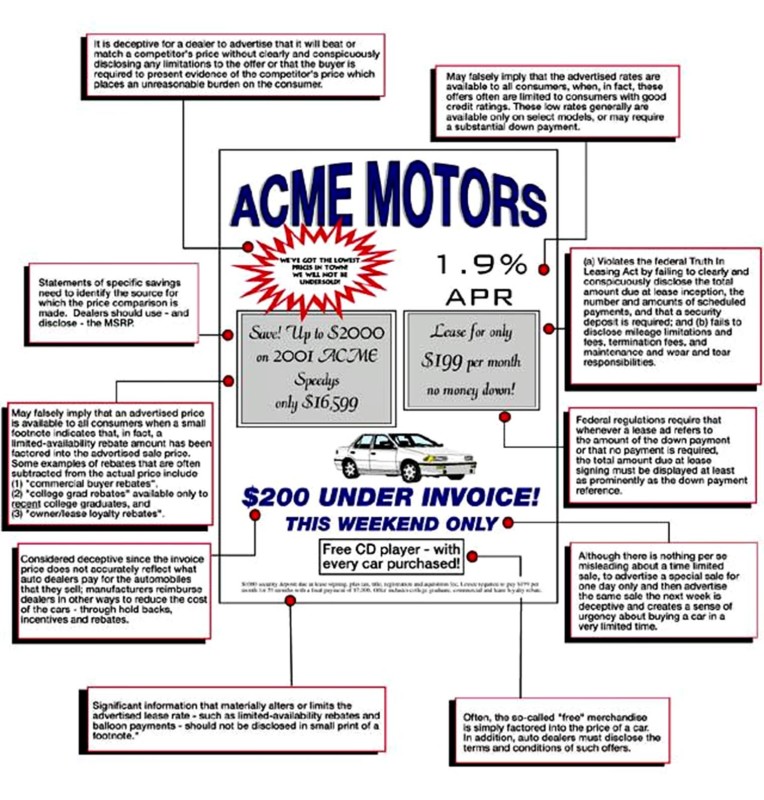
In his letter, Mufarriage identified six specific, illegal practices:
- “Advertising a price that does not reflect all required fees
- Advertising a price that reflects rebates or discounts not available to all consumers
- Advertising a price that fails to take into account the amount of an additional required down payment
- Conditioning the advertised price on consumers using dealer financing
- Requiring consumers to buy additional items not reflected in the advertised price
- Advertising unavailable or nonexistent vehicles.”
Out of Stock
The last of those practices has long generated frustration among consumers who spot a seeming bargain in a dealer ad, only to find that particular model or trim package isn’t actually available at the showroom. Often times, customer will be told the last of those bargain vehicles were already sold though. experts contend, they may never have been in stock in the first place.
The National Automobile Dealers Association, which represents over 17,000 U.S. retailers, responded to the FTC letter in a statement saying that, “While the overwhelming majority of America’s 17,000+ dealers service their customers in a consumer friendly and compliant manner, NADA takes any potential advertising violations in the marketplace very seriously.”
Automakers Also Push the Boundaries
Toyota
Dealers aren’t the only ones who come under fire for misleading advertising, however. Automakers have taken hits for advertising MSRPs that don’t include destination fees. And with those delivery charges rising fast, that’s become a matter of growing concern. “Over the past decade, (destination fees have gone) from a minor line item to a significant budget breaker,” noted Consumer Reports in a new study.
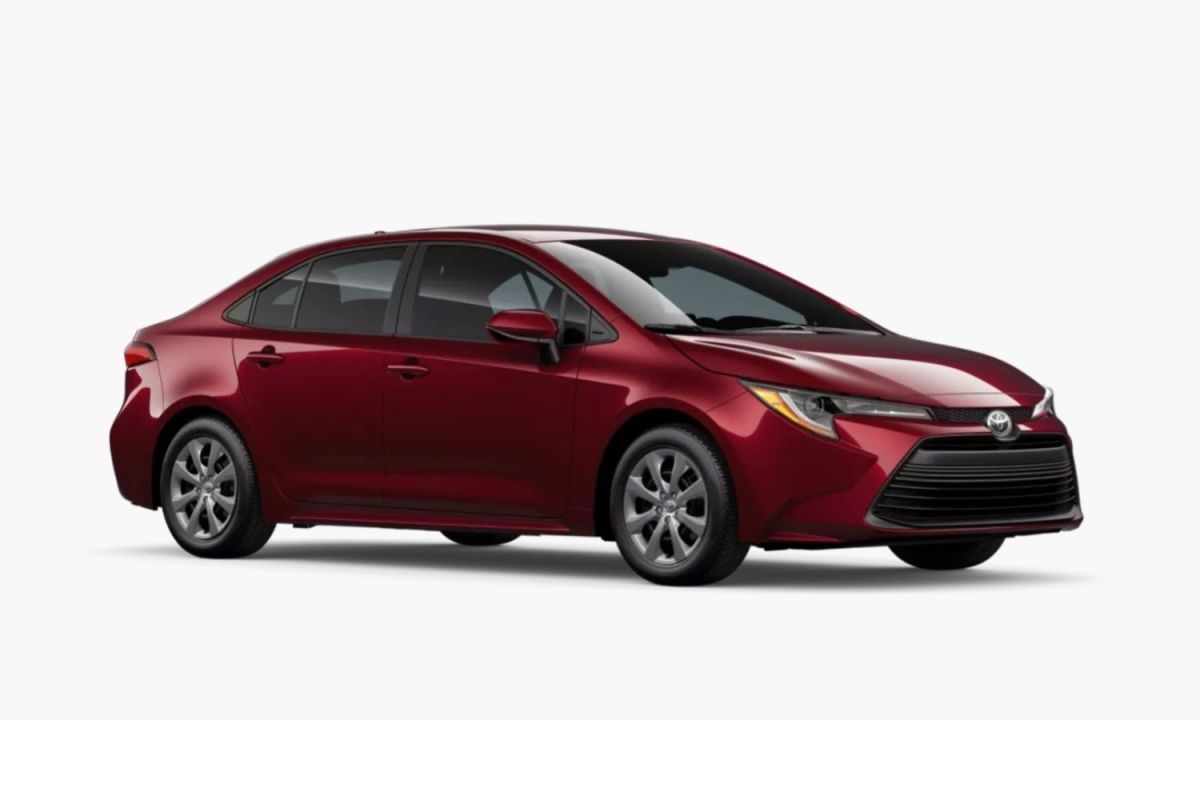
Take a 2026 Toyota Corolla LE with a sticker price of $23,520. The $1,195 destination fee is equal to a more than 5% price hike. Two years ago, destination fees across the auto industry ranged from $995 to $2,095, depending upon product and manufacturer. Now, Consumer Reports noted, it starts at $1,150 and climbs to $3,250. Most manufacturers now list destination fees. Some, Rivian being a good example, specifically point out that buyers will have to add various fees to sticker prices. But others bury the numbers in ads and on their websites, meaning potential buyers could be in for a big shock when it comes to completing a purchase.
Related: Destination Fees on New Cars Have Jumped 67% — Some Now Top $3,000