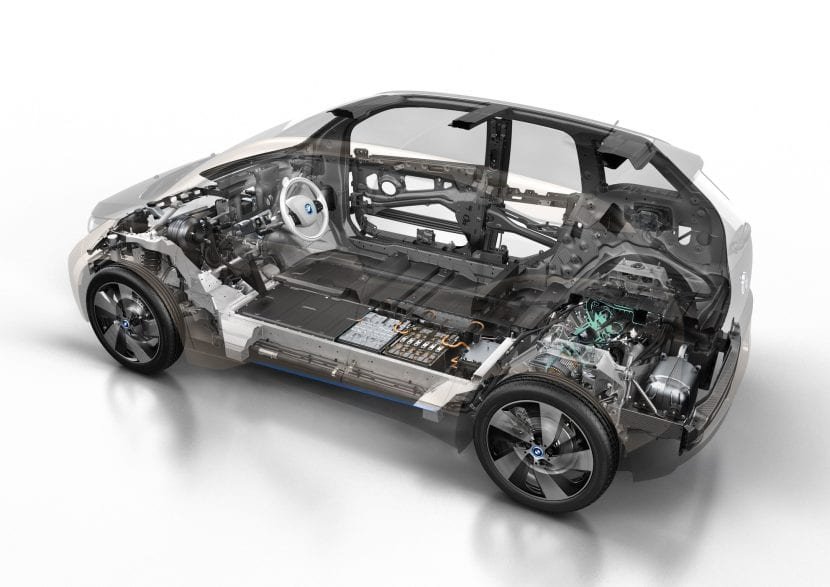
An insider report recently indicated that the upcoming G78 iX5 L — the long-wheelbase, China-market variant of the next X5 — could arrive with a range extender engine, marking BMW’s first REX since the i3. The rumor has been picked up by other media as well in the meantime. But while it’s an intriguing idea, our own sources tell a different story: no range extender X5 has been approved for the Chinese market, and BMW is still in a wait-and-see mode, monitoring whether the technology represents a genuine trend or just a passing moment.
The timing of those reports is also worth scrutinizing. We’re living in a period where 400-mile-range EVs are becoming reality and a 10-minute charge can add over 200 miles. In that context, the case for bolting a combustion generator onto a luxury SUV grows harder to make by the month, especially since it will come with compromises like additional maintenance and reduced space.
Not BMW’s First Rodeo

But, of course, BMW knows this territory well. The company was actually a pioneer here — when it launched the i3 REx more than a decade ago, it was billed as the “world’s first electrically powered car with a range extender engine used exclusively to generate electric power.” We’ve owned four of them. That 650-cc two-cylinder, borrowed from the Motorrad division, didn’t touch the wheels. It simply kept the battery alive on longer trips. It was clever engineering for its time. But BMW dropped the REx before the i3 even finished production in 2022, and Munich has shown little appetite to revive it since.
The New X5 Should Have Great Electric Range

There had been several reports that the X5 (G65) might get an electric iX5 variant with a gas engine serving as a generator. A recent statement from the company’s R&D boss reinforces why that’s unlikely anytime soon. Speaking at BMW’s annual conference, Joachim Post laid out the reasoning clearly:
“With the Neue Klasse, we have our sixth iteration of the battery cells, and we have made a huge contribution here to range. We don’t think that there is any cause for concern about range there. If we have a range of far beyond 800 kilometers and 400 kilowatts charge power, we’re of course keeping an eye on all of the options out there and seeing whether range extenders are something that we need to integrate into our portfolio. At the moment, particularly with what we have with the Neue Klasse, we think we’re in a very good position without that.”
Post’s point lands with some weight when you look at what Neue Klasse is actually delivering. The second-generation iX3 already carries a WLTP rating of 805 kilometers (500 miles) in dual-motor xDrive guise. A lighter, rear-wheel-drive single-motor variant — or a more aerodynamically efficient body style — could push that figure further still. Pair that with 400-kW charging and the gap between topping up an EV and filling a tank starts to look much narrower.

That said, the door isn’t completely shut. Charging infrastructure remains patchy across much of the world, and 400-kW stations are far from ubiquitous even in markets where EV adoption is strong. If a range extender does eventually make a return in BMW’s lineup, the X5 and X7 would be the logical candidates — heavy, long-haul SUVs where carrying a small generator is the least intrusive compromise. For now, both nameplates are staying on a pure battery-electric path. The G65 debuts later this summer, while the G67 X7 follows in 2027.

Where BMW is placing a bigger bet for long-range flexibility is hydrogen. The next X5 will be the first BMW to offer fuel-cell propulsion — co-developed with Toyota and expected to arrive in 2028, likely badged as the iX5 50H xDrive. Post has been consistent in championing it as a serious piece of the decarbonization puzzle:
“We are convinced that that will be a further alternative that will be needed for climate mitigation. We think that fuel cell technology can make a contribution there.”
So while the range extender conversation isn’t completely dead — competitors are clearly betting on it — our sources indicate BMW hasn’t approved the technology for the X5. Whether the market, particularly in China, ultimately forces their hand remains to be seen.
First published by https://www.bmwblog.com