Nissan’s Biggest Headache
So far, Nissan is recovering pretty well from what’s been going on the last few years. That said, China is proving to be its biggest headache right now. Like all legacy automakers, sales in that market are down by double-digit percentages, and Nissan is actually on course for its lowest unit sales since 2003 because of the Chinese market. While it’s good that it’s making a profit, it’ll need volume to pump up the portfolio.
So, to match the Chinese, Nissan has turned to one of its partners there for help. The company is leaning more into its cooperation with Dongfeng Motors. Adapting development and manufacturing principles should help speed things up, which is vital in the current landscape. If Nissan can, at the very least, turn things around in China, then its recovery will be even quicker.
Nissan
Made in China by Nissan
We’re starting to see more Nissan-Dongfeng products roll out, and both intend to export them across Asia and other parts of the world. Some examples include the Altima-sized N6 sedan and Maxima-sized N7 sedan, along with the three-row NX8 crossover and Frontier Pro/Navara Pro pickup.
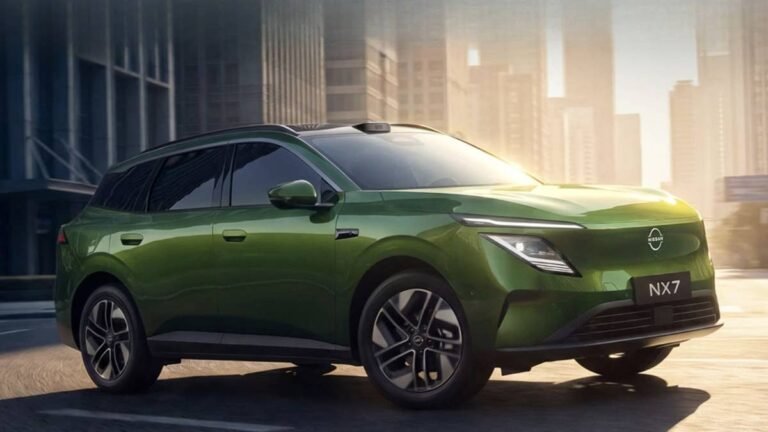
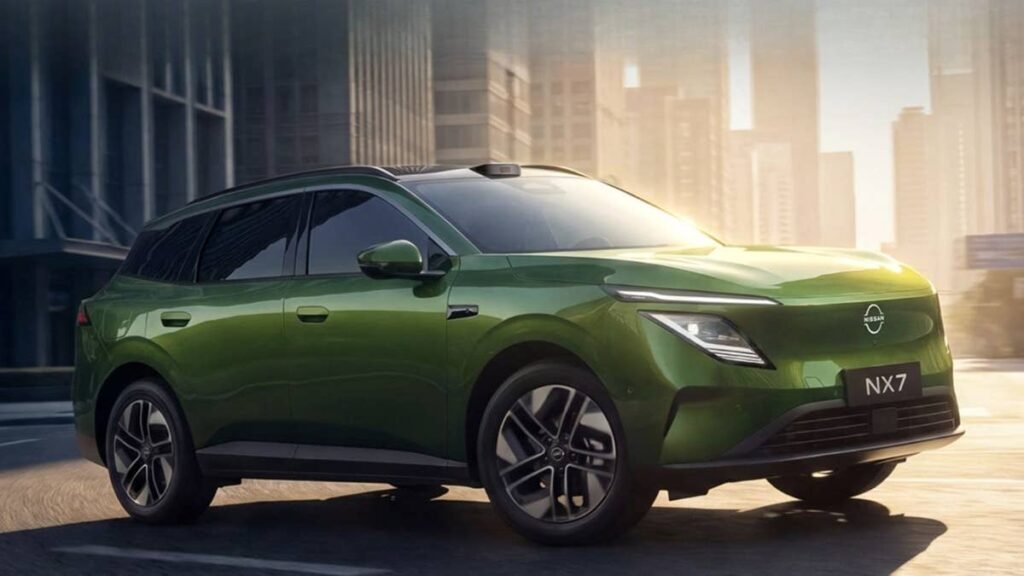
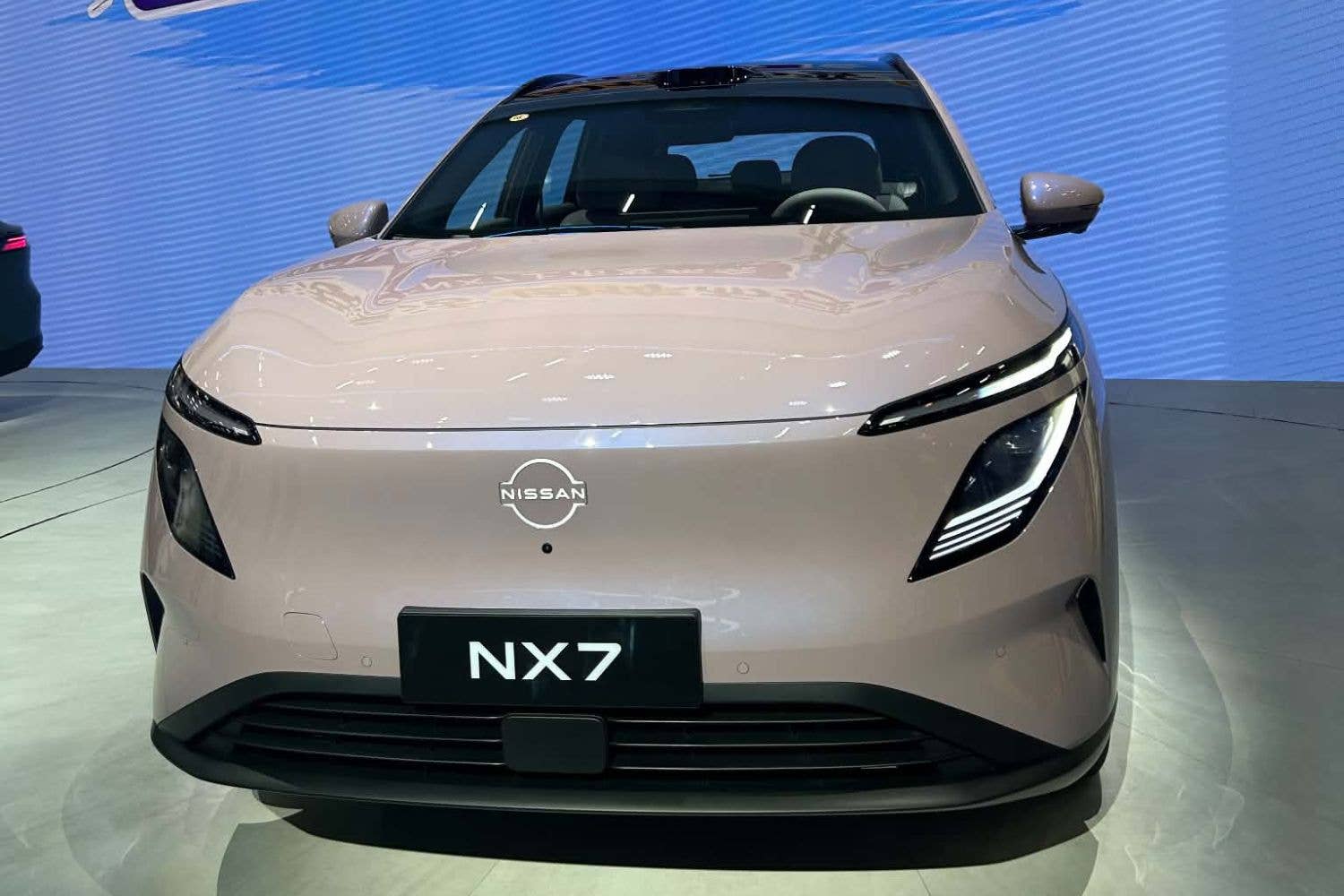
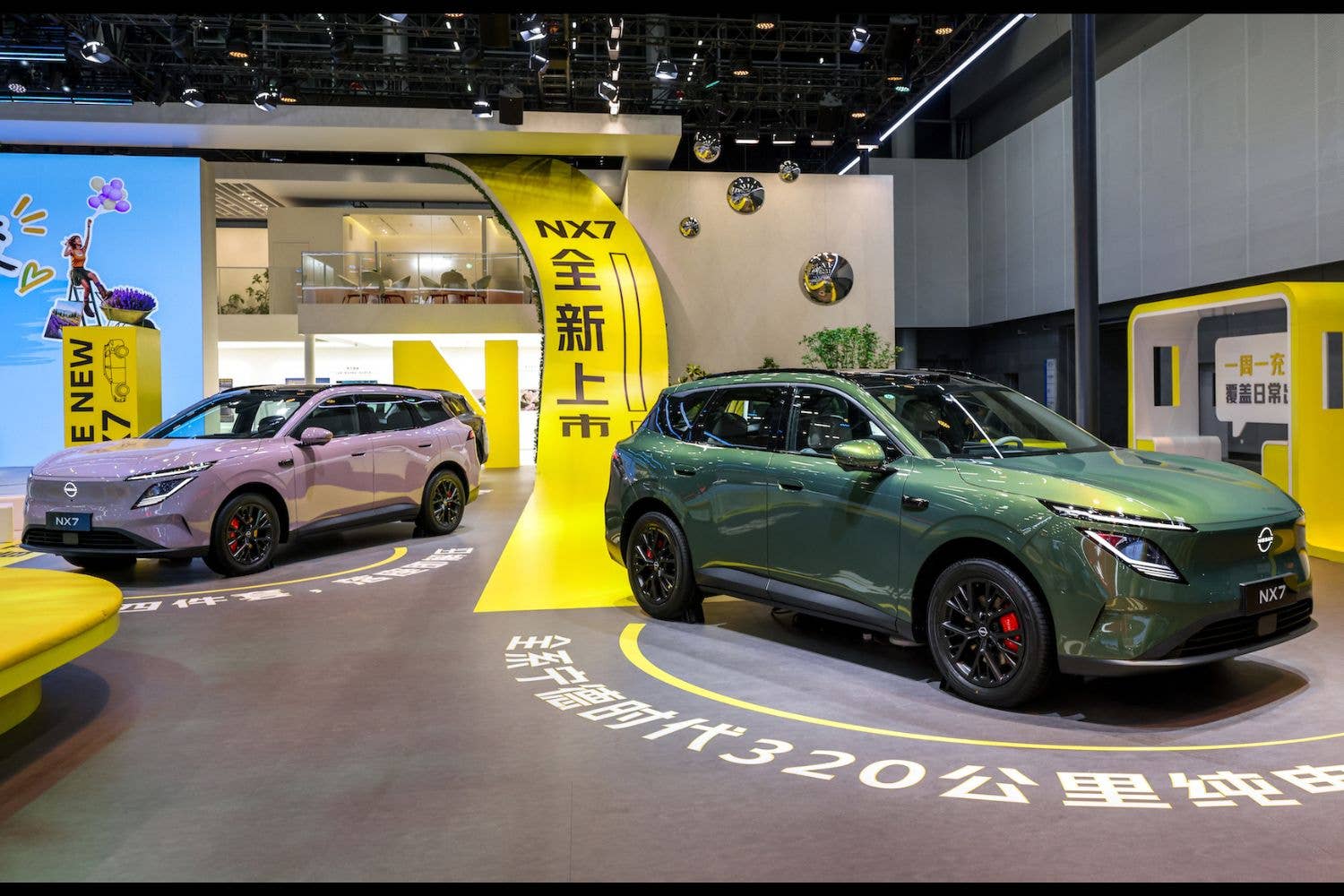
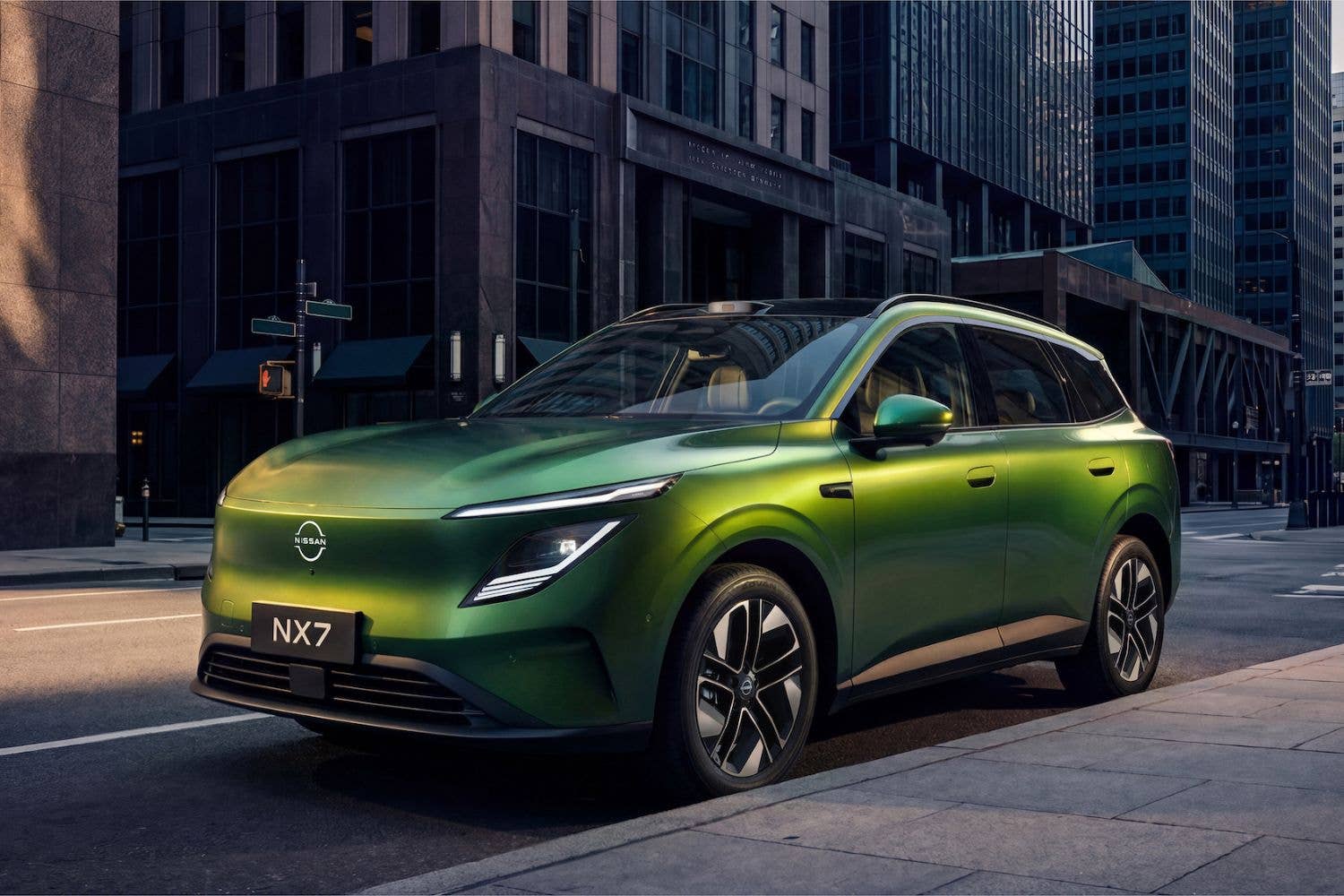
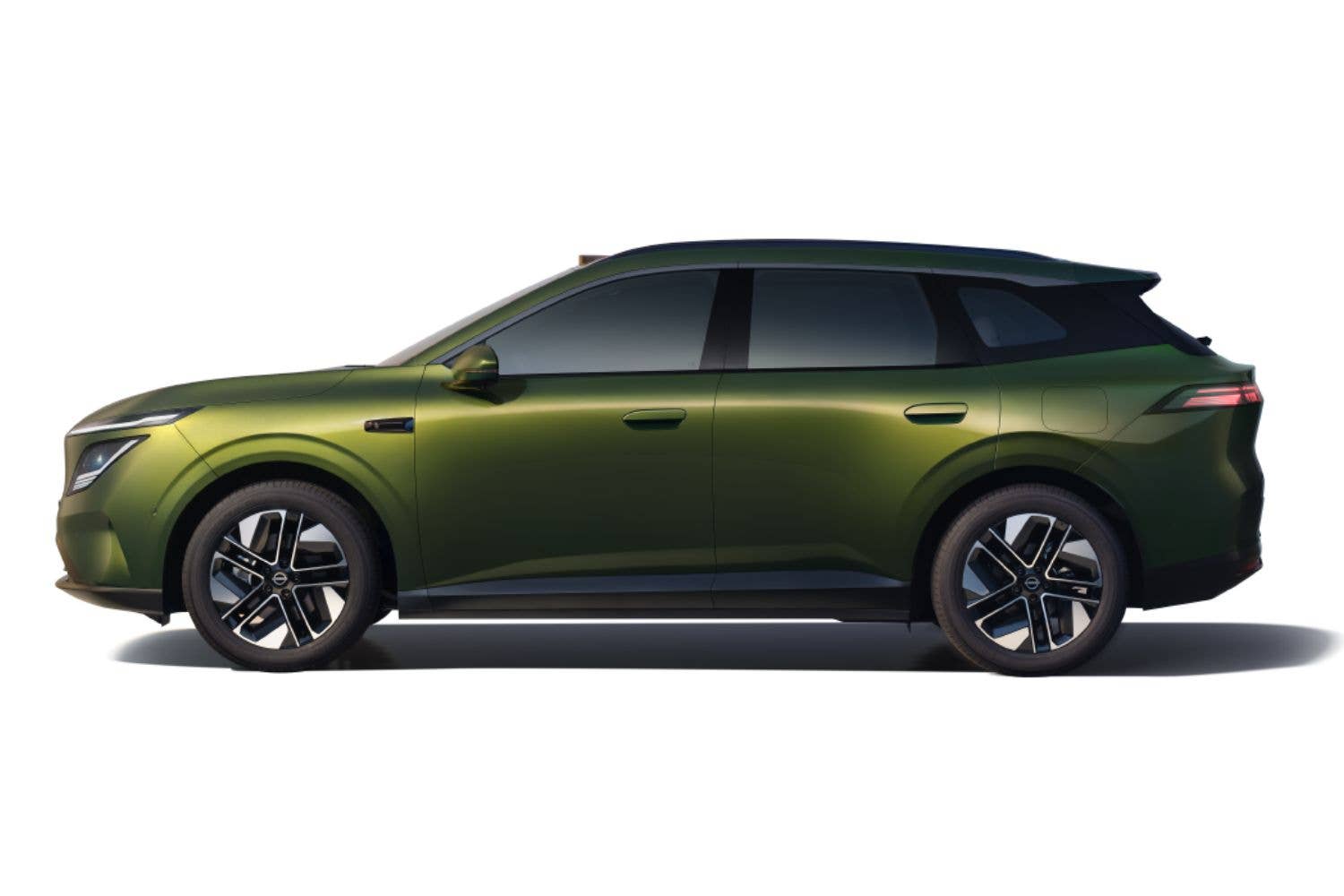
Now, there’s a new addition to that list: the NX7. It was previewed at the 2026 Beijing Auto Show, but sales have commenced in China. You can think of it as a Rogue-sized crossover, but slightly longer and with a totally different twist. Clearly, it doesn’t look like a Rogue, adopting a totally different design language, and it’s clearly aimed at Chinese brands that have been nipping away at Nissan’s sales.
Unlike the 2027 Rogue that features the e-Power series hybrid system, the NX7 is a plug-in hybrid. That said, there’s more to the story than a different powertrain and design.
Nissan
What it Offers
The NX7 measures 188.4 inches long, 76.1 inches wide, 65.4 inches tall, and rides on a 110.8-inch wheelbase. It’s creeping up towards midsize territory, but that’s part of the Chinese market playbook of offering a ‘large for its class’ kind of vehicle.
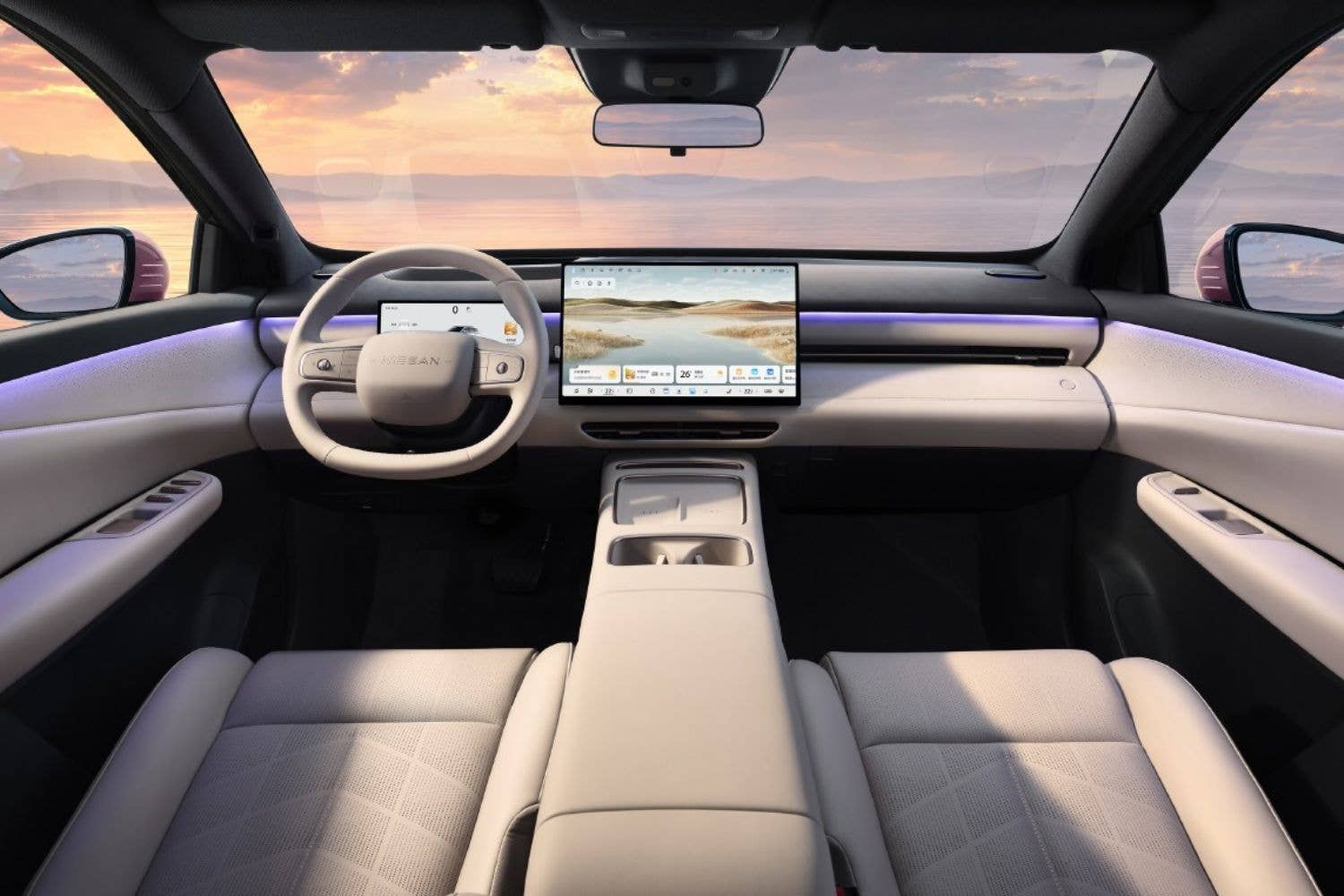
For technology, it has a centralized electronics architecture that’s powered by the Qualcomm Snapdragon 8155 system-on-chip processor. In plain English, that allows the infotainment system to move at rapid speeds, as well as control other functions accessed from the screen. Thankfully, there is still a relative abundance of physical controls inside. Also, Nissan is quite proud of the fact that 90% of the cabin is softly padded.
It has a new advanced driver assist system powered by Momenta, although Nissan refuses to call it a level 3 system outright. It’s labeled as Level 2++, effectively a higher and more responsive version of level 2 systems you currently see. A built-in fridge is also available, which is cool and all, but Nissan doesn’t want its occupants getting carsick. For that, the NX7 has 6 anti-dizziness modes, and a braking system designed to reduce dive in normal scenarios.
Nissan
The Powertrain
As mentioned, it’s a plug-in hybrid, but its battery-only range makes it one of the longest-range PHEV crossovers around. For the oily bits, it’s powered by a 1.5-liter engine that mostly recharges the battery but occasionally powers the vehicle. It only makes 98 hp, but the more important figure here is the number from the single motor, which is 230 hp. With only one motor, this does mean it’s strictly front-wheel drive unless Nissan adds an all-wheel-drive version down the line.
As for the hybrid bit, its battery capacity is sizable for a vehicle of its type. It’s rated at 40.95 kWh, which is actually the size of close to a lot of entry-level subcompact EVs sold around the world. With that much capacity and the compact 1.5-liter sipping fuel, Nissan estimates a range of up to 1,035 miles with a full battery and a full tank. Range on battery power alone is rated at 199 miles.
The price for all this? The entry-level model starts at 129,900 yuan, or roughly $19,500, while the mid-spec NX7 starts at 139,900 yuan, just shy of $21,000. As for the range-topper with LiDAR and all bells and whistles attached, it’ll set you back 149,990 yuan. That’s a fully-equipped, fully-loaded compact crossover for just $25,000. If Nissan starts exporting this model, it has the potential to be a disruptor and lure people away from Chinese brands, despite being made there. The NX7 should appeal to those reluctant to buy a Chinese-branded vehicle and prefer a familiar badge. Nissan might actually be on to something here.
Nissan
Nissan