The spelling of California-based S-Klub LA’s name tells you something isn’t quite right, and its creations often turn out the same. For SEMA 2026, the company took that visual trademark to a showstopping new level, exhibiting what at first looks like a Mercedes-Benz CLK GTR but turns out to be a McLaren 750S, of all things. The company has been making waves in the aftermarket automotive scene for a few years now, producing wild things like a Ferrari 612 Scaglietti that somehow got uglier and fusing a 1971 Mercedes-Benz 600 “Grosser” with a modern AMG S 63. Simply put, S-Klub LA makes new cars look a lot like famous forebears, but changes enough that you start questioning your memory, and its latest creation is particularly mind-bending.
S-Klub LA Presents “Game Over”
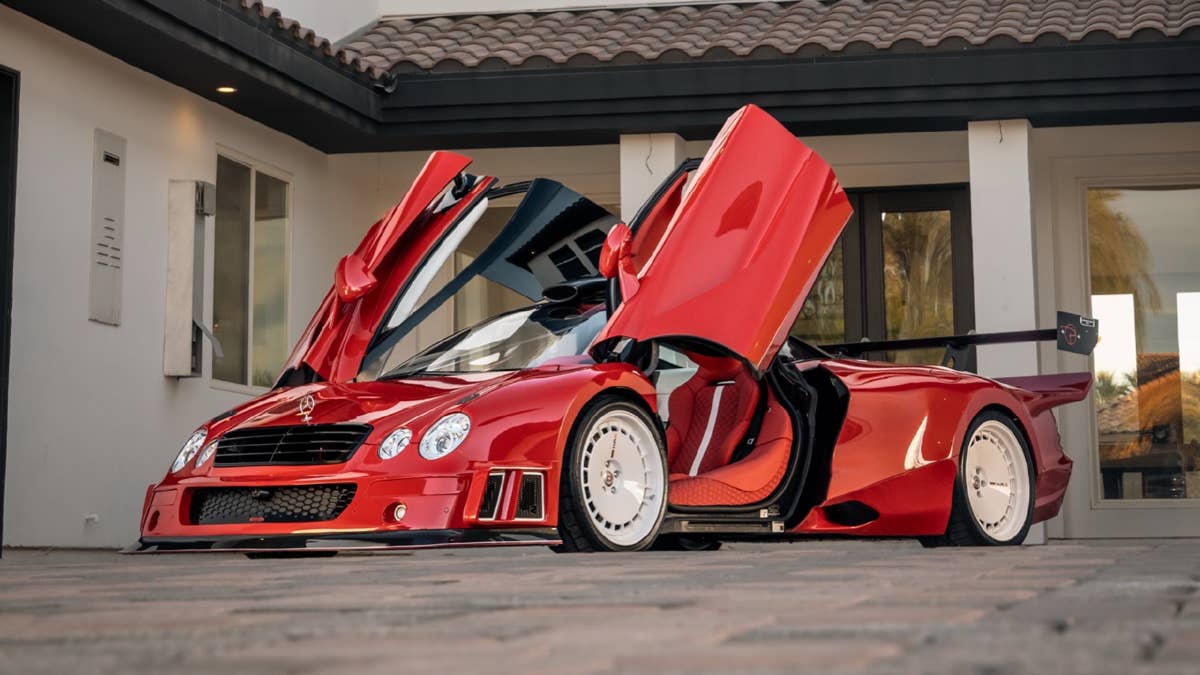
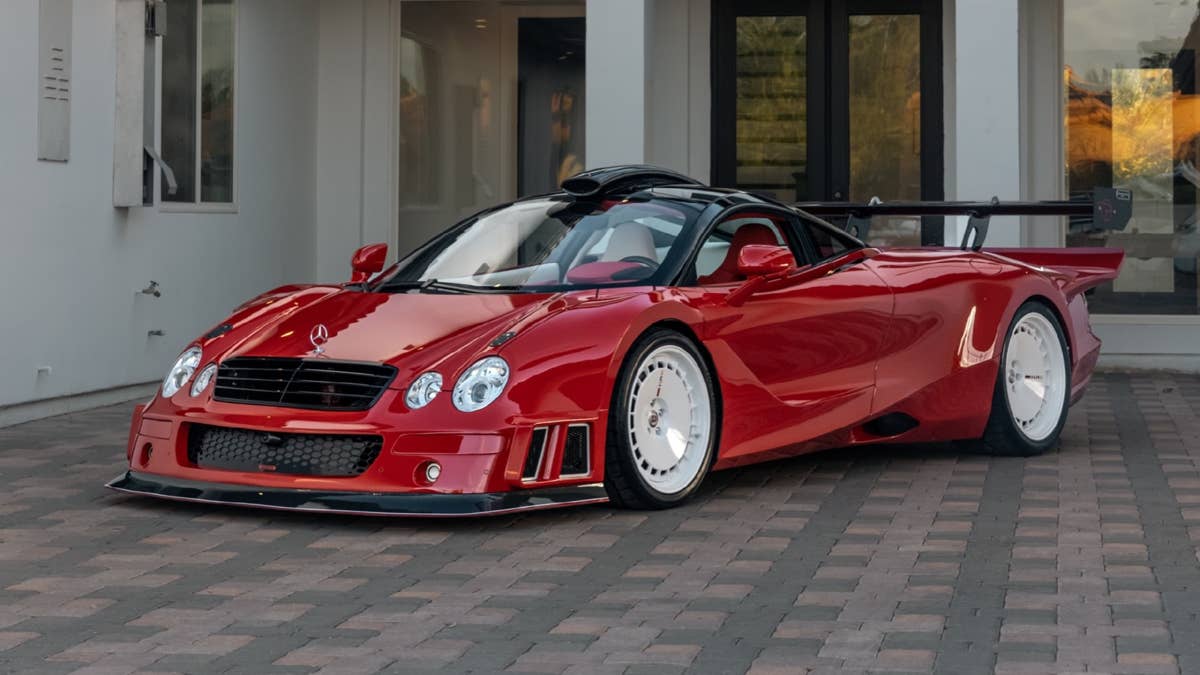
S-Klub always names its projects, perhaps imitating other creations that don’t always fit the term ‘restomod’ (such as those made by Singer), and this year, its entrant to the Toyo Tires Treadpass exhibition is called Game Over. From the front, the Rosso Red creation presents as a convincingly proportioned replica of the 1997 FIA GT Championship winner that competed against the likes of the Porsche 911 GT1 and McLaren F1 GTR. There’s even a carbon fiber snorkel over the glasshouse, albeit fake, and the rear end isn’t too far off either, replete with a bewinged longtail. Motorsport-inspired HRE wheels also appear. But there’s a hint of Pagani Zonda in the silhouette, and in the middle of the body, things are more obviously unusual, with the sculptural side body panels of the underlying McLaren 750S showing how far aerodynamic understanding, material construction techniques, and cosmetic design have come since the relatively wedge-shaped CLK’s heyday.
Performance has also evolved considerably in three decades, so the company left well enough alone. While the 1997 race car produced around 600 horsepower from a 6.0-liter naturally aspirated V12 and the Strassenversion (road-going iteration) made 622 hp from a 6.9-liter V12, the stock McLaren 750S powertrain is already far more potent, delivering 740 hp from a 4.0-liter twin-turbo V8. That means 0-60 mph in 2.7 seconds and a top speed of 206 mph, assuming the modifications haven’t added too much weight or aerodynamic drag. Swing open the Mac’s dihedral doors, and S-Klub LA’s cosmetic changes continue.
Game Over: Split Personality, Two-Tone Cabin
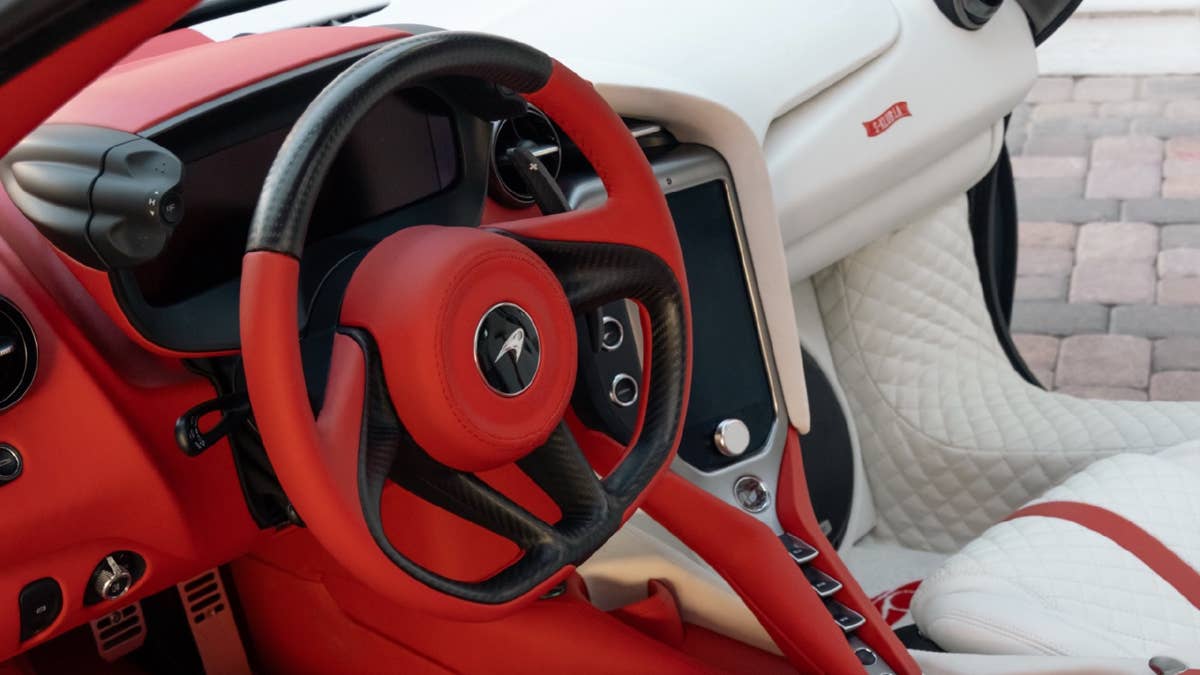
Just as the exterior bodywork shows elements of both the old-school supercar it imitates and the new one it was built on, so too is the fully reupholstered interior a medley of contrast, with quilted red leather accented by white appearing on the driver’s side, including the instrument binnacle, and white leather with red accents showing up on the passenger side and its portion of the dashboard, which bears the company’s tag. Switchgear and pedals are unchanged, but Audison supplied a sound system upgrade, including a speaker in the passenger footwell. One might argue the added luxury detracts from the supercar’s performance, but if the Mercedes-McLaren SLR could get away with being compromised, so can this aftermarket blend of the brands.
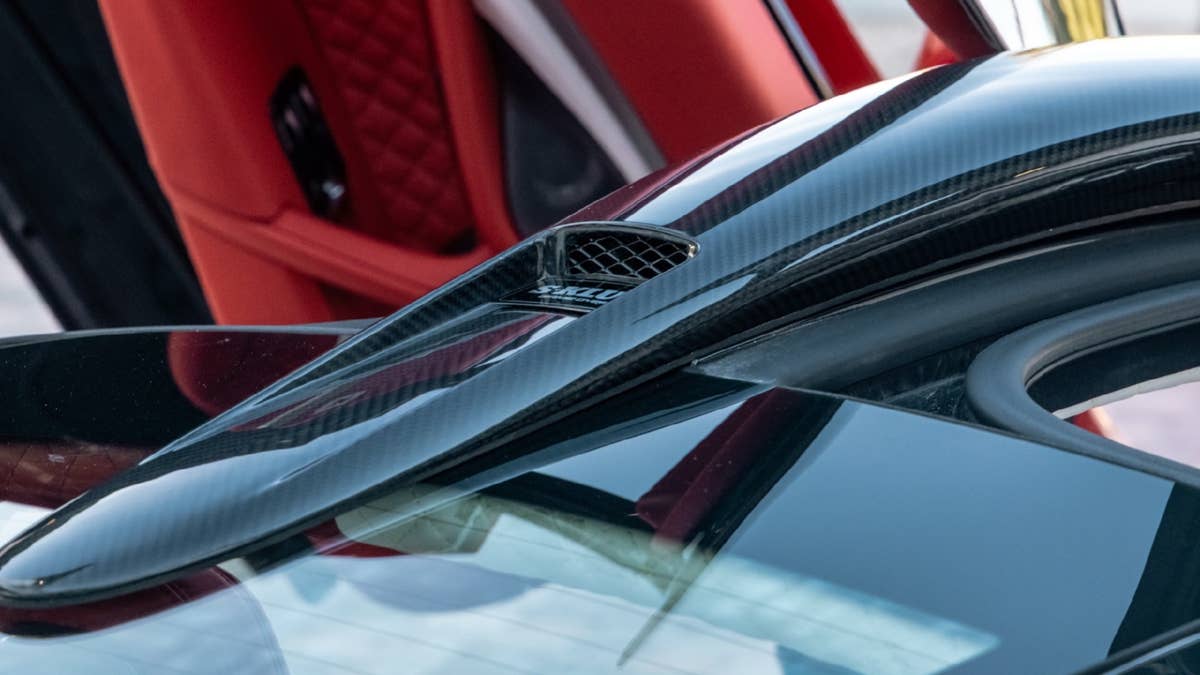
Admittedly, this mashup looks unavoidably odd, and a 2,000-mile 750S was sacrificed to make it happen. But the build was completed in just 65 days, and that included 3D-scanning the supercar before removing the exterior panels, strategically cutting and modifying the metal that would remain to reduce weight – while preserving the passenger cell, factory door mechanisms, glazing, and mechanical elements – and fabricating and fitting the new widebody panels and front and rear bodywork. S-Klub LA took care to preserve the airflow paths below the glasshouse that feed the engine, so it shouldn’t overheat, and more impressively, the company even managed to replicate communication commands and data from the McLaren lighting controllers. This means the older Mercedes-Benz lights work without any dashboard warning lamps illuminating (and, hopefully, none for deleting the active rear wing either). Granted, this era-bridging one-off won’t be to everyone’s taste, but as a benchmark for what aftermarket companies can do in a short timeframe, it’s certainly set new standards.