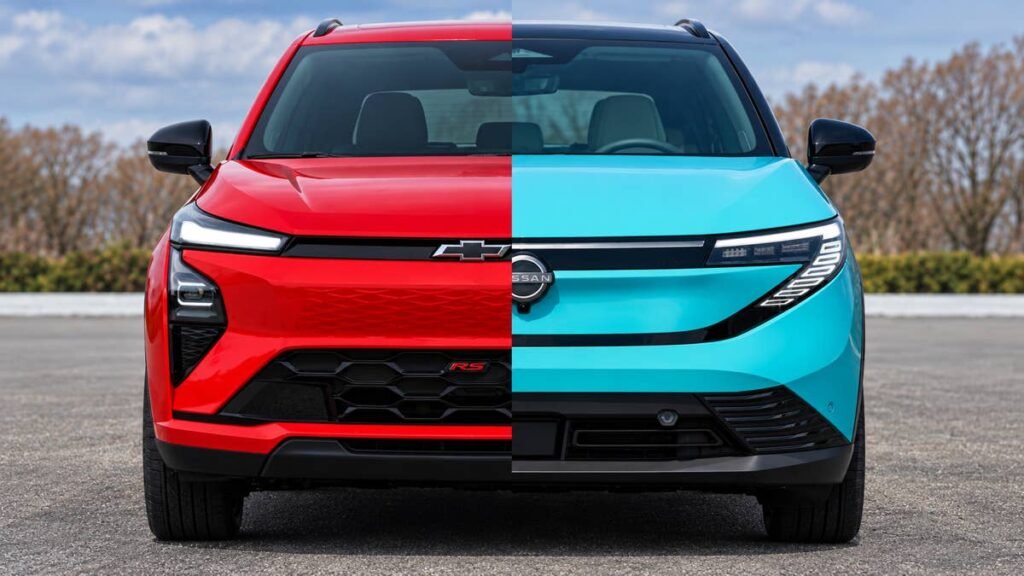
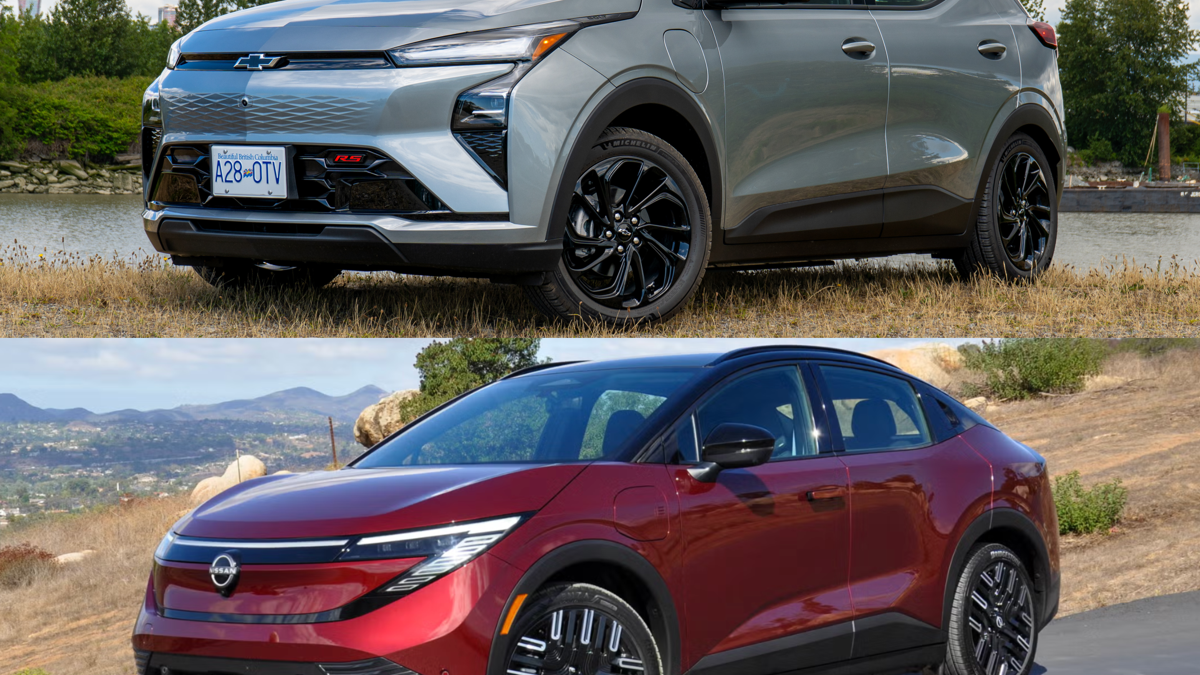
The Chevrolet Bolt and Nissan Leaf are two of the most affordable new EVs on sale in the United States. Both are still fresh, having entered new generations over the last year or two, although the Leaf’s makeover has been particularly striking. Both vehicles start at under $30,000 and make EV ownership a reality for buyers who may not otherwise have considered such a vehicle, but which one is resonating more with drivers in this segment? The latest sales report from Cox Automotive provides some context and shows that one of these budget EVs is far ahead of the other.
Bolt Outsells Leaf By 3.5 to 1
Cole Attisha
The latest Chevy Bolt only hit the market early in 2026, but it has already established itself as a sales leader in the budget EV category. Here’s a look at how both models have performed so far in 2026 versus the same period in 2025.
|
YTD Sales 2026 |
YTD Sales 2025 |
% Change |
|
|
Chevrolet Bolt EV |
8,090 |
123 |
+6,477% |
|
Nissan Leaf |
2,318 |
4,649 |
-50.1% |
Whereas sales of the Leaf have declined by 50% in 2026, the Bolt has only gone up (no new Chevy Bolt was on sale in 2025). Buyers have clearly gravitated towards the Bolt, which has surpassed 8,000 sales through the first three quarters of 2026. Nissan will be disappointed that the Leaf’s sales have stumbled this year, despite it being a vast improvement over the previous Leaf hatchback.
2027 Chevrolet Bolt
Jared Levenson/Autoblog
There are hardly any other sub-$30,000 EVs on sale, but the Kia EV3 is one to watch. It has just gone on sale and 514 units of the Kia were sold in Q3.
The upcoming Slate Truck will undercut all these EVs when it goes on sale, but it’s uncertain whether a barebones pickup will be able to steal sales from these well-equipped hatchbacks and crossovers.
Related: 5 Cheapest EVs Ranked By Range: One Goes 321 Miles
Price: Still The Bolt’s Key Advantage
Cole Attisha
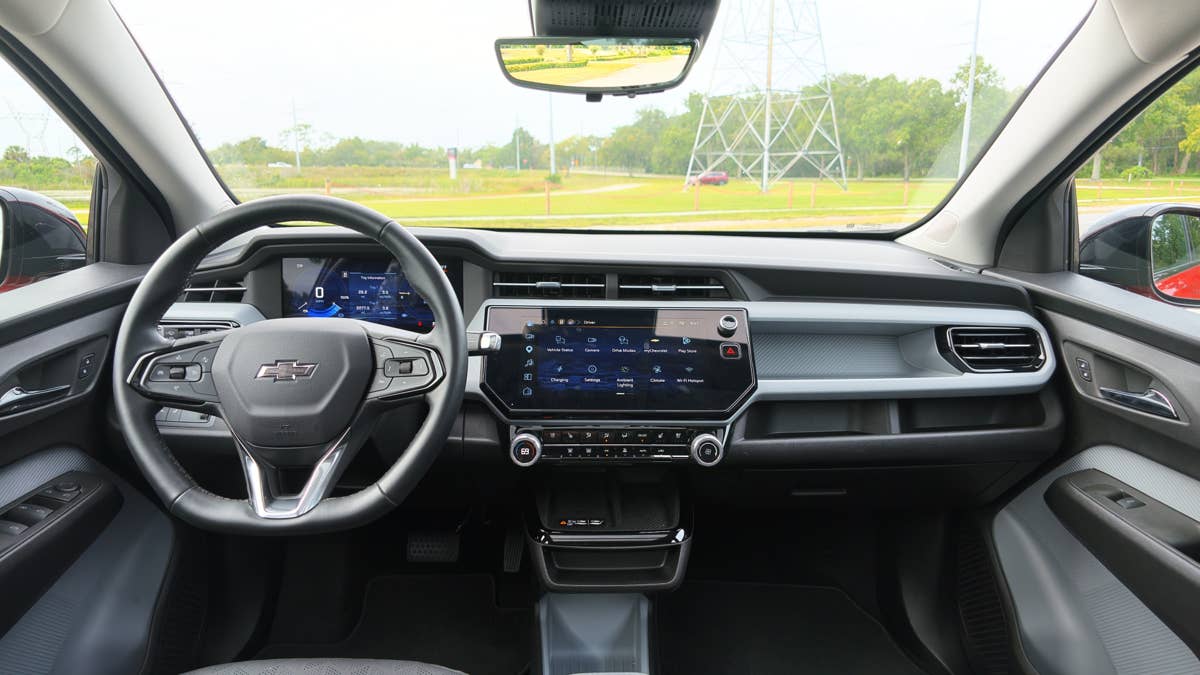
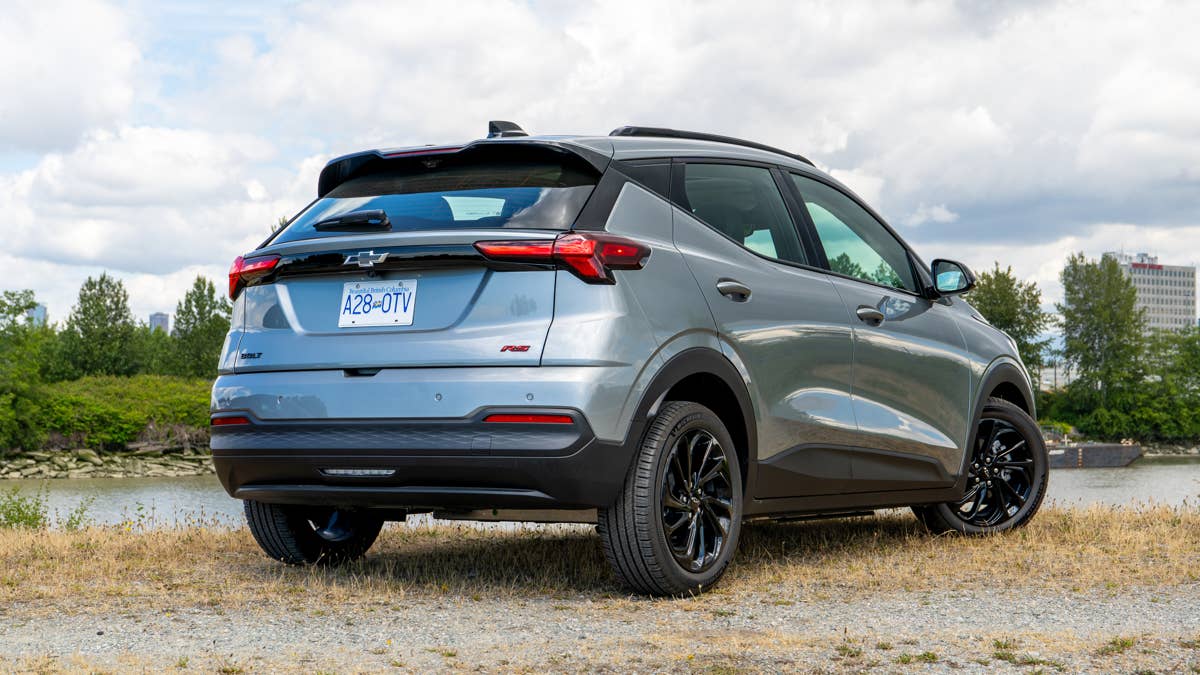
The 2027 Chevy Bolt starts at $27,600, making it over $2,000 cheaper than the base Nissan leaf ($29,900). In entry-level form, the Bolt comes with a 210-horsepower motor and 65-kWh battery. It can travel for 262 miles on a full charge and is generously specified with features like an 11.3-inch touchscreen, automatic climate control, and remote start.
For $31,600, buyers can upgrade to the Bolt RS. It has the same powertrain and range, but enjoys extras like heated/ventilated front seats, Evotex upholstery, an eight-way power driver’s seat, a heated steering wheel, and 17-inch gloss-black alloy wheels.
Although the Leaf is pricier, it has a bit more power (214 hp) and significantly more range (303 miles). We drove both EVs in 2026 but preferred the Nissan’s driving manners, more premium interior, and modern execution. Surprisingly, the Chevy was a bit quieter on the highway and has decent rear-seat space, but one can see and feel why the Nissan costs more.
Final Thoughts

2026 Nissan Leaf
Nissan
American EV buyers have spoken, and value appears to be the key driver of success in this segment. The Bolt’s low base price has seen it leapfrog the Leaf on the sales charts in 2026, despite the Nissan’s superiority in range and driving appeal. Unfortunately, the current Bolt isn’t expected to stick around for much longer, with a shorter-than-expected production run. This gives first-time and/or younger buyers limited time to take advantage of the Bolt’s exceptional value.