Multi-Pathway
Toyota, as a brand, has been the most outspoken non-EV believer. Not that Toyota hates EVs; it just thinks they shouldn’t be the only option for the mobility future we’re headed toward. To pave its own way, the Japanese auto giant has launched a multi-pathway approach that aims to develop and study different, innovative internal combustion engine technologies.
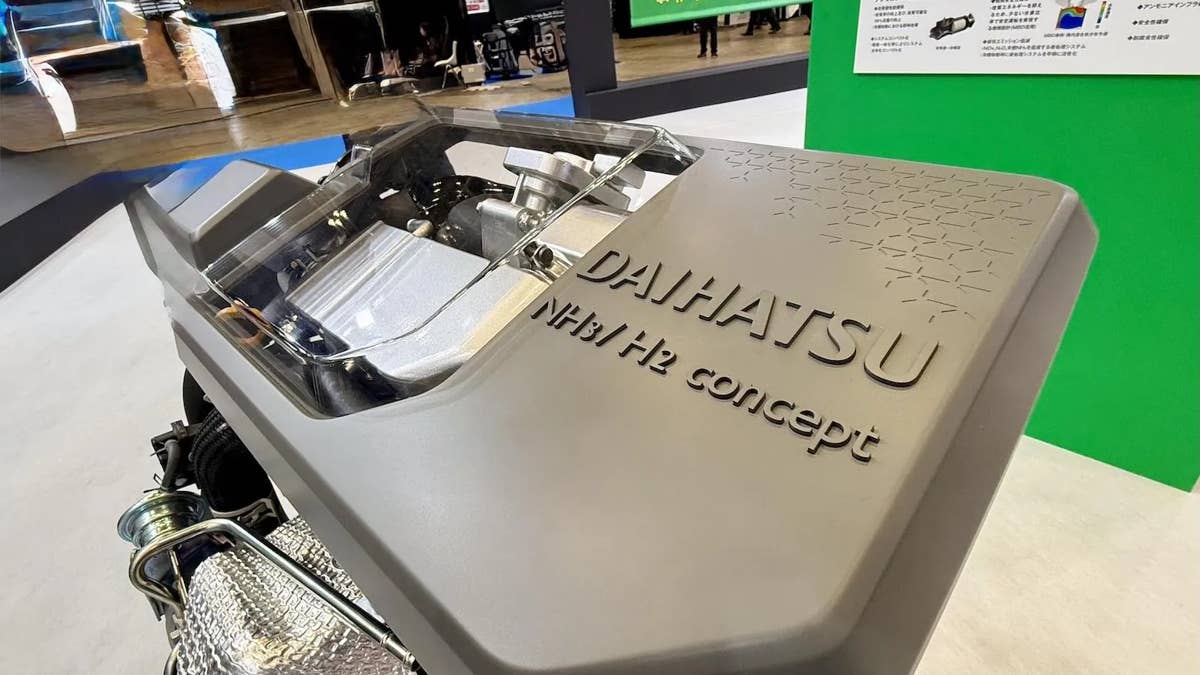
One of the latest projects born out of the multi-pathway approach is the use of Ammonia as a fuel and a helper to hydrogen technology. Toyota has entrusted the project to its small carmaker, Daihatsu.
Motor Fan Japan
Ammonia Fuel?
We know Ammonia as a pungent-smelling substance mainly used for agricultural purposes. Data show that 85% to 90% of all industrially produced ammonia is used globally to make chemical fertilizers like urea, ammonium nitrate, and ammonium phosphate.
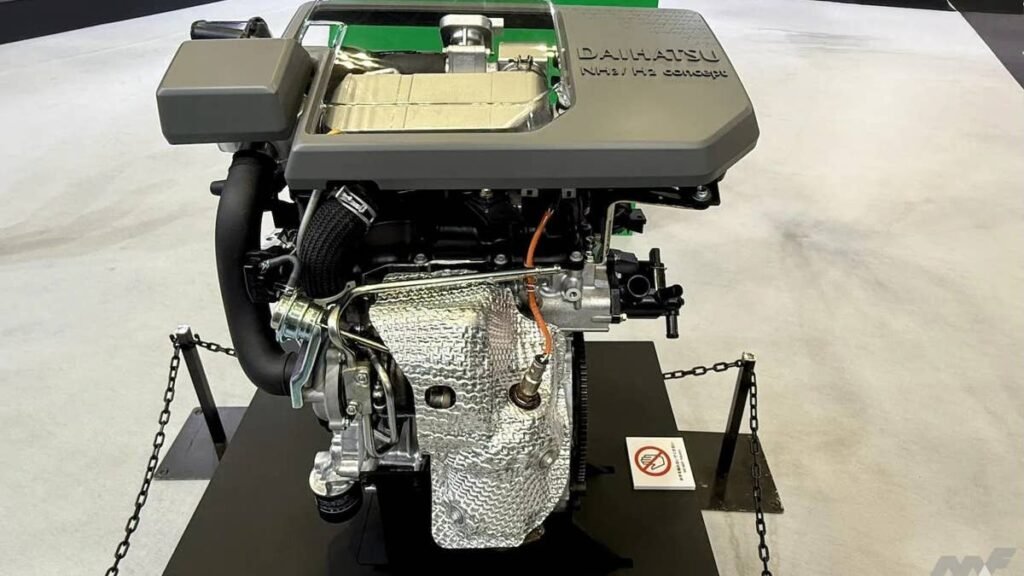
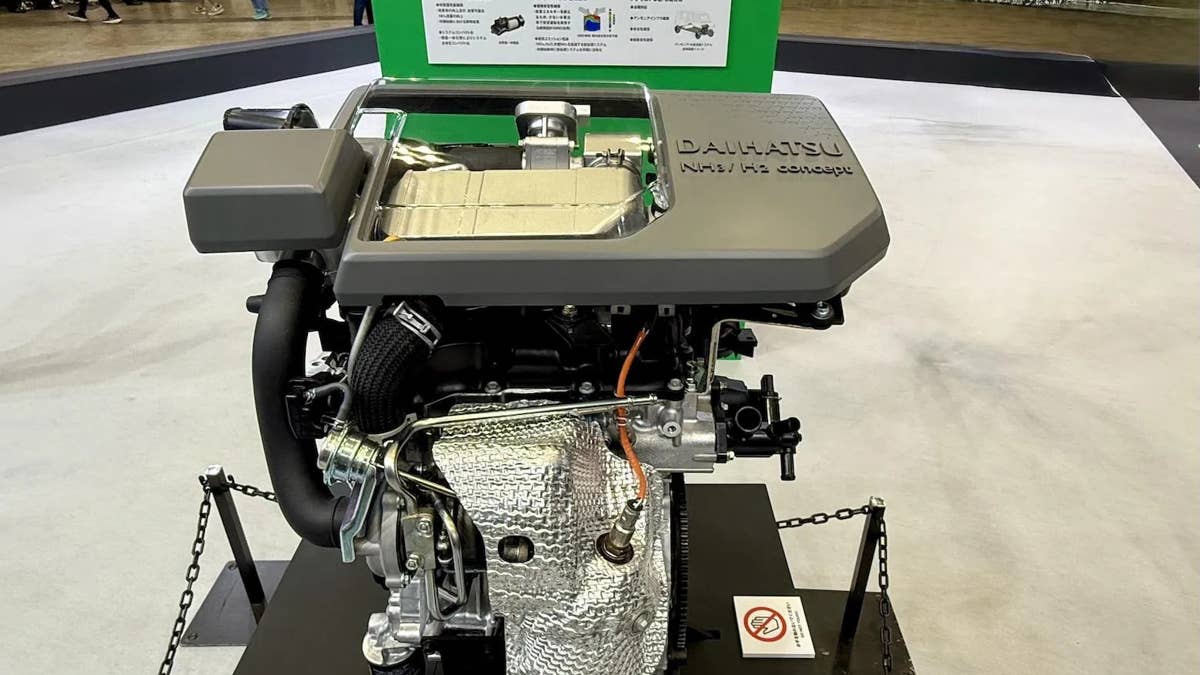
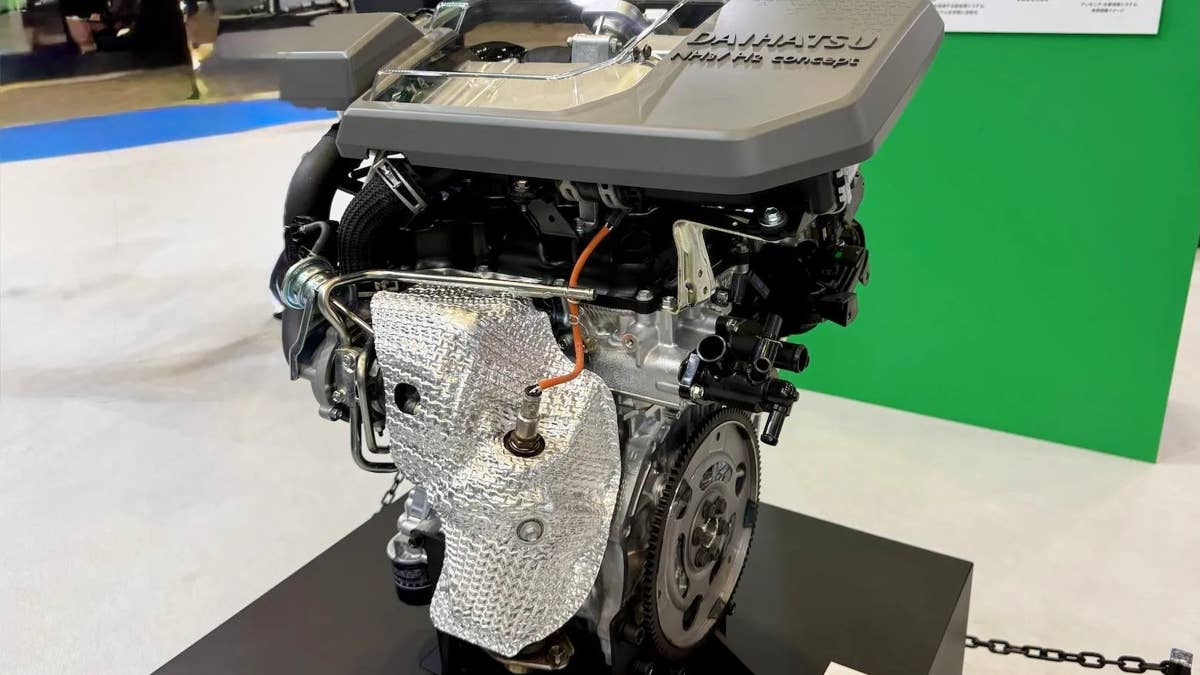
Daihatsu has other plans for it; it recently debuted at the Japan Mobility Show 2026 Bizweek as a 658cc inline 3-cylinder engine for kei cars with an ammonia/hydrogen co-firing engine. Basically, the car’s fuel tank will be filled completely with ammonia, but the technology will reform it into hydrogen, which will improve combustion.
According to a report by Motor Fan, ammonia is gaining attention as an energy carrier for a decarbonized society because it already contains hydrogen and is easier to store and transport than hydrogen itself. Another important point is that ammonia contains no carbon, so burning it does not produce CO2 emissions.
The engine’s overall layout will include a hydrogen production system that uses a portion of the car’s ammonia fuel and converts it to hydrogen. On top of the engine will be a small square plasma reactor and a bigger rectangular catalytic reformer. According to the Daihatsu team, “At low temperatures or during startup, we use electricity to produce hydrogen from ammonia. Once the temperature rises to a certain level, we hand over to the catalyst, which then produces a large flow rate of hydrogen.”
Motor Fan Japan
Side Effects
As promising as this new engine technology seems, the team behind it acknowledges a few challenges. First, ammonia, when combusted, produces nitrogen oxides, but even more concerning is that unburned ammonia creates nitrous oxide, a potent greenhouse gas.
Another issue is that while the test engine is a Kei car-derived unit, the overall package might be too big to actually install in a Kei car. Regardless, the developers are pressing on with testing to sort out the problems and see whether it’s viable for production.