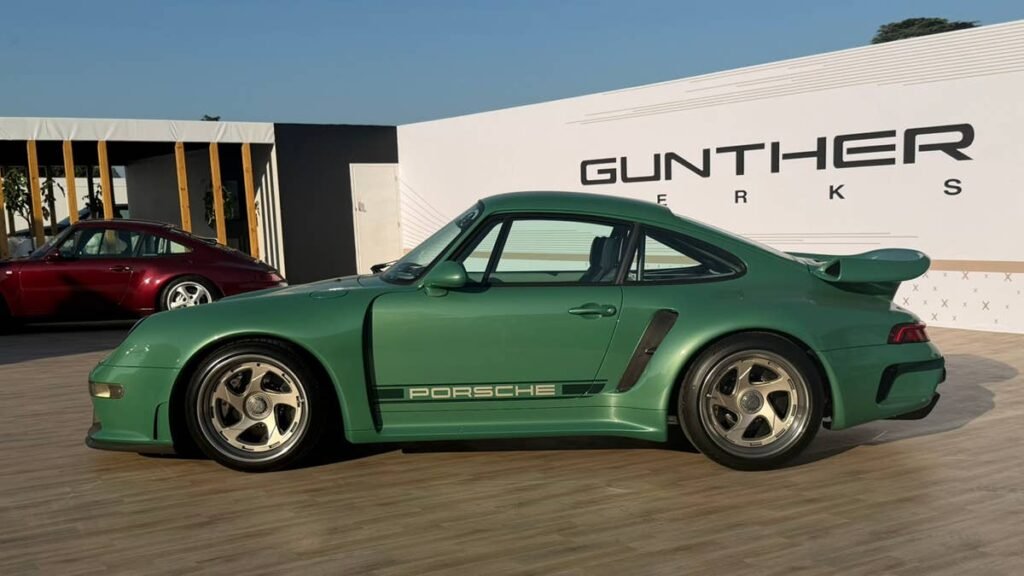
There is no shortage of companies willing to tear apart an old Porsche 911 and rebuild it into something faster, lighter and considerably more expensive. Peter Nam believes Gunther Werks is different.
The company founder doesn’t describe his Huntington Beach operation as an assembler or traditional restomod shop. Instead, he argues that Gunther Werks has become a manufacturer in its own right, designing and producing virtually everything required to transform a Porsche 993 into one of its limited-production machines.
Adam Lynton / Autoblog
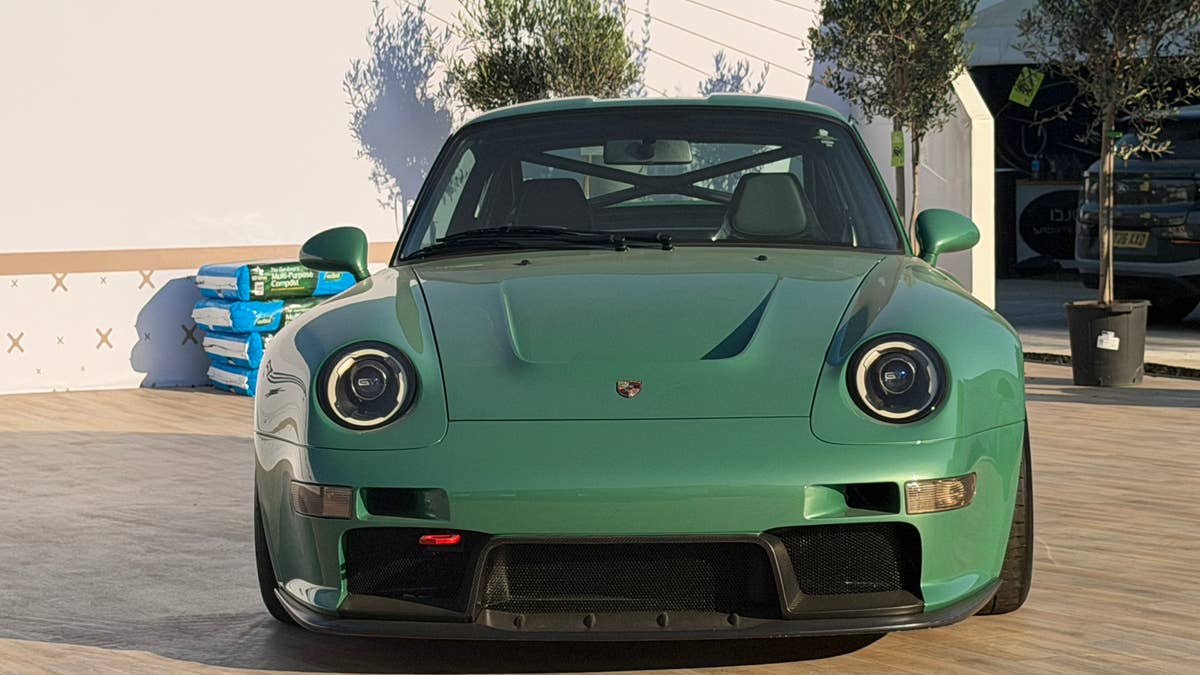
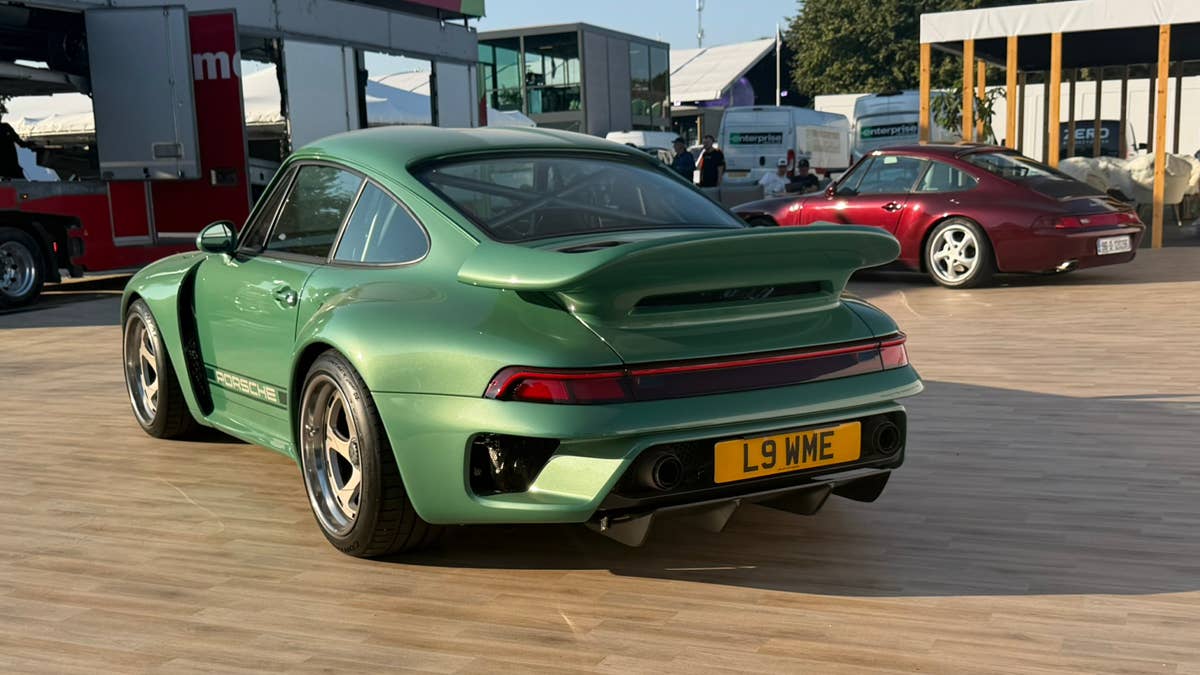
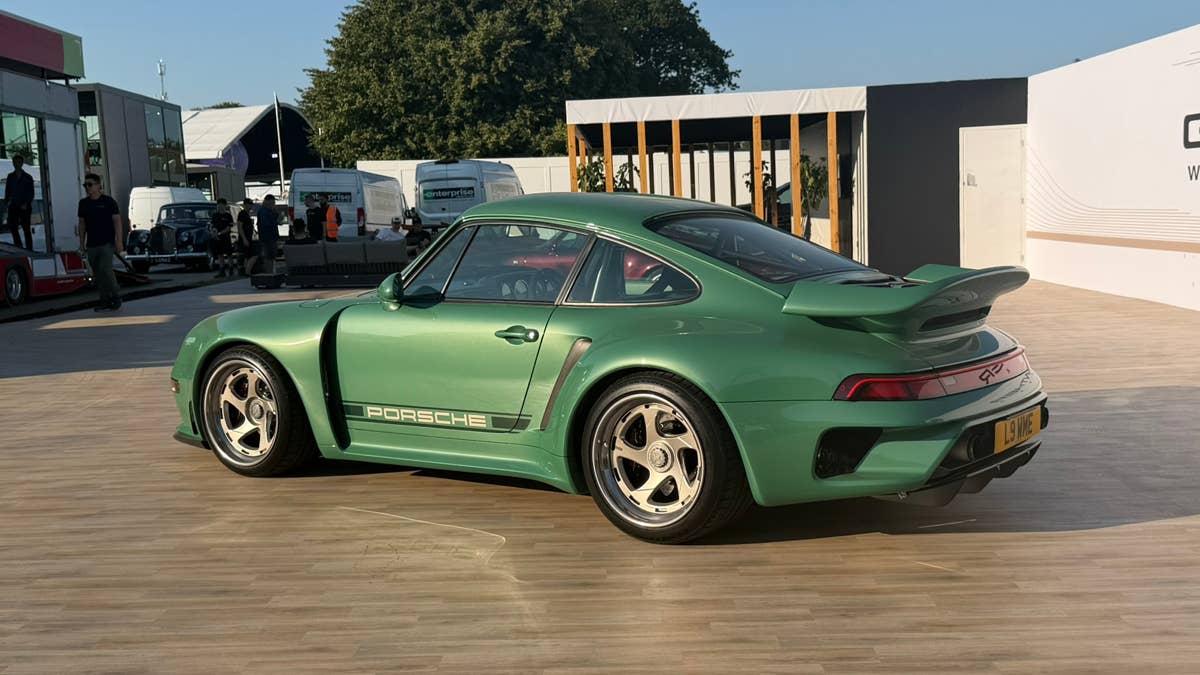
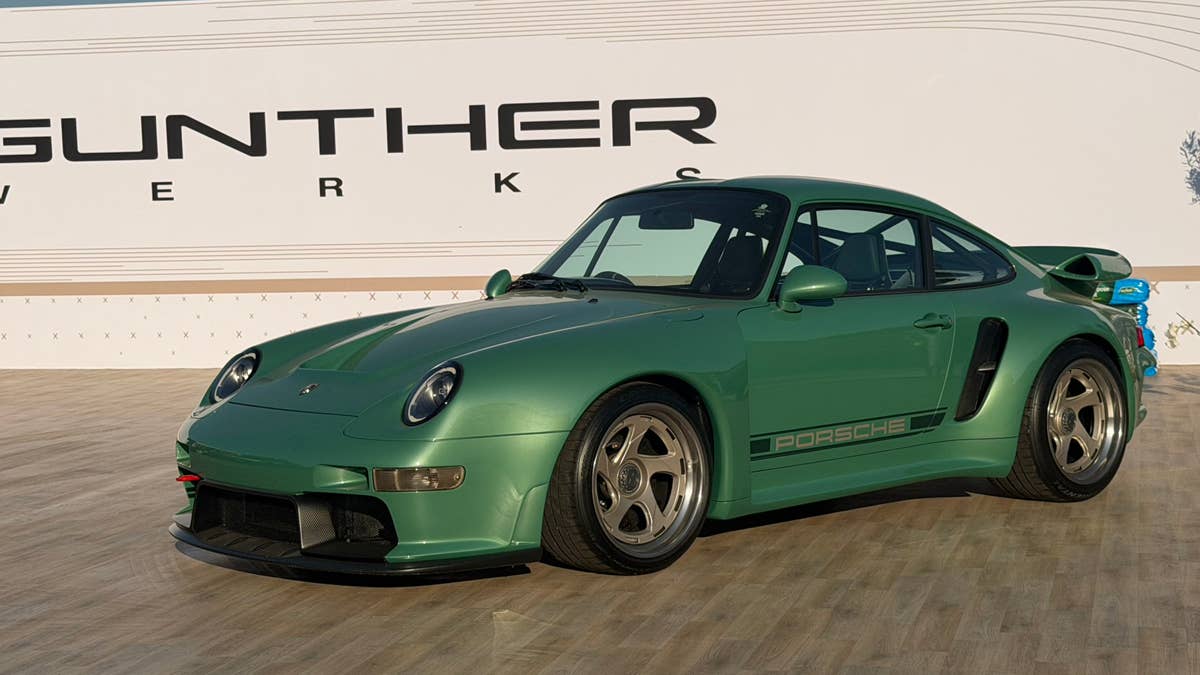
That philosophy is perhaps best demonstrated by its latest Turbo Commission, a right-hand-drive customer car destined for the UK that Nam showed Autoblog at the 2026 Goodwood Festival of Speed this summer.
“Everything you see on the car right now, headlights, tail lights, carbon fiber wheels, steering wheel, seats, everything, with the exception of the engine, is designed and manufactured in-house at our factory in Huntington Beach,” Nam said. “We are a true vertically integrated manufacturer.”
And this particular 993 is packing some serious numbers. Including its near $2 million price tag and elite status as one of just 75 to be made worldwide.
Adam Lynton / Autoblog
“A Hypercar With A Porsche Badge”
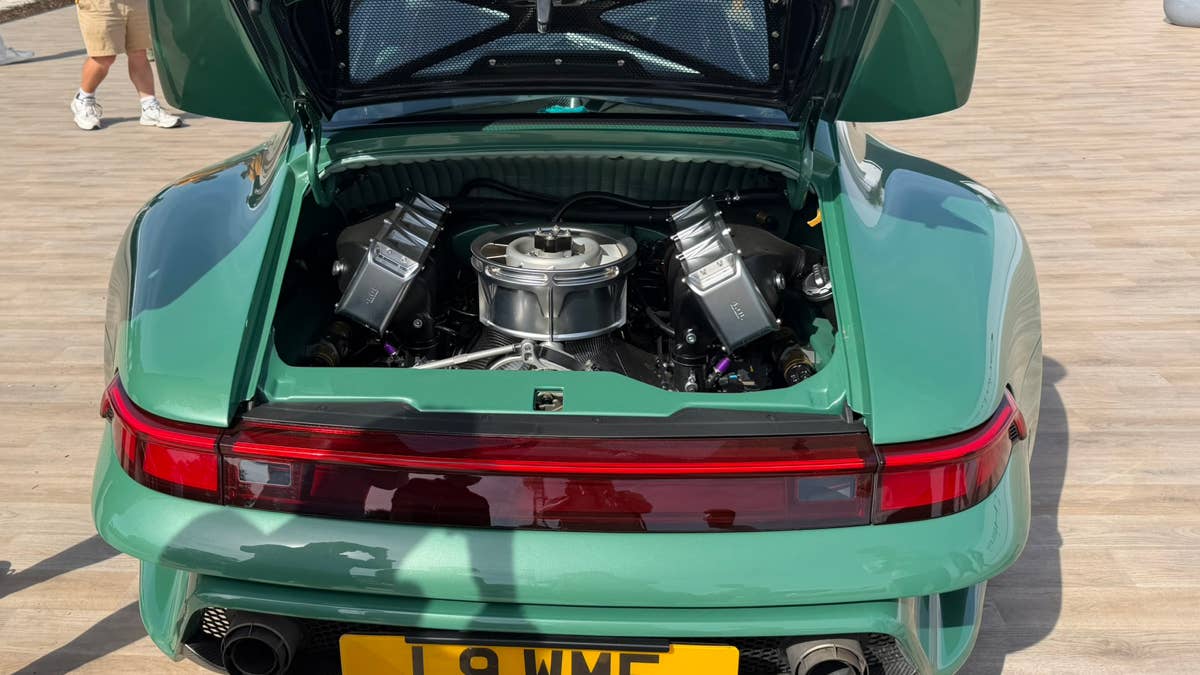
The finished car weighs just 2,750 pounds while producing as much as 840 horsepower from its 4.0-liter twin-turbocharged flat-six engine.
The original 993 chassis is extensively reinforced as part of the transformation. “The 993 chassis is now 150 percent stiffer than the original,” Nam said. “This car has no body roll at all. It just is completely flat on track, and it’s as stiff as a modern-day car.”
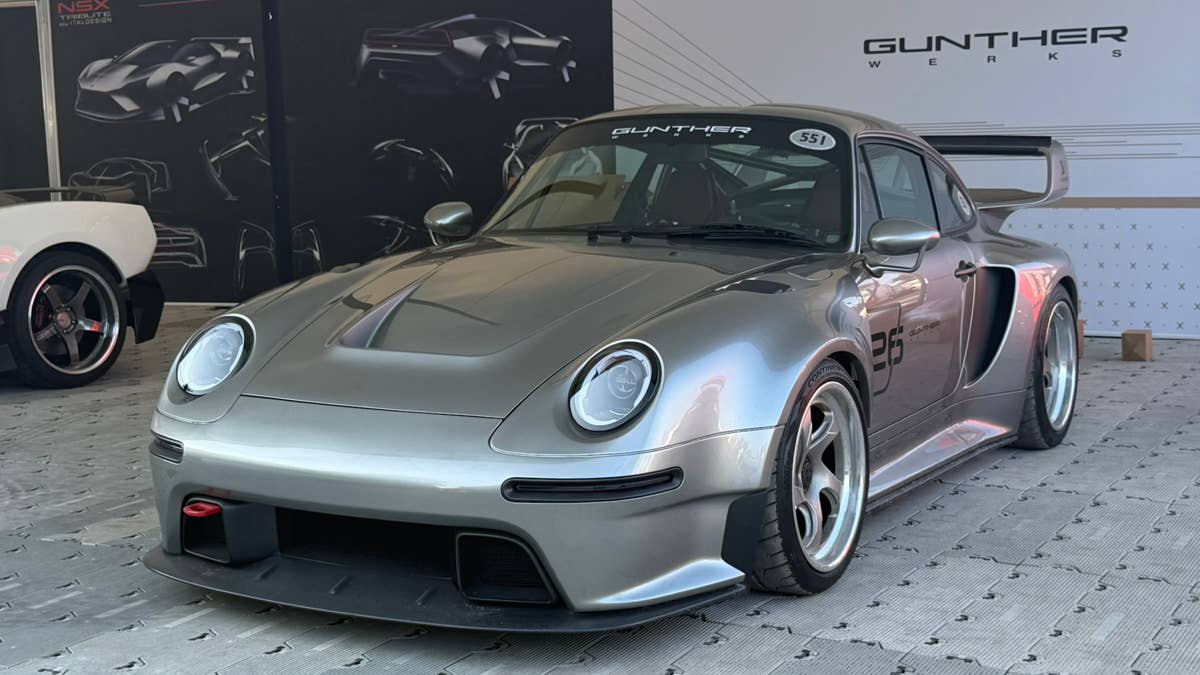
Related: Gunther Werks F-26 Targets Goodwood’s Hill Climb Record with 1,067 Horsepower
Put that power together with such little mass and Nam has a particularly bold description for the result. “Power-to-weight ratio is superior to a Bugatti,” he said. “This is essentially a hypercar with a Porsche badge.”
Related: This 840-HP Porsche 911 Has Color-Shifting Paint and 24K Gold Inside
That comparison is Nam’s, but there is no mistaking the numbers. An 840-hp car weighing only 2,750 pounds has roughly 3.3 pounds to move for every horsepower it produces. The engine itself is developed with Rothsport Racing in Oregon, but Nam said approximately 30 percent of the package, including its charge-cooling system and distinctive flat-fan arrangement, was designed and developed by Gunther Werks. Yet maximum horsepower only tells part of the story.
Adam Lynton / Autoblog
One Car With Three Very Different Personalities
Gunther Werks deliberately didn’t make the Turbo Commission an 840-hp experience every time its owner leaves the driveway. The drivetrain offers three settings that dramatically alter how much performance is available.
“In comfort mode on the drivetrain, it has about 550 horsepower,” Nam said. “In sport mode, it has around 740, and track mode, it has 840.” That’s a 290-hp difference between the least and most aggressive settings.
Adam Lynton / Autoblog
Adam Lynton / Autoblog
Nam argues that this gives the car genuinely distinct personalities rather than the subtle throttle-response changes offered by many drive-mode selectors. “You have basically like Bruce Banner and the Incredible Hulk,” he said.
The suspension is similarly adaptable. Nam said the electronically controlled system makes adjustments 1,000 times every second and offers Comfort, Sport and Track settings separate from the drivetrain modes. According to Nam, the result surprised even some Gunther Werks customers. “They were all shocked about how comfortable the car was,” he said, adding that some owners use their cars as daily drivers.
That’s particularly unusual given the Turbo’s power, wide bodywork and track-oriented engineering. “This is one of those cars you could drive through London, have dinner with your wife, drive to the track without using a trailer, and drive back home,” Nam said.
Adam Lynton / Autoblog
Gunther Werks Makes The Engineering Dictate The Looks
The company’s approach also explains why the Turbo is covered in vents, ducts and openings. Nam says they’re not simply styling exercises. “Everything is dictated by engineering and performance of the car,” he said. “The design and the beauty of the car is really a byproduct of the engineering.”
The ducts and vents are there for thermal management, aerodynamics or downforce, according to Nam, rather than simply making an already extreme 993 look more dramatic. Gunther Werks also pushes its development cars beyond what it expects customers to subject them to.
“We don’t want our customers driving our cars and being lab rats,” Nam said. “We push our cars and test them and break them on the track to find all the points and weaknesses so that they are as bulletproof as possible.”
Look Closely And You’ll Find Xs Everywhere
Not everything about this particular Turbo is purely technical. Hidden throughout the car are small X motifs, including on the wheel center caps, steering wheel, door panels and seat pattern. For Nam, the symbol dates back to the company’s beginnings nearly a decade ago.
“When I started this company nine years ago, everyone told me that it can’t be done, it’s impossible, and a lot of people closed their doors in front of my face,” he said. “The X symbol, it’s a symbol of overcoming adversity, and a symbol of trying to do the impossible.”
There is another message written into the car’s door sill: “Define your limits by going beyond them.”
Nine years after Gunther Werks started, a 2,750-pound, 840-hp 993 capable of switching from a relatively civilized 550-hp road car into what Nam calls a “hypercar with a Porsche badge” is a fairly literal interpretation of that philosophy.
Adam Lynton / Autoblog