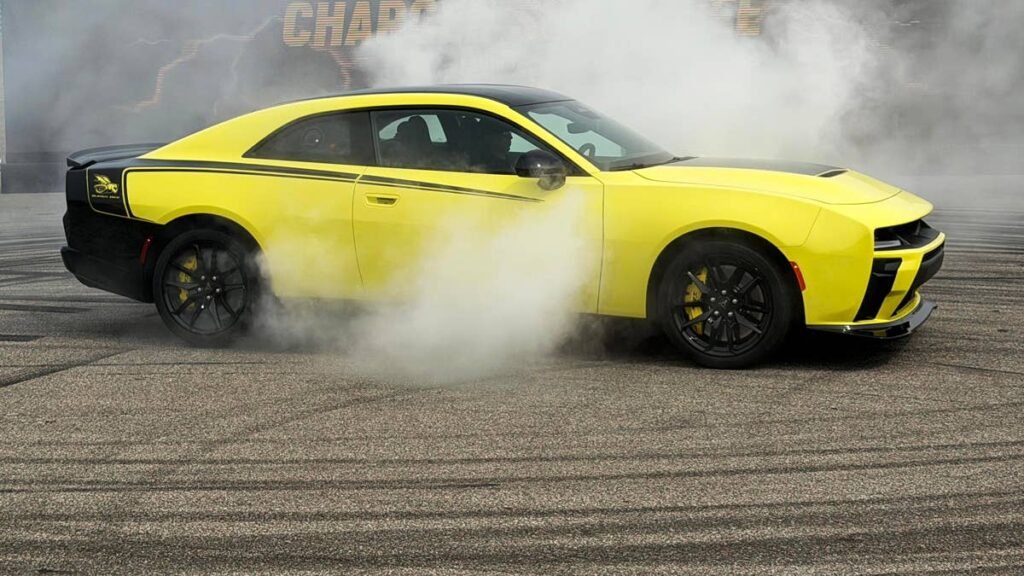
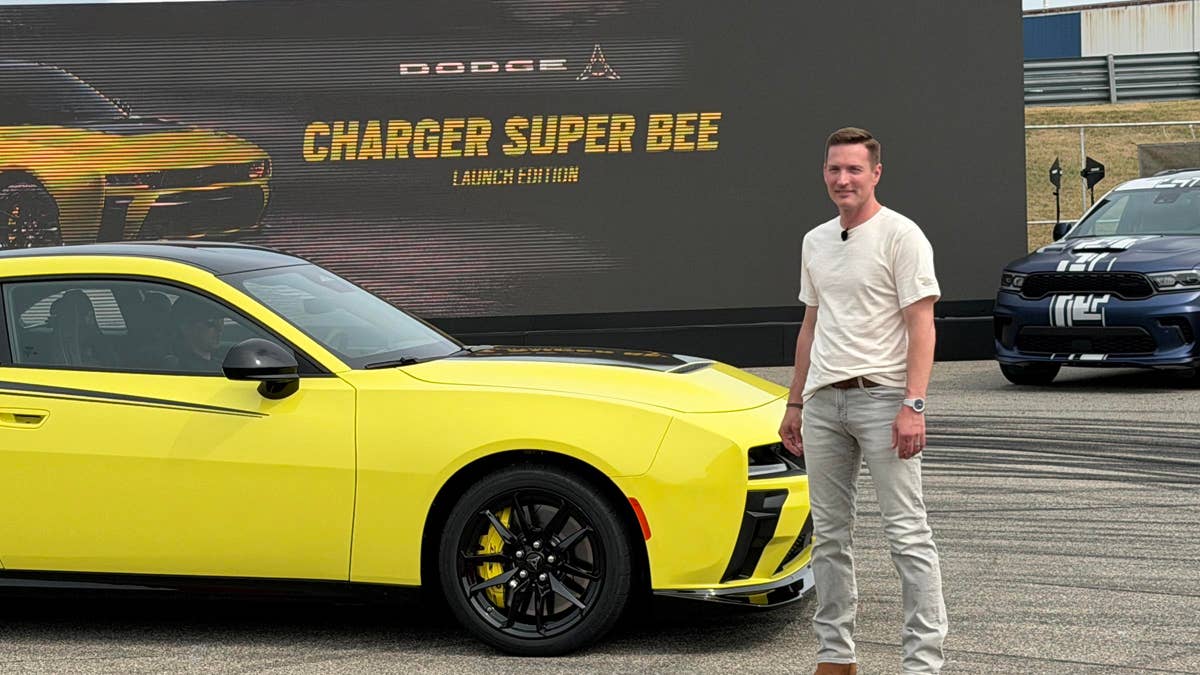
“We’re looking at every powertrain technology across the board to see where it makes sense,” Dodge boss Matt McAlear said during the brand’s annual Roadkill Nights rally over the weekend.
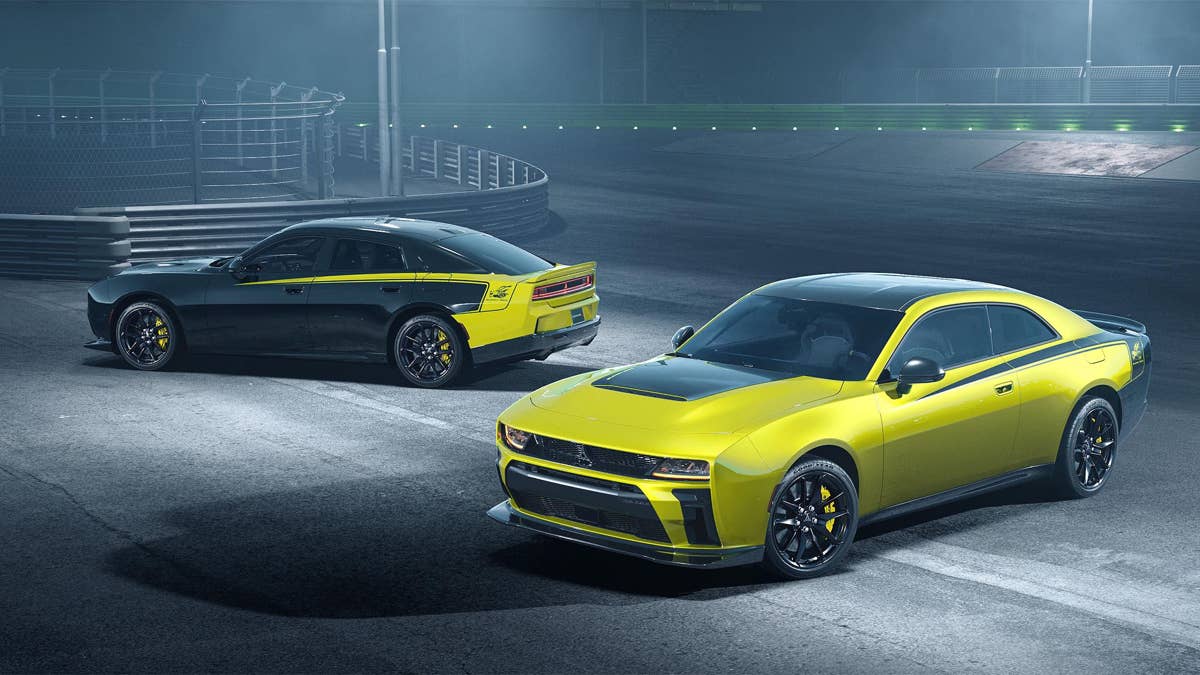
The search has resulted in an ever more powerful series of products since the eighth-generation Dodge Charger made its debut nearly two years ago. The latest iteration is the 2027 Charger Super Bee which squeezes out a blistering 600 horsepower from its twin-turbo Hurricane engine, enough to launch from 0 to 60 in 3.6 seconds. That’s nearly a full second faster than the last-generation Super Bee and, at 200 horsepower per liter, makes this the “most power-dense muscle car ever,” McAlear claims.
But don’t think Dodge is satisfied with the results. Or, at least, it won’t be for long. McAlear and other Dodge officials did little to hide the fact that they’re already in the hunt for ways to deliver still more muscle. That search could take them in some unexpected directions – though the next step seems all but certain to include the return of the iconic Hemi V-8.
Beyond the Bee
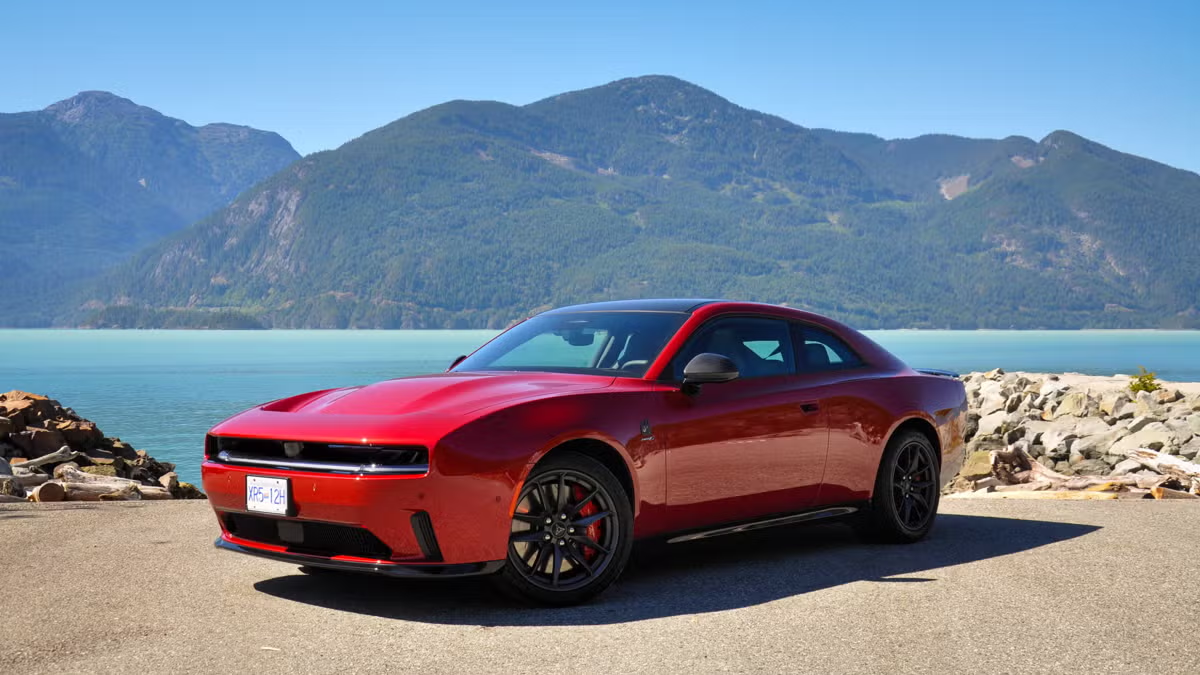
The latest-generation Dodge Charger is unique in a number of ways, starting with its availability in both two- and four-door body styles. But it’s what’s under the hood, so to speak, that makes the real difference. It’s the first offering from parent Stellantis to make full use of a new “multi-energy platform.” Currently, it’s offered with a choice of either an all-electric drivetrain with the Daytona package, or two different versions of the six-cylinder Hurricane internal combustion engine.
Cole Attisha
It took only a matter of months to realize that there was, at least for now, little market for the EVs, Dodge quickly ending production of the 496-hp Daytona R/T. trim It continues to produce the 630-hp Daytona Scat Pack which, at 630 hp – 670 in PowerShot Mode – can outrun the original Charger Hellcat in the quarter mile.
But Daytona currently accounts for barely 5% of total Charger sales, McAlear noted, and the gap is likely to widen based on the 40% surge in demand for ICE-powered versions of the muscle car last month. So, said McAlear, expect to see Dodge turn to other solutions as “we continue to build out the (Charger) portfolio.”
ICE, ICE, baby
“We’re focused on pushing the boundaries as much as we can,” McAlear said, stressing that, “We’re not doing our job if we’re not constantly engaged with the R&D team.”
Super Bee is the latest example. At 600 horsepower and 531 pound-feet of torque, its updated Hurricane engine may make gobs of power, but it’s still not up to what Dodge managed in the past, the gen-seven Charger SRT Hellcat Redeye Jailbreak edition pumping the numbers up to 807 hp and 707 lb-ft during its short run in the 2022 and 2023 model years. And that’s not even taken into account the visceral thrill of its Hemi V8.
Related: Ram Dealers Think the Rumble Bee Can Turn Car Buyers Into Truck Owners
McAlear is quick to change the subject whenever the word, “Hemi,” enters the conversation. But don’t think it’s not on his mind, if you’ll allow the double negative. The good news is that Dodge currently has three V-8s available in the Dodge Durango, and there’s a near ready-to-go package available over at Ram. The 2027 Ram 1500 SRT TRX boasts a 6.2-liter version of the iconic engine pounding out 777 hp and 680 lb-ft. Of course, it won’t come cheap, at a base MSRP of $99,995 — plus $2,795 in delivery fees. But when it comes to performance there are plenty of deep-pocket buyers.
SRT weighs in
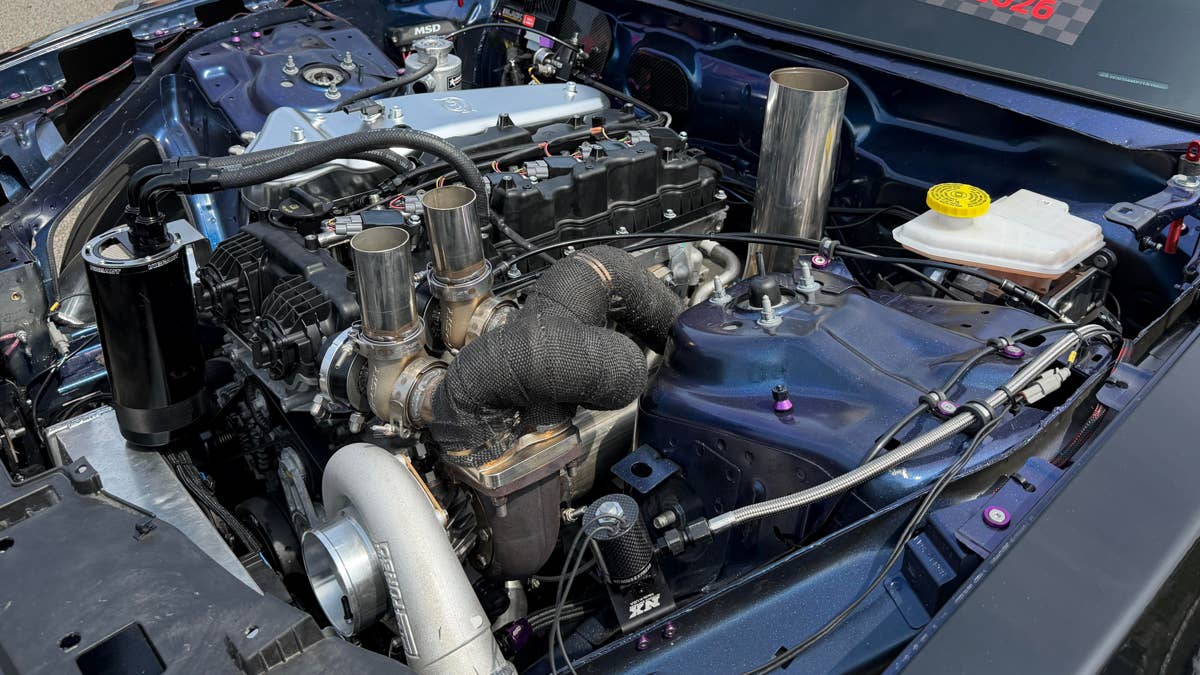
Just don’t think the Hemi is the only path Dodge can take to more power, it demonstrated at Roadkill Nights. Working with six different tuners the Stellantis muscle car brand showed off six Hurricane-powered Charger concepts making as much as 1,064 horsepower.
This is where SRT comes into the picture. Short for Street and Racing Technology, it’s the Stellantis unit tasked with coming up with new ways to boost performance for North American brands Chrysler, Dodge, Jeep and Ram. And it’s got some novel solutions. It last week showed off the prototype eBoost Air system which is designed to address dreaded turbo lag. Anyone who has had a turbocharged engine knows the feeling: you stomp on the throttle and wait for boost to pick up before you get peak launch torque. The eBoost is, at its most basic, an electrically powered compressor which can add as much as 10 psi of boost in a mere 650 milliseconds. It kicks in while the turbos “spool up” to give an essentially instant rush of power.
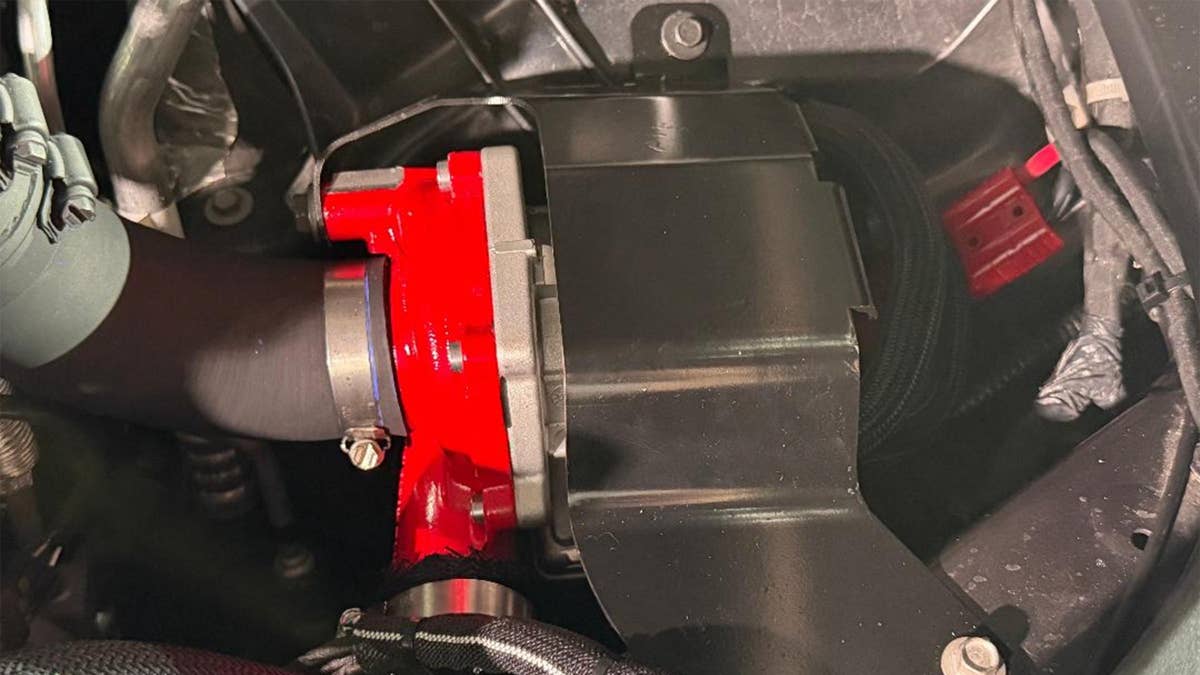
The system went from concept to prototype in just seven weeks, noted Joel Baker, SRT’s vice president of product engineering. “There’s no plans…for production,” he added. “Not yet.” But Baker’s boss, SRT chief Tom Sacoman, said there are clear opportunities for a solution like eBoost Air in the automotive performance market.
Related: Ram’s Hemi V8 Is Losing The Hybrid Tech Nobody Asked For
Hybrids offer another option
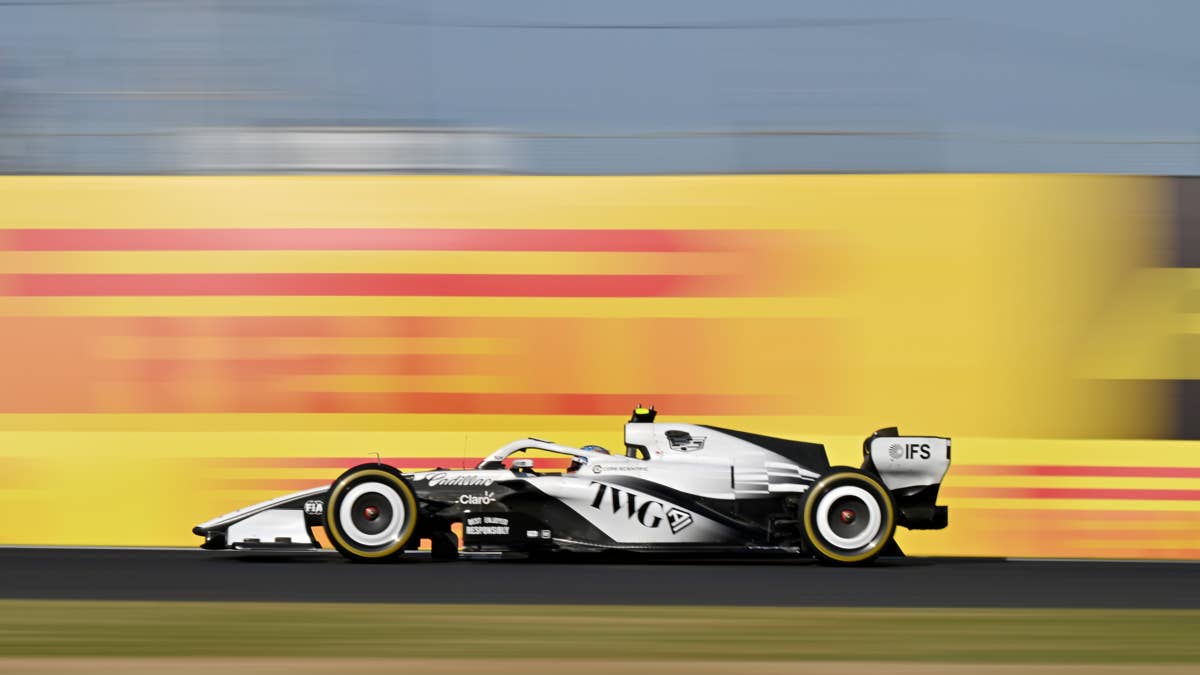
If you’ve been following motorsports you’ve undoubtedly noticed the growing list of racing series turning to hybrid drivetrains, including Formula 1, IndyCar, the World Rally Championship and the FIA World Endurance Championship. Even NASCAR has been exploring hybrid options since 2019, though its so far held to more traditional ICE powertrains.
General Motors
Car enthusiasts might also have noted there’s been a big change in the use of hybrids in street vehicles over the last few years. Gone are the days when a gas-electric drivetrain meant sacrificing the fun-to-drive factor for fuel economy. Even the latest Toyota Prius makes up to 196 hp, the plug-in hybrid Prius Prime upping that to 220 hp. A growing number of vehicles are trading off a few mpg for much better performance, like the Lexus RX 500h F Sport delivering up to 366 hp.
“You clearly can use (hybrids) to make a performance version” of a vehicle using an ICE drivetrain, Sacoman told me. Whether that approach works for Dodge, however, is still in the exploratory stage.
Performance heats up
The surge in Charger sales shows there’s a clear market for not just performance vehicles, but those adopting the coupe and sedan body styles many automotive pundits were ready to write off. If anything, we could see the segment grow even hotter before decade’s end.
Adam Lynton/ChatGPT
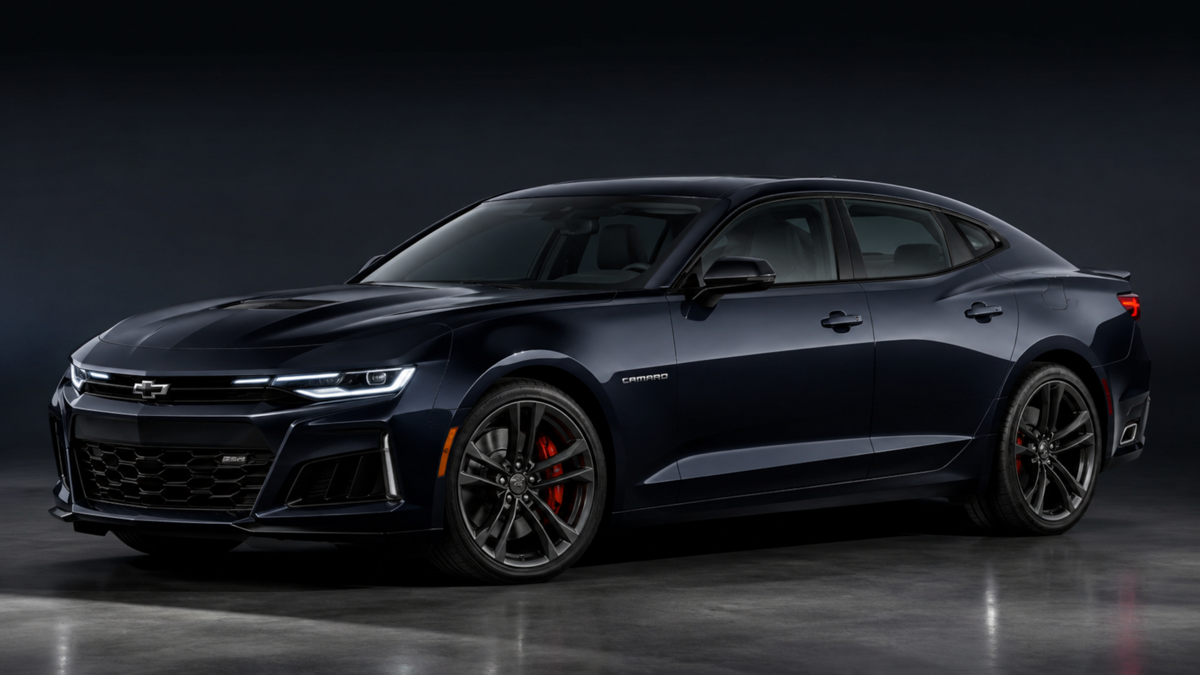
Ford, for one, has never been shy about boosting the power of its iconic Mustang. That said, demand for the classic coupe has been fading and the automaker is searching for a new formula. At a dealer meeting in Las Vegas this week, Ford CEO Jim Farley reportedly confirmed plans for a four-door version of the pony car. Then there’s Chevrolet which, according to widespread reports, is working on the revival of the Camaro badge – though a seventh-generation package is expected to be offered in both two and four-door body styles when it launches in 2029.
Related: Ford’s Four-Door Mustang Sedan Arriving Under $40,000
For his part, Dodge chief McAlear downplayed those classic opponents, telling me, “We’ve never looked at Mustang and Camaro in the past as competitors as much as they are alternatives.” Perhaps not, but he also acknowledged, “Competition keeps us better, stronger, and helps us push the limits, helps us set benchmarks to improve and conquer.”
Perhaps. But it’s clear Dodge will have to keep pushing the boundaries of performance if Ford and Chevy are really serious about their plans. And that means exploring every possible option, said Sacoman. “You never know where things are going (so it’s) good to have as much as you can on the shelf.”