A Tough Engine with a Strong Reputation
The Mitsubishi Lancer Evolution X split the fanbase when it took over from the iconic 4G63 Evo IX, but the aluminum-block 4B11T quickly showed it wasn’t just a pretender. Tuners and owners have pushed this turbocharged 2.0-liter four-cylinder past 400 horsepower on stock guts, and some have racked up thousands of hard track miles without the engine so much as flinching – provided you use good parts and don’t skimp on maintenance.
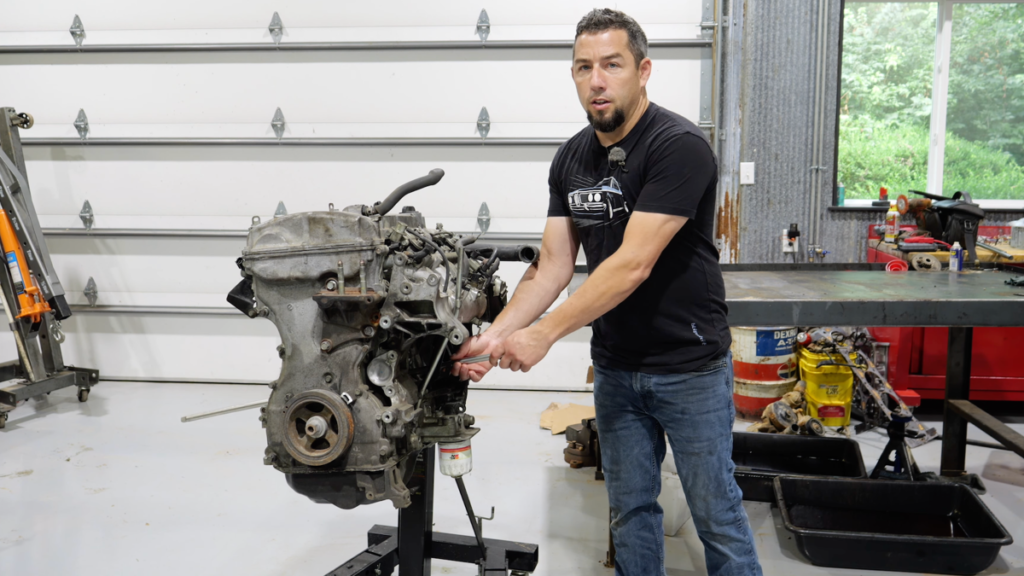
And then, there’s this teardown video. YouTube’s I Do Cars got its hands on a 2010 Mitsubishi Lancer Ralliart from Copart, armed with a 4B11T that had already punched two gaping holes through both sides of its block. The auction claimed it was part of the ‘Engine Start Program,’ but by the time it landed, the only thing starting was the engine’s journey to the scrapyard.
Which begs the question: how did a supposedly bulletproof engine end up spraying connecting rods and piston bits all over its own crankcase?
One Very Expensive Failure
Initially, the engine didn’t look like something that had just self-destructed. After popping the valve cover, it showed a spotless valvetrain, shiny ARP-style head studs, fresh timing bits, and barely a hint of sludge. Even the spark plugs looked happy, and the intake ports were nearly squeaky clean.
But as the video went deeper into the teardown, fine aluminum dust lurked in the timing area. This hinted that someone had gone wild with abrasive discs during a previous rebuild and skipped the cleanup. The oil pickup screen was riddled with aluminum shavings, RTV, and random debris – none of which should belong anywhere near a healthy engine.
Still, the bearings had their own story to tell. They showed some wear, but nothing like the chewed-up copper carnage you’d expect from a starved engine.
The real chaos was all in one cylinder. The piston was in pieces, a connecting rod had made a dramatic exit through the block, and the wrist pin was nowhere to be found. Amazingly, the cylinder head got off easy with just a few valve marks – probably the only big part worth saving from this mess.
I Do Cars/YouTube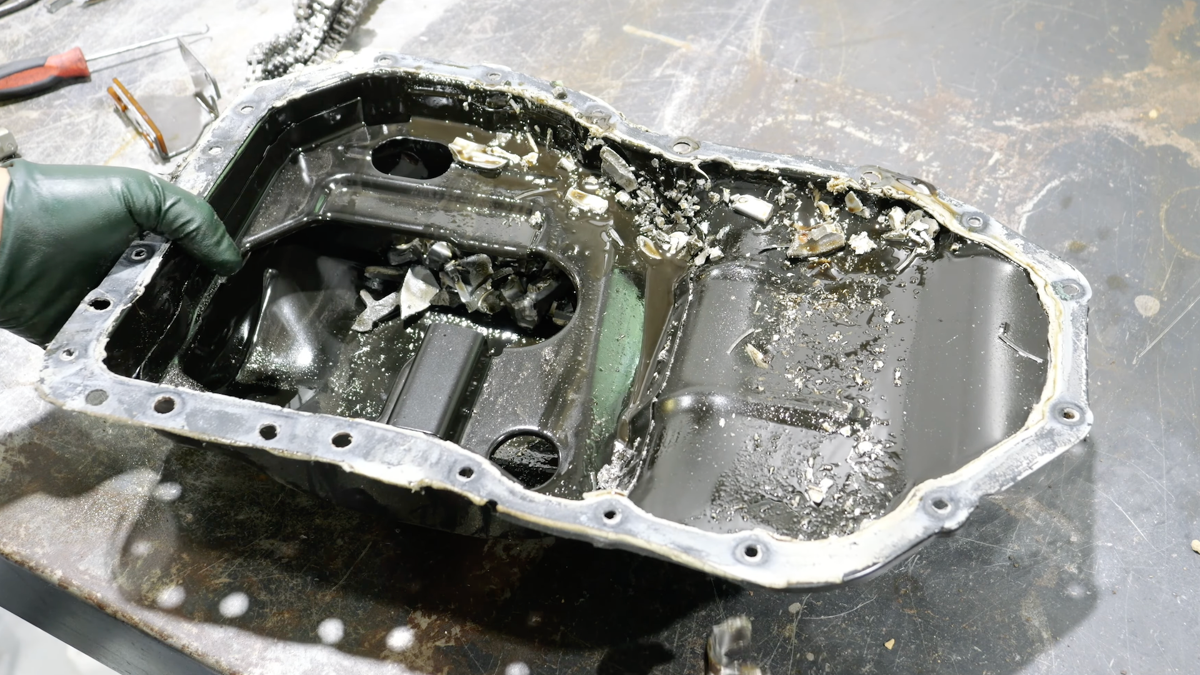
Reliability Still Comes Down to the Details
After poking through every major part, the host figured that leftover junk from a previous rebuild sped up the wear, but it wasn’t what actually killed the engine.
Instead, he suspects the real culprit was too much cylinder pressure, which bent a rod or two until they smacked into the crankshaft. After that, the whole bottom end basically went into self-destruct mode, flinging metal everywhere and turning the engine into a very expensive paperweight.
It’s a good reminder: the Evo X’s reputation for durability is still legit. But as every buying guide warns, a sketchy mod job is way riskier than a bone-stock car, so service and tuning history matter just as much as the odometer. If you’re hunting for an Evo X today, this teardown spells it out: the 4B11T is tough, but what happened in the garage before you matters.
Copyright 2014 Seyth Miersma / AOL