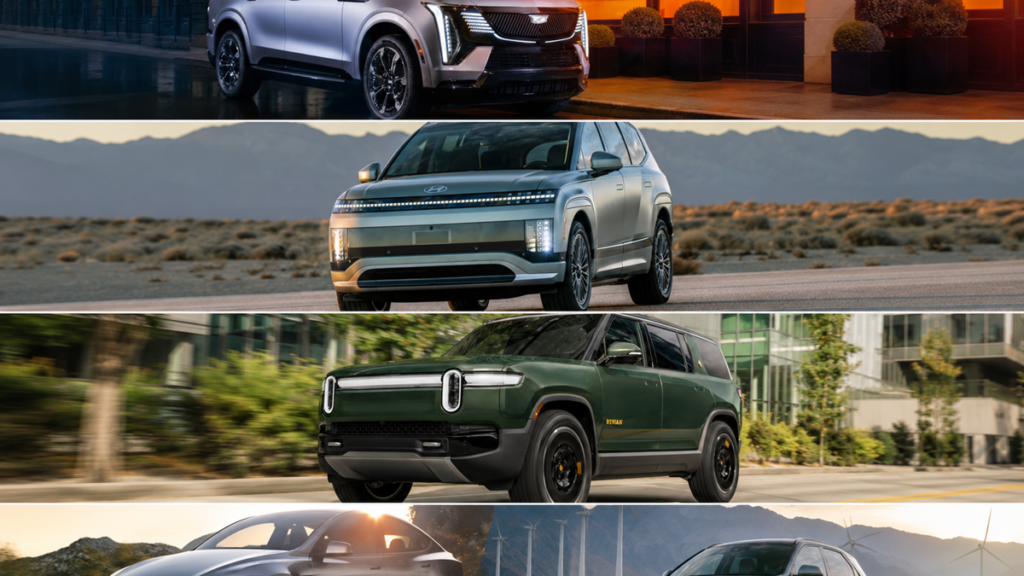
The American road trip has fundamentally changed, range anxiety is all but a relic of the past, and the 2026 model year proves that automakers may have cracked the code on long-distance electric travel. The formula for a capable road-trip EV is no secret; it requires a high-capacity battery for range and hauling, DC fast charging capability, North American Charging Standard (NACS) compatibility, and a cabin that feels spacious and well-appointed.
To make your shortlist easier to compile, we have separated the engineering triumphs from the marketing spin to put together five of the best electric vehicles currently on sale in America for cross-country travel – presented below, in no particular order:
1. Cadillac Escalade IQ – Brute Force Engineering
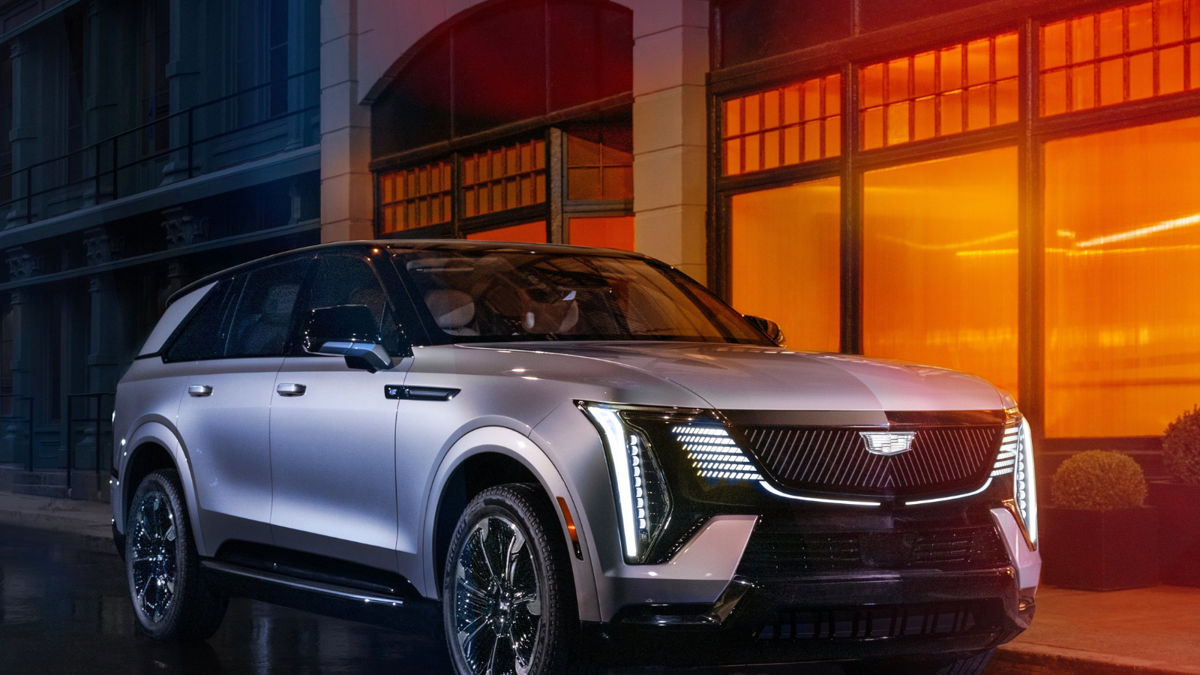
General Motors didn’t reinvent the wheel on the Escalade. It continues to be a heavy, hulking piece of machinery, however the conventional V8 typically found in it has been replaced by a massive 205 kWh battery pack – creating the Escalade IQ. This massive battery setup allows for an estimated maximum range of 465 miles on a single charge, while also putting out 750 horsepower. 350 kW DC fast charging allows for it to add 117 miles of range in 10 minutes, and its full suite of family safety tech, including GM’s Super Cruise autonomous driving, makes for a compelling overall package. The Escalade IQ stays true to its expected levels of comfort with Air Ride Adaptive suspension and Magnetic Ride Control, smoothening out even the worst of the roads you come across.
Starting at an MSRP of $127,405, it is the most expensive vehicle on the list. With an eight-year, 100,000-mile EV warranty, this is not only a great EV, but given GM’s V8 troubles, it may also be GM’s best full-size SUV on the market.
2. Hyundai IONIQ 9 – Pragmatic Preference
Hyundai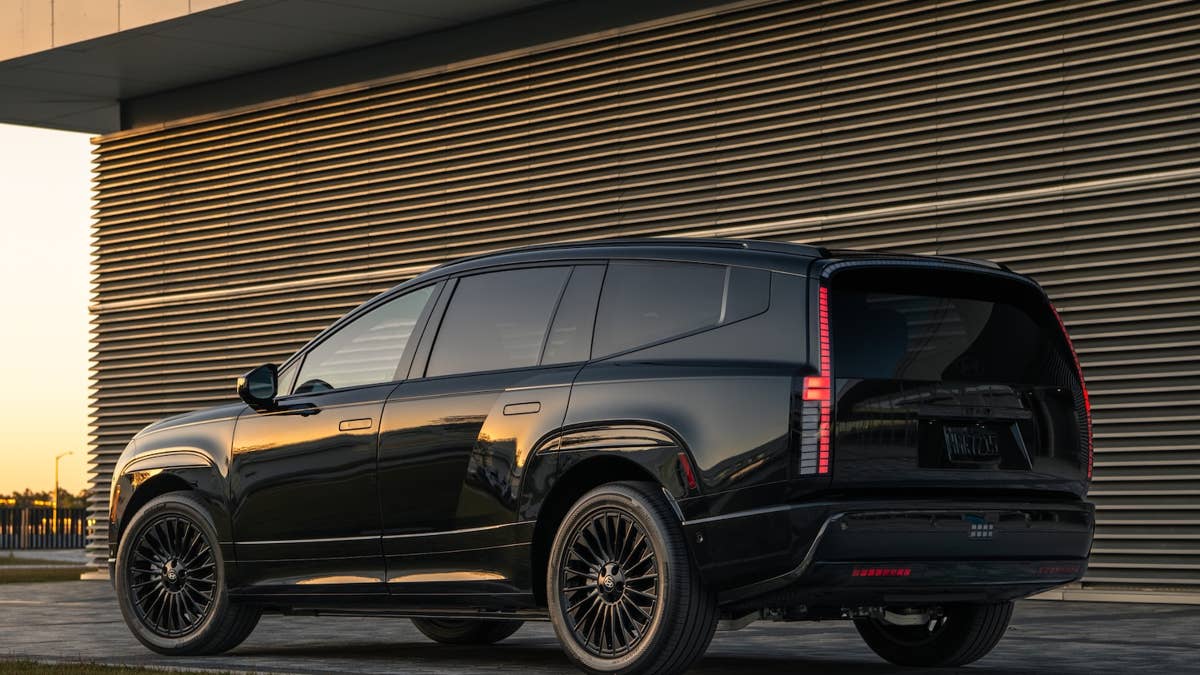
For large families who want all the space and tech but don’t necessarily want to overspend, Hyundai‘s IONIQ 9 stands out as great value. Offering genuine three-row practicality with Hyundai’s proven electric architecture, the IONIQ 9 is capable of up to 335 miles of range, and for the 2026 model year and onward, Hyundai has introduced NACS compatibility without the need for fidgety adapters. On a 350 kW DC fast charger, the IONIQ 9 charges from 10 percent to 80 percent in 24 minutes.
Its large cabin boasts all the in-car tech and comfort that families would expect, as well as an integrated UV-C sterilizer console, which is a blessing when traveling with children. Hyundai’s class-leading warranty, Forward Collision-Avoidance Assist, and a surround view camera system add to an already complete value proposition starting at an MSRP of under $60,000.
3. Tesla Model Y – Logistical Benchmark
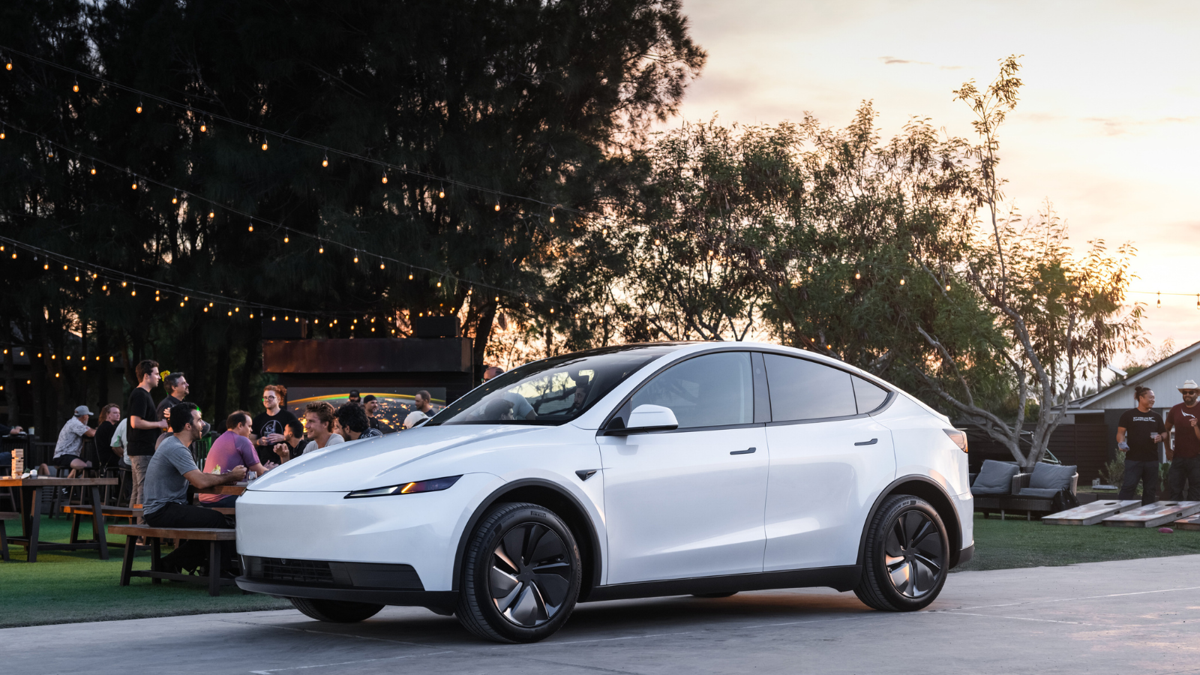
Not the newest, most luxurious, or fastest charging, but to ignore the Tesla Model Y when discussing roadtrip-capable EVs may count as journalistic malpractice. It remains the default benchmark for one specific reason: its software. With prices for the base variant starting at under $40,000, and a long-range variant capable of up to 357 miles on a charge, the Tesla Model Y offers access to the best charging network across America, as well as a suite of active safety features. Therefore, the Model Y stands out even in 2026 as being amongst the best EVs for a cross-country adventure.
4. Rivian R1T & R1S – Adventurer’s Choice
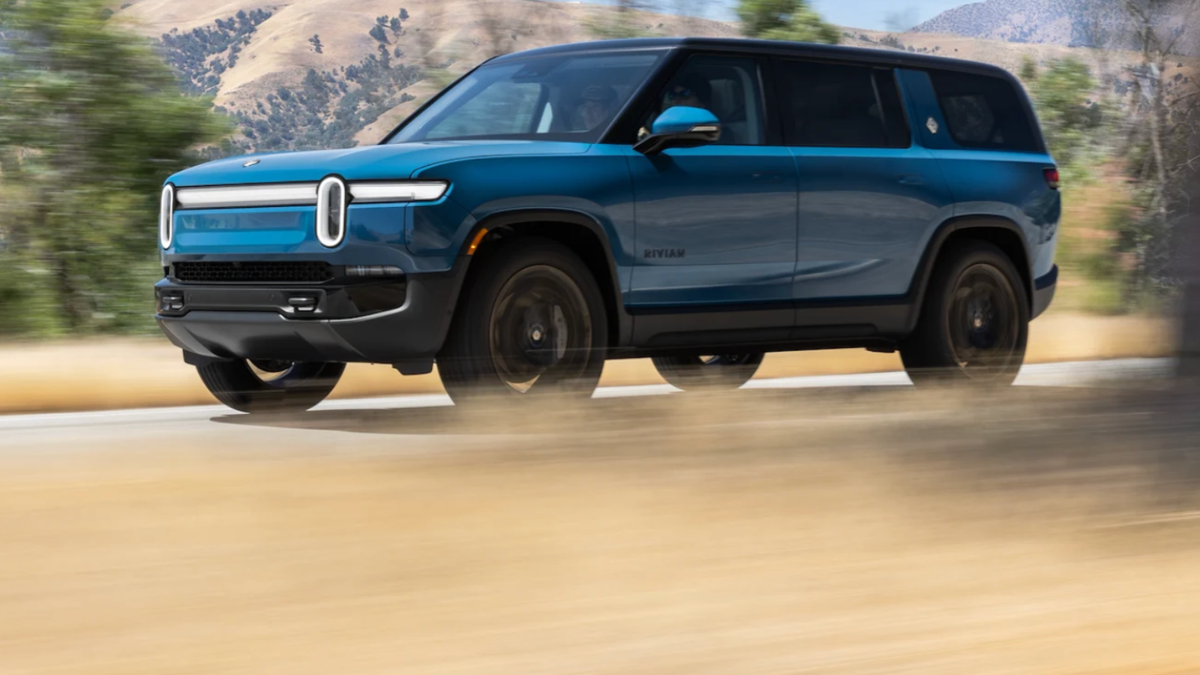
For the more adventurous travelers, Rivian’s R1T and R1S stand out as robust options. The R1S is the SUV variant offering three-row seating, while the R1T is the truck variant. Purpose-built for the outdoors and prioritizing utility, Rivian‘s R1 range can be had from an MSRP starting at $76,990 for the base variant, going up to $121,990 for the four motor 1,025 horsepower quad variant. The most suitable variant for roadtrips, though, would be the dual motor, large battery variant starting at an MSRP of $83,990 and capable of up to 329 miles of range and 533 horsepower from its 108.5 kWh battery pack.
With NACS compatibility and an additional Aventure Network of charging locations, the Rivian R1 range offers a robust build quality, strong crash protection, and unique adventure-focused features such as its “Camp Mode” to level the vehicles on any surface for those who enjoy car camping. A Rivian is sure to meet most requirements on an adventurous road-tripper’s checklist.
5. Hyundai IONIQ 5 – Proven and Capable
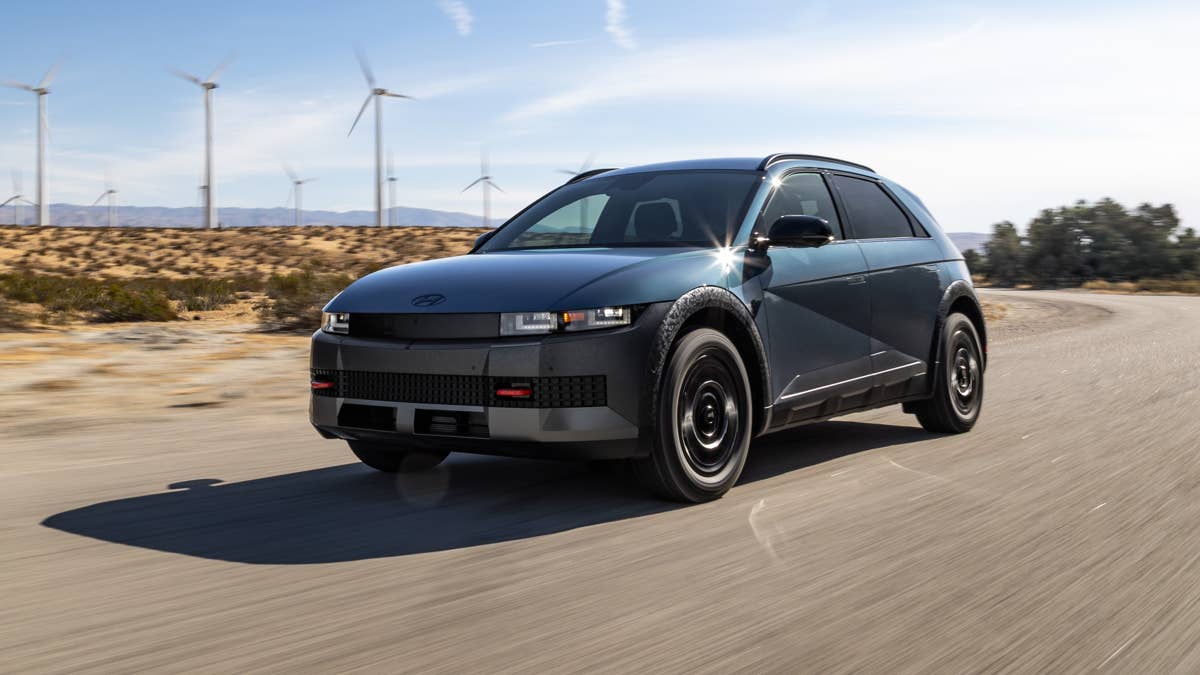
Hyundai’s IONIQ 5 has been around long enough to be familiar. Incremental improvements have kept it at the top of the pack for smaller families or people who prioritize ease of ownership and convenience. Prices start at an MSRP of $35,000, and while offering up to 318 miles of range may not make it the class leader, its 800-volt architecture remains a benchmark in fast charging, allowing it to charge from 10 percent to 80 percent in roughly 22 minutes on a 350 kW station. Like other Hyundai EVs, from the 2026 model year onward, the IONIQ 5 even offers NACS compatibility.
With a deceptively long wheelbase, one that is longer than even the Hyundai Palisade, it offers a surprisingly spacious interior and composed highway dynamics. Featuring clever design, such as its sliding center console and reclining front seats, which are explicitly designed for resting during charge stops, it is evident that the IONIQ 5 has been put together as a very comprehensive package for people who simply want a capable and well-designed EV.
Takeaway
Roadtrips were always a make-or-break for people looking to switch away from internal combustion toward electric mobility. In 2026, however, the range of vehicles on sale, with their long range and fast charging, electric long range mobility is more viable than ever before. Which one of these vehicles would you choose for your next trip on the tarmac?